What are LED bulbs? A Beginner’s Guide to How They Work and How to Choose
If your eyes feel tired after a few hours at your desk or if your living room always feels too bright, the problem is often the bulb itself. Poorly chosen or cheap bulbs can flicker, shift in color, or emit more light than a room needs. Understanding what LED bulbs are and how to choose the right one can have a greater impact on daily comfort than most people expect.
This beginner’s guide explains the basic technology behind LEDs, why they replaced older bulb types, and what to look for when buying. By the end, you will know what LED bulbs are, how they work, and how to avoid the most common mistakes that make a lighting upgrade feel disappointing instead of worthwhile.
Quick Answer
LED bulbs are semiconductor-based light sources that efficiently produce light without using a filament and with far less wasted heat than traditional bulbs. The best results come from choosing the right brightness, color temperature, fitting, and quality of the bulb for the room where you plan to use it.
- They use less energy than incandescent and halogen bulbs
- They last significantly longer with less maintenance
- They offer multiple color temperatures for different spaces
- They can provide stable, flicker-free light when well-made
- They also come in many shapes and fittings for standard fixtures
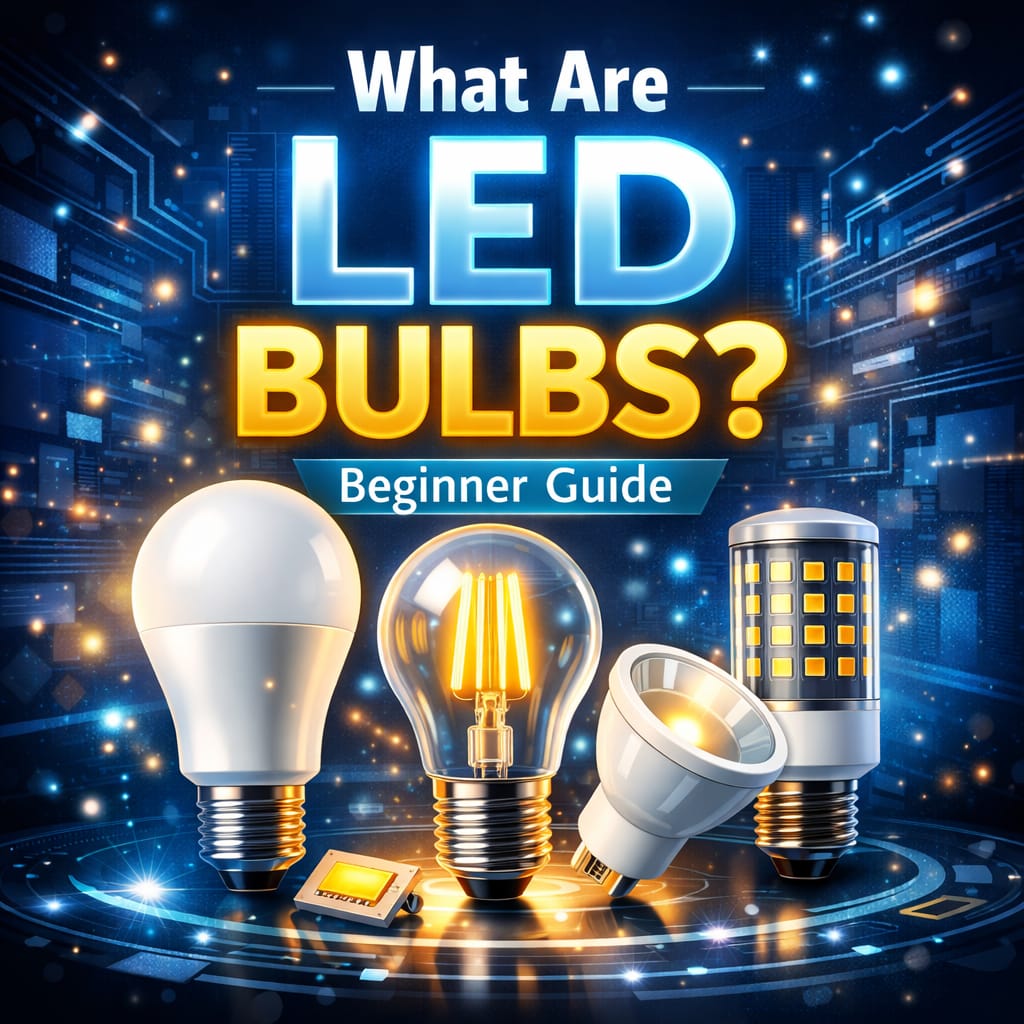
What are LED bulbs?
LED stands for light-emitting diode. At the core of every LED bulb is a small semiconductor chip that produces light when electricity passes through it. There is no filament or gas, nor is there any part that has to glow red-hot just to produce visible light. This fundamental difference makes LED bulbs much more efficient than older lighting technologies.
Although the light source inside is very different, the bulb itself is designed to fit standard fixtures. This means that you can typically replace an old incandescent, halogen, or CFL bulb with an LED version without modifying the lamp or ceiling fixture. For most people, this easy swap makes LED lighting feel practical rather than technical.
When asked what LED bulbs are, the simple answer is that they are modern bulbs built around semiconductor technology instead of heat-based lighting. This change affects almost every aspect of real-world use, including energy consumption, lifespan, color quality, and comfort. This is also why LED bulbs now dominate the market for homes, offices, and everyday fixtures.
If you want to learn more about the internal mechanics of LED bulbs, How LED Bulbs Actually Produce Light is a useful companion piece. This guide focuses on the basics, so the goal here is to understand how LED bulbs work in practice and how to choose ones that suit your space.
How LED Bulbs Work
A diode allows current to move in one direction. In an LED, the diode is made from a semiconductor material that is engineered to emit light when electricity flows through it. Inside the chip, electrons combine with electron holes and release energy in the form of photons. Those photons are the light you see.
Most household LED bulbs use a blue LED chip that is coated with a phosphor layer. This coating converts some of the blue light into a broader spectrum, producing the warm, neutral, or cool white appearance seen in everyday rooms. The quality of the phosphor coating and the electronics that power the bulb influence how natural colors appear, how stable the light output feels, and how comfortable the light is over time.
This is why semiconductor lighting changed the industry so dramatically. Incandescent bulbs relied on a hot tungsten filament and fluorescent lamps used ionized gas and mercury vapor. Both approaches involved more wasted energy and compromises. LED technology changed the equation by generating visible light much more efficiently and with far less excess heat. This is why modern bulbs can run cooler, last longer, and use less electricity.
According to the U.S. Department of Energy, LED lighting uses at least 75% less energy than incandescent lighting and can last up to 25 times longer. This is not just marketing language. It comes directly from the underlying physics. If you want to understand how that translates to product packaging, our lumens vs. watts guide is worth reading next.
The wattage on an LED box indicates energy use, not brightness. Lumens matter if you want to know how much useful light the bulb produces.
Why LED Bulbs Replaced Older Lighting
LED bulbs replaced older lighting not just because they use less electricity. They also deliver the light that people want from a bulb: instant full brightness, less wasted heat, a longer lifespan, more color temperature choices, and much lower maintenance. In everyday use, this combination matters more than any single specification.
LEDs are a completely different kind of technology compared with incandescent bulbs. Incandescent bulbs make light by heating a filament to an extreme temperature. This process causes most of the energy to end up as heat instead of usable light. LEDs do not rely on this process, so they are more efficient and typically last much longer. For a broader comparison of older options, see how LEDs compare to halogens and CFLs.
This efficiency also has a real effect on your electricity bill. A standard 60-watt incandescent bulb can often be replaced by an 8- or 9-watt LED bulb with similar brightness, and that difference adds up across multiple lamps over the course of a year. A more detailed breakdown of how much energy LED lighting can save is available, but the basic logic is straightforward. If you are still using incandescent or halogen bulbs in several rooms, you are paying more every month for older, lower-performing technology.
LED bulbs also win on longevity, though real lifespan depends on build quality and conditions. A cheap LED bulb may fail prematurely if the driver circuit is poor or the heat management is inadequate, but a quality bulb used in the appropriate fixture can last for many years. Reduced maintenance is an easy benefit to overlook until you stop changing bulbs in hard-to-reach places. The ENERGY STAR LED lighting guide is useful for comparing certified products.
Comfort is another underrated reason people switch. A well-made LED bulb can provide stable light with less flicker and glare and better color quality than many inexpensive traditional bulbs. If your current lighting feels harsh or tiring, the problem is often not with LEDs in general. It is a poor-quality bulb. A flicker-free, warm LED bulb, for example, can be much easier on the eyes than a budget bulb with a weak driver.
How to Choose the Right LED Bulb
Selecting the right LED bulb depends on several practical factors: brightness, color temperature, CRI (color rendering index), fitting, dimmer compatibility, and overall build quality. The biggest mistake beginners make is focusing on wattage first. Lumens actually tell you how bright a bulb will be, while watts only tell you how much electricity it uses. This explains why two 10W LEDs can appear very different in the same room.
Color temperature is just as important as brightness. Around 2,700 to 3,000 Kelvin usually feels warm and comfortable in bedrooms and living rooms, while 3,500 to 4,000 Kelvin often works better in kitchens, bathrooms, and home offices. Above 5000K starts to feel more like daylight and is better suited to spaces where tasks are performed than to spaces where relaxation is the goal. For a deeper look at this topic, Color Temperature Explained is one of the most useful follow-up reads in this series.
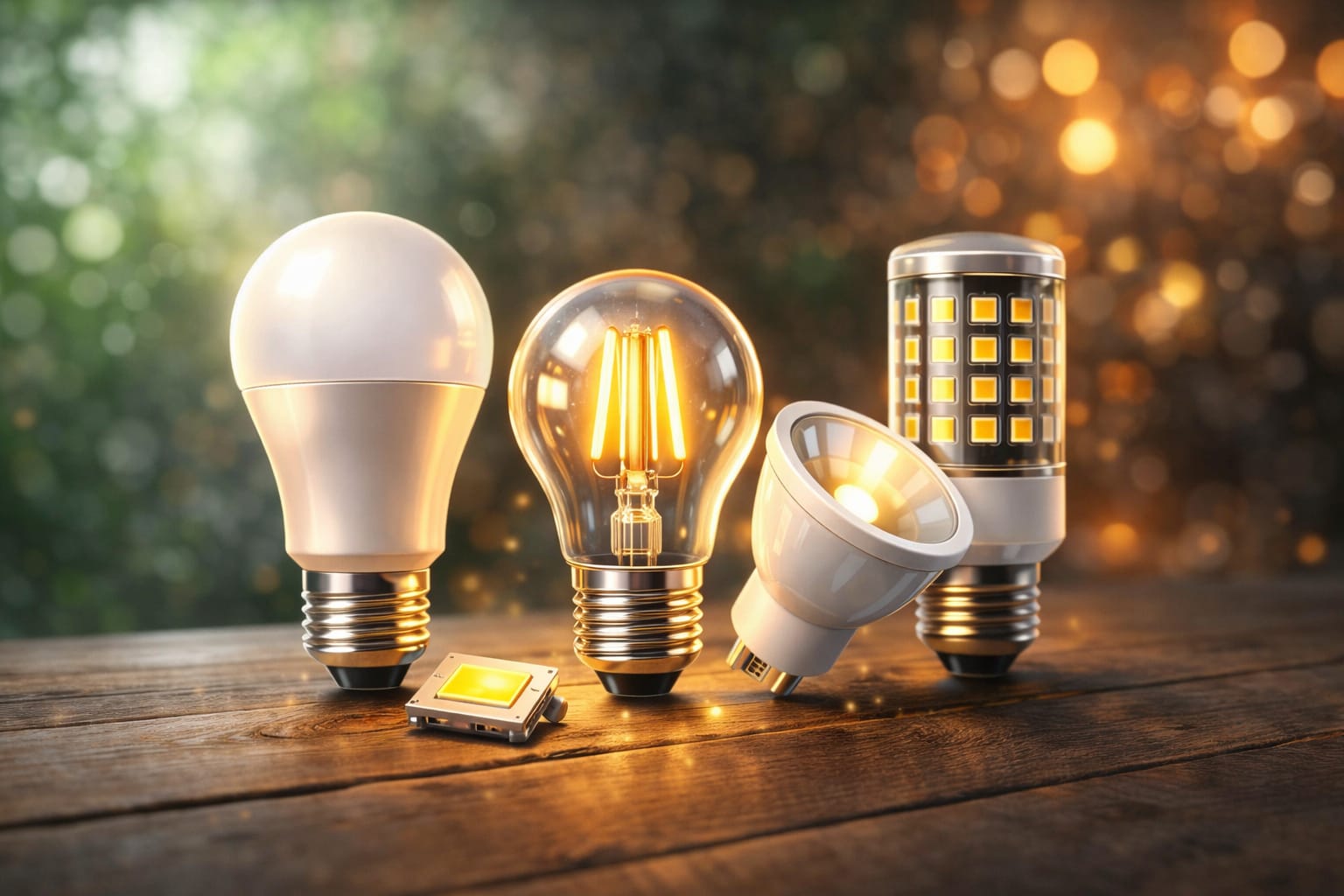
You also need to match the bulb to the fixture and the room. Classic A19 or A60 bulbs fit many table lamps and ceiling fixtures. However, spotlights, candle bulbs, globe bulbs, and enclosed-fixture models serve different purposes. Bedrooms usually feel best with a warm, soft light, which is why choosing the right bulbs for your bedroom can make such a noticeable difference. For main living spaces, the best LED bulbs for comfort and ambiance cover the details that matter most.
Read the numbers on the box in the right order. First focus on lumens, then Kelvin, then CRI, and finally, check the fitting and dimmability.
The purpose of the room should guide the final decision. Kitchens and work areas typically require brighter, cleaner light. Bedrooms and spaces used in the evening benefit from warmer tones and more diffusion. If glare is a recurring problem, a frosted bulb can soften the light in open areas, which can become uncomfortable over time due to sharp output. In that kind of setup, a frosted, warm LED bulb is often a better choice than a clear, high-intensity bulb.
What should you choose?
Choose LED bulbs based on brightness, color temperature, and room purpose rather than wattage alone. Matching the bulb to the environment provides better comfort and efficiency and results in a more pleasing atmosphere once the light is on.
- For a cozy atmosphere, choose a warm white bulb with a color temperature between 2700 and 3000 Kelvin
- For focus lighting, choose a neutral white bulb with a color temperature between 3500 and 4000 Kelvin
- For color accuracy, choose a bulb with a CRI of 90 or higher
- If you use dimmers, make sure the bulb is dimmable and compatible
- If you care about long-term value, prioritize bulb quality over the lowest price
Before buying, check the brand’s reputation, whether the bulb is compatible with enclosed fixtures, and whether the bulb is certified. A bulb that costs a little more but uses a better driver circuit and maintains stable output over time is usually the better buy. For a broader, step-by-step process and more technical detail, the LED Knowledge Center is the best place to continue once you want to know what to look for before choosing LED lighting.
In work-focused rooms, a dimmable, neutral white bulb is often the safest choice because it provides clarity without feeling too cold. If that is what you need, a dimmable, neutral LED bulb is a sensible option for desks, study areas, and general-purpose task lighting.
Common Mistakes When Buying LED Bulbs
The most common mistake is buying based on wattage alone. This habit stems from the incandescent era but is ineffective with LED bulbs because wattage no longer indicates a bulb’s brightness. A lower-watt LED bulb can easily outshine a similar bulb if its chip quality and optical design are better. That is why checking lumens first is so important.
Another mistake is ignoring color quality and room suitability. People often buy a cold, bright multipack because it looks efficient, then wonder why their bedroom feels cold or their living room looks dull. Others ignore CRI and end up with lighting that makes skin tones and furnishings look worse than they should. These are not small details. They influence how comfortable and natural a room feels on a daily basis.
Compatibility errors are also common. Not every LED bulb dims well, not every bulb is suitable for enclosed fixtures, and not every inexpensive bulb has a good enough driver circuit to avoid flicker or buzz. Many first-time buyers become frustrated when this happens because the bulb technically works, but the experience is poor. Reading the terms on the packaging before buying usually prevents these problems.
Never install a standard, non-dimmable LED bulb on a dimmer switch. It may flicker, buzz, shut off unpredictably, or shorten the life of the bulb and switch.
Another common mistake is assuming that the cheapest bulb is the best value. In LED lighting, the driver circuit, thermal design, and optical quality matter much more than many buyers realize. A cheap bulb may save you a little money up front, but if it flickers, shifts color, or fails prematurely, it quickly stops being a bargain.
Frequently Asked Questions
Are LED bulbs really better than incandescent bulbs?
Yes. They use far less energy, last much longer, generate less heat, and usually offer better control over brightness and color temperature. The main caveat is quality. A poor LED bulb may perform poorly, but a good one will typically outperform incandescent lighting in every practical category.
How many lumens are needed to replace a 60-watt bulb?
As a rough guide, around 800 lumens is the standard replacement for a traditional 60-watt incandescent bulb. However, the exact result depends on beam shape, diffusion, and fixture design.
Why do some LED bulbs flicker?
Flickering is usually caused by poor driver quality, dimmer incompatibility, or unstable power regulation. It is not an unavoidable part of LED lighting. Better-designed bulbs with stronger electronics provide a much steadier output.
Can I use LED bulbs in enclosed fixtures?
Yes, but only if the bulb is rated for enclosed fixtures. Since heat buildup shortens the lifespan of LEDs, using the wrong bulb in a sealed fitting can lead to early failu
Key Takeaways
LED bulbs are semiconductor-based light sources that generate light directly from electrical energy, unlike older bulb types that heat a filament. This fundamental difference is why they run cooler, use less power, and have a much longer lifespan than older bulb types.
The best way to choose an LED bulb is to consider lumens, color temperature, CRI, the bulb’s size, and its compatibility with the room and fixture. When these factors align with the space, the improvement in comfort and efficiency is usually noticeable right away.
A good LED bulb is about more than just lower energy use. It’s also about better light quality, fewer replacements, and a room that feels more comfortable to live in every day.
If you found it helpful, please share it with someone who is still choosing bulbs the hard way.
Facebook | X (Twitter) | WhatsApp | LinkedIn
Pingback: LED Bulbs vs Halogen: Ultimate Smart Buying Guide
Pingback: LED Bulbs vs Incandescent: Ultimate Smart Savings
Pingback: Best LED Bulbs for Bedrooms: Ultimate Guide 2026
Pingback: Best LED Bulbs for Living Rooms: Smart Guide 2026
Pingback: Are LED Bulbs Safe for Eyes? Facts Revealed - NeoLEDHub
Pingback: LED Bulb Lifespan: Essential Facts You Must Know
Pingback: Cheap vs Premium LED Bulbs: Performance vs Price
Pingback: Best LED Bulbs for Ceiling Fans: Expert Guide - NeoLEDHub
Pingback: Best LED Bulbs for Desk Lamps (Eye-Friendly) - NeoLEDHub
Pingback: Best LED Bulbs for Bathroom Lighting - NeoLEDHub
Pingback: Smart Lighting Systems: Guide 2026 - NeoLEDHub
Pingback: Do You Need a Smart Hub for Lighting? - NeoLEDHub
Pingback: Best LED Bulbs for Dining Rooms (Warm & Cozy) - NeoLEDHub
Pingback: Best LED Bulbs for Home Office - NeoLEDHub
Pingback: Best Dimmable LED Bulbs (No Flicker Picks) - NeoLEDHub
Pingback: How LED Bulbs Work: Amazing Technology Explained Simply
Pingback: Lumens vs Watts: Which Is Brighter? - NeoLEDHub
Pingback: LED Color Temperature: Warm vs Cool - NeoLEDHub
Pingback: How LED Lighting Works (Beginner Guide) - NeoLEDHub
Pingback: Best LED Bulbs for Brightness (High Lumens) - NeoLEDHub
Pingback: Best Soft White LED Bulbs (Warm Lighting) - NeoLEDHub
Pingback: LED Bulbs vs Halogen: Which Is Better? - NeoLEDHub
Pingback: Best LED Bulbs for Bedrooms (Top Picks) - NeoLEDHub
Pingback: Best LED Bulbs for Living Rooms You Can Buy - NeoLEDHub
Pingback: LED Bulbs vs Incandescent: Which Saves More? - NeoLEDHub
Pingback: LED Bulb Lifespan: How Long Do They Last? - NeoLEDHub
Pingback: Cheap vs Premium LED Bulbs: Worth It? - NeoLEDHub
Pingback: Are LED Bulbs Safe for Eyes? The Truth - NeoLEDHub
Pingback: Best LED Bulbs for Ceiling Fans - NeoLEDHub
Pingback: Best LED Bulbs for Desk Lamps for Eye Comfort - NeoLEDHub
Pingback: Best LED Bulbs for Bathroom (Bright & Fog Free) - NeoLEDHub
Pingback: Best LED Bulbs for Dining Rooms (Warm & Cozy) - NeoLEDHub
Pingback: Best LED Bulbs for Home Office (Better Focus) - NeoLEDHub
Pingback: Best Dimmable LED Bulbs (No Flicker Picks) - NeoLEDHub
Pingback: LED Bulb Base Types: What You Need to Know - NeoLEDHub
Pingback: LED Color Temperature: Warm vs Cool - NeoLEDHub
Pingback: Do You Need a Smart Hub for Lighting? What to Know First - NeoLEDHub
Pingback: Lumens vs Watts: What Really Tells You a Bulb Is Brighter?
Pingback: Smart Lighting Systems: Guide 2026 - NeoLEDHub
Pingback: How LED Lighting Works (Beginner Guide) - NeoLEDHub
Pingback: Best LED Bulbs for Brightness (High Lumens) - NeoLEDHub
Pingback: Best Soft White LED Bulbs (Warm Lighting) - NeoLEDHub