Color Temperature Explained: Warm vs Cool Light by Room
Understanding color temperature makes it much easier to choose LED lighting that still feels right once it is installed. In simple terms, lower Kelvin values look warmer and softer, while higher Kelvin values look cooler and brighter. That one choice affects comfort, mood, visibility, and how a room feels at different times of day.
This guide explains the Kelvin scale, the difference between warm light and cool white light, and the best ranges for bedrooms, kitchens, bathrooms, living rooms, and workspaces. The goal is simple: to help you choose a bulb that feels right in the room, not just one that looks good on the box.
Quick Answer
Warm light usually falls between 2700K and 3000K and works best in relaxing spaces. Cool white light usually starts at around 4000K and often works better in task-heavy areas where clarity matters more than coziness.
- Choose 2700K to 3000K for bedrooms, living rooms, and other evening spaces.
- Choose 3000K to 4000K for kitchens and bathrooms, depending on the look you want.
- Choose 3500K to 5000K for home offices, garages, and detail-focused work areas.
- Kelvin affects light color, while lumens tell you how bright the bulb is.
- When in doubt, test one bulb in the room at night before replacing everything.
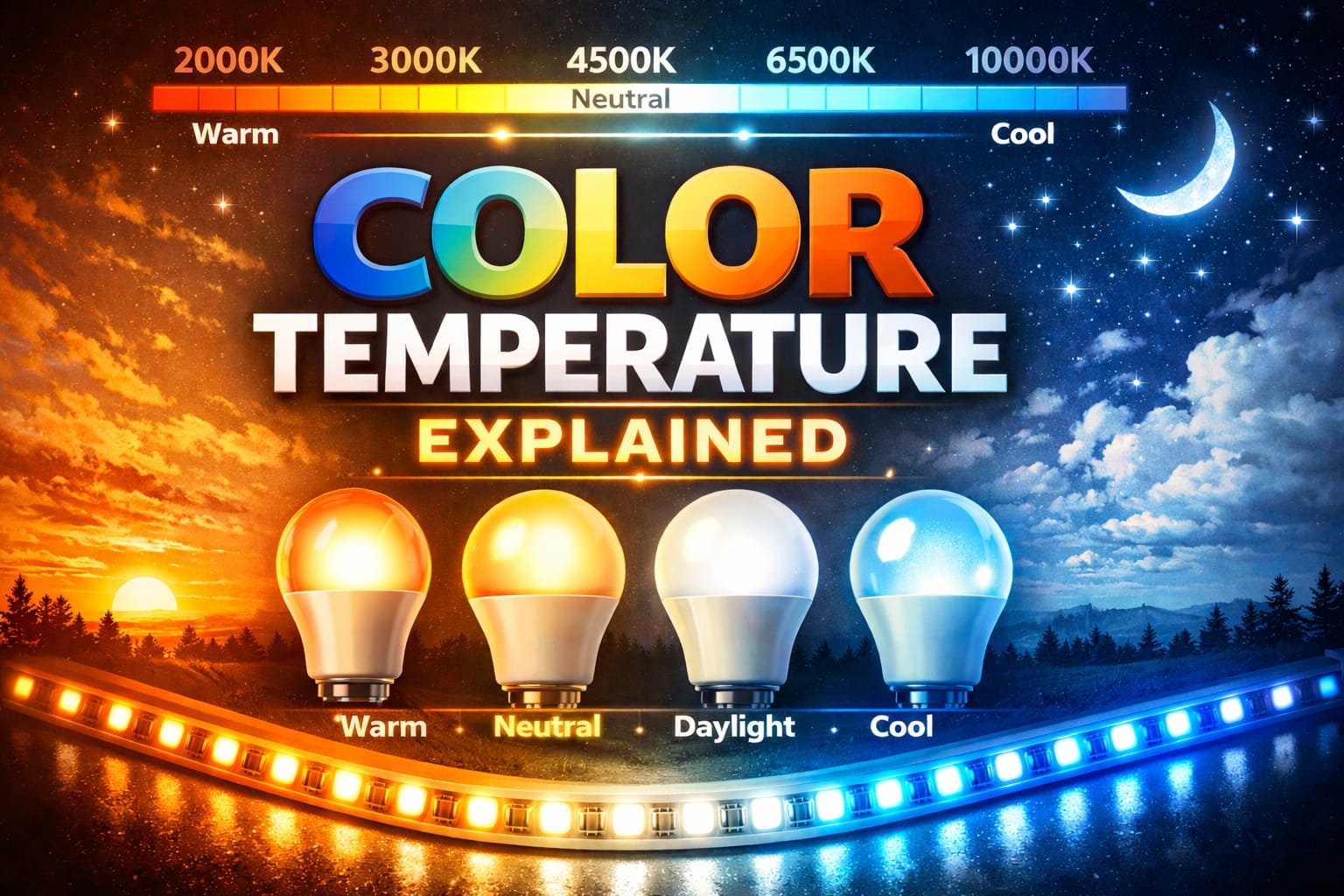
Table of Contents
What color temperature means
Color temperature describes how light looks to your eyes, not how hot the bulb gets. A lower number on the Kelvin scale creates a warmer, more amber tone. A higher number creates a cooler, crisper, more neutral-to-blue appearance. That is why a 2700K bulb feels cozy, while a 5000K bulb looks much more like daylight.
This matters because the same brightness can feel completely different depending on the color of the light. A bulb in the wrong range can make a bedroom feel harsh, a kitchen feel flat, or a bathroom mirror feel less flattering than expected. If you want a deeper foundation before choosing bulbs, it also helps to understand what LED bulbs are and how LED lighting works.
For most people, the practical question is not what color temperature means in theory. It is which Kelvin range makes the most sense in a specific room. That is the question this guide is built to answer clearly.
Understanding the Kelvin scale
The Kelvin scale is the standard way lighting products describe light appearance. You will usually see it written as a number followed by K on the bulb box or product page. The higher the number, the cooler the light looks. The lower the number, the warmer it looks.
As a quick guide, 1800K to 2400K looks very warm and decorative, 2700K to 3000K feels warm and comfortable, 3000K to 3500K feels more balanced, 3500K to 4000K looks neutral and functional, and 4000K to 5000K feels cooler and more task-friendly. Daylight-style ranges above that usually look crisp and intense.
Traditional incandescent bulbs usually sat around 2700K, which is why many people still think of that warm tone as standard home lighting. LEDs give you much more choice, which is useful, but it also makes it easier to buy the wrong tone if you only focus on brightness. If you need help reading bulb labels more confidently, our guide to reading LED packaging can make the specs easier to understand.
The U.S. Department of Energy and ENERGY STAR both recommend paying attention to light appearance as well as brightness when comparing bulbs for the same room. You can learn more from the U.S. Department of Energy and ENERGY STAR light bulb guidance.
Warm light vs cool white light
Warm light usually feels softer, more comfortable, and more relaxing. Cool white light feels cleaner, sharper, and more energizing. Neither is automatically better. The right choice depends on what the room is for, how you use it, and what feeling you want once the lights are on.
Warm ranges such as 2700K to 3000K are usually the easiest to live with in most homes. They flatter skin tones, make spaces feel cozy, and work especially well in the evening. That is why they are so common in bedrooms, living rooms, and dining areas. If you want a deeper side-by-side comparison, our warm vs cool light guide breaks down where each style works best.
Cooler ranges such as 4000K to 5000K improve visibility and often feel more productive. They can make a room appear cleaner and more open, which is why people often prefer them for kitchens, bathrooms, utility rooms, garages, and focused work areas. Cooler light can be very useful, but in the wrong place it may feel clinical or tiring, especially at night.
A simple rule usually works: if the room is mainly for relaxing, lean warmer. If the room is mainly for seeing clearly and doing tasks, lean cooler.
Best color temperature by room
This is where most buying decisions actually happen. You are not choosing an abstract number. You are choosing how a room will feel every day. The ranges below are practical starting points rather than rigid rules, but they work well for most homes.
Best Kelvin for bedrooms
For bedrooms, 2700K to 3000K is usually the safest choice. This range feels calm, comfortable, and easier on the eyes in the evening. If someone asks what Kelvin is best for bedrooms, this is usually the answer. Cooler lighting can still work for closet task lighting or vanity areas, but it is usually less pleasant for general bedroom use. For a more detailed setup, see our best LED lights for bedroom guide.
Best Kelvin for living rooms
Living rooms usually feel best around 2700K to 3000K as well. That range supports conversation, TV viewing, and a more comfortable atmosphere. If your living room also serves as a reading or hobby space, 3000K to 3500K can be a good middle ground. You can also explore our best LED bulbs for living rooms guide for more targeted recommendations.
Best Kelvin for kitchens
Kitchens usually benefit from 3000K to 4000K, depending on the style of the space. A warm, modern kitchen may look best closer to 3000K, while a more functional, cooking-focused kitchen often benefits from 3500K to 4000K. The goal is clear visibility without making the room feel cold.
Best Kelvin for bathrooms
Bathrooms often feel best between 3000K and 4000K. That range keeps the room feeling fresh while still being flattering enough for mirrors and grooming. Many people prefer 3500K to 4000K around the vanity because it feels cleaner and more practical than very warm light. If that is your main focus, our best LED lights for bathrooms guide goes deeper.
Best Kelvin for home offices and study spaces
Home offices usually work best with 3500K to 5000K, depending on your tolerance for cooler light. A moderate neutral white often feels easier for long work sessions than very warm light, especially if you read, write, or use a computer for hours. The key is balancing focus with comfort rather than assuming the coolest possible bulb is always best.
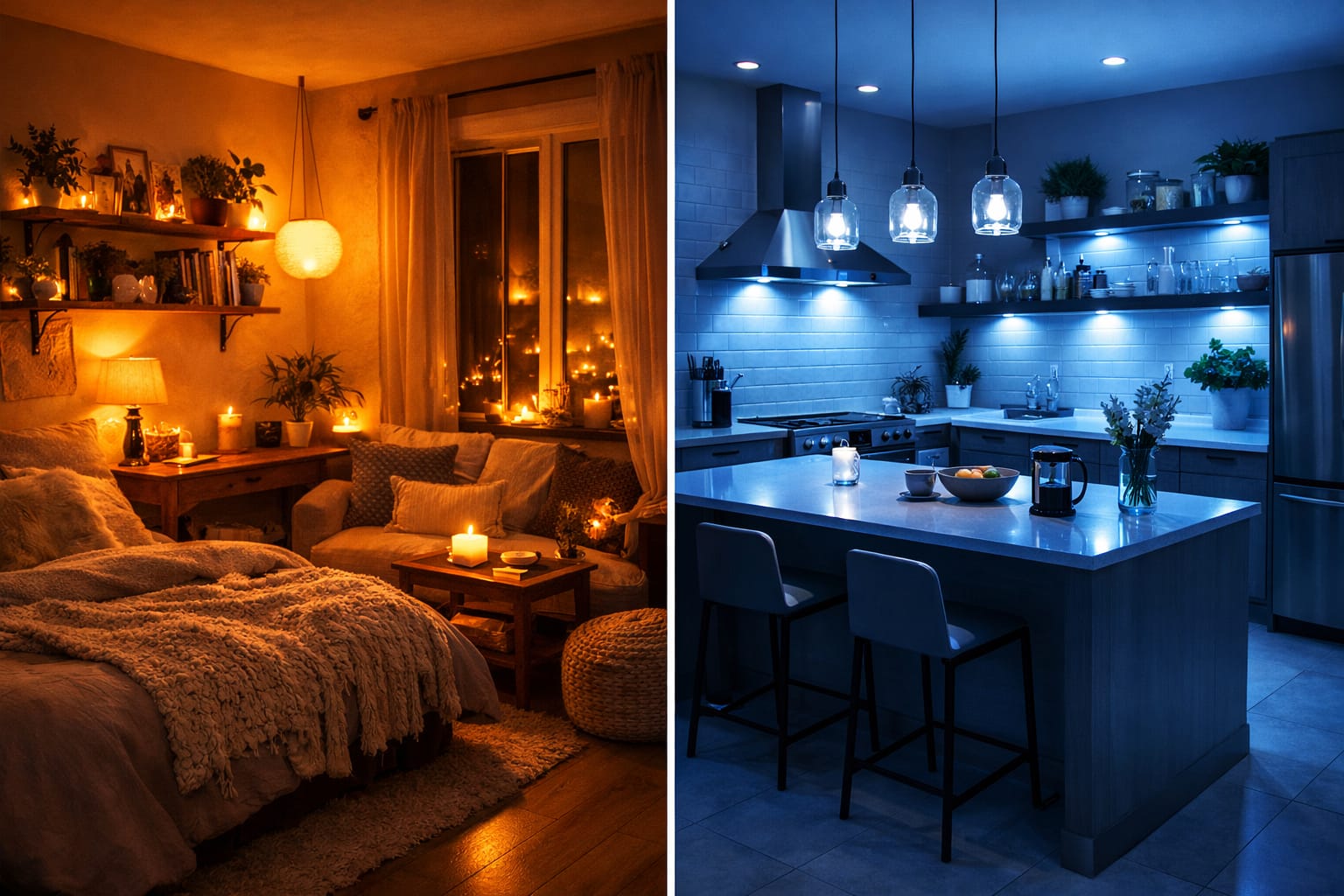
These room-by-room ranges are starting points, not hard rules. Finishes, wall color, natural light, and personal preference can shift what feels best once the bulbs are installed.
If you are choosing between two Kelvin ranges, test one bulb in the room at night before replacing everything. Evening use often reveals problems that are easy to miss during the day.
How to choose the right option without regretting it
The easiest way to choose well is to start with function first, then adjust for mood and decor. Ask yourself whether the room is mainly for relaxing, socializing, working, grooming, or seeing detail clearly. That answer should guide the Kelvin range before you think about design trends.
It also helps to think about the room at night, not just in daylight. A bulb that looks fine during the day can feel very different after sunset. This is why very cool bulbs often disappoint in bedrooms and living rooms. They may seem bright and fresh in the store, but once installed they can feel too stark for evening use.
You do not need every room to match exactly, but dramatic jumps between adjacent spaces can feel awkward. A smoother transition usually means staying within a nearby range rather than jumping from very warm light in one room to very cool light in the next. If glare is part of the problem in brighter spaces, our lighting glare reduction guide can help you fine-tune the setup.
Do not confuse brightness with color. A bulb can be bright and warm, or bright and cool. Brightness is measured in lumens, while color appearance is described by Kelvin. If you only look at Kelvin, you can still end up with a bulb that is too dim or too bright for the space. Our lumens vs watts guide is useful if you want to match brightness and color more accurately.
How warm and cool light affect sleep, mood, and productivity
Lighting does more than change how a room looks. It also changes how the room feels physically and mentally. Warm light tends to support a calmer atmosphere, especially in the evening, while cooler light usually feels more stimulating and alert.
Warmer light is usually the better choice later in the day because it feels softer and less activating. That does not mean every warm bulb automatically improves sleep, but it generally fits better with how people want bedrooms, reading lamps, and wind-down spaces to feel at night.
Cool white light often works better where you need concentration, detail visibility, and a cleaner sense of contrast. That is why many people prefer more neutral or cooler ranges for desks, makeup mirrors, kitchens, utility rooms, and workshops.
Warm light tends to make spaces feel more inviting and intimate. Cooler light tends to feel more energetic and functional. Neither is wrong, but the emotional effect should match the purpose of the room. That is the real key to choosing well.
Common color temperature mistakes to avoid
Most lighting mistakes happen because people buy bulbs too quickly, assume every room should use the same tone, or focus only on brightness. Avoiding a few common errors can save money and make your home feel much more intentional.
One of the most common problems is choosing bulbs that are too cool for relaxing rooms. A very cool bulb may look clean on the package but feel harsh in a bedroom or living room once the sun goes down. Another common mistake is mixing very different Kelvin values in the same room. Slight variation is fine, but large differences can make the space feel messy and uncomfortable.
People also forget that wall color, flooring, countertops, and furniture change how a bulb feels once it is installed. Warm bulbs can enrich warm-toned decor, while cooler bulbs can sharpen whites, grays, and modern finishes. That is one reason the same bulb can feel great in one room and wrong in another.
Buying without testing your own preferences can also lead to regret. Some people love 3000K everywhere. Others prefer cooler bathrooms and kitchens. Personal preference matters more than rigid rules, so it is smart to test one bulb in a room before replacing everything at once.
Key Takeaways
Color temperature is about how light looks, not how bright it is. In most homes, warmer Kelvin ranges feel better in relaxing spaces, while cooler ranges work better where clarity, focus, and detail matter most.
A good starting point is 2700K to 3000K for bedrooms and living rooms, 3000K to 4000K for kitchens and bathrooms, and 3500K to 5000K for offices or other task-heavy areas. Always think about how the room feels at night, not just how the bulb looks in daylight or on the box.
The best choice is the one that fits the room, your routine, and your personal preference once the lights are actually on. When you treat Kelvin as part of the room design instead of a random spec, lighting decisions become much easier.
Sharing this guide
If this guide helped you choose a better Kelvin range for your home, save it for later or share it with someone planning a lighting upgrade.
Facebook | X (Twitter) | WhatsApp | LinkedIn
For more foundational guides on bulb specs, room lighting decisions, and LED basics, visit our LED Knowledge Center.
Interested in learning more? Browse all related articles in our category section.
Pingback: Best LED Bulbs Guide: Easy Tips for Smart Savings
Pingback: Beginner Guide to Lighting Design: Perfect Basics
Pingback: Warm Light vs Cool Light: Perfect Choice Explained
Pingback: Best LED Bulbs for Desk Lamps (Eye-Friendly) - NeoLEDHub
Pingback: Best LED Bulbs for Bedrooms: Ultimate Guide 2026
Pingback: Best LED Bulbs for Living Rooms: Smart Guide 2026
Pingback: Best LED Bulbs for Ceiling Fans: Expert Guide - NeoLEDHub
Pingback: SMD LED Strip Lights: Complete Guide & Benefits - NeoLEDHub
Pingback: Voice Controlled Lighting: Setup Guide - NeoLEDHub
Pingback: Best LED Bulbs for Dining Rooms (Warm & Cozy) - NeoLEDHub
Pingback: LED Car Lighting Upgrades: Essential Types Revealed
Pingback: LED Headlights vs HID: Ultimate Comparison Guide
Pingback: LED Car Lights Legal? Complete 2026 Country Guide
Pingback: LED Lighting Buying Guide for Beginners - NeoLEDHub
Pingback: Are LED Bulbs Safe for Eyes? Facts Revealed - NeoLEDHub
Pingback: Best Soft White LED Bulbs (Warm Lighting) - NeoLEDHub
Pingback: LED Bulbs vs Halogen: Which Is Better? - NeoLEDHub
Pingback: Best LED Bulbs for Bedrooms (Top Picks) - NeoLEDHub
Pingback: What Are LED Bulbs? Beginner Guide - NeoLEDHub
Pingback: Best LED Bulbs for Living Rooms You Can Buy - NeoLEDHub
Pingback: Best LED Bulbs for Ceiling Fans - NeoLEDHub
Pingback: Best LED Bulbs for Desk Lamps for Eye Comfort - NeoLEDHub
Pingback: Best LED Bulbs for Dining Rooms (Warm & Cozy) - NeoLEDHub
Pingback: Best LED Lights for Bathrooms: Vanity, Ceiling & Shower Picks - NeoLEDHub
Pingback: Why Are My LED Lights Too Bright? Causes and Easy Fixes - NeoLEDHub
Pingback: MacAdam Ellipses: LED Color Impact - NeoLEDHub
Pingback: Reading LED Packaging: What Labels Mean Before You Buy - NeoLEDHub
Pingback: Lighting for Windowless Rooms: How to Make Them Feel Bright - NeoLEDHub
Pingback: Voice Controlled Lighting: Setup Guide - NeoLEDHub
Pingback: Best LED Bulbs for Bathroom (Bright & Fog Free) - NeoLEDHub
Pingback: Lighting for High Ceilings: Best Fixtures, Placement & Ideas - NeoLEDHub
Pingback: SMD LED Strip Lights: Complete Guide & Benefits - NeoLEDHub
Pingback: Best LED Car Lighting Upgrades: What’s Worth Buying?
Pingback: LED Headlights vs HID: Ultimate Comparison Guide
Pingback: Are LED Car Lights Legal? What Drivers Need to Know
Pingback: Light Bulb Comparison: Brightness, Cost, Lifespan & Color
Pingback: Best LED Lights for Kitchen: Smart Picks for Better Lighting
Pingback: Lighting for Narrow Hallways: Smart Ways to Open the Space
Pingback: Warm Light vs Cool Light: Best Kelvin for Every Room
Pingback: LED Phosphor Technology Explained: Why White LEDs Glow
Pingback: Are LED Bulbs Safe for Eyes? The Truth - NeoLEDHub
Pingback: Best Soft White LED Bulbs (Warm Lighting) - NeoLEDHub