Are Premium LED Bulbs Worth It? Cheap vs Premium LED Bulbs
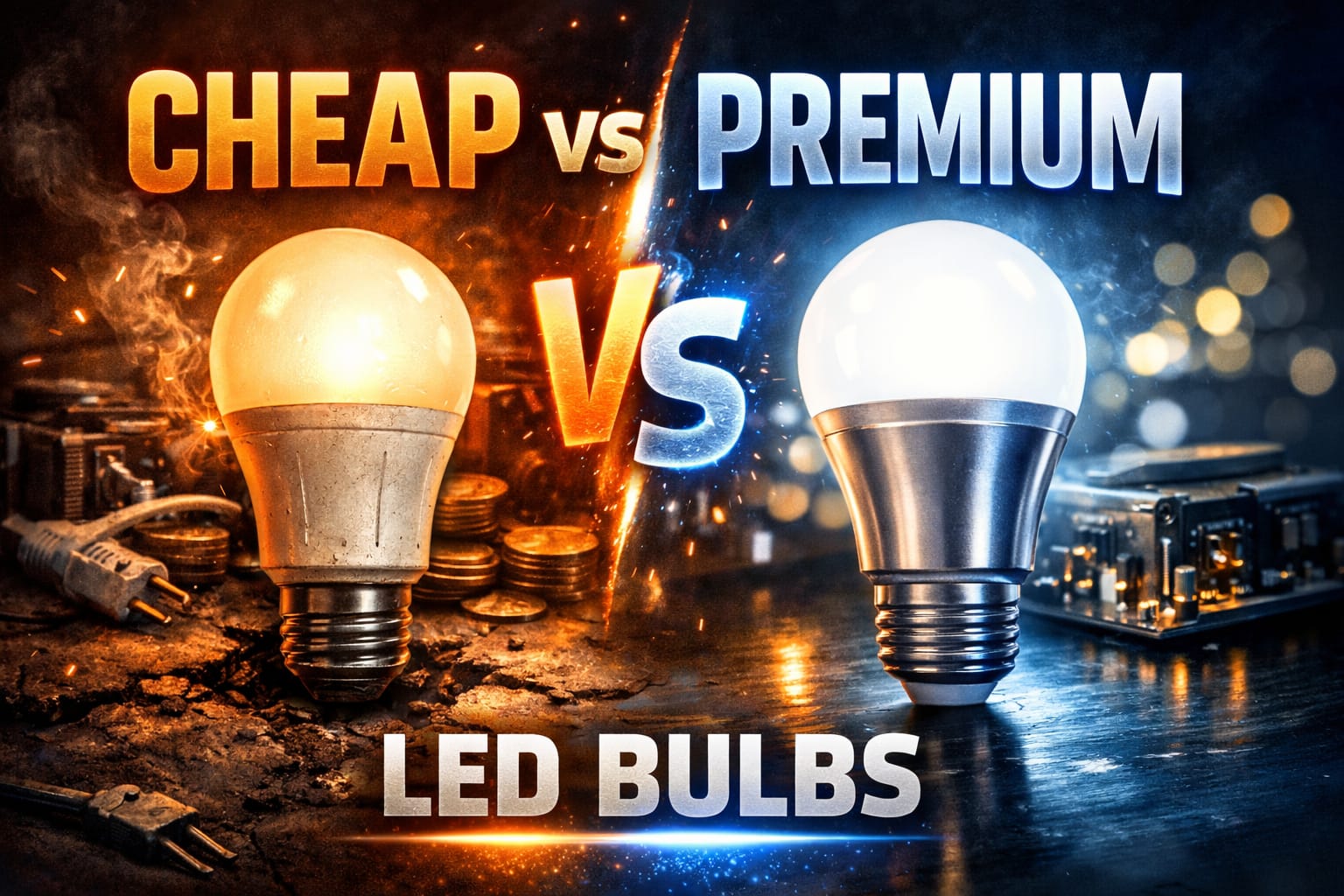
Premium LED bulbs are usually worth it for rooms you use every day, dimmable fixtures, kitchens, bathrooms, workspaces, enclosed fixtures, and places where flicker or color accuracy matters. Cheap LED bulbs are fine for closets, garages, storage rooms, temporary setups, and low-use fixtures. The real difference is not just price: it is driver quality, heat control, CRI, flicker, warranty, and how quickly the bulb loses brightness over time.
Quick Answer
Premium LED bulbs are worth the extra cost when the fixture is used often, when you want smoother dimming, when accurate color matters, or when replacing the bulb would be inconvenient. Budget LED lights can still be a smart choice when the bulb is used rarely and basic brightness is enough.
- Choose premium for daily-use rooms, dimmers, enclosed fixtures, kitchens, bathrooms, offices, and reading areas.
- Choose budget bulbs for closets, garages, storage rooms, seasonal lighting, and low-use spaces.
- Premium bulbs usually offer better CRI, lower flicker, stronger heat control, and more consistent brightness.
- The best value is often a mix: premium bulbs where performance matters, cheap bulbs where it does not.
If you are new to LED lighting, this beginner’s guide to LED bulbs explains how LED bulbs work and why quality can affect brightness, efficiency, lifespan, and everyday comfort.
Table of Contents:
- Quick Answer
- Why Premium LED Bulbs Cost More
- Cheap vs Premium LED Bulb Quality
- Brightness, Flicker, and Eye Comfort
- Color Accuracy and CRI
- Heat, Drivers, and Lifespan
- Cheap vs Premium LED Bulbs for Dimmers
- Cost per Hour and Long-Term Value
- When to Buy Cheap vs Premium LED Bulbs
- FAQ
- Key Takeaways
- Sharing This Guide
Why Premium LED Bulbs Cost More
The price gap between cheap and premium LED bulbs usually comes from materials, testing, driver design, heat management, quality control, warranty support, and consistency from bulb to bulb. Budget LED lights often keep costs down with simpler electronics, lighter housings, lower-cost components, and wider manufacturing tolerances. That can be acceptable in low-use fixtures, but it may become noticeable in rooms where the lights stay on for hours every day.
Premium LED bulbs are not automatically better in every situation, but they are more likely to deliver stable brightness, smoother dimming, better color accuracy, lower flicker, and a more dependable rated lifespan. If a cheap bulb fails early, buzzes on a dimmer, changes color over time, or looks different from the other bulbs in the same room, the lower upfront price can quickly become less attractive.
To better understand how LEDs compare with older lighting technologies, see this LED bulbs vs incandescent bulbs comparison.
Cheap vs Premium LED Bulb Quality
The quality of an LED bulb starts with the physical construction and internal components. Premium bulbs usually use stronger housings, better heat sinks, sturdier bases, more consistent LED chips, and more carefully designed electronics. Cheap bulbs may still work well at first, but they are more likely to show variation in brightness, color temperature, startup behavior, and long-term reliability.
Housing quality matters because heat, vibration, and age can weaken cheaper materials. Plastic housings in budget LED lights may yellow or become brittle after long exposure to heat. Premium housings are more likely to resist discoloration and protect the electronics for a longer portion of the bulb’s rated lifespan. This is especially important in enclosed fixtures, recessed cans, high ceilings, outdoor-rated applications, and rooms where the lights stay on for long periods.
Another difference is consistency. If you install several cheap bulbs in the same fixture or room, small variations in color temperature and brightness can make the lighting look uneven. Premium bulbs are usually manufactured with tighter tolerances, which helps the room look more balanced and professional.
Brightness, Flicker, and Eye Comfort
One of the clearest differences between cheap and premium LED bulbs is how well they maintain brightness over time. All LEDs lose some output as they age, but the rate depends on chip quality, driver design, heat control, and overall construction. Premium bulbs usually retain brightness more consistently, while budget options may dim sooner or vary more from one bulb to another.
Flicker is another major comfort issue. Some flicker is visible, but some is subtle enough that you may only notice the effects after reading, working at a computer, or spending a long time under the light. Poorly designed drivers can produce unstable light output, which may contribute to eye strain, headaches, visual fatigue, or general discomfort for sensitive users.
If you are choosing bulbs for a desk, home office, or screen-heavy setup, this guide to the best LED lights for home offices explains how to balance brightness, glare, color temperature, and visual comfort for work-focused spaces.
Premium models are more likely to use better driver circuitry that keeps light output steady. If you are upgrading a reading lamp, home office, bedroom lamp, or screen-heavy workspace, flicker-free LED bulbs for eye comfort are a more practical upgrade than simply buying the cheapest pack available.
Color Accuracy and CRI
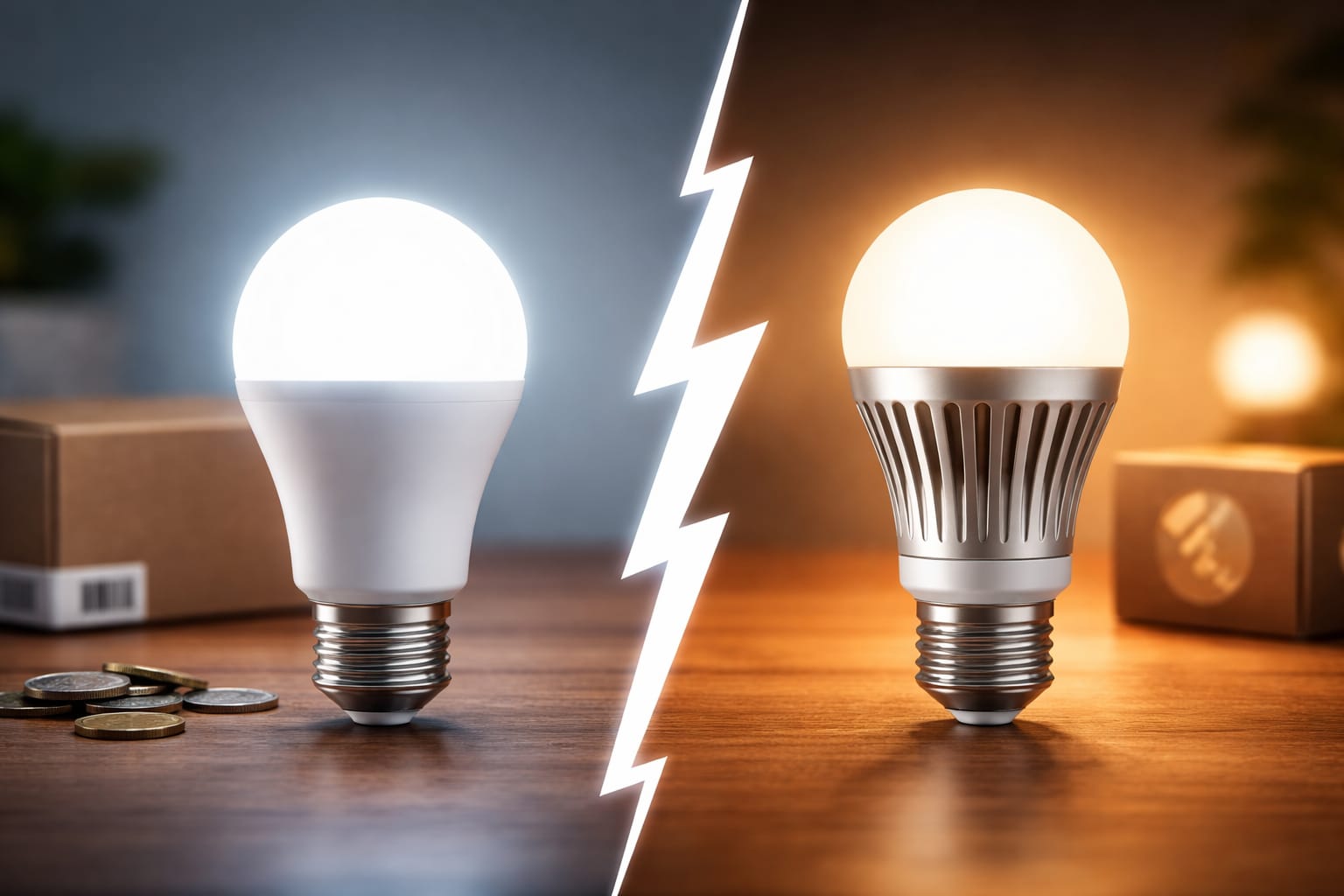
Color Rendering Index, or CRI, measures how accurately artificial light shows colors compared with natural light. This is one of the biggest practical differences between cheap and premium LED bulbs. A low-quality bulb may look bright enough, but it can make skin tones, paint colors, food, fabrics, and décor look dull, flat, or slightly unnatural.
Budget LED lights can be acceptable in hallways, garages, closets, and utility spaces where color accuracy does not matter much. Premium LED bulbs are a better fit for kitchens, bathrooms, vanity areas, dining rooms, offices, creative spaces, and decorative fixtures where the appearance of the room matters. If color accuracy is one of your main reasons for upgrading, high-CRI LED bulbs for more natural color are usually a better match than basic budget bulbs.
Color temperature consistency also matters. Two bulbs labeled “warm white” can still look slightly different if manufacturing tolerances are loose. In multi-bulb fixtures, ceiling lights, bathroom vanities, and open-plan rooms, premium bulbs make it easier to keep the lighting uniform instead of patchy or mismatched.
Heat, Drivers, and Lifespan
Heat is one of the main things that shortens the life of an LED bulb. Better thermal management protects the LED chips, driver, housing, and internal connections. This is why premium bulbs often perform better in enclosed fixtures, recessed cans, outdoor-rated housings, and spaces where the lights stay on for several hours at a time.
The driver is the electronic circuit that converts household power into the current used by the LED chips. Inexpensive drivers often use simpler designs and fewer protective components. That can lead to flicker, buzzing, early failure, unstable brightness, or more sensitivity to voltage changes. Premium drivers are more likely to regulate power smoothly and reduce stress on the bulb over time.
Poorly designed drivers can also create electromagnetic interference that affects radios, audio equipment, or nearby electronics. This is not usually the first thing people check when buying a bulb, but it can become frustrating if the fixture is close to speakers, radios, desks, or entertainment areas.
If you only want to upgrade a few bulbs at first, start with enclosed fixtures, recessed lights, high-use rooms, and hard-to-reach fixtures. That is where premium bulbs usually make the biggest difference.
According to the U.S. Department of Energy, good thermal management is important for LED performance because excess heat can affect light output and lifespan.
Rated lifespan figures on packaging are based on controlled testing, not always on the exact conditions inside your home. Independent programs like ENERGY STAR can help consumers identify lighting products that meet verified performance standards.
Cheap vs Premium LED Bulbs for Dimmers
Dimming is one of the fastest ways to expose LED bulb quality. A cheap bulb may work fine at full brightness but flicker, buzz, shimmer, or shut off too early when dimmed. Premium LED bulbs are more likely to work smoothly across a wider dimming range because they usually have better drivers and broader compatibility testing.
This matters most in bedrooms, dining rooms, living rooms, media rooms, and spaces where you frequently adjust brightness. It also matters in older homes with legacy dimmers originally designed for incandescent bulbs. Because LEDs use much less power, some dimmers may need a minimum electrical load to function properly. Lower-quality bulbs are more likely to behave unpredictably in those setups.
Cheap bulbs are not always compatible with dimmers. If they flicker or buzz, the lower upfront price can disappear quickly if you also need to replace the dimmer switch.
If the main problem is that your bulbs flicker, buzz, shut off early, or refuse to dim smoothly, this troubleshooting guide on LED bulbs not dimming properly explains the most common causes and fixes.
If visual comfort is your main concern, this guide on whether LED bulbs are safe for eyes explains how flicker, brightness, color temperature, and exposure time can affect everyday comfort.
Cost per Hour and Long-Term Value
The best way to compare cheap vs expensive LED bulbs is not only the purchase price. The better question is how much useful light you get over time. A budget bulb that costs less upfront but fails sooner, dims faster, flickers on a dimmer, or needs replacement more often can end up being worse value than a premium bulb used in the right place.
Electricity use also matters, especially when several bulbs run for hours every day. Premium bulbs are often more efficient because they convert electricity into usable light more effectively and waste less energy as heat. In a single low-use closet, the savings may be small. In kitchens, living rooms, offices, exterior fixtures, or commercial spaces, the difference can add up over time.
Replacement hassle is part of the real cost too. In hard-to-reach fixtures, high ceilings, outdoor security lights, rental properties, and commercial spaces, changing failed bulbs takes time and sometimes equipment. In those cases, paying more upfront for a longer-lasting bulb can be the more practical decision.
For a deeper look at running costs, this guide compares LED vs incandescent electricity cost and explains why efficient lighting usually wins over time.
When to Buy Cheap vs Premium LED Bulbs
The right choice depends on where the bulb will be used, how long it will stay on, and how much the quality of light matters in that space. In many homes, the smartest setup is not “all cheap” or “all premium,” but a practical mix based on usage.
Choose premium LED bulbs for:
- Living rooms, kitchens, bathrooms, bedrooms, offices, and reading areas.
- Dimmable fixtures where flicker, buzzing, or poor low-level dimming would be annoying.
- Enclosed fixtures, recessed lights, outdoor-rated fixtures, and hard-to-reach installations.
- Rooms where color accuracy matters, such as vanity areas, dining rooms, workspaces, and decorative fixtures.
- Fixtures used for several hours every day, where lifespan and efficiency matter more.
Choose budget LED bulbs for:
- Closets, garages, storage rooms, laundry rooms, and utility spaces.
- Temporary setups, seasonal lighting, rental situations, or low-use fixtures.
- Areas where basic brightness is enough and small differences in color or dimming quality do not matter.
- Situations where upfront cost is the main priority and replacement is easy.
What Should You Choose?
Choose premium bulbs for rooms you use every day and budget bulbs for spaces where light quality, dimming, and long-term performance matter less.
- If you use dimmers, choose premium.
- If color accuracy matters, choose premium.
- If the fixture is enclosed or hard to reach, choose premium.
- If the room is rarely used, budget bulbs may be enough.
- If upfront cost is the most important factor, budget bulbs can be the better choice.
For daily-use rooms with several fixtures, starting with reliable LED bulb multipacks for daily-use fixtures can make the room look more consistent than mixing random low-cost bulbs over time.
For more LED performance, efficiency, and buying guidance, visit the LED Knowledge Center.
FAQ
Are premium LED bulbs worth it?
Yes, premium LED bulbs are usually worth it in rooms used every day, dimmable fixtures, enclosed fixtures, workspaces, kitchens, bathrooms, and places where flicker, brightness consistency, or color accuracy matters. They are less necessary in low-use spaces where basic light is enough.
Do expensive LED bulbs last longer?
They often do, but the difference depends on heat control, driver quality, fixture type, usage hours, and operating conditions. A premium bulb used in a suitable fixture is more likely to maintain brightness and reliability over time than a very cheap bulb used under heat stress.
When are cheap LED bulbs good enough?
Cheap LED bulbs are usually good enough for closets, garages, storage rooms, temporary fixtures, seasonal lighting, and areas where the bulb is used rarely. They make less sense in spaces where poor dimming, flicker, color mismatch, or early failure would be noticeable.
What should I check before buying LED bulbs?
Check brightness in lumens, color temperature, CRI, dimmer compatibility, fixture rating, enclosed-fixture compatibility, warranty, energy use, and whether the bulb is designed for the room where you plan to use it.
Key Takeaways
Premium LED bulbs are usually worth it when the bulb is used often, when light quality matters, when the fixture is dimmable, enclosed, hard to reach, or exposed to heat, and when you want better color accuracy, lower flicker, and more consistent brightness over time.
Cheap LED bulbs can still be a practical choice for garages, closets, storage rooms, temporary fixtures, and other low-use spaces where runtime is limited and small differences in CRI, dimming, housing quality, or long-term brightness are less important.
For most homes, the best value is a mixed approach: use premium bulbs in daily-use rooms and problem fixtures, then use budget bulbs where simple, occasional light is enough.
Sharing This Guide
If you found this guide helpful, save it for later or share it with someone comparing cheap vs premium LED bulbs. It is especially useful for beginners, homeowners, renters, and DIY users who want better lighting without overspending.
Share using the links below.
Interested in learning more? Browse all related articles in our category section.