LED Basics: Guides, Terms, Types & How It Works
LED lighting looks straightforward at first, but the basics shape almost every good decision that comes later. Once you understand how LEDs work, what the key terms mean, and how common product types differ, it becomes much easier to choose the right lights and avoid beginner mistakes.
This category brings together beginner-friendly guides on LED technology, essential terminology, bulb formats, and the core concepts behind real-world performance. Whether you are starting from scratch or want a clearer foundation before buying or upgrading, this page helps you find the right guide quickly.
Start Here
Use this page as your entry point to LED basics. If you want to browse the full archive first, you can go straight to the LED basics category section.
Table of Contents
Why LED Basics Matter
LED basics matter because better lighting choices start with better understanding. Many people compare brightness, price, or style first, but it is often more useful to learn what LEDs actually are, how they produce light, and why they behave differently from incandescent, halogen, or fluorescent products.
That foundation makes packaging easier to read and helps common terms like lumens, color temperature, CRI, chip type, and dimming compatibility feel much less confusing. This category is designed to make those fundamentals easier to learn without pushing you into overly technical explanations too early.
What you will find in this category
- Beginner-friendly explanations of how LED lighting works
- Guides to useful LED terms and everyday specifications
- Core articles on chip types, phosphor, and optical design
- Help understanding bulb formats, light quality, and product basics
- Clear starting points before moving into buying guides or more advanced topics
Start With the Foundations
If you are completely new to LEDs, start with the broadest guides first. The most helpful beginner questions are usually what LED bulbs are, how LED lighting works, and why LED systems are so much more efficient than older lighting technologies. Those answers create the base for everything else in this category.
These articles are the best places to start before you move into more technical concepts or product-specific choices.
How LED Technology Works
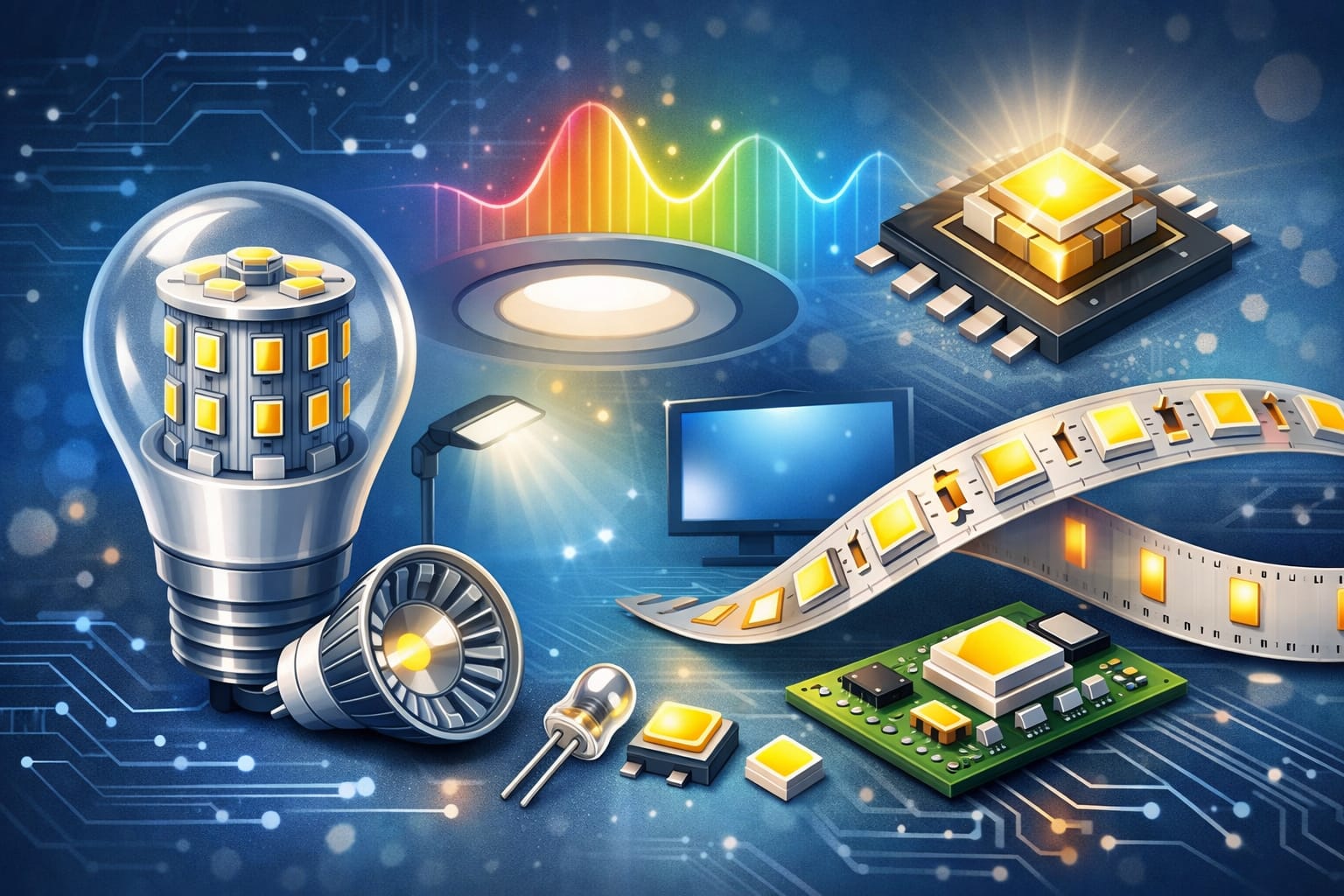
Once the foundations are clear, the next step is understanding the parts of LED technology that influence performance. That includes how semiconductor chips produce light, how phosphor creates white light, and how chip designs or optical systems affect efficiency, beam control, and overall appearance.
This section is especially useful if you want to understand why two LED products can look similar on the shelf but perform very differently in real use.
A simple way to use this category
- Start with the foundation guides if you are new to LED lighting
- Move to the technology articles when you want a deeper understanding of performance
- Use the term and concept guides when packaging or specs feel confusing
- Jump to product-format articles when you are ready to compare real options
Key Terms and Core Concepts
Many beginners get stuck because LED terminology can sound technical before it becomes familiar. Terms like lumens, watts, Kelvin, CRI, binning, and beam control can feel abstract at first, but they are much easier to understand once you connect them to real lighting results. This part of the category helps translate packaging language into something practical.
These guides are especially useful if you already know the basics and want to read specs with more confidence.
- LED lighting terms
- Lumens vs watts guide
- Color temperature explained
- LED binning explained
- MacAdam ellipses
Types and Product Formats
LED basics also include knowing that LED lighting comes in more than one familiar bulb shape. Bulb base types, strip lights, integrated fixtures, and specialty products all have different strengths, which is why understanding product format is often just as useful as understanding the technology behind it.
These guides help connect core LED concepts to the products people actually buy and install.
- LED bulb base types
- Light bulb comparison guide
- How LED strip lights work
- LED strip lights beginner guide
Where to Go Next
Once you understand the basics, the next step depends on what you want to do with that knowledge. Some readers move into buying guides, some into lighting design and room planning, and others into troubleshooting or energy-saving questions. This category works best as the foundation before those more specific paths.
These are useful next steps depending on where you want to go after learning the fundamentals.
- LED lighting buying guide
- LED troubleshooting guides
- Energy-efficient lighting
- Lighting guides and practical LED tips
Why This Category Is Useful
A strong LED basics hub should move you from confusion to clarity without expecting one article to explain the entire topic at once. That is exactly what this hub is built to do. It gives you a clear place to begin and then points you toward the right guide depending on whether you need foundations, terminology, technology, or product-format explanations.
It also makes the educational side of the site easier to navigate. Instead of treating every beginner article as a separate stop, this category creates a more useful learning path through the subject.
Key Takeaways
LED basics are easiest to learn in layers. Start with what LEDs are and how they work, then build on that with the terms, product formats, and performance concepts that explain why some lights behave differently from others.
Use this category as a practical starting point instead of trying to learn everything at once. Begin with the foundation guides, then follow the section that matches what you need next, whether that means understanding specs, comparing formats, or preparing for a purchase.
Once the basics feel clear, the rest of LED lighting becomes much easier to navigate. From here, you can move into buying guides, troubleshooting, energy-saving advice, or room-by-room lighting decisions with a stronger understanding of the technology behind them.
Sharing this guide
If you found this category guide helpful, save it for later or share it with someone who wants a clearer introduction to LED lighting.
Use the links below: