Best Flicker-Free Dimmable LED Bulbs for Smooth Light
The best flicker-free dimmable LED bulbs are the ones that stay steady at low brightness, work well with your dimmer or app, and avoid the buzzing, pulsing, or uneven steps that make a room feel harsh. If your current bulbs shimmer when dimmed, the problem is usually bulb quality, dimmer compatibility, or both.
A good dimmable LED bulb should do more than get darker. It should maintain comfortable light, preserve natural color, and give you smooth control from bright task lighting to a soft evening glow. This guide explains what to look for, which bulb styles fit different rooms, and how to avoid common dimmer-switch problems before you buy.
Quick Answer
Choose flicker-free dimmable LED bulbs that specifically mention smooth dimming, low-end stability, and LED dimmer compatibility. For many homes, app-based control can be easier than relying on an older wall dimmer, especially in bedrooms and living rooms.
- For old wall dimmers: check dimmer compatibility first.
- For bedrooms and living rooms: prioritize smooth low-end dimming.
- For visible fixtures: choose a good filament-style bulb, not just the cheapest decorative option.
- For app control: a full-range smart bulb for smooth dimming can be a practical fit.
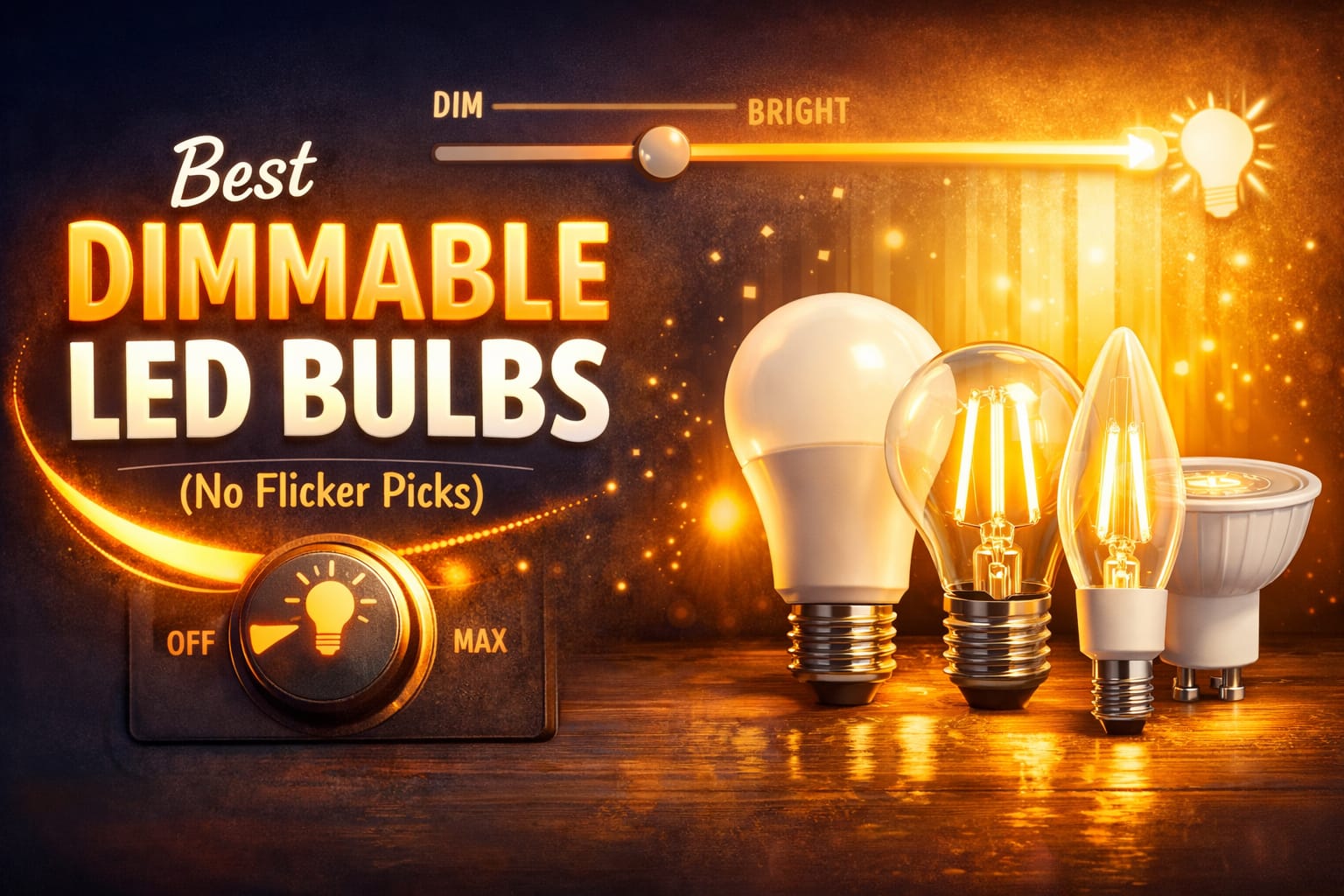
Table of Contents:
- Quick Answer
- Why Flicker-Free Dimming Matters at Home
- Best Flicker-Free Dimmable LED Bulbs for Everyday Use
- What to Check Before You Buy
- Common Mistakes That Cause Poor Results
- Best Rooms and Bulb Styles
- How to Set Up for Smoother Performance
- When Are Smart Bulbs Worth It?
- FAQ About Flicker-Free Dimmable LED Bulbs
- What Should You Choose?
- Key Takeaways
- Sharing This Guide
Why Flicker-Free Dimming Matters at Home
Anyone who has sat under a buzzing, flickering, or abruptly dimming lamp already knows the problem. Flicker-free dimmable LED bulbs provide more comfortable lighting because their light output stays stable as brightness changes. This matters most in spaces where you read, cook, relax, work, or spend long evenings under the same light.
If you need a quick refresher on how modern LED bulbs work, it helps explain why dimming quality differs so much from one product to another. Two bulbs can both say “dimmable” on the box, but one may stay steady while the other shimmers below 30% brightness.
What Causes Visible Pulsing?
Visible pulsing usually starts with a poor LED driver, a mismatched wall dimmer, or a bulb that was not designed for smooth control. Some bulbs look acceptable at full power but begin to shimmer when the output is lowered. That is why buyers often search for dimmable LED bulbs that don’t flicker instead of trusting every “dimmable” label.
Driver quality matters because LEDs respond quickly to changes in electrical current. Without good regulation, small fluctuations can become visible. Better flicker-free dimmable LED bulbs are designed to keep the lamp feeling steady rather than jumpy, especially in the evening when lower brightness reveals every weakness.
If flicker is your main problem and you are not sure whether dimming is the cause, this broader guide to flicker-free LED bulbs can help you compare what to look for before choosing a replacement.
Why Low-End Dimming Performance Matters
The bottom end of the dimming range is usually where weak bulbs fail. A bulb may look fine at 80%, then become patchy, unstable, or strangely tinted below 30%. Smooth-dimming LED bulbs are valuable because they keep the room usable when you want soft light, not just slightly reduced brightness.
For living rooms, bedrooms, dining spaces, and bedside lamps, low-end performance is often more important than maximum brightness. The goal is not just a bulb that gets very dim; it is a bulb that stays comfortable, stable, and natural at the brightness levels you actually use. If you want to understand why some dimming methods feel smoother than others, the guide to PWM vs analog dimming explains the difference in a practical way.
Best Flicker-Free Dimmable LED Bulbs for Everyday Use
For most homes, the best everyday option is a bulb that balances comfort, dimmer friendliness, color quality, and simple control. If your biggest problem is late-night eye strain or uneven brightness, do not choose only by wattage or price. Choose a bulb that is designed for stable output across the full dimming range.
A good everyday bulb proves itself during normal use: softer lighting for a movie, brighter lighting for cleaning, no distracting shimmer while reading, and no harsh jump when you lower the brightness. That reliability is what separates genuinely flicker-free dimmable LED bulbs from average bulbs that only perform well at full power.
Test dimming at night, not just during the day. Flicker, pulsing, harsh color shifts, and uneven low-end control are much easier to notice in real evening conditions.
Households that use a mix of table lamps, ceiling fixtures, and decorative shades should also pay attention to bulb shape and beam spread. Some products are marketed aggressively but still have weak low-end control. The best options usually combine stable electronics with strong real-world performance instead of relying on flashy packaging.
What to Check Before You Buy
The label “dimmable” alone does not guarantee smooth performance. Before choosing flicker-free dimmable LED bulbs, check brightness, bulb shape, beam spread, color temperature, dimmer compatibility, and intended room use. A bulb that works well in a pendant light may be too directional in a table lamp, and a cozy bedroom bulb may be too dim for food prep.
Start with lumen output. Many people replace an old bulb with a dimmable LED bulb that is simply the wrong brightness, then blame the dimming. Room-specific guides, such as these recommendations for bathroom bulbs, can help you match the bulb to the space before you focus on the dimmer itself.
Dimmer Compatibility Basics
Compatibility is where many setups fail. Older wall dimmers were designed for incandescent loads, not sensitive LED electronics. Even the best dimmable LED bulbs can perform poorly with the wrong wall control. This mismatch can cause jumping, buzzing, ghost glow, short dimming range, or visible pulsing at low brightness.
When shopping for dimmer-friendly LED bulbs, treat the bulb and dimmer as one system. Troubleshooting resources about LED bulbs not dimming properly are useful because they show how often the wall dimmer, rather than the bulb alone, causes poor results.
Color Temperature and Color Quality
Even if a bulb dims smoothly, it can still feel wrong if the color is too cold, too yellow, or dull. Warm white is usually best for bedrooms and living spaces, while neutral white works better in offices, kitchens, and task areas. The best flicker-free dimmable LED bulbs should keep color reasonably consistent as brightness changes.
This is where CRI becomes practical rather than technical. Higher color quality helps skin tones, wood finishes, food, and fabrics look more natural, especially at lower brightness levels. If you care about atmosphere as much as efficiency, look for stable dimming and a balanced tone, not just low wattage.
Common Mistakes That Cause Poor Results
One of the biggest mistakes is assuming that every dimmable bulb behaves the same in every fixture. Enclosed fittings, decorative shades, old dimmers, and mixed bulb batches can all affect performance. People often buy a flicker-free dimmable bulb for one lamp, like the result, and then wonder why the same bulb looks different somewhere else.
Another common issue is using smart bulbs with wall dimmers that are meant to stay at full power. In many smart setups, the app handles dimming and scenes better than the physical switch. Ignoring this can lead to glare, uneven brightness, unreliable startup behavior, or a premium bulb that feels worse than it should.
Do not assume that a “dimmable” bulb will compensate for a poor wall dimmer. Bad compatibility can ruin performance even when the bulb itself is a better-quality option.
People also chase the lowest possible price, then complain about mediocre light quality. Better engineering costs more because you are paying for a better driver, better testing, and a dimming curve that feels intentionally tuned rather than random. If flicker has already bothered you, this is usually not the category where the cheapest option is the safest choice.
Best Rooms and Bulb Styles
Different rooms need different things from a bulb, which is why room matching matters more than hype. Bedrooms usually need warm output and a deep, usable dimming range. Dining spaces often need a more decorative appearance. Desk lamps need stable light that stays comfortable during longer tasks.
For work surfaces and smaller task lamps, the ideal bulb often overlaps with what people look for in desk lamps. A compact bulb with stable output is often better than a decorative bulb that looks great online but performs poorly when you sit under it for hours.
A19 vs. Filament Shapes
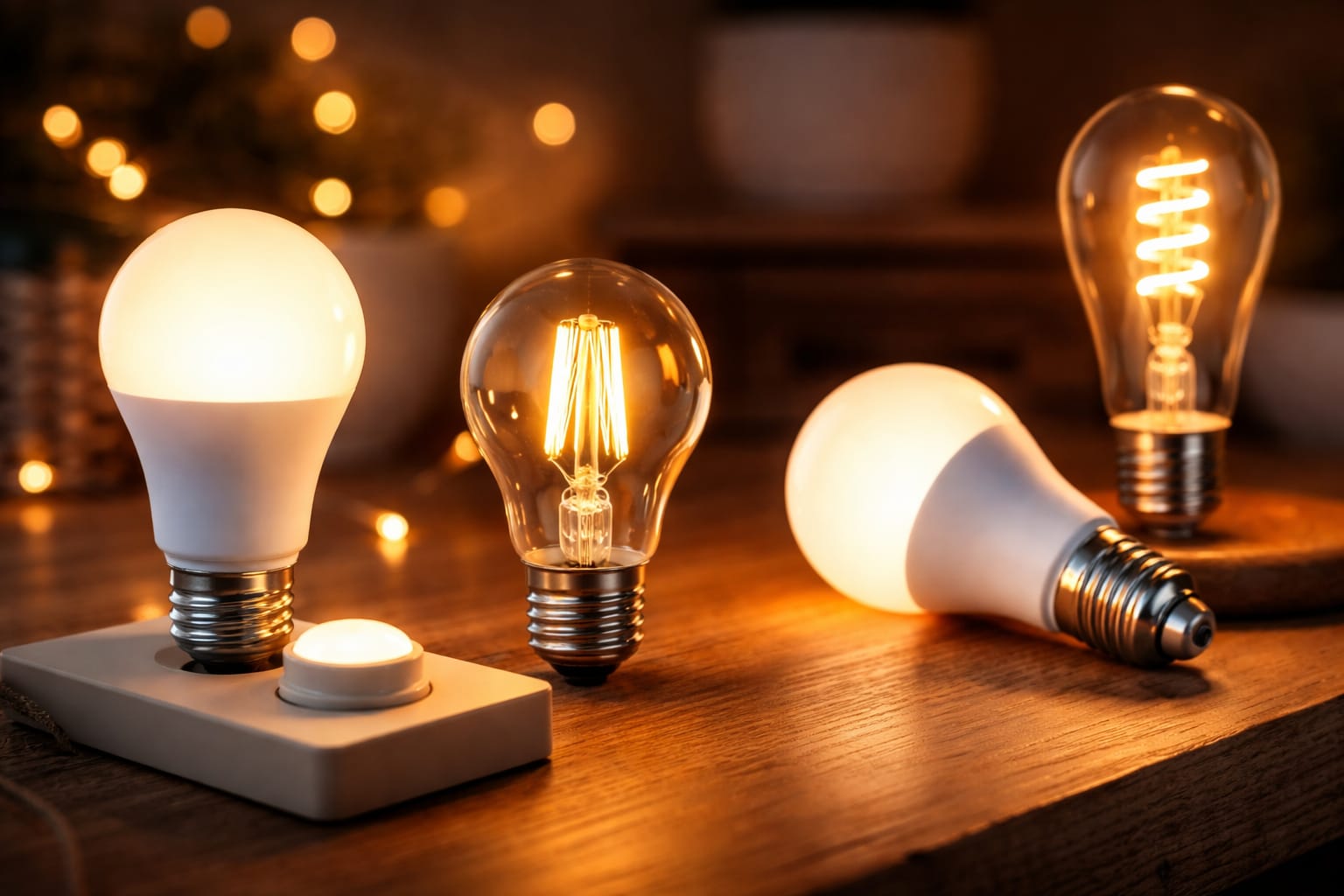
A19 bulbs are the safest all-around choice because they usually deliver balanced light for lamps, ceiling fixtures, and general household use. Filament-style LEDs are often chosen for exposed pendants, sconces, and dining fixtures where appearance matters as much as performance.
If flicker is your main concern in an exposed fixture, choose a bulb with a proven dimming record rather than the cheapest vintage look. For pendants, visible lamps, and dining spaces, a warm decorative dimmable filament bulb can fit naturally because it solves the style problem without ignoring comfort.
Warm vs. Neutral Light Levels
A warm light around 2700K is usually the most flattering for evening spaces because it feels softer as brightness decreases. Neutral light from around 3000K to 4000K is better suited for spaces where clarity is important. The best dimmable LED bulbs preserve the intended mood instead of shifting strangely as brightness changes.
Many smooth-dimming LED bulbs are especially useful because they keep a room comfortable across the full brightness range. You can create a softer evening scene without making countertops, books, or faces look dull. This balance is what turns an ordinary room into a pleasant one.
How to Set Up for Smoother Performance
Even the best flicker-free dimmable LED bulbs need a sensible setup to perform well. First, check the dimmer type, fixture rating, and whether the bulb is being used in an enclosed fitting. Then test the full dimming range slowly instead of judging performance after one quick twist of the knob.
It also helps to set realistic expectations for minimum brightness. Some homeowners expect near-candle levels from every bulb and dimmer pairing, but not every setup can go that low cleanly. A stable, usable low setting is better than an ultra-low setting that flickers, buzzes, or jumps.
If your lights already flicker or pulse, diagnose the setup before replacing every bulb in the house. This broader guide to LED lights flickering can help separate bulb problems, dimmer issues, loose connections, and fixture-related causes.
For broader context on performance, efficiency, and quality claims, the U.S. Department of Energy’s LED lighting efficiency guidance is useful because it explains how LED design affects long-term results beyond simple wattage comparisons.
When Are Smart Bulbs Worth It?
Smart bulbs are worth considering if you want scenes, schedules, voice control, color changes, or smoother app-based brightness control without depending on an old wall dimmer. In many homes, smart bulbs can feel like the easiest dimmer-friendly LED bulbs because the app manages brightness more consistently than an aging switch.
If you are not sure whether to choose app-controlled bulbs or upgrade the switch itself, this comparison of smart bulbs vs smart switches can help you avoid buying the wrong control setup for the room.
Smart bulbs are also useful in shared spaces where different people want different lighting levels. Morning cleaning, late-night unwinding, and casual entertaining do not need the same brightness. A multi-room smart dimming bulb pack can be a sensible fit when you want consistent control across several fixtures instead of testing one random bulb at a time.
Before buying, check whether your existing switch should stay on permanently, whether the bulb supports your preferred ecosystem, and whether the app allows grouped scenes. Some bulbs that look good on paper can still disappoint if the control method is annoying, unreliable, or too slow for daily use.
The LED Knowledge Center is worth exploring if you want to understand LED basics, lighting guides, and energy-saving choices beyond this one product category. Flicker-free dimmable LED bulbs are easier to choose when you think about the full system instead of only the marketing claim.
Independent standards can also help cut through vague packaging language. The ENERGY STAR guide to LED lighting basics explains quality, efficiency, and what buyers should expect from modern household bulbs.
FAQ About Flicker-Free Dimmable LED Bulbs
Do flicker-free dimmable LED bulbs work with any dimmer switch?
No. A flicker-free bulb can still perform badly with an incompatible dimmer. Check the bulb’s compatibility notes and consider an LED-rated dimmer if your current switch causes buzzing, jumping, or unstable low-end brightness.
Are smart bulbs better than dimmable bulbs for flicker?
Smart bulbs can be better if your wall dimmer is the problem because brightness is controlled through the app instead of the switch. However, they still need reliable electronics, a stable connection, and the right setup to feel smooth in daily use.
What does smooth low-end dimming mean?
Smooth low-end dimming means the bulb stays stable when brightness is very low. Instead of jumping from bright to barely dim, the bulb fades gradually and remains comfortable at the levels people actually use for evening light.
Can a bulb be dimmable but still flicker?
Yes. “Dimmable” only means the bulb is designed to dim; it does not guarantee flicker-free performance with every switch or fixture. Driver quality, compatibility, fixture heat, and minimum load can all affect the result.
What Should You Choose?
Choose the bulb type that matches your room, dimmer, and preferred control method. The best option is not always the most expensive one; it is the one that stays stable at the brightness levels you use most.
- Choose smart bulbs if you want scenes, schedules, app control, and fewer wall-dimmer problems.
- Choose filament-style bulbs if the bulb is visible in a pendant, sconce, or dining fixture.
- Choose smooth-dimming LED bulbs if comfort at low brightness matters more than maximum brightness.
- Check dimmer compatibility first if you have older wall switches or existing flicker problems.
Key Takeaways
The best flicker-free dimmable LED bulbs provide stable light, smooth low-end control, and consistent color in the rooms you use every day.
Dimmer compatibility matters as much as bulb quality because an old or mismatched wall dimmer can cause flicker even with a better bulb.
For the best result, match the bulb to the room, fixture, control method, and brightness level you use most often instead of choosing by price alone.
Sharing This Guide
If you found this guide helpful, save it or share it with someone who still has buzzing, flickering, or harsh dimmable bulbs at home.
Interested in learning more? Browse all related articles in our category section.