Best LED Bulbs for Desk Lamps: Flicker-Free Picks
Need a desk lamp bulb that feels comfortable for reading, studying, home office work, or long screen sessions? For most desks, the best choice is a flicker-free LED bulb with 300–500 lumens, a neutral 3500K–4500K color temperature, and a frosted or dimmable design to reduce glare.
This guide helps you choose the right LED bulb for your desk lamp based on how you actually use it: reading, computer work, late-night study, detail tasks, or color-sensitive projects. If you are improving a full workspace rather than just one lamp, our guide to the best LED lights for home offices can help you plan the rest of the room lighting around your desk setup.
Quick Answer
For most desk lamps, choose a flicker-free LED bulb with 300–500 lumens, a 3500K–4500K color temperature, and a frosted finish to soften glare. If you work both day and night, a dimmable or tunable white bulb is usually the safer choice.
- 300–500 lumens for reading, writing, and general desk work
- 3500K–4500K for daily work, study, and home office setups
- CRI 80+ for everyday use, CRI 90+ for design or color-sensitive work
- Flicker-free, frosted, or dimmable bulbs help reduce visual discomfort
Table of Contents:
- Quick Answer
- Best Desk Lamp Bulb by Use Case
- How Many Lumens Should a Desk Lamp Bulb Have?
- Best Color Temperature for Desk Lamps
- Flicker-Free Light, Glare, and Eye Strain
- Bulb Shape, Fit, and Color Quality
- Dimming, Energy Use, and Compatibility
- Installation and Positioning Tips
- FAQ
- Key Takeaways
- Sharing This Guide
If you’re new to LED lighting, start with our beginner’s guide to LED bulbs to understand the basics before choosing the right option for your desk.
Best Desk Lamp Bulb by Use Case
The best LED bulbs for desk lamps depend on what you do at your desk most often. A bulb that feels great for evening reading may feel too warm for focused daytime work, while a very cool bulb can feel sharp and tiring at night. Instead of choosing only by wattage, match the bulb to your task, fixture, and daily routine.
Best quick setup: choose a frosted LED bulb around 4000K, with 300–500 lumens and clear flicker-free labeling from a reliable brand.
- Reading and writing: 300–500 lumens, neutral white, frosted finish
- Home office with a monitor: moderate brightness, low glare, stable output
- Late-night study: warm or dimmable light, not very cool bright white
- Design or drawing: higher CRI, even beam spread, enough direct task light
- Standard desk lamps: A19 or similar bulb shape that stays hidden inside the shade
If your main issue is tired eyes, headaches, or unstable light during long sessions, a flicker-free LED bulb for desk lamps is the most natural place to start. It does not solve every lighting problem by itself, but it removes one of the most common causes of uncomfortable task lighting.
How Many Lumens Should a Desk Lamp Bulb Have?
For most reading and writing, 300 to 500 lumens usually provides enough light for the work surface without creating harsh glare. Computer work often feels better with a slightly lower output, around 200 to 300 lumens, especially if the lamp sits close to your monitor. The aim is not maximum brightness; it is balanced light that helps your eyes work less.
Tasks that require more detail, such as drawing, crafting, inspections, or small repairs, may need 500 to 750 lumens aimed directly at the work area. Higher brightness can help fine detail, but only if the lamp shade and bulb diffusion control glare properly. A bright exposed bulb can feel worse than a softer bulb with fewer lumens.
If you are replacing an older incandescent bulb, do not choose by watts alone. LED bulbs use far less power for the same visible brightness, so lumens are the better comparison. For a deeper explanation, see our lumens versus watts guide before matching a replacement bulb to your desk lamp.
If you switch between paper and a screen, keep the desk bright enough to read comfortably without making the lamp the brightest object in your field of view.
Best Color Temperature for Desk Lamps
A neutral white temperature between 3500K and 4500K is the safest all-around choice for desk lamps. It feels cleaner and more alert than warm yellow light, but it is usually less harsh than very cool daylight bulbs. This range works well for reading, studying, home office tasks, and general desk lighting.
Cooler temperatures around 5000K to 6500K can make a workspace feel brighter and more focused during the day. They may suit demanding tasks that require alertness, but they can feel too sharp if the bulb is close to your eyes or used late at night. Very cool desk lighting is best used with good diffusion and some ambient room light.
Warmer temperatures below 3000K are better for evening reading, relaxed work, or bedrooms where you do not want the desk lamp to feel stimulating. If you use the same desk in the morning and at night, tunable white or dimmable bulbs give you more flexibility than a fixed color temperature. Learn more in our color temperature guide.
Very cool, bright light late in the evening can make it harder to wind down, even when the bulb itself meets normal safety standards.
Flicker-Free Light, Glare, and Eye Strain
Eye strain is common when people read, write, or work at a desk for long periods under poor lighting. Dry eyes, blurred vision, headaches, and fatigue can happen when your eyes constantly adapt to dim light, harsh brightness, glare, or unstable output. A good desk lamp bulb should make the work surface clear without forcing your eyes to keep adjusting.
Flicker matters because some LED drivers create rapid changes in brightness, even when the light looks steady. Sensitive users may notice discomfort faster during screen use, close work, or late-night study. If this is the problem you are trying to solve first, compare more options in our guide to the best flicker-free LED bulbs.
Glare is the other major problem. A bulb can have the right lumens and color temperature but still feel uncomfortable if the light source is visible under the shade or reflected from glossy paper, glass, or a monitor. Frosted bulbs, deeper shades, and side placement usually help soften the brightest parts of the beam.
Bulb Shape, Fit, and Color Quality
Even the best specifications can disappoint if the bulb does not physically suit the lamp. Desk lamps place the light source close to your eyes and work surface, so bulb shape and diffusion matter more than they do in many ceiling fixtures. A bulb that technically fits can still create glare if it sits too low or remains exposed below the shade.
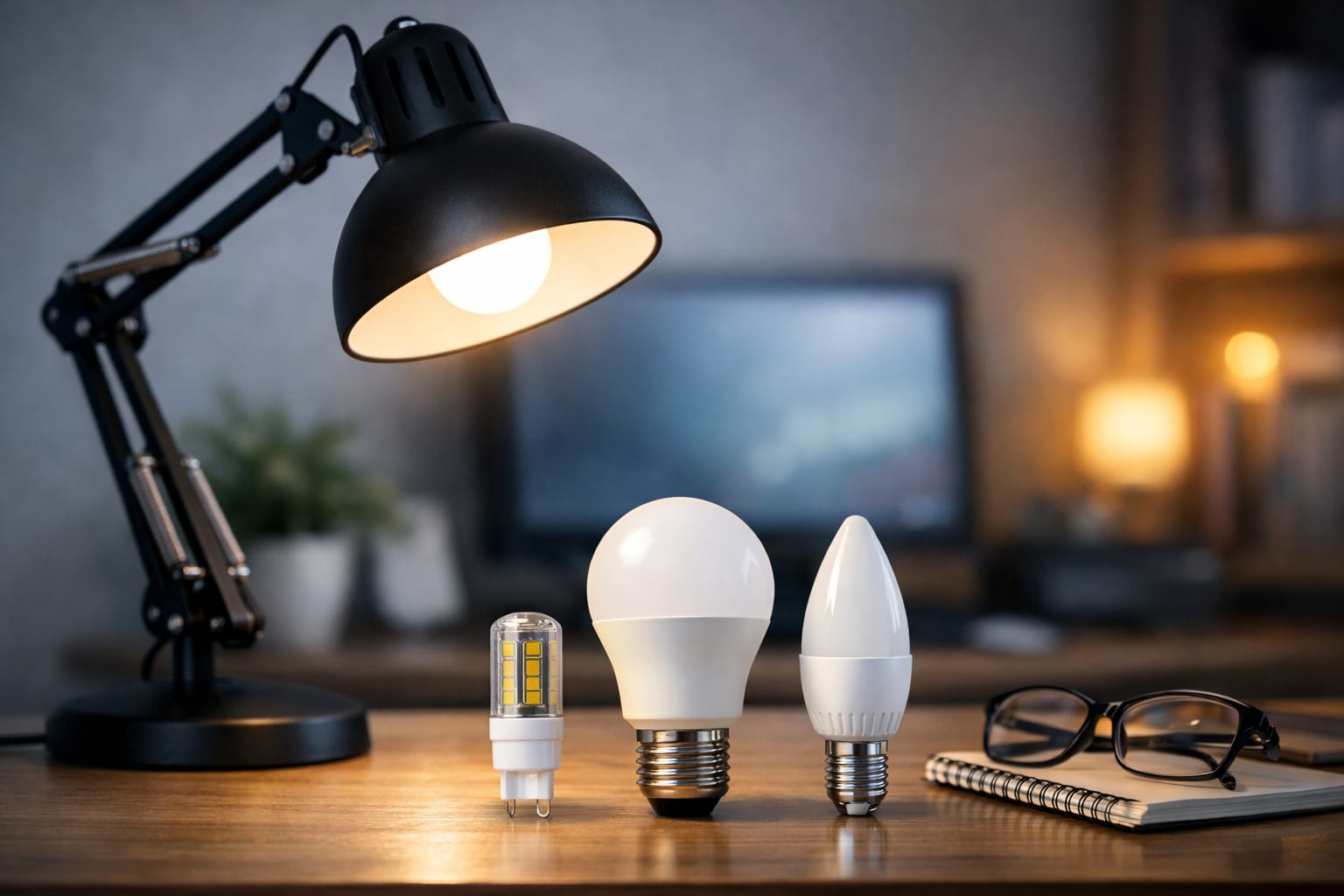
A19 bulbs fit many standard medium-base desk lamps and are widely available for everyday task lighting. For open or shallow desk lamps, frosted A19 LED bulbs for standard desk lamps are usually more comfortable than clear or decorative bulbs because they soften bright spots and spread light more evenly across the desk.
Color rendering also affects comfort and accuracy. CRI 80+ is usually fine for reading, writing, and office work. If you draw, design, edit photos, match colors, or work with products, CRI 90+ is worth considering because it helps colors look more natural and reduces visual guesswork during long sessions.
Decorative shapes may look better in exposed fixtures, but they do not always improve the actual lighting experience. For desk use, comfort usually matters more than appearance. The best desk lamp bulb is often the one that fits neatly inside the shade, stays out of direct view, and creates an even pool of light on the work surface.
Dimming, Energy Use, and Compatibility
Dimming is useful when your desk serves different purposes throughout the day. Morning work may need less artificial light, while evening reading may need a softer output. A dimmable LED bulb for adjustable desk lighting is a good fit if one fixed brightness level often feels either too strong or too weak.
A smooth dimming range matters more than the word “dimmable” on the box. Better bulbs stay stable at lower brightness levels, while weaker bulbs may flicker, buzz, or shift color noticeably when dimmed. If your lamp uses a built-in dimmer or wall dimmer, check compatibility before buying because older dimmers may not work well with every LED bulb.
Modern bulbs that produce 450 to 800 lumens often use around 6 to 9 watts, which is much less than comparable incandescent bulbs. Since desk lamps are often used for long sessions, this lower power use can reduce heat and long-term running costs. The U.S. Department of Energy’s LED lighting guidance explains why LED bulbs are more efficient than older lighting technologies.
Energy efficiency is useful, but it should not be the only factor. For desk lamps, stable light, comfortable diffusion, the right color temperature, and proper fit usually matter more to daily comfort than choosing the lowest wattage bulb available.
Installation and Positioning Tips
Choosing a good bulb is only part of the setup. Even an excellent LED bulb can feel harsh if the lamp is positioned badly, aimed into your eyes, or used as the only light source in a dark room. A well-placed desk lamp usually feels softer, more useful, and less tiring over long sessions.
Place the lamp slightly to the side of your work area, around 15 to 20 inches from the main reading or writing zone when possible. Right-handed users often prefer the lamp on the left, while left-handed users usually prefer the reverse so the hand does not cast shadows across the page.
Angle the shade so the light falls onto the work surface without shining directly into your eyes or reflecting strongly from a screen. Extra ambient light in the room helps reduce contrast between the desk and the surrounding space, which makes your eyes adjust less when you look away from the page or monitor. For more help with harsh reflections and bright spots, read our lighting glare reduction guide.
If you want to keep learning before choosing a bulb, the lighting knowledge center includes more guides on LED basics, brightness, color temperature, and practical lighting decisions.
Which Desk Lamp Bulb Should You Choose?
Choose a neutral white, flicker-free bulb if you use your desk daily and want the best balance of comfort and clarity. If your tasks change often, choose a dimmable or tunable white bulb so you can lower brightness at night and keep a cleaner light during the day.
- For reading: 300–500 lumens, frosted finish, 3500K–4500K
- For computer work: moderate brightness, low glare, lamp placed to the side
- For design work: CRI 90+ and an even beam across the desk
- For night work: warmer or dimmable light instead of very cool bright white
- For standard desk lamps: A19 shape if it fits safely inside the shade
FAQ
What Is the Best LED Bulb for a Desk Lamp?
For most people, the best LED bulb for a desk lamp is a flicker-free, frosted bulb with 300–500 lumens and a neutral 3500K–4500K color temperature. This gives enough light for reading and work without making the desk feel harsh.
Is 4000K Good for a Desk Lamp?
Yes. 4000K is one of the most practical choices for desk lamps because it feels clean and focused without being as sharp as 5000K or 6500K. It works well for home offices, studying, reading, and general task lighting.
Are LED Desk Lamp Bulbs Better for Eye Strain?
LED bulbs can be better for eye comfort when they are flicker-free, not overly bright, and properly diffused. A poor LED bulb can still cause discomfort if it flickers, creates glare, or uses a color temperature that does not match the time of day.
Should a Desk Lamp Bulb Be Warm White or Daylight?
Warm white is better for relaxed evening use, while daylight can help with alertness during the day. For one everyday desk lamp, neutral white around 3500K–4500K is usually the most balanced option.
Key Takeaways
The best LED bulbs for desk lamps are usually flicker-free, moderately bright, and comfortable for the way you use your desk most often. For reading, writing, and home office work, 300–500 lumens and 3500K–4500K is the best starting point.
A frosted bulb, proper lamp placement, and stable output often matter more than maximum brightness. If glare bothers you, avoid exposed clear bulbs and use a shade or bulb shape that keeps the light source out of direct view.
If your routine changes from daytime work to evening reading, choose dimmable or tunable white lighting. If your work depends on accurate colors, choose a higher CRI bulb instead of focusing only on lumens or watts.
Sharing This Guide
If you found this guide helpful, save it for later or share it with a friend.
Interested in learning more? Browse all related articles in our LED bulbs category section.