Warm Light vs Cool Light: Best Kelvin for Every Room
Warm light and cool light can make the same room feel completely different. The right choice affects comfort, mood, visibility, and how useful a space feels during everyday tasks.
This guide explains how color temperature works, where warm and cool light fit best, and how to choose a practical Kelvin range for living rooms, bedrooms, kitchens, bathrooms, and work areas.
Quick Answer
Warm light usually works best in spaces meant for relaxing, while cool light is better suited to spaces where clarity and focus matter more.
- Warm light is usually around 2700K to 3000K and feels softer and cozier.
- Cool light is usually around 4000K to 5000K and feels brighter and more alert.
- Living rooms, bedrooms, and dining areas usually look better with warmer light.
- Kitchens, bathrooms, and home offices often benefit from more neutral or cooler light.
- If one space needs both comfort and visibility, a tunable or layered setup often works best.
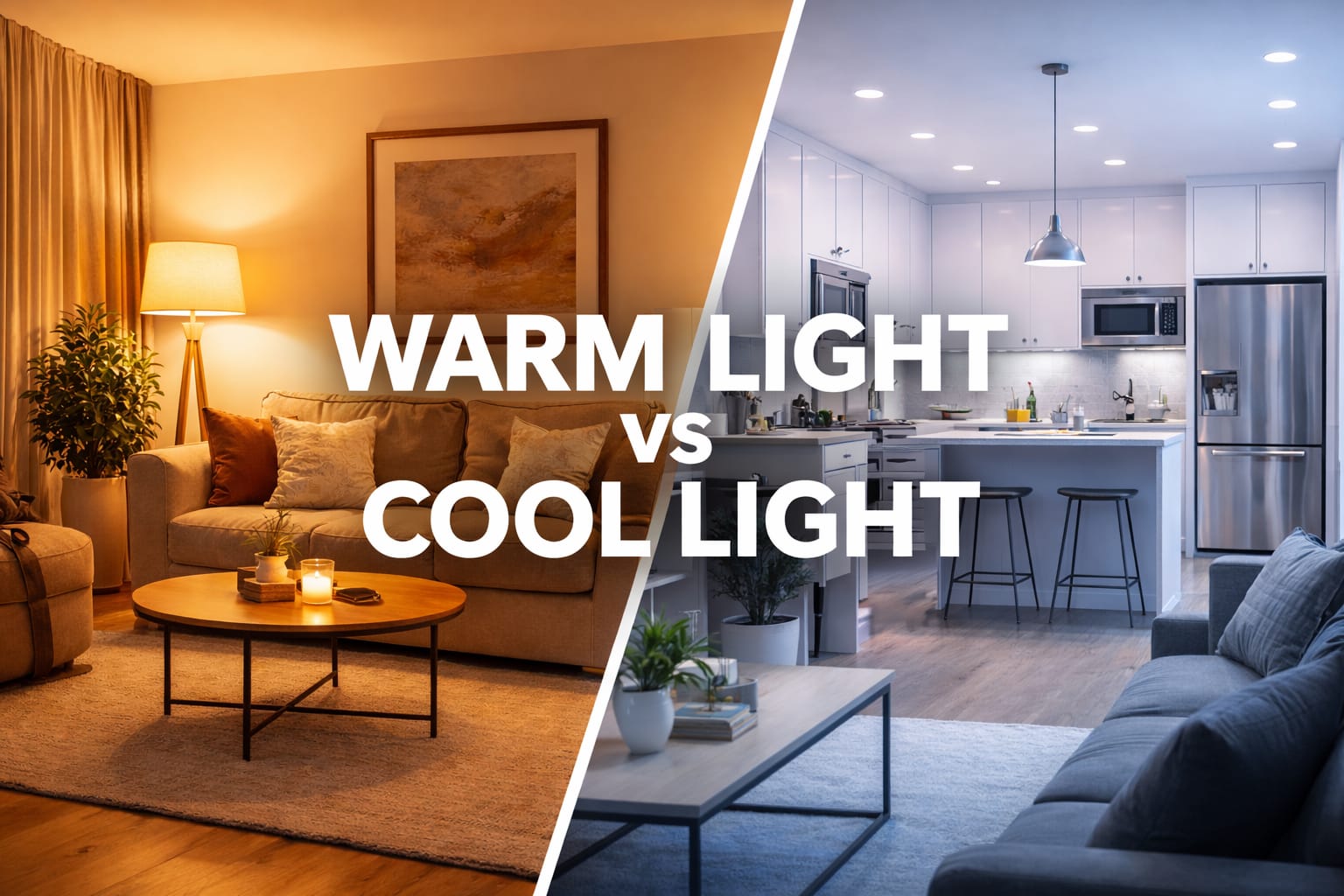
Table of Contents
Kelvin Scale
The difference between warm light and cool light comes down to color temperature, which is measured in Kelvin (K). Lower Kelvin numbers produce a warmer, more yellow or amber look, while higher numbers produce a cooler, whiter, or slightly bluish look. If you want a deeper breakdown of the scale, see our guide to color temperature and Kelvin ratings.
In most homes, warm white usually falls around 2700K to 3000K. Neutral white often lands around 3500K to 4000K. Cool white and daylight-style bulbs usually sit between 4000K and 5000K or higher. These ranges do not change how bright a bulb is by themselves, but they do change how that brightness feels in the room.
That is why two bulbs with similar lumen output can still create very different impressions. A warm bulb can make a room feel softer and more intimate, while a cooler bulb can make the same space feel sharper and more clinical. The effect becomes easier to understand once you know how LED lighting works and how modern bulbs shape both output and color.
If bulbs in the same room look mismatched, the problem is often the Kelvin rating rather than brightness. Using bulbs from the same product line usually gives a more consistent result.
Color quality matters too. Two bulbs can both be labeled 3000K, but one may still render colors better than the other. That is where build quality and CRI come in, which is one reason premium products can look noticeably better than cheaper ones. For more on that, compare budget and premium LED bulbs.
If you want a stable, comfortable warm tone for everyday use, a quality option like a warm LED bulb with stable color output can help avoid the uneven look that some cheaper bulbs develop over time.
Psychological Effects
Color temperature does more than change the look of a room. It also affects how that room feels. Warm light is usually associated with calm, comfort, and relaxation, which is why it works so well in living spaces and evening settings. Cool light tends to feel cleaner, brighter, and more energizing, which makes it useful in rooms where attention and visibility matter more. Our lighting psychology guide explores that relationship in more detail.
This is also tied to circadian rhythm. Cooler, bluer light is closer to daylight, so it can support alertness during the morning or workday. Warmer light is easier on the eyes later in the day and generally fits better with evening routines. In practice, that means the best color temperature often depends on both the room and the time of day.
Warm light also tends to flatter skin tones and warm finishes such as wood, beige paint, and earth-tone décor. Cool light usually makes whites, grays, chrome, and modern finishes look crisper. Neither is automatically better. The goal is to match the light to the function of the room and the feeling you want from it.
Very cool bulbs can look harsh in bedrooms, lounges, or dining spaces at night, even when the brightness level itself is technically correct.
Living Rooms
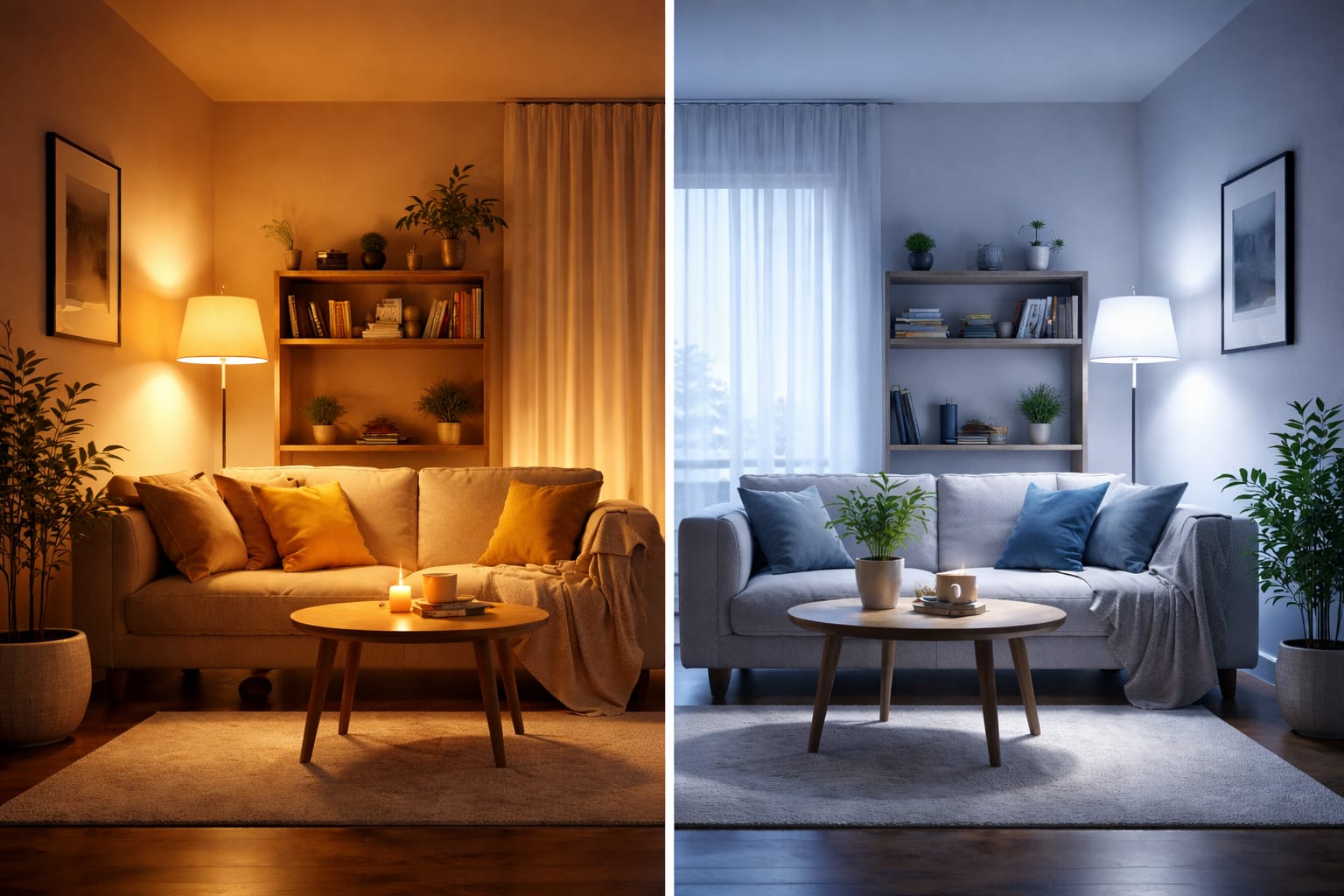
Living rooms usually look and feel best with warm light in the 2700K to 3000K range. These spaces are normally used for relaxing, talking, watching TV, or spending time with family, so comfort matters more than a crisp task-lighting effect. Warm tones make the room feel more welcoming and usually work better with soft furnishings, wood finishes, and evening use.
That does not mean the room has to be dim. The better approach is often layered lighting: warm ceiling light for general use, plus floor lamps or table lamps for reading and focused tasks. That way, the room keeps a cozy look without sacrificing usability. Dimmable bulbs make this even easier because you can adapt the mood to the moment.
Accent lighting should usually stay in the same general temperature range as the rest of the room. If the main lighting is warm, artwork lights or display lights should normally stay warm too. Keeping the color temperature consistent helps the room feel intentional instead of patchy or mismatched.
Bedrooms
Bedrooms are one of the clearest cases for warm light. A 2700K to 3000K bulb usually feels calmer, softer, and better suited to winding down at night. Cooler temperatures can work for a closet, vanity, or a short task, but they often feel too sharp for the main sleeping area, especially after dark.
Bedside lamps are a good example. Warm light makes reading more comfortable before sleep and creates a gentler transition as the room gets darker. It also tends to pair better with dimmers, lampshades, and softer bedroom materials. If the room doubles as a dressing space, you can still keep the main ambient light warm and use a more neutral task light only where it is actually needed.
The same logic generally applies to children’s rooms. Warm light is usually the safer default for evening use, night lights, and bedtime routines. It feels less stimulating and more comfortable, especially when the goal is to help the room settle down rather than keep it bright and active.
Kitchens
Kitchens often benefit from a more neutral approach. In many homes, 3500K to 4000K works well because it keeps the space bright and practical without feeling too cold. That balance matters in a room where you need clear visibility for cooking, cleaning, and prep work, but still want the space to feel comfortable enough for everyday use.
Under-cabinet lighting can go a little cooler than the rest of the room if you need sharper task visibility on countertops. That is especially helpful when handling knives, reading labels, or working with detailed recipes. The main ceiling lighting does not need to be as cool if the task zones are already well covered.
If your kitchen feels underlit during meal prep, using bright LED bulbs designed for clearer task visibility can make it easier to work on countertops without having to overlight the whole room.
Bathrooms
Bathrooms usually sit between warm and cool. If the space is mostly for relaxing and general use, a warm-to-neutral range around 3000K can feel balanced and flattering. If the bathroom is heavily used for grooming, shaving, or makeup, a slightly cooler 3500K to 4000K setup often gives better clarity around the mirror.
Mirror lighting matters more than people think. The goal is not just brightness but accurate color rendering and even facial illumination. A neutral white source often works better than a very warm one if you need precision. Placement matters too, which is why fixture position should be planned alongside color temperature. Our bathroom vanity light height guide can help with that part.
In short, warm light makes bathrooms feel calmer and more spa-like, while neutral-to-cool light usually supports grooming better. The right answer depends on whether comfort or visibility is the main priority.
Home Offices
Home offices are one of the strongest cases for cooler light. A range around 4000K to 5000K usually supports focus, screen work, reading, and desk tasks better than warm ambient light. That sharper look can help the room feel more like an active work area and less like a lounge.
That said, cooler is not always better. If the office is small or used late in the evening, very cool light can start to feel tiring. A neutral ambient light combined with a focused desk lamp is often a better long-term solution. It gives you enough clarity to work without making the space feel sterile.
If your office lighting causes glare or eye strain, it is worth looking at both temperature and fixture placement together. Our guides on home office lighting and reducing glare can help you fine-tune the setup.
Dining Areas
Dining areas almost always benefit from warm light. A 2700K to 3000K range usually makes meals feel more inviting, helps the room look less stark, and supports a slower, more social atmosphere. Food often looks better under warm light too, especially in residential settings where comfort matters more than task precision.
A dimmable pendant or chandelier works especially well here because you can raise brightness for everyday meals and lower it when you want a softer mood. That flexibility is one reason dining rooms do not need cool light unless the space also doubles as a workspace or homework area during the day.
If you want one fixture to handle both daily use and a softer evening ambiance, smart bulbs with adjustable brightness and color settings can make that easier without changing the whole fixture.
Mixed Temperatures
Mixing warm and cool light in the same home is normal. Using them inconsistently in the same visible zone is what usually causes problems. If one lamp looks amber and the ceiling fixture looks icy white, the room can feel disjointed even when both bulbs are technically fine on their own.
The easiest way to avoid that is to keep the main ambient lighting in each room within a similar Kelvin range. You can still use different temperatures in different rooms based on their purpose. Open-plan layouts are the exception, because abrupt temperature changes become more obvious when spaces connect visually. In those cases, a neutral middle ground like 3500K often works well.
Task lighting can bend the rule a little if it is clearly separated from the rest of the space. For example, a slightly cooler kitchen worktop light can still work inside an otherwise warm open-plan home when it is subtle and purposeful. If you are planning a whole-room scheme, our guide to lighting design basics can help you keep the result cohesive.
What Should You Choose?
Choose warm light when the room is mainly about comfort, and choose cool light when the room is mainly about visibility, focus, or detailed work.
- Pick warm light for living rooms, bedrooms, and dining spaces.
- Pick neutral-to-cool light for kitchens, bathrooms, and home offices.
- Pick around 3500K if you want a flexible middle ground.
- Pick tunable bulbs if the same room needs different moods at different times.
- Pick consistency within each room so the lighting feels intentional rather than mixed by accident.
Key Takeaways
Warm light and cool light are not really competing styles so much as different tools. Warm light usually creates a softer, more comfortable atmosphere, while cool light usually supports sharper visibility and better focus.
The simplest way to choose is to think about what the room needs most. Relaxing spaces usually benefit from 2700K to 3000K, while work-heavy spaces often perform better around 3500K to 5000K, depending on the task.
If you are still unsure, start with a balanced neutral setup or use tunable bulbs. A flexible system is often the easiest way to find out what feels right in your own home.
Sharing this guide
If you found this guide helpful, save it for later or send it to someone comparing bulb color temperatures at home.
Share using the links below
Interested in learning more? Browse related articles in our category section.
Pingback: Do Dimmer Switches Save Electricity? Real Truth Now
Pingback: Best LED Bulbs for Ceiling Fans: Expert Guide - NeoLEDHub
Pingback: LED Color Temperature: Warm vs Cool - NeoLEDHub
Pingback: Best Soft White LED Bulbs (Warm Lighting) - NeoLEDHub
Pingback: Color Temperature Explained: Warm vs Cool Light and Best Kelvin by Room - NeoLEDHub