How to Reduce Glare From Lights: 9 Fixes for Softer, Easier Lighting
Harsh lights usually feel uncomfortable for one of three reasons: the bulb is visible, the fixture is aimed into your eyes, or the light is bouncing off a screen, desk, floor, countertop, or glossy surface. The fastest fixes are to shield the light source, add a diffuser or shade, move the fixture out of your normal sightline, and dim lights that feel too bright.
This guide explains how to reduce glare from lights in living rooms, bedrooms, kitchens, and home offices without making the room feel dark. The goal is not just lower brightness. It is softer, better-directed light that reduces eye strain, screen reflections, harsh LED hotspots, and visual discomfort.
Quick Answer: How to Reduce Glare From Lights
To reduce glare from lights, first hide exposed bulbs, add a diffuser or frosted shade, move fixtures out of your normal sightline, reduce reflections from shiny surfaces, and use dimmers when brightness feels too harsh. If the fixture is compatible, a dimmer switch can be one of the quickest fixes because it lowers intensity without replacing the whole fixture.
- Hide the bulb or LED chip from direct view.
- Use shades, diffusers, frosted bulbs, or opal covers.
- Move pendants, spotlights, and downlights out of your normal sightline.
- Dim lights that feel too bright for evening use or screen work.
- Use indirect lighting in bedrooms, living rooms, and media spaces.
- Reduce reflections from desks, floors, screens, counters, and glossy furniture.
- Choose warmer, softer light in relaxing areas where eye strain matters most.
If you want a stronger foundation before fine-tuning glare, this beginner guide to lighting design explains how placement, brightness, and layering work together in real spaces.
Table of Contents:
Why Lights Create Glare
Glare happens when a light source or reflection is much brighter than the area around it. Your eyes then have to work harder to adapt, which can make a room feel tiring even when the total brightness level seems normal. In real homes, glare usually comes from exposed bulbs, bright LED chips, poorly aimed ceiling lights, shiny surfaces, or fixtures that sit directly in your line of sight.
There are two main types to pay attention to. Direct glare comes from the light source itself, such as a bare bulb, harsh pendant, exposed LED strip, or recessed downlight that shines toward your eyes. Reflected glare comes from light bouncing off a monitor, polished table, glossy floor, glass surface, tile, or bright countertop.
This is why simply buying a brighter bulb rarely solves the problem. A room can feel harsh because one source is too visible, too cool, too concentrated, or aimed at the wrong angle. Before replacing every fixture, look at where the light comes from, what it hits, and whether your eyes can see the brightest part directly.
If a room feels uncomfortable, do not assume you need less light everywhere. Start by reducing direct visibility of the source, softening the beam, and lowering contrast between bright and dark areas.
9 Fixes to Reduce Glare From Lights
The best glare reduction techniques are usually simple: shield the source, soften the beam, change the angle, dim the output, and reduce reflections. Use the fixes below in order, starting with the cheapest and easiest adjustments before replacing fixtures.
1. Hide the Bulb From Direct View
This is often the strongest single fix. If you can see the brightest part of the bulb, LED chip, or light source from a sofa, bed, desk, or dining chair, the room will usually feel harsher than it should. Choose shades, deeper trims, baffles, recessed lenses, or fixtures that hide the source instead of leaving it exposed.
In many rooms, glare is not really a brightness problem. It is a visibility problem. A lower-output bulb can still feel uncomfortable if it shines straight into your eyes, while a brighter source can feel softer when properly shielded.
2. Add a Diffuser, Shade, or Frosted Cover
Diffusers spread light over a wider surface, which makes the beam feel softer and less concentrated. Frosted bulbs, fabric shades, opal glass, acrylic covers, and diffuser lenses can all help reduce glare from LED lights because LEDs often produce a lot of brightness from a small point.
Diffusion is especially useful when the fixture is in the right location but the light still feels sharp. If you want a closer look at materials and fixture options, this guide to LED light diffusers covers the most useful choices.
3. Move Fixtures Out of Your Normal Sightline
A light can be technically good but still badly positioned. If a pendant, spotlight, track head, or downlight sits exactly where you naturally look while sitting, standing, eating, reading, or working, it will feel more aggressive than it should.
This matters most above sofas, desks, kitchen islands, dining tables, beds, and mirrors. Small placement changes can reduce glare more effectively than switching bulbs. Before moving or adding fixtures, review these lighting placement mistakes so the new position does not create the same problem from a different angle.
4. Use Indirect Lighting Where Comfort Matters Most
Indirect lighting bounces light off ceilings, walls, or hidden surfaces instead of sending it straight into the room. That reflection spreads the light, reduces harsh hotspots, and makes the space feel softer without necessarily making it darker.
Cove lighting, wall washing, uplights, backlighting, and hidden LED strips can work well in bedrooms, living rooms, media spaces, and evening areas. If you want to compare where each method works best, this guide to direct vs indirect lighting explains the difference in more detail.
5. Use a Dimmer for Harsh Ceiling Lights
Sometimes the fixture is acceptable, but the output is simply too strong for the time of day or the activity. Dimming is one of the easiest ways to reduce eye strain because it lets you lower intensity in the evening, during screen use, or when a room feels too bright compared with the surrounding area.
When brightness feels too intense and your fixture is compatible, a dimmer switch for reducing harsh overhead light can make a clear difference without replacing the whole fixture. Always check bulb and fixture compatibility first, especially with LED lighting.
6. Reduce Reflections From Glossy Surfaces
Glare is not always caused by the fixture itself. Sometimes the real issue is the surface receiving the light. Polished floors, glossy desks, glass tables, shiny tiles, bright countertops, and reflective cabinet finishes can bounce strong highlights back toward your eyes.
If a room still feels harsh after you soften or dim the fixture, look closely at what the light is hitting. A matte desk pad, rug, softer wall finish, different monitor angle, or repositioned lamp can reduce reflected glare without changing the whole lighting plan.
7. Match Brightness to the Room, Not Just the Fixture
A single bright fixture in a dark room often feels worse than several softer sources working together. The problem is contrast: your eyes keep adjusting between one intense point and a much darker background. Moderate ambient light plus task or accent lighting usually feels calmer than forcing one ceiling light to do everything.
Instead of asking whether one bulb is bright enough, ask whether the whole room feels balanced. Softer layers usually reduce glare better than one powerful source in the center of the ceiling.
8. Choose Warmer, Softer Color Temperatures in Comfort Zones
Cool white or daylight LEDs are not automatically bad, but they often feel sharper in bedrooms, lounges, media rooms, and evening spaces. Warmer light can feel easier on the eyes because it creates a softer visual impression, especially when brightness is also controlled.
For relaxing spaces, warm white lighting is usually the safer starting point. For bedrooms, lounges, and evening spaces, flicker-free dimmable soft white LED bulbs can feel more comfortable than cool, exposed, high-output bulbs. For work areas, neutral white can be useful, but it should still be diffused, shielded, and positioned so it does not reflect directly into screens or eyes.
9. Layer the Lighting Instead of Relying on One Source
Layered lighting spreads the work across ambient, task, and accent sources. That reduces the need for any single fixture to be extremely bright. It also gives you more control: ceiling light for general use, lamps for comfort, task lighting for focused work, and indirect light for softer background brightness.
In most real rooms, layering creates a more polished result and a space that feels less fatiguing over time. It also makes glare easier to troubleshoot because you can adjust one source at a time instead of relying on a single bright fixture.
How to Reduce Screen and Desk Glare
A lot of glare complaints are actually screen or desk complaints. If you work at a computer, your lighting should support the screen rather than fight it. The most common problems are overhead lights reflecting in the monitor, windows behind or directly in front of the screen, and task lamps aimed in a way that creates shiny patches on the display or desk surface.
Start by placing the monitor perpendicular to windows when possible. Then avoid exposed bright fixtures directly above the screen. Soft side lighting usually works better than hard overhead light in desk zones because it gives the room enough brightness without bouncing a bright source back into your eyes.
The desk area also needs balance. If the screen is bright but the room is very dark, your eyes keep adjusting between strong contrast levels. Moderate ambient light usually feels better than working in near darkness with only the monitor turned on. This is why a good home office lighting setup often feels more comfortable than standard room lighting.
If you see a bright fixture, window, or lamp reflected on your screen, the problem is probably the angle or placement rather than the screen itself.
Best Glare Fix by Room
The right fix depends on how the room is used. The goal is always the same: keep the brightest source out of your direct view, soften the light, and reduce harsh contrast. The best method changes from one room to another.
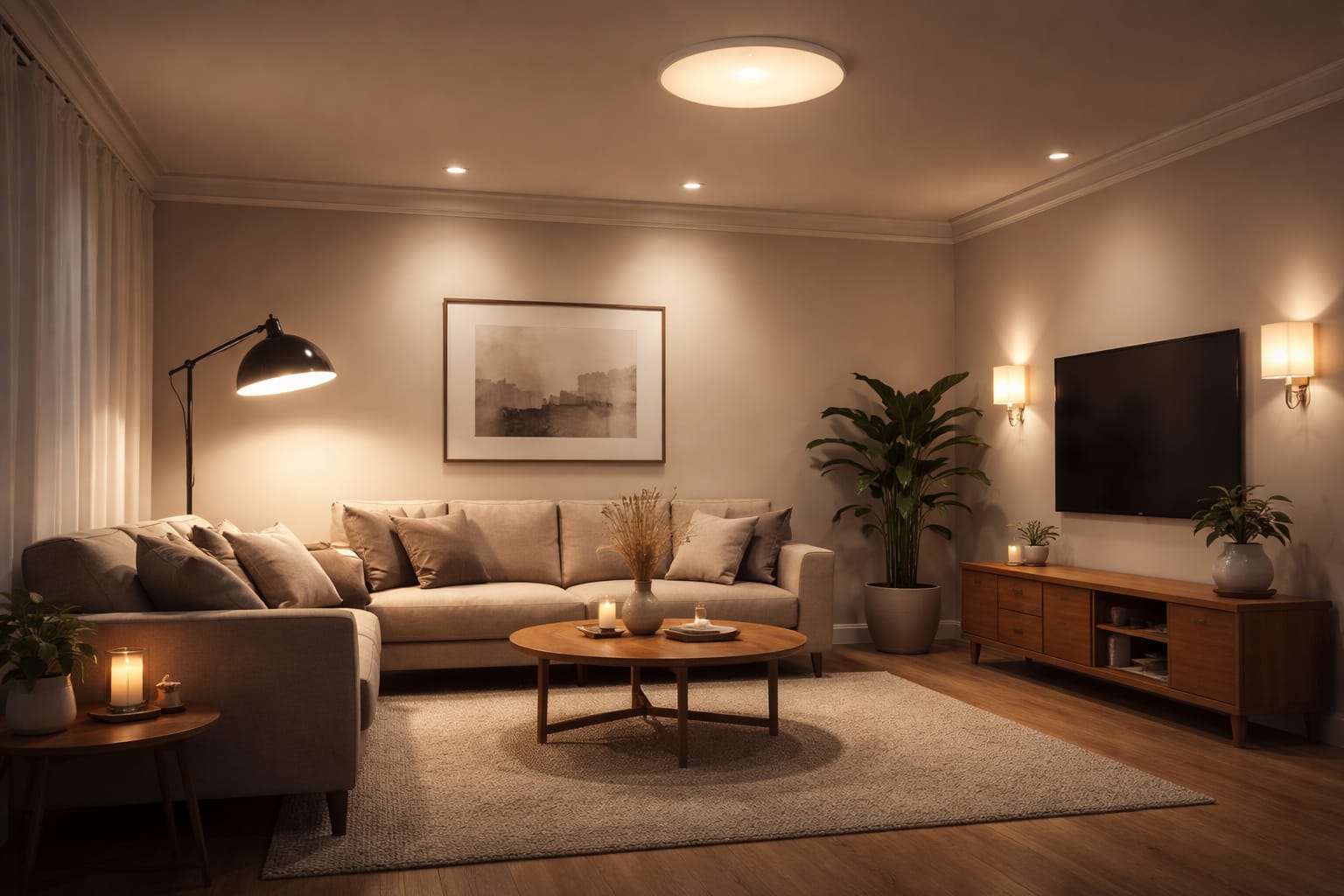
Living room: Use lamps with shades, dimmable ceiling fixtures, and indirect accent lighting. Avoid exposed bulbs visible from the sofa. A mix of floor lamps, table lamps, and soft wall or cove light usually feels better than one bright central source.
Bedroom: Prioritize warm light, hidden sources, and lower evening brightness. Bedside lamps with shades are usually more comfortable than bare bulbs. Keep overhead fixtures soft and dimmable where possible.
Kitchen: Balance functional overhead light with under-cabinet task lighting. Watch for harsh downlights reflecting off glossy counters, tiles, stainless steel, or polished surfaces.
Home office: Prioritize monitor position, side lighting, controlled overhead brightness, and low-reflection desk surfaces. Desk glare is rarely solved by adding more light. It is usually solved by putting the right light in the right direction.
What Should You Fix First?
If you are not sure where to start, choose the fix based on what is bothering you most. This keeps the solution practical and avoids replacing lighting that may only need better control or placement.
- If you can see the bulb: add a shade, diffuser, deeper trim, or fixture with better shielding.
- If the room feels too bright at night: dim the fixture or use lower-output, warmer light.
- If the monitor reflects light: move the screen, adjust the fixture angle, or use softer side lighting.
- If the room feels harsh but not bright enough: add softer layers instead of one stronger bulb.
- If counters, desks, or floors shine: reduce reflections before blaming the fixture.
- If the space is for relaxing: choose warm, diffused, indirect light over cool, exposed, high-output light.
For most people, the best order is: shield the source, soften the beam, adjust placement, dim the output, then add layers. That sequence solves many glare problems without turning the article into a shopping list or replacing everything too early.
Common Mistakes That Make Glare Worse
The most common mistake is assuming glare means the room is simply too bright overall. Often, one bad source, one bad reflection, or one poorly aimed fixture is creating most of the discomfort. Reducing every light in the room can make the space dim without actually solving the glare source.
Another mistake is choosing a stylish fixture that looks good in photos but leaves the bulb fully exposed from every normal seating position. A fixture can look beautiful and still be uncomfortable if the brightest part is visible from the sofa, bed, desk, or dining table.
People also underestimate the role of surfaces. A room with polished floors, glossy counters, glass furniture, or bright reflective desktops can feel much harsher than the same room with matte finishes, even under the same fixtures. In workspaces, it is also common to blame the screen when the real problem is the angle of the ceiling light above it.
For extra context on LED efficiency and general lighting choices, the U.S. Department of Energy’s guidance on LED lighting is a useful official reference to review alongside practical placement, shielding, and glare-control decisions.
FAQ
How Do You Reduce Glare From LED Lights?
To reduce glare from LED lights, hide the LED chip from direct view, use a diffuser or frosted cover, lower the brightness, avoid cool high-output light in relaxing spaces, and reposition fixtures that shine directly into your eyes or onto reflective surfaces.
Are Diffusers Good for Glare Reduction?
Yes. A light diffuser can reduce glare by spreading brightness over a larger surface instead of concentrating it in one small, intense point. Diffusers work especially well when the fixture is well positioned but the beam still feels sharp.
Is Dimming Enough to Fix Glare?
Dimming helps when the light output is too strong, but it may not solve glare caused by an exposed bulb, poor fixture angle, glossy surface, or screen reflection. If dimming improves comfort but does not fully solve the issue, combine it with shielding, diffusion, or better placement. If the light still feels uncomfortable after dimming, check bulb compatibility and consider flicker-free dimmable LED bulbs in rooms where eye strain is the main problem.
Why Do My Lights Hurt My Eyes Even When the Room Is Not Very Bright?
This usually happens because of contrast or source visibility. A small, bright bulb or LED chip can feel uncomfortable even in a dim room if your eyes can see it directly. Reflections from screens, desks, counters, or glossy floors can also create eye strain without making the whole room look bright.
Key Takeaways
Glare usually comes from visible bright sources, poor fixture placement, excessive contrast, or reflections from glossy surfaces and screens rather than from total light output alone.
The most effective fixes are practical: shield the bulb, add diffusion, move lights out of your sightline, use indirect light, dim excessive brightness, reduce reflections, and layer lighting instead of relying on one harsh source.
In most rooms, the goal is not simply more or less light. It is softer, better-directed, better-balanced light that stays comfortable for the way you actually use the space.
Want more practical LED help? The LED Knowledge Center covers placement, bulb types, smart controls, and real-world lighting fixes in more depth.
Sharing This Guide
If you found this guide helpful, you can save it for later or share it with a friend. It is especially useful for beginners, homeowners, and DIY users trying to make everyday lighting more comfortable.
Share using the links below
Interested in learning more? Browse all related articles in our category section.