Direct vs Indirect Lighting: Difference, Examples & Best Uses
Direct lighting sends light straight onto a task area, so it works best for kitchens, desks, counters, vanities, displays, and accents. Indirect lighting bounces light off a ceiling or wall, so it feels softer, more even, and better for bedrooms, lounges, offices, media rooms, and glare-sensitive spaces.
In most homes, the best choice is not one or the other. Use direct lighting where you need visibility, indirect lighting where you want comfort, and combine both when a room needs function and atmosphere at the same time.
Quick Answer
Direct lighting is better for tasks, accents, and precise beam control. Indirect lighting is better for soft ambient light, reduced glare, and a calmer room feel. Most well-designed rooms use both: direct light for seeing clearly and indirect light for comfort.
- Choose direct lighting for counters, desks, vanities, artwork, displays, and focused tasks.
- Choose indirect lighting for bedrooms, lounges, offices, media rooms, and low-glare ambient light.
- Direct lighting usually delivers more usable brightness to a specific surface.
- Indirect lighting usually feels softer because the light is reflected before it reaches the room.
- Use a layered mix when the room needs both visibility and atmosphere.
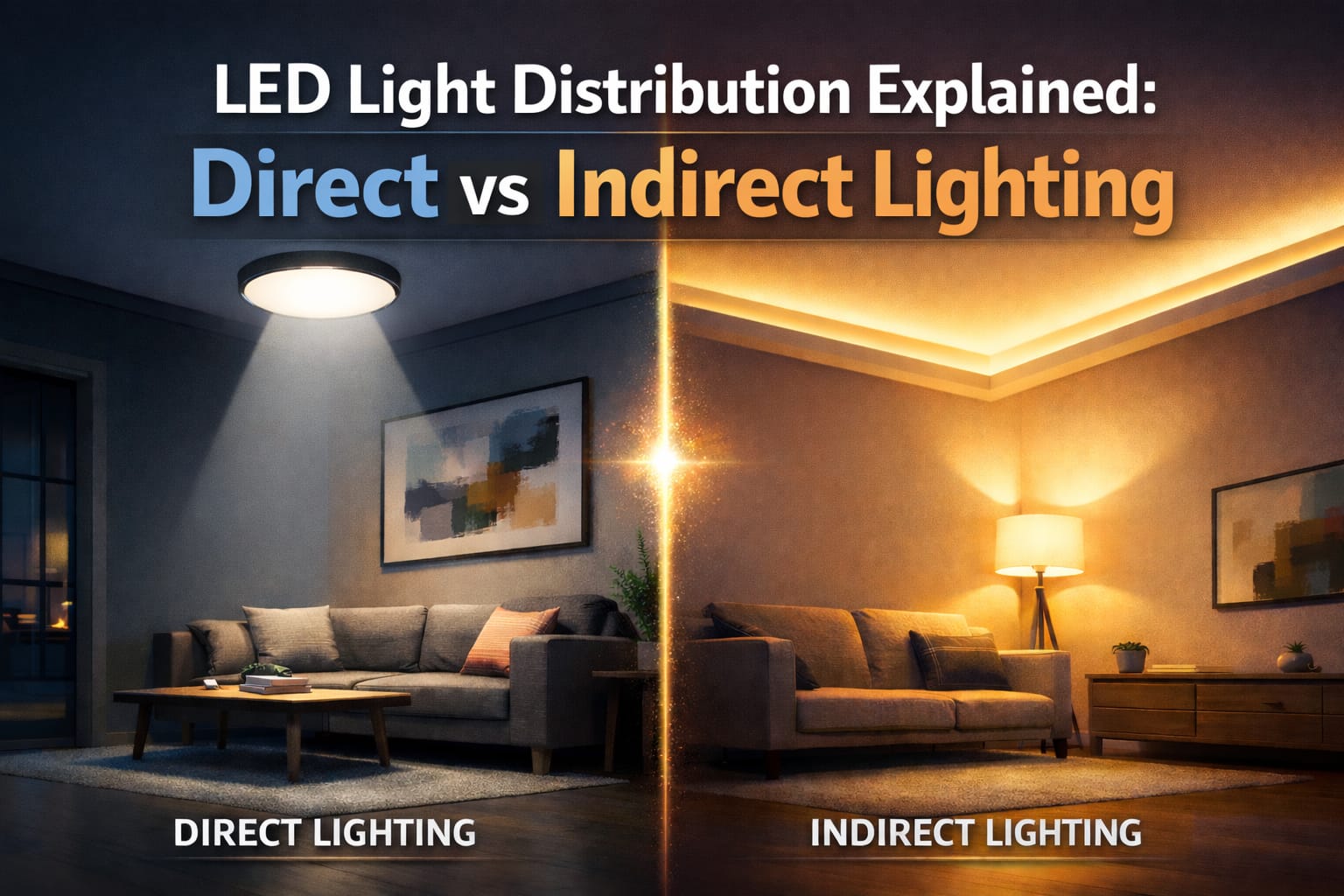
Table of Contents:
- Direct vs Indirect Lighting: What’s the Difference?
- Best Uses by Room
- Best Fixtures for Direct and Indirect Lighting
- Glare, Comfort and Energy Use
- Installation, Cost and Maintenance Tips
- When to Combine Both Approaches
- Direct or Indirect Lighting: Which Should You Choose?
- FAQ
- Key Takeaways
- Sharing This Guide
Direct vs Indirect Lighting: What’s the Difference?
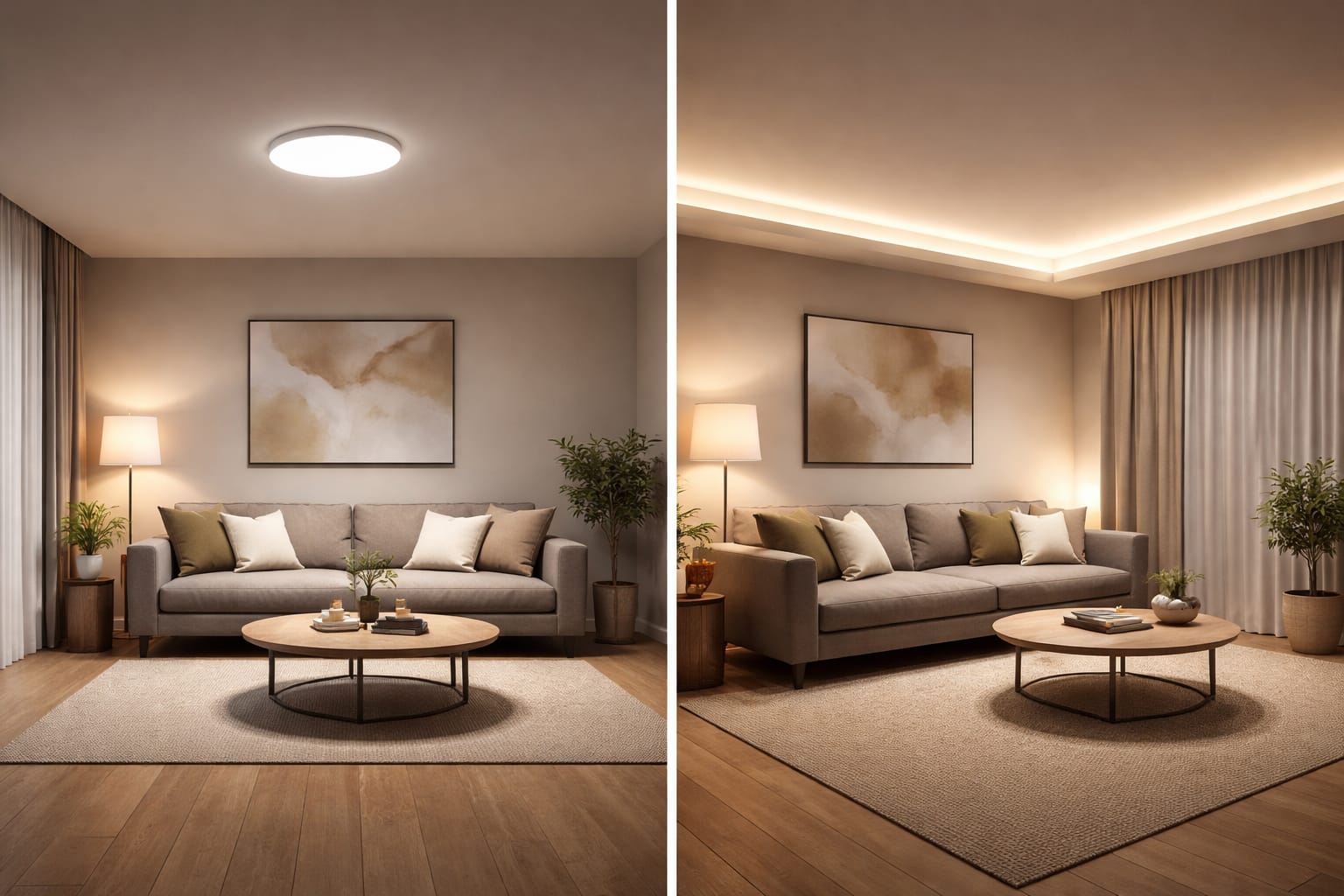
The main difference is the path the light takes before it reaches your eyes or the surface you want to illuminate. Direct lighting travels straight from the fixture to the target. Indirect lighting hits another surface first, usually a ceiling, wall, cove, or reflector, and then spreads into the room.
That simple difference changes almost everything: brightness, glare, shadow quality, visual comfort, efficiency, and the mood of the space.
Light path: direct lighting travels straight from the fixture to the target, while indirect lighting bounces off a ceiling, wall, cove, or surface first.
Best for: direct lighting works well for tasks, counters, desks, accents, and displays. Indirect lighting works better for ambient light, bedrooms, lounges, offices, and glare control.
Visual effect: direct lighting usually looks brighter, sharper, and more focused. Indirect lighting usually feels softer, wider, and more even.
Glare risk: direct lighting has a higher glare risk if it is badly aimed or too bright. Indirect lighting usually lowers glare because the source is softened or hidden.
Efficiency: direct lighting is usually more efficient for lighting a target. Indirect lighting can lose output through reflection, especially on dark surfaces.
Direct lighting is common in recessed downlights, spotlights, pendants, track heads, task lamps, and under-cabinet lights. It gives you control because you can aim the beam at a countertop, desk, artwork, shelf, or work surface. Understanding broader lighting layer types also helps show where direct lighting fits into a complete room plan.
Indirect lighting is common in coves, uplights, valance lighting, hidden LED strips, and wall sconces that throw light upward. Instead of creating a strong beam or hotspot, it spreads reflected light across a larger area, which usually feels calmer and less aggressive.
In practice, direct lighting prioritizes precision and usable brightness, while indirect lighting prioritizes comfort and evenness. According to the U.S. Department of Energy, efficient LED systems can support both approaches when the fixture and use case are matched correctly.
Best Uses by Room
Most rooms work best with a mix of direct and indirect lighting, but the balance changes depending on how the space is used. A kitchen needs more direct task light. A bedroom or lounge usually benefits from a softer indirect base. An office often needs both: indirect light for screen comfort and direct light for reading or desk work.
Kitchen: mostly direct lighting, plus soft indirect fill. Counters, sinks, islands, and prep zones need clear task visibility.
Living room: mostly indirect lighting, plus direct accents. A soft ambient base feels relaxed, while reading lamps and picture lights add function.
Bedroom: mostly indirect or diffused direct light. Lower glare and softer shadows make the room feel calmer at night.
Office: mixed direct and indirect lighting. Indirect light helps screen comfort; direct task light supports reading and detailed work.
Retail or display area: mostly direct lighting. Spotlights and track heads create emphasis, contrast, and visual hierarchy.
Kitchens usually need direct lighting over counters, sinks, and islands because these are task-focused zones where visibility matters most. Recessed downlights, pendant lights, and under-cabinet strips work well because they send brightness straight to the work surface instead of wasting output where it does not help.
For kitchens, a simple set of dimmable under-cabinet LED lights for kitchen task lighting is a natural direct-lighting upgrade because it sends brightness straight onto the counter instead of relying only on ceiling light.
Living rooms and bedrooms usually feel better with a softer base layer. Uplights, cove lighting, hidden LED strips, and upward-facing sconces can make the room feel less clinical than a ceiling full of bright downlights. For room-specific planning, compare bedroom bulb recommendations with broader bedroom lighting design ideas.
Commercial spaces often make the difference even clearer. Offices usually benefit from more indirect or mixed distribution because it reduces glare on screens, while retail spaces lean more heavily on direct lighting because beam control is essential for highlighting products and focal points.
Best Fixtures for Direct and Indirect Lighting
The best fixture is not just the one that looks good. It is the one that sends light in the right direction for the job. A beautiful pendant can still be wrong if it creates glare over a sofa, and a soft uplight can still be wrong if you need strong brightness on a desk.
For direct lighting, use fixtures that aim light toward a specific surface: recessed downlights, pendants, track heads, spotlights, task lamps, picture lights, and under-cabinet strips. These work best when you need controlled brightness, beam precision, or a stronger visual accent.
For indirect lighting, use fixtures that hide, soften, or redirect the light source: cove lighting, uplights, concealed LED strips, valance lighting, and upward-facing wall sconces. Their job is not to spotlight a surface directly, but to create reflected illumination that fills the space more gently.
If you rent, do not want built-in coves, or simply want to test the effect first, an adjustable uplight for soft ceiling-bounce lighting can create an indirect effect without changing the ceiling or wall structure.
Indirect lighting depends heavily on ceiling and wall color. If those surfaces are dark, textured, glossy, stained, or uneven, the reflected light can look dimmer and patchier than expected.
If a direct fixture feels too harsh but you still need its function, do not remove the task light immediately. First try better aiming, a wider beam, a deeper trim, or a diffuser. This guide to LED light diffusers explains practical ways to soften a direct source without losing all of its useful brightness.
Glare, Comfort and Energy Use
Brightness is only one part of good lighting. A room can measure bright enough and still feel tiring if the glare is harsh, the contrast is too strong, or the fixture sits directly in your line of sight. This is where indirect lighting often wins on comfort.
Indirect lighting usually reduces visual discomfort because the light source is hidden or softened by reflection. Instead of looking into a bright emitter, your eyes receive a wider wash of light from the ceiling or wall. That softer presentation is especially useful in bedrooms, lounges, offices, healthcare spaces, hospitality areas, and rooms with screens.
If a room feels harsh even after you lower the brightness, the issue may be distribution rather than output. Adding an indirect layer often improves comfort more than simply dimming the existing direct fixtures.
Direct lighting can still be comfortable, but it needs more control. Deep baffles, careful aiming, good spacing, lower-glare trims, and sensible mounting height all help preserve useful task light without creating visual irritation. For more detail, see these practical glare reduction techniques.
Direct lighting is usually more efficient at delivering usable light to a specific target because fewer lumens are lost along the way. Indirect lighting often gives up some raw efficiency in exchange for softness, evenness, and lower glare. The tradeoff can still be worth it if one indirect layer makes the whole room more comfortable and reduces the need for several extra lamps.
The ENERGY STAR LED lighting guide explains why modern LED efficacy makes both direct and indirect setups more practical than older lighting technologies, especially when the fixture is matched to the room instead of chosen only by wattage.
Installation, Cost and Maintenance Tips
Good lighting design can be ruined by poor placement. Direct fixtures need careful positioning so the beam lands where it should without creating glare or leaving dead zones. Spacing, mounting height, and aiming angle all matter. Even a strong fixture can feel disappointing if it is off-center or aimed at the wrong surface.
Indirect fixtures need good reflective surfaces. A flat, light-colored ceiling usually produces the cleanest bounce. A dark ceiling, uneven wall, glossy surface, or stained finish can absorb light, reveal flaws, or create an inconsistent wash. Before final installation, test the room at night with temporary positioning if possible.
Use separate controls for direct and indirect layers. That lets you keep the room soft most of the time and turn on stronger direct light only when you need it.
Direct lighting often costs less at the basic level because standard recessed downlights, spot fixtures, and simple pendants are widely available. Indirect lighting can cost more when it requires coves, valances, concealed channels, premium wall fixtures, or extra finish work to look clean.
Maintenance is different too. Direct fixtures may need lens, trim, or reflector cleaning to preserve beam quality. Indirect systems also depend on the surface doing the reflecting. If the ceiling yellows, darkens, or becomes patchy over time, the reflected light can lose brightness and uniformity.
Control strategy, spacing, and fixture access matter in both systems. Avoiding common lighting placement mistakes will save time, money, and frustration whether you choose direct lighting, indirect lighting, or a layered setup.
For a deeper technical foundation, this guide on how LED lighting works explains why source design, efficiency, heat, and optics matter in both approaches.
When to Combine Both Approaches
In real rooms, the best answer is often not direct lighting or indirect lighting alone. A layered setup usually works better because each type solves a different problem. Direct lighting gives you visibility. Indirect lighting gives you comfort. Together, they make the room easier to use at different times of day.
A kitchen might use direct downlights and under-cabinet strips for prep work, then add a softer indirect layer above cabinets to reduce contrast at night. A living room might use indirect cove lighting as the base layer, then add a floor lamp for reading and a picture light for artwork. An office might use indirect ceiling bounce for screen comfort, then a desk lamp for documents or detailed work.
This kind of layering makes the room more flexible. You can keep the space soft and comfortable most of the time, then turn on extra direct light only when you need better visibility, more emphasis, or a stronger focal point.
Direct or Indirect Lighting: Which Should You Choose?
Choose based on what the light needs to do. If you need visibility, accuracy, or emphasis, start with direct lighting. If you want softness, comfort, and lower glare, start with indirect lighting. If the room has to do both, layer them separately.
- Choose direct lighting for kitchens, desks, vanities, displays, artwork, reading areas, and task-heavy zones.
- Choose indirect lighting for bedrooms, lounges, media rooms, offices, hospitality spaces, and glare-sensitive areas.
- Choose direct lighting when beam precision, brightness, and efficiency matter most.
- Choose indirect lighting when softer shadows, visual comfort, and even ambient light matter most.
- Choose both when the room needs comfort most of the time but also needs stronger light for specific tasks.
For broader learning, the NeoLEDHub LED knowledge center covers more practical and technical lighting topics.
FAQ
Is indirect lighting better than direct lighting?
Not always. Indirect lighting is usually better for comfort, softness, and glare reduction, but direct lighting is better when you need strong visibility on a specific surface. The better choice depends on the room and task.
Can indirect lighting replace task lighting?
Usually, no. Indirect lighting can make a room feel pleasant and evenly lit, but it may not provide enough focused brightness for cooking, reading, grooming, drawing, or desk work. Use direct task lighting where accuracy matters.
Which is better for bedrooms?
Bedrooms usually benefit from indirect or diffused lighting because it feels calmer and less harsh at night. Direct lighting can still be useful for reading, closets, or vanities, but it should be controlled separately and kept out of direct eye line.
Does indirect lighting use more energy?
It can require more lumens because some light is absorbed during reflection. However, efficient LED fixtures, light-colored surfaces, and smart placement can make indirect lighting practical, especially when comfort is the main goal.
Key Takeaways
Direct lighting sends light straight where you need it, so it is usually better for tasks, accents, and precise control. Indirect lighting reflects light first, which makes it softer, more even, and often more comfortable for everyday use.
If a room feels harsh, the issue may be distribution rather than brightness. Use direct lighting where visibility matters most, use indirect lighting where comfort matters most, and combine them when one method cannot do both jobs well.
The best lighting plans are layered, intentional, and matched to the room instead of copied from a template. Once you understand how direct and indirect lighting behave, it becomes much easier to create a space that looks better and works better.
Sharing This Guide
If you found this guide helpful, save it for later or send it to someone planning a room layout or lighting upgrade.
Share using the links below
Interested in learning more? Browse all related articles in our category section.