Direct vs Indirect Lighting: Which Works Best in Each Room?
Direct and indirect lighting can make the same room feel completely different. One sends light straight onto a surface for stronger task visibility and sharper contrast, while the other bounces light off ceilings or walls to create a softer, more even glow.
This guide explains how each approach works, where each one works best, What Direct and Indirect Lighting Mean and how to choose the right balance for comfort, efficiency, and overall room design.
Quick Answer
Direct lighting points light straight at the area you want to illuminate, while indirect lighting reflects light off another surface before it reaches the room. Direct lighting is usually better for tasks and accents, and indirect lighting is usually better for softer ambient coverage and lower glare.
- Choose direct lighting for counters, desks, displays, and focused tasks.
- Choose indirect lighting for lounges, bedrooms, offices, and other low-glare spaces.
- Direct lighting is usually more efficient at delivering usable light to a target.
- Indirect lighting often feels more comfortable because it softens contrast and reduces harsh shadows.
- Most well-designed rooms use a mix of both.
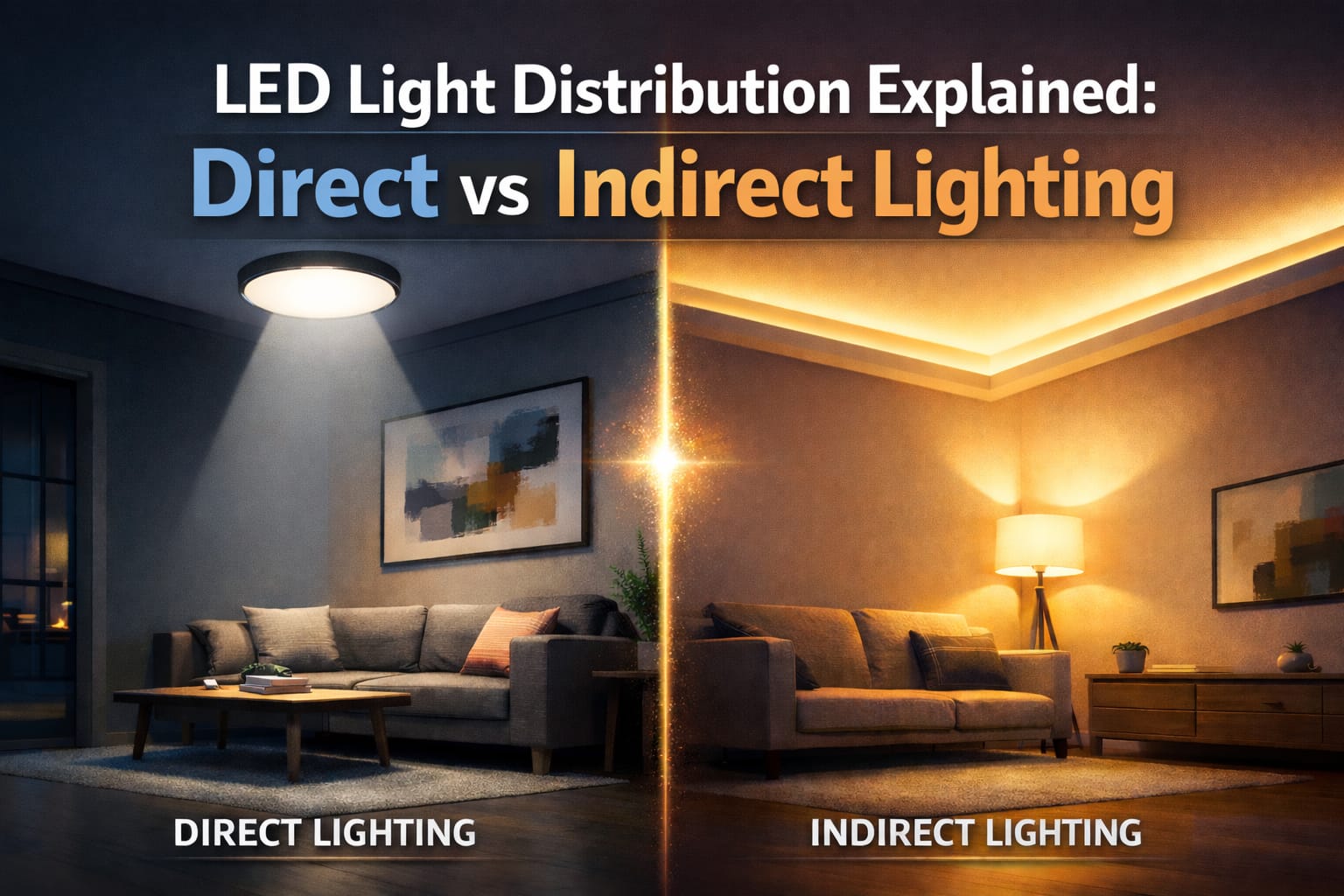
Table of Contents
- Direct vs Indirect Lighting: What’s the Difference?
- Beam Patterns and Light Spread
- Visual Comfort and Glare
- Efficiency and Energy Use
- Best Residential Uses
- Commercial Applications
- Choosing the Right Fixtures
- Installation Tips
- When to Combine Both Approaches
- Cost and Long-Term Value
- Maintenance and Upkeep
- What Should You Choose?
- Key Takeaways
- Sharing this guide
Direct vs Indirect Lighting: What’s the Difference?
The main difference comes down to the path light takes before it reaches your eyes or the surface you are trying to light. That sounds simple, but it changes how bright a room feels, how much glare you notice, and how comfortable the space is over time.
Direct lighting sends light straight to the target
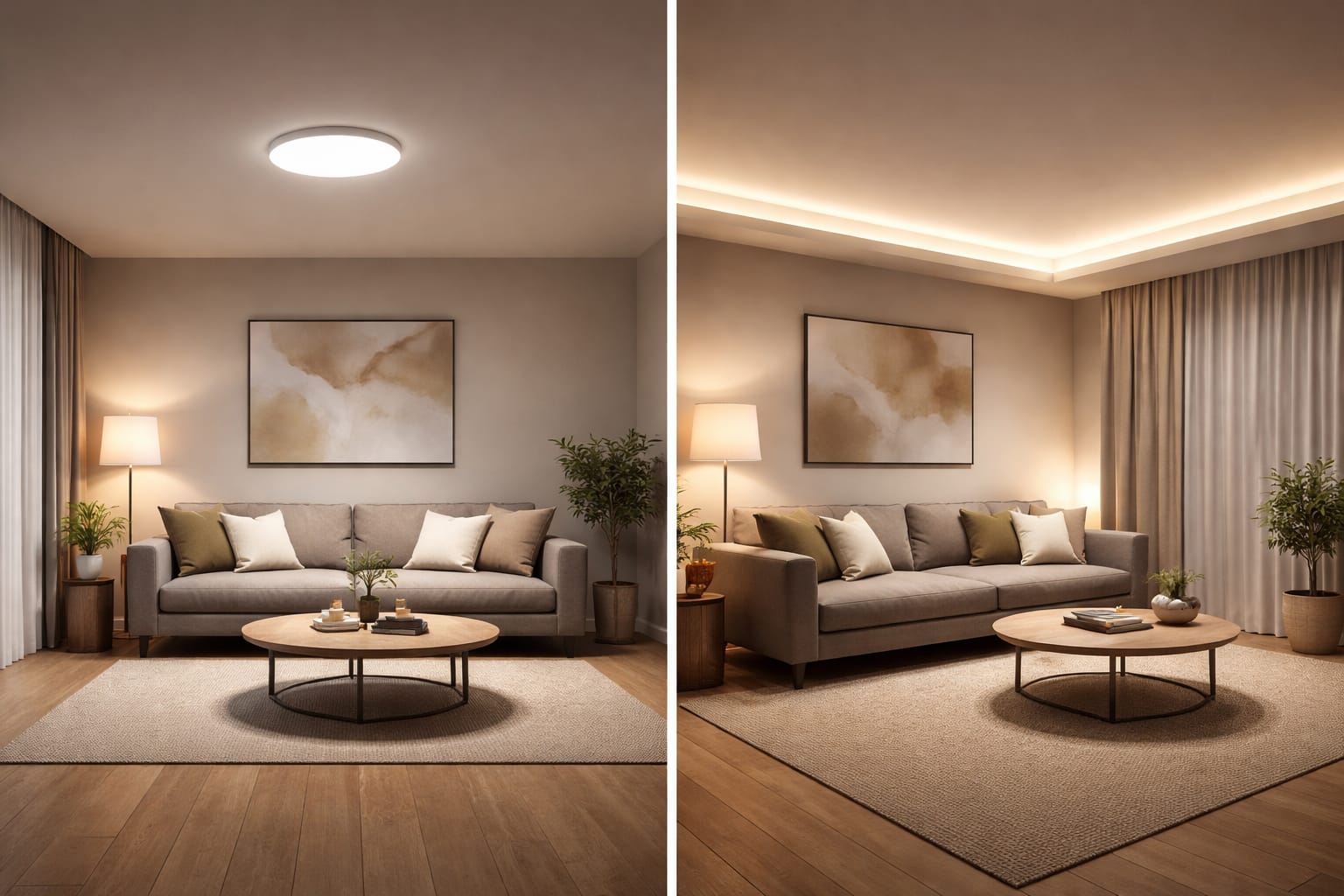
Direct lighting delivers illumination from the fixture straight to the area below or in front of it, with little or no reflection involved. Recessed downlights, spotlights, pendants, and track heads are common examples. They create a clear beam path, stronger contrast, and more defined shadows, which is why they work so well for tasks, accents, and targeted illumination.
Because the light is focused, direct fixtures usually make it easier to put brightness exactly where it is needed. That makes them especially useful in kitchens, reading areas, workshops, retail displays, and anywhere else that benefits from higher light intensity on a specific surface. Understanding broader lighting layer types also helps show where direct lighting fits into a full room plan.
Indirect lighting bounces light first
Indirect lighting points output toward a ceiling, wall, cove, or another reflective surface before the light spreads into the room. Uplights, cove lighting, valance lighting, and some wall sconces all work this way. Instead of seeing a strong beam or bright hotspot, you get a softer wash that feels more even and less aggressive.
That softer effect is the biggest reason people choose indirect lighting in bedrooms, lounges, offices, hospitality spaces, and other environments where comfort matters more than tight beam control. The tradeoff is that some light is lost in reflection, so the result often feels calmer but less intense than a direct source with the same raw output.
In practice, direct lighting usually prioritizes precision and efficiency, while indirect lighting prioritizes comfort and evenness. According to the U.S. Department of Energy, efficient LED systems can support both approaches effectively when they are matched to the right use case.
Beam Patterns and Light Spread
The way a fixture spreads light has a huge effect on how a room works. This is where direct and indirect lighting start to feel different in a very practical way.
Direct lighting gives you beam control
Direct fixtures can produce anything from a tight spot to a wide flood, depending on the lens, reflector, or trim design. A narrow beam can pull attention onto a painting, display shelf, or work area. A wider beam can light a countertop, dining table, or circulation zone while still keeping the light aimed and controlled.
That beam control makes direct lighting the better choice when you want contrast, emphasis, or functional brightness on a specific target. A reading chair, for example, benefits from concentrated light that lands on the page instead of spilling everywhere else. Retail environments use the same principle to highlight products and create visual hierarchy.
Indirect lighting spreads light more broadly
Indirect lighting creates a much wider apparent beam because the light reflects across a large surface before entering the room. That is why uplighting, cove lighting, and wall washing can make a space feel calmer and more open. Instead of bright patches and darker gaps, the room often feels more evenly lit from side to side.
Surface reflectance matters a lot here. White or light-colored ceilings can reflect a high percentage of the incoming light, while darker finishes absorb much more of it. If the room has a dark ceiling, indirect lighting may look weak unless you compensate with more output. In situations like that, a practical option is an adjustable uplight designed for ceiling bounce lighting that lets you fine-tune how the light spreads.
Indirect lighting depends heavily on ceiling and wall color. If those surfaces are dark, textured, or uneven, the result can look dimmer and patchier than expected.
Visual Comfort and Glare
Brightness is only part of good lighting. A room can be bright enough on paper and still feel tiring if the glare is harsh, the contrast is too strong, or the fixture sits directly in your line of sight.
Indirect lighting usually performs better for comfort because the light source is hidden or visually softened by reflection. That reduces harsh highlights and lowers the chance of looking straight into a bright emitter. In offices, bedrooms, and lounge areas, that softer presentation often makes the room easier to live with over long periods.
If a room feels harsh even after you lower the brightness, the issue may be distribution rather than output. Switching part of the lighting to an indirect source often improves comfort more than simply dimming the existing fixtures.
Direct lighting can still be comfortable, but it needs more control. Deep baffles, proper aiming, good fixture spacing, and careful mounting height all help reduce glare while preserving useful task light. When direct fixtures are placed badly, they can create constant visual irritation, especially over seating areas, desks, vanity mirrors, and screens. Applying proven glare reduction techniques makes a noticeable difference in either system.
Shadow quality changes as well. Direct lighting creates sharper shadows that help reveal texture and depth, which can be useful in workshops, kitchens, and display settings. Indirect lighting softens those shadows, which often feels more relaxing in spaces designed for comfort. If you want to soften a direct source without losing it entirely, this guide on LED light diffusers covers several practical options.
Efficiency and Energy Use
Direct lighting is usually more efficient at getting usable light onto a target because fewer lumens are lost along the way. Indirect lighting often gives up some raw efficiency in exchange for a softer and more comfortable result.
Direct lighting usually delivers more usable light
When a fixture sends light straight to the surface you care about, less of that output is absorbed by walls, ceilings, or surrounding materials. That means direct lighting often reaches the task area with fewer losses and needs fewer lumens to achieve the same measured brightness on a desk, counter, shelf, or floor.
This is one reason direct downlights, task lights, and spotlights are so common in work-focused installations. When the goal is to light a very specific area well, direct delivery is hard to beat.
Indirect lighting can still be energy-smart in the right room
Indirect systems lose part of their output during reflection, especially if the ceiling is darker or the geometry is inefficient. That means they may need more lumens to create the same sense of brightness in the space. The tradeoff is that they often light a room more evenly, which can reduce the need for extra lamps or additional ambient fixtures.
So while direct lighting often wins on pure delivery efficiency, indirect lighting can still be the smarter overall choice when it improves coverage and comfort enough to simplify the full lighting plan. The ENERGY STAR LED lighting guide explains how modern LED efficacy helps offset some of the losses that used to make indirect systems much less practical.
If you want a deeper technical foundation, this guide on how LED lighting works offers useful background on why efficient source design matters in both approaches.
Best Residential Uses
Most homes work best with a mix of direct and indirect lighting, but some rooms naturally lean more toward one side than the other.
Kitchens benefit from strong direct task light
Kitchens usually need direct lighting over counters, sinks, and islands because these are task-focused zones where visibility matters most. Recessed downlights, pendant lights, and under-cabinet strips all work well because they send brightness straight to the work surface instead of wasting output where it does not help.
That said, a kitchen lit only by direct fixtures can feel harsh, especially at night. Adding indirect cove lighting above cabinets or a softer ceiling bounce layer can reduce the contrast between bright work areas and darker surroundings, making the room feel more comfortable during long cooking sessions or casual gatherings.
Living rooms and bedrooms often favor indirect ambient light
Spaces designed for relaxation usually feel better with a softer base layer. Uplights, cove lighting, hidden LED strips, and wall sconces that throw light upward can create an even glow that makes the room feel calmer and less clinical than a ceiling full of bright downlights.
Direct lighting still has a place here, but usually as a secondary layer. Reading lamps, picture lights, and focused accent fixtures add function without forcing the whole room to feel bright all the time. For more room-specific guidance, you can compare bedroom bulb recommendations with broader bedroom lighting design ideas.
Commercial Applications
Commercial spaces often make the contrast between these two methods even clearer because the lighting has to support productivity, customer experience, safety, and comfort at the same time.
Offices usually benefit from more indirect or mixed distribution because it reduces glare on screens and makes the space easier to work in for long hours. Suspended direct-indirect fixtures are common because they push some light upward for ambient fill and some downward for practical desk visibility.
Retail spaces often lean more heavily on direct lighting because beam control is essential for merchandise highlighting, focal points, and visual hierarchy. Track lighting and adjustable accent fixtures let designers pull attention toward featured products in a way indirect lighting usually cannot.
Healthcare, hospitality, and reception spaces often benefit from indirect lighting in patient or guest areas because it feels softer and less stressful, while direct task lighting is added only where it is truly needed. That combination supports comfort without sacrificing visibility for staff or users.
Choosing the Right Fixtures
Once you know which lighting approach you want, fixture type becomes much easier to choose. The best option is the one that supports the light distribution you actually need, not just the one that looks good in isolation.
Common direct-lighting fixtures
Recessed downlights are one of the most common direct options because they are clean, versatile, and available in different beam spreads. Pendants are another strong choice when you want targeted downward light over a table, island, or workspace. Track heads and spotlights are ideal when you need adjustability or precise accenting.
These fixtures work best when you need a controlled beam, stronger brightness on a target, or a more dramatic visual effect. The tradeoff is that you need to pay closer attention to spacing, aiming, and glare control.
Common indirect-lighting fixtures
Cove lighting, uplights, concealed LED strips, and upward-facing wall sconces are all popular indirect options. Their job is not to spotlight a surface directly, but to create reflected illumination that fills the room more gently.
These fixtures are especially useful when the goal is to create a comfortable background layer, soften the ceiling plane, or make a space feel less harsh in contrast. They often look more architectural and feel more integrated into the room, but they also rely more on the quality of surrounding surfaces to perform well.
Installation Tips
Good lighting design can be undone by poor installation. Direct and indirect systems can underperform in different ways, so the setup process should match the method you are using.
Direct fixtures need careful positioning so the beam lands where it should without creating glare or leaving dead zones. Spacing, mounting height, and aiming angle all matter. Even a strong fixture can feel disappointing if it is off-center or aimed poorly.
Indirect fixtures need good reflective surfaces. If the ceiling is uneven, stained, dark, or too glossy, the bounced light can reveal flaws or create an inconsistent wash. Flat, light-colored ceilings usually produce the best results for indirect systems.
Before final installation, test the room at night with temporary positioning if possible. It is much easier to fix beam angle, spacing, or bounce direction before everything is permanently mounted.
Control strategy matters too. Direct systems often work best with separate switching zones for task, accent, and general lighting. Indirect systems benefit greatly from dimming because their soft ambient role often changes throughout the day. Avoiding common lighting placement mistakes will save time and frustration in either case.
When to Combine Both Approaches
In real-world rooms, the best answer is often not direct or indirect lighting alone. A layered setup usually works better because it lets each type do what it does best.
A kitchen might use direct downlights and under-cabinet strips for prep work, then add a softer indirect layer to keep the rest of the room from feeling stark. A living room might use indirect cove lighting as the base layer, then add a floor lamp for reading and a spotlight for artwork. Offices often combine indirect ceiling bounce with direct desk illumination for the same reason.
This kind of layering improves flexibility. You can keep the room soft and comfortable most of the time, then turn on extra direct light only when you need better visibility, more emphasis, or a stronger focal point.
Cost and Long-Term Value
Direct lighting often costs less to install at the basic level. Standard recessed downlights, spot fixtures, and simple pendants are widely available and usually easier to budget for than architectural cove details or custom indirect systems.
Indirect lighting can cost more upfront because it may require concealed channels, soffits, valances, premium wall fixtures, or more careful finish work to look right. It can also require more output to achieve the same sense of brightness if the room is not highly reflective.
Still, long-term value is not only about raw installation cost. Indirect lighting can improve comfort enough to make a room feel more refined, less fatiguing, and more pleasant to use every day. In some commercial spaces, that comfort is worth more than the added energy use or fixture cost. For broader learning, the NeoLEDHub LED knowledge center covers more technical and practical lighting topics.
Maintenance and Upkeep
Direct fixtures usually need lens, trim, or reflector cleaning to maintain beam quality and output. Dust and dirt can reduce brightness and change the way the beam looks, especially in recessed fixtures or exposed spotlights.
Indirect systems also depend on the condition of the surfaces they light. If the ceiling yellows, darkens, or becomes patchy over time, the reflected light can lose brightness and uniformity. In other words, maintenance is not just about the fixture itself. It is also about the surface doing the reflecting.
Access matters too. Some direct fixtures are easy to reach and service, while certain cove or concealed systems can be more awkward to repair or replace later. LED longevity reduces how often this becomes a problem, but it is still worth considering before you commit to a hard-to-access installation.
What Should You Choose?
Choose based on how the room needs to feel and what the light needs to do. Direct lighting is better when you need control and task visibility, while indirect lighting is better when comfort and softness matter more.
- Choose direct lighting for kitchens, desks, displays, vanities, and task-heavy areas.
- Choose indirect lighting for bedrooms, lounges, offices, and glare-sensitive spaces.
- Choose direct lighting when efficiency and beam precision matter most.
- Choose indirect lighting when you want softer shadows and more even ambient light.
- Choose a layered mix when the room needs both comfort and function.
Key Takeaways
Direct lighting sends light straight where you need it, so it is usually better for tasks, accents, and precise control. Indirect lighting reflects light first, which makes it softer, more even, and often more comfortable for everyday use.
If the room feels harsh, the issue may be distribution rather than brightness. Use direct lighting where visibility matters most, use indirect lighting where comfort matters most, and do not be afraid to combine them when a single method cannot do both jobs well.
The best lighting plans are usually layered, intentional, and matched to the room instead of copied from a template. Once you understand how direct and indirect lighting behave, it becomes much easier to create a space that looks better and works better.
Sharing this guide
If you found this guide helpful, save it for later or send it to someone planning a room layout or lighting upgrade.
Share using the links below
Interested in learning more? Browse all related articles in our category section.
Pingback: Lumens Per Watt: Complete Essential Efficiency - NeoLEDHub
Pingback: Ambient vs Task vs Accent Lighting: Which Type? - NeoLEDHub
Pingback: How to Hide LED Strip Lights for a Clean Look - NeoLEDHub
Pingback: Lighting Glare Reduction Guide: 9 Ways to Reduce Eye Strain - NeoLEDHub