Best Lighting for Small Rooms: Make Tight Spaces Feel Bigger
Small rooms need lighting that adds brightness without adding visual clutter. The best setup is usually a low-profile ceiling light, one focused task light, and one soft accent layer that spreads light toward walls, corners, or furniture instead of relying on one harsh bulb.
This guide is for bedrooms, home offices, studios, guest rooms, and other compact spaces where every inch matters. It explains which LED fixtures work best, how bright the room should be, where to place lights, and how to make a small room feel bigger without overlighting it.
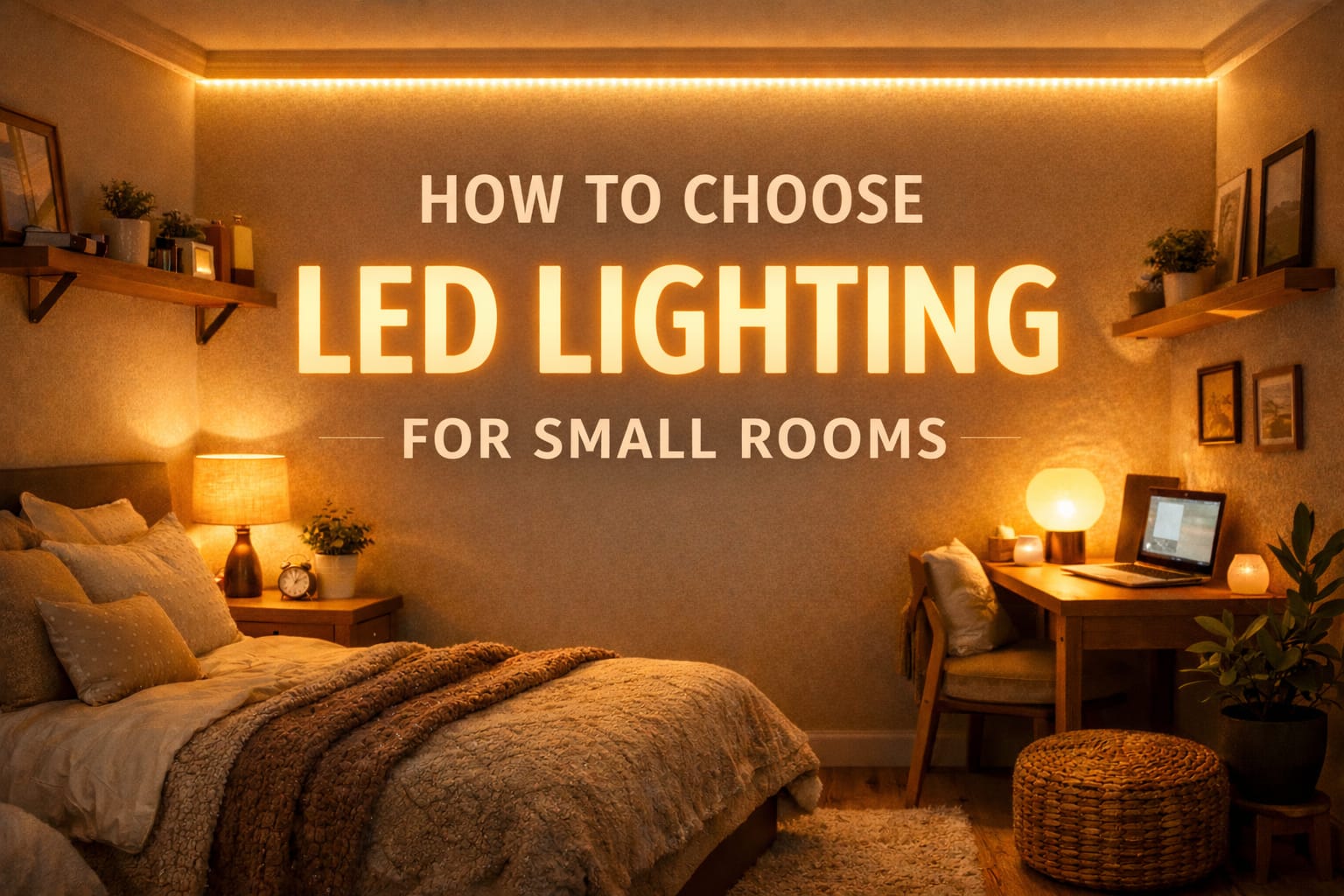
Quick Answer: The best lighting for small rooms is usually a low-profile ceiling fixture, one wall-mounted or desk task light, and one soft accent light. Use warm-to-neutral LEDs, dimming, and wall or corner placement to make the room feel brighter without glare or clutter.
Table of Contents:
- Best Lighting Setup for Small Rooms
- Best Light Fixtures for Small Rooms
- How Bright Should a Small Room Be?
- How to Layer Light Without Clutter
- Best LED Color Temperature for Small Rooms
- Placement Tips That Make a Room Feel Bigger
- Small Bedroom, Office and Studio Lighting Ideas
- Small Room Lighting Mistakes
- Final Takeaway
- FAQ
- Sharing This Guide
Best Lighting Setup for Small Rooms
The best lighting for small rooms is not the brightest fixture you can find. It is a balanced setup that gives the room enough usable light while keeping the ceiling, walls, desks, and bedside surfaces from feeling crowded.
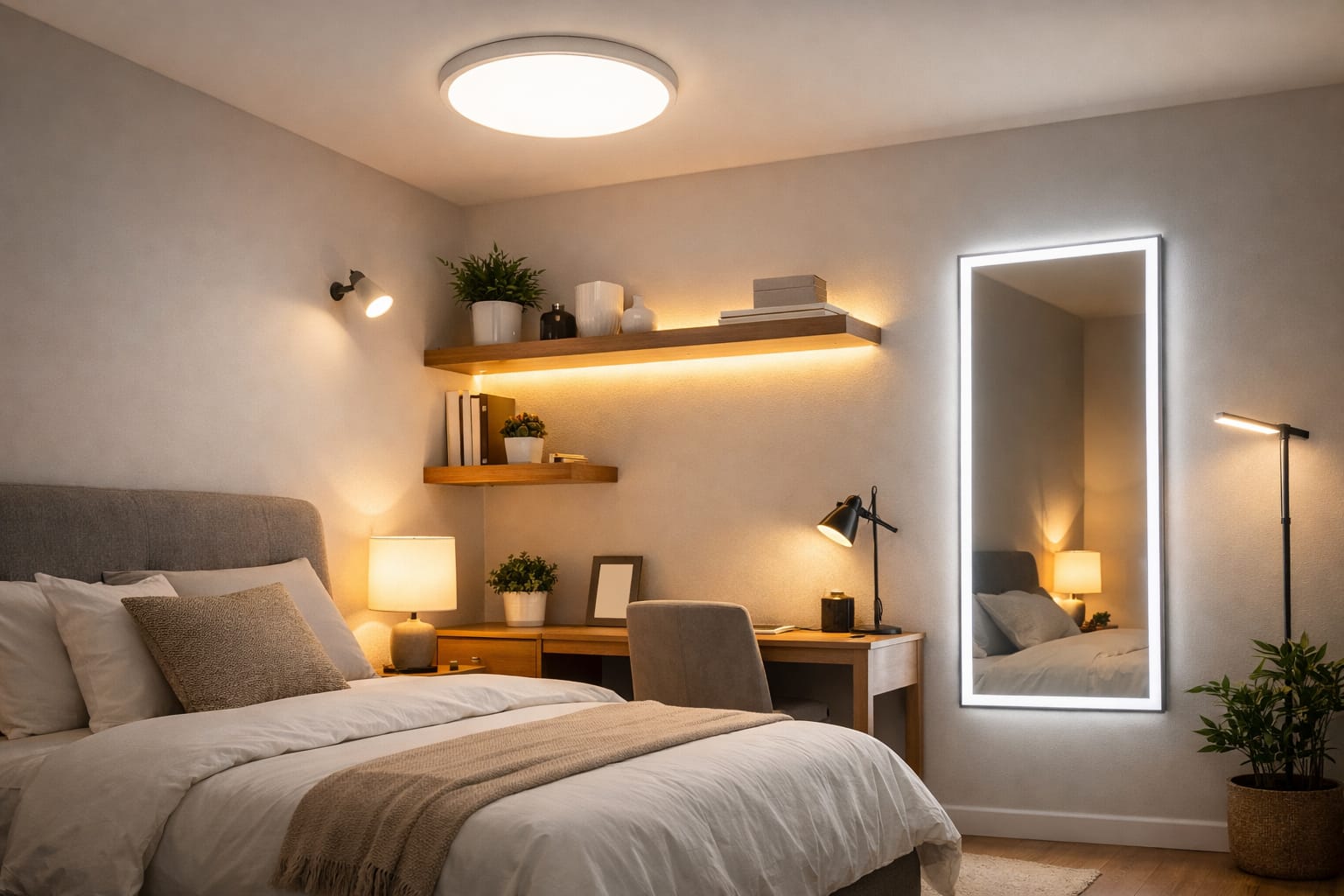
A strong small-room setup usually has three simple parts: one compact ambient light for general visibility, one focused task light for reading or work, and one subtle accent light that adds depth. This gives the room more flexibility than a single ceiling bulb and usually makes the space feel larger, calmer, and more useful.
The reason this works is simple: small rooms react quickly to lighting mistakes. A bulky fixture can make the ceiling feel lower, one bright bulb can create glare, and dark corners can make the room feel tighter. For broader product-selection basics, the LED lighting buying guide is a useful supporting resource.
Best small-room formula: Low-profile ceiling light + focused task light + soft wall, shelf, or corner accent light. This is usually enough for bedrooms, offices, guest rooms, studios, and compact living spaces.
Best Light Fixtures for Small Rooms
The best light fixtures for small rooms are the ones that provide useful light without dominating the room visually. Flush-mount ceiling lights, ultra-slim panels, small recessed lights, wall sconces, compact desk lamps, and hidden LED strips usually work better than oversized chandeliers, wide lampshades, or heavy decorative fixtures.
If the ceiling is low, start with a slim flush mount, canless recessed light, or low-profile LED panel. These fixtures keep the ceiling line cleaner and reduce visual weight overhead. This same idea is also useful in related compact areas, especially rooms with low ceilings and narrow transition spaces; for more examples, see the guides on lighting for low ceilings and lighting for narrow hallways.
If one main fixture needs to handle everyday brightness and softer evening use, a low-profile smart LED ceiling light for small rooms is a natural fit. It keeps the ceiling visually clean while giving you dimming and color-temperature control without adding another lamp.
Wall-mounted lights are often the smartest upgrade when floor or surface space is limited. They free up nightstands, desks, dressers, and side tables while still giving you light exactly where you need it.
How Bright Should a Small Room Be?
A small room does not need extreme brightness, but it does need enough light in the right places. As a rough starting point, general ambient lighting is usually around 20 to 30 lumens per square foot; task lighting is then added where people read, work, apply makeup, study, or use a desk.
The bigger issue is usually not total brightness. It is poor distribution. One bright ceiling bulb can technically light the room while leaving corners dull and making the space feel flat. Good small-room lighting spreads brightness across the room instead of concentrating it in one harsh spot.
Task lighting is still important even in a compact space. A slim desk lamp, clip-on reading light, or wall-mounted swing-arm lamp often works better than increasing the brightness of the entire room. This keeps the space comfortable and avoids glare from an overly strong ceiling light.
If the room genuinely needs stronger output, use the high-lumen LED bulbs guide to compare brightness options without overlighting the space.
How to Layer Light Without Clutter
Layered lighting design is one of the fastest ways to make a small room feel better, but the layers must stay simple. In most compact rooms, you only need ambient lighting, task lighting, and one accent layer. Adding more fixtures than that can make the room feel busier instead of better.
Ambient lighting gives the room overall visibility. Task lighting handles specific activities such as reading, working, studying, or getting ready. Accent lighting adds depth and softness, especially when it is placed behind a headboard, under a shelf, around a desk, or near a corner.
This is where ambient, task, and accent lighting become especially useful in small spaces. Instead of making one ceiling fixture do everything, each layer handles one job. For a deeper breakdown of this concept, see the guide to ambient vs task vs accent lighting.
In a small room, three well-placed light sources usually outperform six random fixtures. A main light, one task light, and one subtle accent light are often enough.
For shelves, headboards, desks, or indirect corner lighting, tunable white LED strip lights for hidden accent lighting are especially useful because they add depth without adding another visible lamp. The key is to hide the strip itself and let the glow soften the room.
Smart bulbs and tunable fixtures can also help in small rooms because one space often has multiple jobs. A room may need brighter neutral light during the day and softer warm light at night, and dimming makes that switch easier without adding more lamps.
Best LED Color Temperature for Small Rooms
Color temperature affects how a small room feels almost as much as brightness. Warm white light around 2700K to 3000K usually works best in bedrooms, living spaces, and relaxing areas because it feels comfortable and inviting. Neutral white around 3500K to 4000K can work better in home offices, hobby rooms, makeup areas, or multipurpose rooms.
Cooler light can make a room feel sharper, but it can also feel sterile if it is too strong or too blue. In a small room, that effect is more noticeable because the light reflects from nearby walls, furniture, and screens.
High CRI also matters. Better color rendering can make furniture, wall colors, skin tones, and decor look more natural without forcing you to use a brighter bulb. The U.S. Department of Energy’s LED Basics guidance explains why CRI and light quality matter alongside brightness.
For the easiest setup, choose one color temperature family for the whole room. Mixing one warm bulb with one cool bulb often makes a small space feel visually messy, even when each individual light is good.
Placement Tips That Make a Room Feel Bigger
Placement changes perceived size. In small rooms, light that reaches walls, corners, shelves, and ceilings usually makes the room feel larger than light aimed only downward. This is why wall sconces, upward-facing lamps, hidden LED strips, and indirect lighting can be more effective than one central overhead bulb.
Try to avoid creating one bright center and four dark corners. Instead, use the main fixture for general visibility, then add a softer light near the area that feels darkest. This helps the room feel wider and more balanced without increasing the brightness too aggressively.
Mirrors can also extend light. They do not replace good lighting, but placing a mirror opposite a window or near a lamp can bounce light back into the room. This is one of the simplest ways to improve small-space lighting without installing another fixture.
If harsh reflections or eye discomfort are part of the problem, the glare reduction guide is the best follow-up before choosing stronger bulbs.
Small Bedroom, Office and Studio Lighting Ideas
The right lighting setup depends on how the small room is used. A bedroom usually needs softness and comfort, a home office needs focused task lighting, and a studio or multipurpose room needs flexibility.
Small Bedroom
Best setup: Flush-mount ceiling light, bedside wall sconces, warm accent light.
Why it works: Keeps the room calm while freeing up nightstand space.
Small Home Office
Best setup: Overhead ambient light, desk task light, neutral white LED.
Why it works: Improves focus without making the whole room too bright.
Studio or Multipurpose Room
Best setup: Dimmable ceiling light, hidden LED strip, tunable bulb.
Why it works: Lets the same room shift between work, relaxation, and evening use.
Guest Room
Best setup: Simple ceiling light, reading light, warm bulb.
Why it works: Keeps the setup easy to use without adding clutter.
For small bedrooms and compact desk corners, a wall-mounted LED sconce for tight bedrooms or workspaces can be more practical than another table lamp because it gives you focused light while keeping surfaces clear.
If the room is mostly for relaxing, prioritize warmer bulbs, dimming, and indirect lighting. If the room is mostly for productivity, use stronger task lighting and a more neutral color temperature. If the room has both jobs, tunable light is usually worth considering.
Small Room Lighting Mistakes That Make Spaces Feel Smaller
The most common mistake is choosing a fixture that is too large for the room. Even if the light output is acceptable, a visually heavy fixture can make a small room feel lower, tighter, and more crowded.
The second mistake is relying on one ceiling light for everything. This often creates a bright center, dull corners, and glare where people sit, read, work, or look at screens. A small task light or indirect accent light usually solves the problem better than simply increasing lumens.
The third mistake is mixing color temperatures. When one bulb is warm and another is cool, the room can feel disorganized. Matching bulbs or using a coordinated smart setup usually makes the space feel cleaner very quickly.
Do not try to make a small room feel bigger by installing the brightest, coolest bulb you can find. This usually increases glare and makes the space feel tense instead of open.
In short, good LED lighting for small rooms is about restraint, consistency, and smarter placement rather than buying the brightest product available.
Final Takeaway
The best lighting for small rooms is simple: one low-profile main fixture, one focused task light, and one subtle accent or indirect light source. This combination improves brightness, flexibility, and comfort without making the room look crowded.
Focus on compact LED fixtures, layered lighting design, warm-to-neutral color temperature, dimming, and placement that spreads light toward walls and corners. When these choices work together, even a tight room can feel brighter, calmer, and more open.
For broader support beyond this article, the LED Knowledge Center is the best overall resource.
FAQ
What Is the Best Lighting for Small Rooms?
The best lighting for small rooms is usually a low-profile ceiling light, one focused task light, and one soft accent light. This gives the room useful brightness without making it feel cluttered or harsh.
How Do You Make a Small Room Look Bigger with Lighting?
Use light that reaches walls, corners, and ceilings instead of pointing everything straight down. Wall lights, upward-facing lamps, mirrors, hidden LED strips, and warm-to-neutral bulbs can make a compact room feel wider and more balanced.
Are LED Lights Good for Small Spaces?
Yes. LED lights are good for small spaces because they are available in slim fixture styles, dimmable options, smart bulbs, tunable color temperatures, and hidden strip formats. The key is choosing the right placement and color temperature instead of only choosing the brightest option.
Sharing This Guide
Share this guide if you found it helpful. Save it for later or share it with a friend who is trying to make a small room feel brighter without adding visual clutter.
Share using the links below:
Interested in learning more? Browse all related articles in our category section.