Bedroom Lighting Design: How to Layer Light for Better Sleep
Good bedroom lighting design should do more than brighten the room. It should help you relax at night, support practical tasks like reading or getting dressed, and make the space feel balanced and comfortable.
This guide explains how to combine ambient, task, and accent lighting, choose the right color temperature, place fixtures well, and avoid the most common mistakes that make bedrooms feel harsh or poorly planned.

Table of Contents
- Understanding the layers
- Creating an ambient foundation
- Adding task lighting where it matters
- Using accent lighting for depth
- Choosing the right color temperature
- Using dimmers and lighting scenes
- Placing fixtures for comfort and coverage
- Planning better bedside lighting
- Improving closet lighting
- Adding smart lighting features
- Improving energy efficiency
- Common bedroom lighting mistakes
- Key Takeaways
- Sharing this guide
Understanding the Layers
Strong bedroom lighting design starts with three core lighting layers that work together instead of competing with one another. When the room includes ambient, task, and accent lighting, it becomes easier to shift from bright daytime use to a softer evening mood without relying on one harsh ceiling fixture.
Ambient lighting provides the general light level for the room. It sets the base layer and should feel even, comfortable, and easy on the eyes rather than stark or overly bright.
Task lighting supports specific activities such as reading in bed, choosing clothes, or using a vanity. It should be brighter and more focused than the general room lighting, but still comfortable for a bedroom setting.
Accent lighting is the finishing layer. It highlights features, adds depth, and often gives the room a more polished and relaxing feel, especially in the evening.
How the Layers Work Together
The real benefit comes from being able to control each layer separately. You might keep the ambient lighting low while using a bedside reading lamp, or use only accent lighting at night for a softer atmosphere that does not feel disruptive.
This approach also works well with lighting psychology. Warm, dim settings can support relaxation later in the day, while brighter, clearer light helps the room feel more functional in the morning.
Creating an Ambient Foundation
Ambient lighting is the base of the entire scheme, so it should feel broad, soft, and easy to live with. In many bedrooms, that means a flush-mount or semi-flush ceiling fixture, though pendants and chandeliers can also work well when ceiling height and style support them.
Recessed lighting can also provide a clean, modern look, especially when paired with dimmers. The key is to avoid turning the room into a bright overhead wash that feels more like a hallway than a place to unwind.
If overhead light feels too harsh at night, indirect options often work better. For example, flexible LED strip lights for a soft ambient glow can be used behind a headboard, under furniture, or in a cove detail to create a gentler look. For broader planning principles, it also helps to review lighting design fundamentals.
If you only have room or budget for one major upgrade, improve the ambient layer first. A softer base light instantly makes the whole bedroom feel better, even before you add specialty fixtures.
Recommended Light Levels
Bedrooms usually need about 10 to 20 lumens per square foot for general lighting. That is enough to make the room usable and comfortable without pushing it into an overly bright range that can feel cold or harsh at night.
For a 12 x 12 foot bedroom, that works out to roughly 1,440 to 2,880 lumens from the ambient layer. Dimmers make this much easier to manage, because you can size the system properly and still turn it down when you want a calmer atmosphere.
Adding Task Lighting Where It Matters
Task lighting should make specific activities easier without overpowering the rest of the room. In bedrooms, that usually means reading lights, vanity lighting, desk lamps, or focused closet illumination.
For reading in bed, 300 to 500 lumens is often enough when the fixture is positioned well. Table lamps on nightstands work, but wall-mounted swing-arm fixtures are often better if you want to save space and direct the light more precisely.
Vanity or dressing areas need more careful planning because poor placement can create strong shadows on the face. Fixtures placed on both sides of a mirror usually give more even, useful light than a single fixture mounted above it. If glare is a problem, this guide on reducing glare is also worth reviewing.
Reading Light Positioning
A good reading light should sit close enough to the page to be effective, but not so close that it creates glare or a hot spot. A common target is about 15 to 20 inches from the reading surface, positioned around shoulder height when you are sitting up in bed.
Adjustable fixtures are especially useful because reading position changes from person to person. A lamp or sconce that pivots easily will be more comfortable and more practical over time than a fixed light aimed in only one direction.
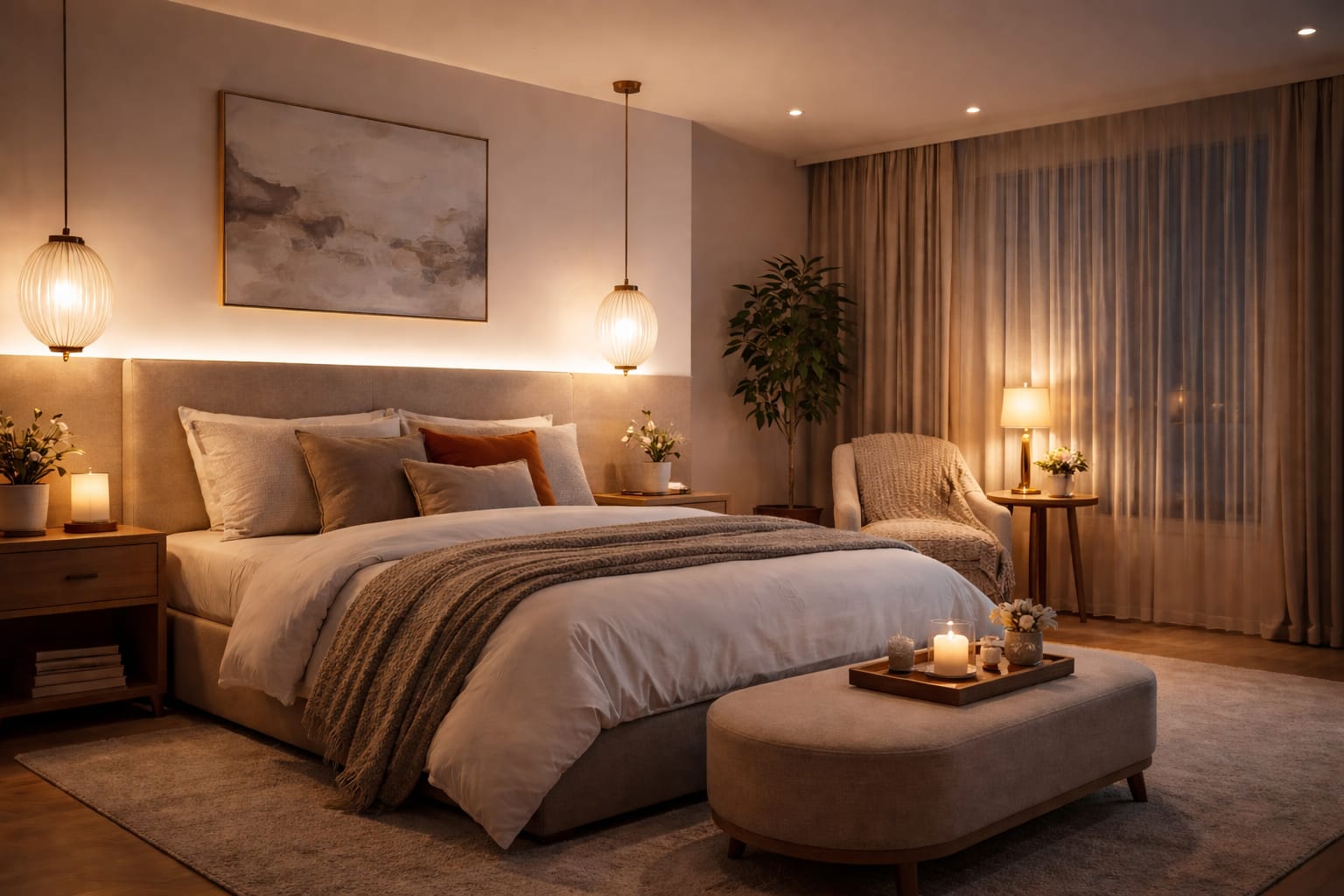
Using Accent Lighting for Depth
Accent lighting is what keeps a bedroom from feeling flat. Even a simple room benefits from a small amount of layered light that adds depth, draws attention to a feature, or creates a softer look once the main lights are dimmed.
LED strips under the bed, behind a headboard, or along shelving can create a subtle floating effect that looks modern and also works well as low-level nighttime lighting. Picture lights, uplighting, or a softly lit wall texture can have a similar effect without making the room feel busy.
This layer should stay subtle. In most bedrooms, accent lighting works best when it adds atmosphere rather than trying to become the brightest thing in the room.
Decorative Fixtures
Decorative fixtures can also play an accent role. A statement pendant, chandelier, or sculptural bedside lamp may contribute real light while still acting as a design focal point during the day.
That only works well if the fixture suits the room’s scale. Something oversized can dominate a small bedroom, while a fixture that is too small can disappear and leave the lighting feeling underpowered.
Choosing the Right Color Temperature
Color temperature has a major effect on how a bedroom feels. Warmer light tends to feel calmer and more inviting, while cooler light feels clearer and more alert. In a space meant for winding down, that difference matters.
For most bedrooms, bulbs in the 2700K to 3000K range are the safest choice for the main lighting. They create a warm white look that feels comfortable in the evening and still works well for general use.
Cooler light in the 4000K to 5000K range can still be useful in focused task areas, especially at a vanity or desk where crisp visibility matters. It is usually better to keep those cooler tones limited rather than using them across the whole room.
Using very cool, bright light as the main bedroom lighting can make the space feel clinical and uncomfortable at night, even if the fixture itself looks attractive.
Tunable White Options
Tunable white bulbs or fixtures let you shift color temperature throughout the day. That can be useful if the bedroom also functions as a workspace, dressing area, or multipurpose room where needs change from morning to night.
A warmer evening setting and a slightly cooler daytime setting can make one room feel more adaptable without needing to swap bulbs or rely on separate fixtures for every situation.
Using Dimmers and Lighting Scenes
Dimmers are one of the easiest ways to improve bedroom lighting design. They let the same fixture handle different situations, from bright morning routines to soft evening lighting, without forcing you into an all-or-nothing setup.
LED-compatible dimmers are important because not every dimmer works properly with every bulb. Checking compatibility before installation helps prevent buzzing, flicker, poor dimming range, or lights that cut out too early.
Smart dimmers and app-based systems can take this further by saving favorite settings. That makes it easy to move between a bright cleaning setup, a reading setup, and a low-light bedtime mode with minimal effort.
Scene Programming
Lighting scenes are especially useful when the room has several fixtures or layers. Instead of adjusting each light one by one, a single preset can bring the room to the exact brightness and mood you want.
For example, a morning scene might use full ambient light plus vanity lighting, while an evening scene could dim the main fixture and leave only warm bedside or accent lighting active.
Placing Fixtures for Comfort and Coverage
Good fixture placement solves problems before they start. It helps avoid glare, dark corners, awkward shadows, and that common bedroom issue where the ceiling light is technically bright enough but still uncomfortable to use.
In many rooms, keeping a central fixture slightly forward of the bed rather than directly above it improves comfort when lying down. Wall sconces beside the bed can also save nightstand space while creating a more intentional layout.
If you are planning a broader setup, it helps to compare this with our guide to lighting layout planning and to avoid the issues covered in common lighting placement mistakes.
Recessed Light Spacing
If you use recessed lights, spacing matters. A common rule is to divide the ceiling height by two to estimate the spacing in feet. In an 8-foot room, that usually means placing fixtures about 4 feet apart.
Keeping the outer fixtures roughly 2 to 3 feet from the walls can also reduce uneven light patterns and help the room feel more balanced.
Planning Better Bedside Lighting
Bedside lighting deserves more attention than it often gets. It affects reading comfort, nighttime visibility, convenience, and how well two people can share the room without disturbing each other.
Table lamps are still a strong choice because they are easy to install and easy to change. Shades that direct light downward are usually better than exposed bulbs, especially in shared bedrooms where uncontrolled glare can be annoying.
Wall-mounted reading lights or clip-on lights can work even better for dedicated readers because they keep light focused on the page. For more ideas, see our separate guide to bedroom lighting setup ideas.
Touch Controls and Easy Switching
Touch lamps and easy-access switches make bedside lighting much more practical. They reduce fumbling in the dark and make it easier to turn lights on or off during the night without fully waking yourself up.
That kind of convenience pairs well with efficient lighting. The U.S. Department of Energy LED lighting guidance is a useful reference if you want to compare modern LED performance and efficiency basics.
Improving Closet Lighting
Closet lighting is easy to overlook, but it has a direct effect on how usable the bedroom feels. A dark closet makes it harder to pick clothing, check color, and keep the space organized.
Walk-in closets usually need a combination of general overhead light and targeted shelf or hanging-rail lighting. LED strips can work especially well here because they bring light into areas where a ceiling fixture alone often leaves deep shadows.
High CRI lighting is also worth considering. Better color accuracy makes it easier to judge fabrics and outfit combinations correctly before you leave the room.
Reach-In Closet Options
In smaller reach-in closets, front-mounted shelf lighting or slim LED strips often work better than a single bulb in the center. They reduce shadows created by hanging clothes and help illuminate the full depth of the space.
Battery-powered or rechargeable puck lights can also be useful for renters or for anyone who wants a simple upgrade without wiring work.
Adding Smart Lighting Features
Smart lighting can make a bedroom feel more convenient, especially when you want to adjust brightness or color without getting out of bed. Voice control, app control, and automation can all be useful here when they are simple and reliable.
Schedules are often one of the best features. A gradual wake-up routine that slowly brightens the room can feel much better than turning on a bright overhead light all at once.
Smart systems can also coordinate with other devices, though not every bedroom needs that level of complexity. In many cases, a few well-chosen smart bulbs or a smart dimmer will be more useful than a fully automated setup.
Presence and Motion Features
Motion or presence sensing can be helpful in closets, under-bed lighting, or entry zones, but it needs careful setup in a bedroom. Sensors that are too aggressive can switch lights on or off at the wrong time and become more annoying than useful.
When used well, though, they can improve convenience and help reduce wasted energy from lights being left on longer than needed.
Improving Energy Efficiency
LED lighting is usually the most practical choice for bedroom efficiency because it combines low energy use with long lifespan and good dimming options. Compared with older incandescent or halogen bulbs, it can cut lighting energy use dramatically while still giving you better control over brightness and tone.
The biggest gains usually come from choosing the right lumen output instead of buying bulbs that are brighter than the room needs. Efficient bedroom lighting is not just about using LED products. It is also about avoiding unnecessary over-lighting.
Timers, dimmers, and occupancy controls can improve efficiency even further. If you want more detail on certified options, the ENERGY STAR LED guide is a good external reference.
Long-Term Value
Quality LED bulbs may cost more upfront, but they often pay for themselves over time through lower electricity use and fewer replacements. That matters even more in bedrooms where multiple fixtures, bedside lamps, and closet lighting can add up.
Looking at total ownership cost instead of just sticker price usually gives a clearer picture, especially when you want lighting that is comfortable, efficient, and low maintenance.
Common Bedroom Lighting Mistakes
The most common mistake is relying too heavily on one central ceiling light. That setup may technically light the room, but it rarely feels comfortable, flexible, or flattering.
Another frequent issue is skipping dimmers. Without them, even good fixtures can feel too bright at night and too limited overall. Bedrooms benefit more than most rooms from having a controllable brightness range.
It is also easy to choose the wrong color temperature, overlook bedside convenience, or pick fixtures that are the wrong size for the room. For broader education on related topics, you can explore the LED lighting knowledge center.
Fixture Scale and Clearance
Fixture scale affects both appearance and comfort. A large hanging fixture in a low room can feel intrusive, while a tiny fixture in a large room may look lost and fail to support the lighting plan properly.
Always consider ceiling height, bed placement, and walking paths before choosing pendants or chandeliers. Safe clearance matters just as much as style.
Key Takeaways
A strong bedroom lighting design uses layers instead of depending on a single overhead fixture. Ambient, task, and accent lighting each play a different role, and the best results come from combining them in a way that fits how the room is actually used.
Start with a comfortable ambient base, add focused bedside or vanity lighting where needed, and use warm color temperatures plus dimmers to make the room easier to adjust throughout the day. Small changes in placement and control often make a bigger difference than buying more fixtures.
If you plan carefully, your bedroom can feel more relaxing at night, more practical in the morning, and more polished overall without becoming overly complicated or expensive to upgrade.
Sharing this guide
If you found this guide helpful, save it for later or share it with someone planning a bedroom lighting upgrade.
Share using the links below
Interested in learning more? Browse all related articles in our category section.
Pingback: How to Choose LED Strip Lights - NeoLEDHub
Pingback: Best LED Strip Lights for Bedrooms (Cozy Setup) - NeoLEDHub
Pingback: Warm Light vs Cool Light Explained - NeoLEDHub
Pingback: Beginner Guide to Lighting Design - NeoLEDHub
Pingback: Lighting for High Ceilings: Best Ideas - NeoLEDHub
Pingback: Best Smart Lighting Ideas for Bedrooms - NeoLEDHub
Pingback: Ambient vs Task vs Accent Lighting: What’s the Difference? - NeoLEDHub
Pingback: Best LED Strip Lights for Bedrooms: What Actually Looks Cozy - NeoLEDHub
Pingback: Best LED Lighting for Small Rooms: Space-Saving Fixture Tips
Pingback: Direct vs Indirect Lighting: Which Works Best in Each Room?
Pingback: Beginner Guide to Lighting Design: How to Layer Light in Any Room
Pingback: How to Choose LED Strip Lights: What to Check Before You Buy