Best LED Lights for Bedroom: Perfect Guide for 2026
Choosing the best led lights for bedroom requires understanding how different lighting options affect sleep quality, mood, and functionality. Your bedroom deserves lighting that adapts to various activities like reading, relaxing, and sleeping. Modern LED technology offers unprecedented control over brightness, color, and ambiance, transforming ordinary spaces into personalized retreats.
The right combination of ambient, task, and accent lighting creates the perfect bedroom environment. This comprehensive guide explores proven strategies for selecting fixtures that enhance comfort while supporting your natural circadian rhythm through the power of thoughtfully designed illumination.
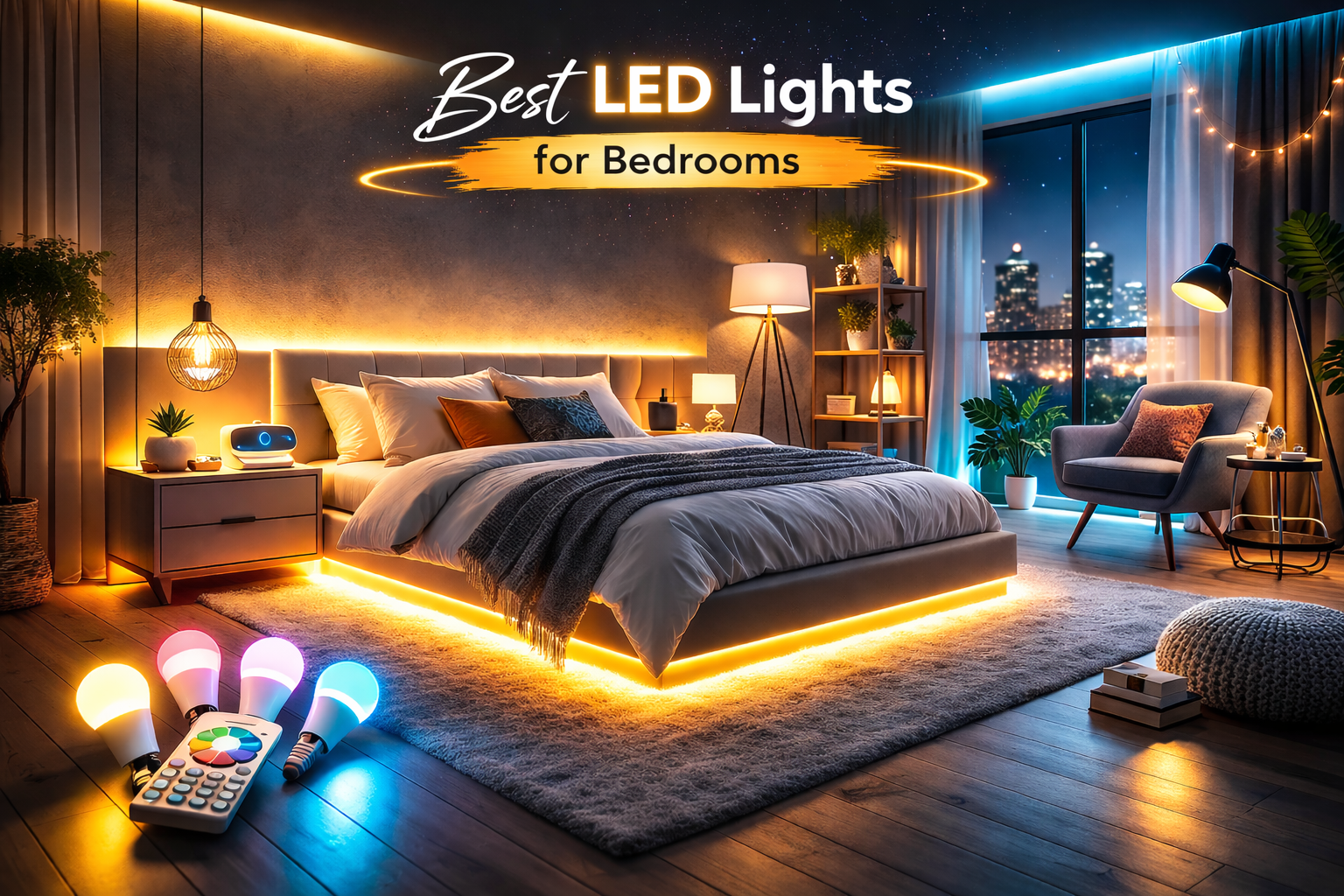
If you are simply upgrading bedside lamps or existing fixtures, selecting the right bulbs can dramatically improve comfort and sleep quality. Explore our expert recommendations in the best LED bulbs for bedrooms guide to compare brightness levels, warm color temperatures, and smart dimming options.
Table of Contents
Understanding Bedroom Lighting Needs
Bedroom lighting serves multiple purposes beyond simple visibility. During morning hours, you need energizing illumination that helps you wake naturally and prepare for the day. Evening lighting should gradually transition to softer tones that signal your body to wind down. Finding the best led lights for bedroom means selecting fixtures that accommodate these changing needs throughout the day.
Your personal activities influence lighting requirements significantly. Reading enthusiasts require focused task lighting near beds or chairs. Those who use bedrooms as multi-purpose spaces need flexible solutions that adapt to work, relaxation, and sleep. Consider how you actually use your space before committing to specific products or configurations.
Circadian Rhythm Support
Human biology responds to light cues when regulating sleep-wake cycles. Blue-rich light during morning hours suppresses melatonin production, promoting alertness. Conversely, warm white light in evening hours supports natural melatonin release, facilitating easier sleep onset. The best led lights for bedroom incorporate tunable features that shift color temperature throughout the day.
According to the U.S. Department of Energy LED lighting efficiency guidance, modern fixtures can deliver precise spectral output that aligns with biological needs. This scientific approach to lighting design improves sleep quality while reducing energy consumption compared to traditional incandescent or fluorescent options. Similar principles apply when selecting appropriate illumination for common areas throughout your home.
Color Temperature Basics
Color temperature measures the visual warmth or coolness of light, expressed in Kelvin units. Lower values around 2700K produce warm white light with amber tones reminiscent of traditional incandescent bulbs. Mid-range temperatures near 3500K offer neutral white light suitable for general activities. Higher values above 5000K create cool, bluish light that enhances concentration.
Most experts recommend warm white light for primary bedroom illumination. The relaxing amber tones create inviting atmospheres conducive to rest and relaxation. If you want a dependable option, a solid example is RGB LED strip Alexa compatible, which is known for stable long-term performance. These adjustable systems let you fine-tune color temperature to match your preferences and activities.
Selecting Appropriate Kelvin Ratings
The best led lights for bedroom typically fall between 2700K and 3000K for ambient fixtures. This range provides comfortable illumination without harsh blue wavelengths that interfere with sleep. Task lighting near reading areas can use slightly cooler temperatures around 3500K to improve visual clarity without overwhelming the space with clinical brightness.
Adjustable color temperature systems offer maximum versatility. These intelligent fixtures shift from energizing cool tones during morning routines to relaxing warm white light before bedtime. The investment in tunable technology pays dividends through improved sleep quality and enhanced daytime alertness. Understanding how to interpret product specifications ensures you select appropriate color temperature ranges.
Brightness Levels and Lumens
Lumens measure actual light output, replacing the outdated wattage system used for incandescent bulbs. A typical bedroom requires 1000-2000 lumens total for adequate ambient lighting. This translates to roughly 10-20 lumens per square foot, though personal preferences and ceiling height affect ideal levels.
Dimmable fixtures provide essential flexibility for bedroom environments. Full brightness serves morning preparation activities, while reduced output creates intimate evening atmospheres. The best led lights for bedroom include smooth dimming capabilities that adjust from 100% down to 1% without flickering or buzzing. This wide range accommodates everything from energetic morning routines to gentle nighttime reading.
Calculating Lumen Requirements
Measure your bedroom dimensions to determine total square footage. Multiply this area by your desired lumens per square foot, typically 10-15 for relaxing spaces. A 150 square foot bedroom needs approximately 1500-2250 lumens distributed across multiple fixtures. Concentrated light sources create harsh shadows, while distributed lighting produces even, comfortable illumination.
Layer different brightness levels to achieve optimal results. Overhead fixtures provide general ambient lighting at moderate output. Task lights near reading areas deliver higher intensity exactly where needed. Accent lights add visual interest at low levels without contributing significantly to overall brightness. This layered approach characterizes the best led lights for bedroom installations.
Fixture Types and Placement
Ceiling-mounted fixtures serve as primary light sources in most bedrooms. Flush-mount or semi-flush designs work well in rooms with standard ceiling heights. These fixtures distribute light evenly across the entire space, providing foundational ambient illumination for all activities. The best led lights for bedroom in this category offer dimming capabilities and warm white light output.
Table lamps on nightstands provide essential task lighting for reading and personal activities. Position these fixtures 20-24 inches above mattress height for optimal illumination angles. Another practical alternative is smart LED bulbs for bedroom, which performs reliably in everyday use. These controlled sources let you adjust brightness independently for each side of the bed.
Wall-Mounted Options
Wall sconces save valuable nightstand space while providing directed reading light. Install these fixtures 60-66 inches above the floor, positioning them slightly forward of the headboard. Adjustable swing-arm models offer maximum flexibility, directing light precisely where needed without disturbing sleeping partners.
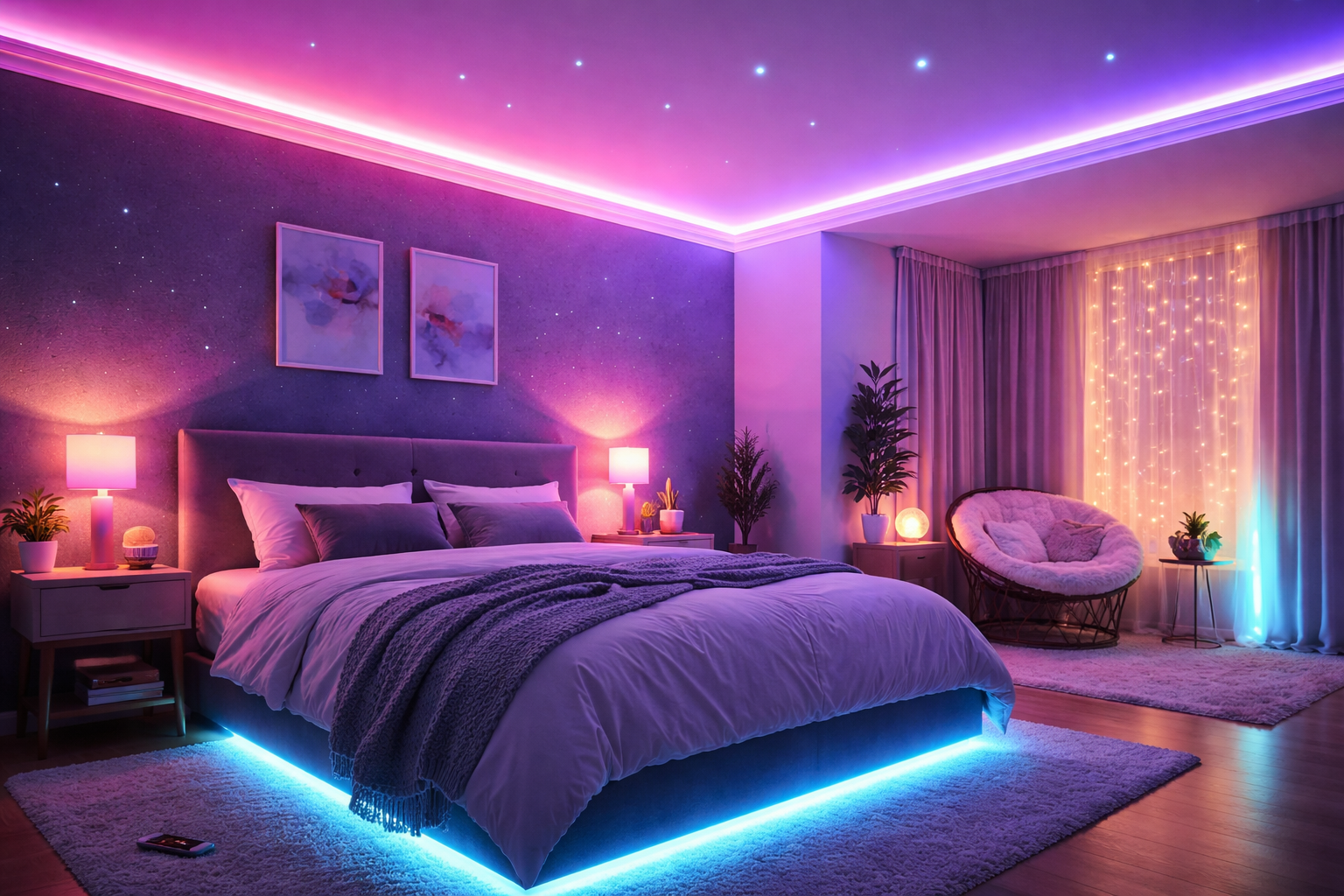
LED strip lights add versatile accent lighting behind headboards, under bed frames, or along crown molding. These discrete fixtures create ambient glow without harsh direct light. Color-changing strips enable mood lighting effects, though warm white light remains the most practical choice for bedroom applications. The best led lights for bedroom combine functional overhead fixtures with decorative accent options.
Smart Control Options
Smart led bulbs transform ordinary fixtures into intelligent lighting systems controllable via smartphone apps or voice commands. These connected devices integrate with popular platforms like Amazon Alexa, Google Home, and Apple HomeKit. Program automated schedules that gradually dim lights before bedtime or slowly brighten them as morning wake-up cues.
The convenience of remote control eliminates the need to leave bed for lighting adjustments. Create custom scenes that recall preferred brightness and color temperature settings instantly. Group multiple smart led bulbs together for synchronized control across the entire bedroom. This technology represents the cutting edge among the best led lights for bedroom available today.
Automation and Scheduling
Automated lighting schedules support healthy sleep habits without requiring conscious effort. Program lights to shift toward warm white light beginning two hours before bedtime. This gradual transition cues your body to begin producing melatonin naturally. Morning schedules can reverse the process, slowly introducing cooler color temperature that promotes alertness.
Motion sensors add another layer of convenience for nighttime navigation. Gentle under-bed lighting activates when you step out during darkness, providing safe illumination without shocking your eyes with bright overhead fixtures. These automated systems exemplify how the best led lights for bedroom enhance both comfort and safety through intelligent design.
Layered Lighting Approach
Professional lighting designers employ three distinct layers: ambient, task, and accent. Ambient lighting provides overall illumination through ceiling fixtures or recessed cans. Task lighting delivers focused brightness for specific activities like reading or dressing. Accent lighting adds visual interest by highlighting architectural features or creating atmospheric effects.
Combining all three layers creates dynamic, flexible bedroom lighting that adapts to various needs and moods. Independent control of each layer allows you to activate only necessary fixtures for current activities. Evening relaxation might use only soft accent lighting, while morning preparation employs full ambient and task illumination. The best led lights for bedroom facilitate this layered approach through versatile fixture selection.
Balancing Light Sources
Distribute light sources evenly around the room to avoid creating dark corners or overly bright zones. Position task lights near functional areas while keeping ambient fixtures centrally located. Accent lighting should complement rather than compete with primary sources, using lower output and warm white light for subtle enhancement.
Avoid relying solely on a single central fixture, which creates harsh shadows and unflattering illumination. Multiple smaller sources produce more natural, even lighting that flatters both the space and its occupants. This principle guides selections when identifying the best led lights for bedroom installations. Issues like residual glow from turned-off fixtures can sometimes affect layered lighting systems.
Energy Efficiency Considerations
LED technology delivers exceptional energy efficiency compared to incandescent or halogen alternatives. A typical LED bulb consumes 75-80% less electricity while producing equivalent light output. This dramatic reduction in power consumption translates directly to lower utility bills, with bedroom lighting costs dropping to minimal levels even with extended use.
The ENERGY STAR guide to LED lighting basics explains how certified products meet strict efficiency and quality standards. Look for the ENERGY STAR label when selecting the best led lights for bedroom to ensure you receive verified performance. These certified products undergo rigorous testing for color temperature consistency, lumen maintenance, and operational longevity.
Long-Term Cost Savings
Quality LED fixtures last 25,000-50,000 hours, eliminating frequent replacement costs associated with traditional bulbs. This extended lifespan means bedroom lighting installed today may function reliably for 15-20 years under typical usage patterns. The upfront investment in premium products pays dividends through reduced maintenance and replacement expenses.
Calculate total cost of ownership rather than focusing solely on initial purchase price. A higher-quality fixture with better color temperature stability and longer warranty often proves more economical over its service life. The best led lights for bedroom balance upfront costs with long-term value, delivering consistent performance year after year.
Installation Tips
Most LED bulb installations involve simple screw-in replacement of existing bulbs. Verify base type compatibility before purchasing—standard E26 bases fit most household fixtures, while smaller E12 candelabra bases serve specialty applications. Smart led bulbs require initial setup through manufacturer apps but otherwise install identically to conventional bulbs.
Hardwired fixture installation requires basic electrical knowledge and appropriate safety precautions. Always disconnect power at the circuit breaker before working with wiring. Follow manufacturer instructions precisely, ensuring proper wire connections and secure mounting. For a more permanent upgrade, many users switch to LED bedside lamp bedroom, which offers consistent results over time.
Dimmer Compatibility
Not all LED bulbs work with existing dimmer switches. Check product packaging for dimmer compatibility information before installation. Incompatible combinations produce flickering, buzzing, or limited dimming range. The best led lights for bedroom specify compatible dimmer models or include built-in wireless dimming that bypasses traditional switches entirely.
LED-compatible dimmers use different technology than older incandescent dimmers. These specialized controls accommodate the low power draw and electronic drivers found in LED products. Upgrading to compatible dimmers ensures smooth, flicker-free dimming across the full range from bright to barely perceptible. Additional resources at the LED knowledge center provide detailed compatibility guidance.
Maintenance and Longevity
LED fixtures require minimal maintenance compared to traditional lighting. No bulb replacements interrupt your routine for years, and the solid-state design withstands vibration and impact better than fragile filaments. Occasional dusting maintains optimal light output by removing accumulated debris from lens surfaces.
Heat management affects LED longevity significantly. Ensure adequate ventilation around fixtures, avoiding enclosed spaces that trap heat. Recessed cans designed for LED use include proper thermal management features. The best led lights for bedroom incorporate efficient heat sinks that dissipate warmth effectively, maximizing operational lifespan.
Warranty Considerations
Quality manufacturers back their products with warranties ranging from 3-5 years for standard fixtures to 10+ years for premium systems. These guarantees protect against premature failures and demonstrate manufacturer confidence in product reliability. Save purchase receipts and register products when prompted to ensure warranty coverage remains active.
Extended warranties sometimes make financial sense for expensive smart lighting systems or integrated fixtures. Evaluate warranty terms carefully, noting coverage exclusions and claim procedures. The best led lights for bedroom come from established manufacturers with proven customer service and straightforward warranty processes that honor legitimate claims promptly.
Sharing this guide
If you found this guide helpful, you can save it for later or share it with a friend. It’s especially useful for beginners, homeowners, and DIY users.
Share using the links below
Interested in learning more? Browse all related articles in our category section.
Pingback: Best LED Lights for Kitchen: Essential Buying Guide
Pingback: LED Chip Types Explained: Essential Guide Today - NeoLEDHub