The Best LED Lights for the Bedroom: Warm, Smart, and Sleep-Ready Picks
Selecting the ideal LED lights for a bedroom involves more than just brightness. The ideal setup should help you relax at night, provide comfortable reading light, and make the room feel inviting instead of harsh. For most bedrooms, this means prioritizing dimmable fixtures, warm white light, and layered lighting instead of relying on one overly bright ceiling fixture.
This guide breaks down the best options for sleep, reading, smart control, and bedroom ambiance, helping you choose lighting that will make you feel better every day and fit the way you use your room.
Quick Answer
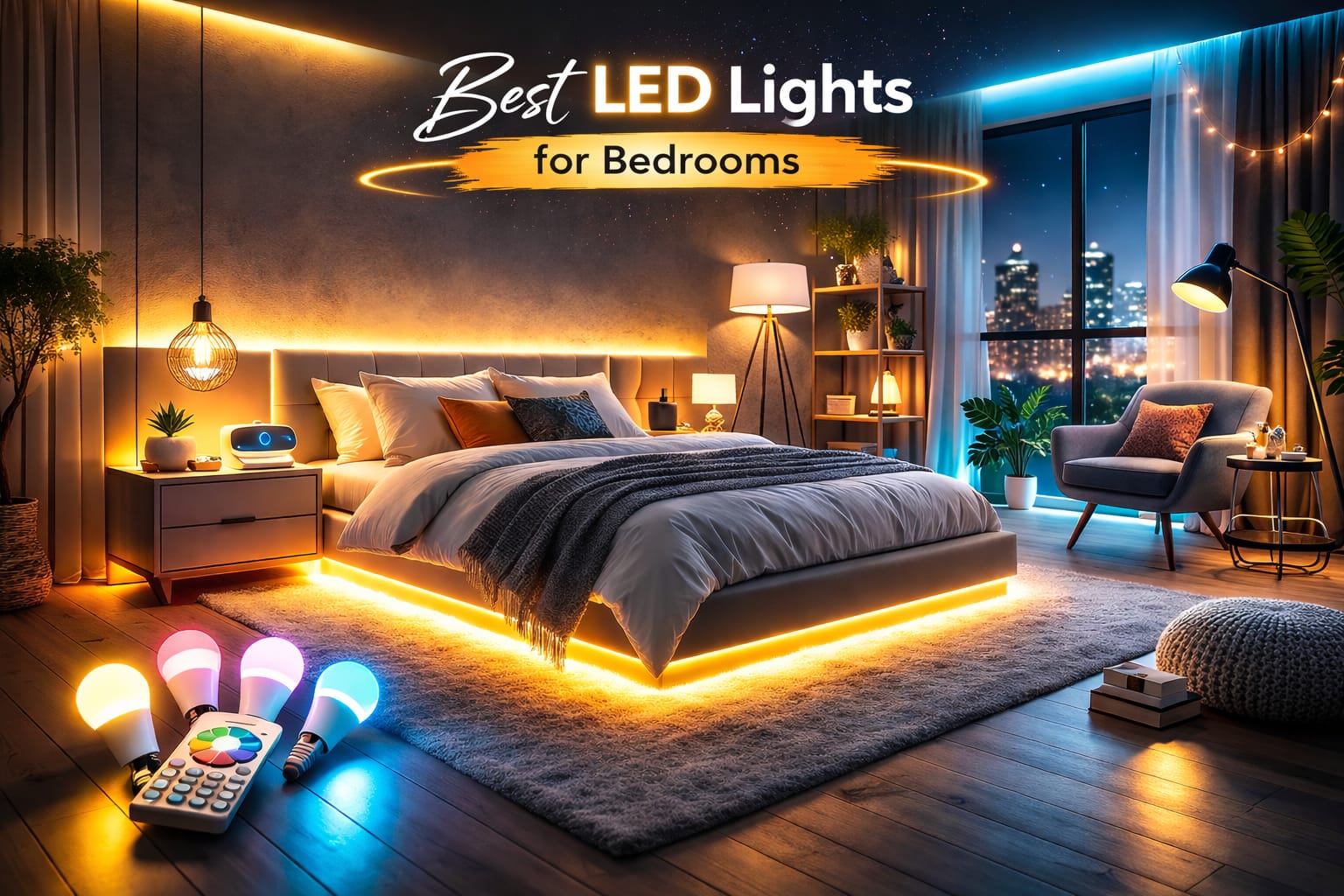
For most bedrooms, the best LED lights are warm white, dimmable, and layered. A good setup usually combines a soft ceiling light, a bedside lamp or sconce for reading, and optional accent lighting, such as strips behind a headboard or under the bed. If you want more flexibility, smart bulbs or tunable lighting can help you adjust the brightness and color temperature throughout the day.
- The best range for a relaxing bedroom is usually 2700K to 3000K.
- Dimming matters more than raw brightness.
- Warm white light is better for winding down at night.
- Smart bulbs are useful if you want schedules, scenes, or tunable white light.
- LED strips work best as accent lighting rather than the only light source in a room.
If you are upgrading mainly lamps or existing fixtures rather than changing the room’s layout, our best LED bulbs for bedrooms guide is a helpful next step for comparing brightness, warm white light, and smart dimming options.
Table of Contents:
- Quick Answer
- What works best in a bedroom
- Best LED lights for bedrooms, organized by use case
- Best color temperature for sleep and comfort
- How bright should bedroom lights be?
- Are smart LED bulbs worth it?
- Best fixture types and placement
- Why layered lighting works better
- Common bedroom lighting mistakes
- What should you choose?
- Key Takeaways
- Sharing this guide
What Works Best in a Bedroom
Unlike kitchens, offices, or garages, bedrooms usually need softer and more flexible lighting. You want enough light to get dressed, tidy up, or read comfortably, but not so much that the room feels cold at night. For this reason, the best bedroom lighting plans prioritize comfort over brightness.
A good bedroom setup can support several different moods. Morning light should help you wake up and get ready without making you feel gloomy. Evening light should feel calmer and less stimulating. Reading light should be focused enough to be useful without filling the whole room with glare. One fixture rarely accomplishes all of that well on its own.
That’s why dimmable, layered lighting is so important. Rather than hunting for one “perfect” light, it’s usually smarter to use a few light sources, each designed for a specific purpose. If you want a broader checklist for comparing product labels before buying, our LED lighting buying guide is a useful resource.
Best LED Lights for Bedroom by Use Case
The best LED lights for the bedroom depend on how you use the space. A bedroom used only for sleep and relaxation does not need the same lighting setup as a bedroom that also serves as a reading space, workspace, or dressing area. In other words, “best” is usually about the use case, not one universal product.
Best for sleep and relaxation
For sleep-friendly lighting, a warm white light between 2700 and 3000 Kelvin is usually the best choice. Dimmable bedside lamps, warm ceiling fixtures, and low-level accent lighting work better than cool, bright bulbs late at night.
Best for reading in bed
A focused bedside lamp or adjustable wall sconce works better than relying on the room’s main light. Reading light should stay focused where you need it instead of bouncing harshly across the room.
The best smart option
Smart LED bulbs are ideal if you want to control them with an app, voice commands, or schedules that gradually adjust brightness and color. They are especially useful for automating your evening routine or changing the room’s mood without touching the wall switch.
The best accent lighting option
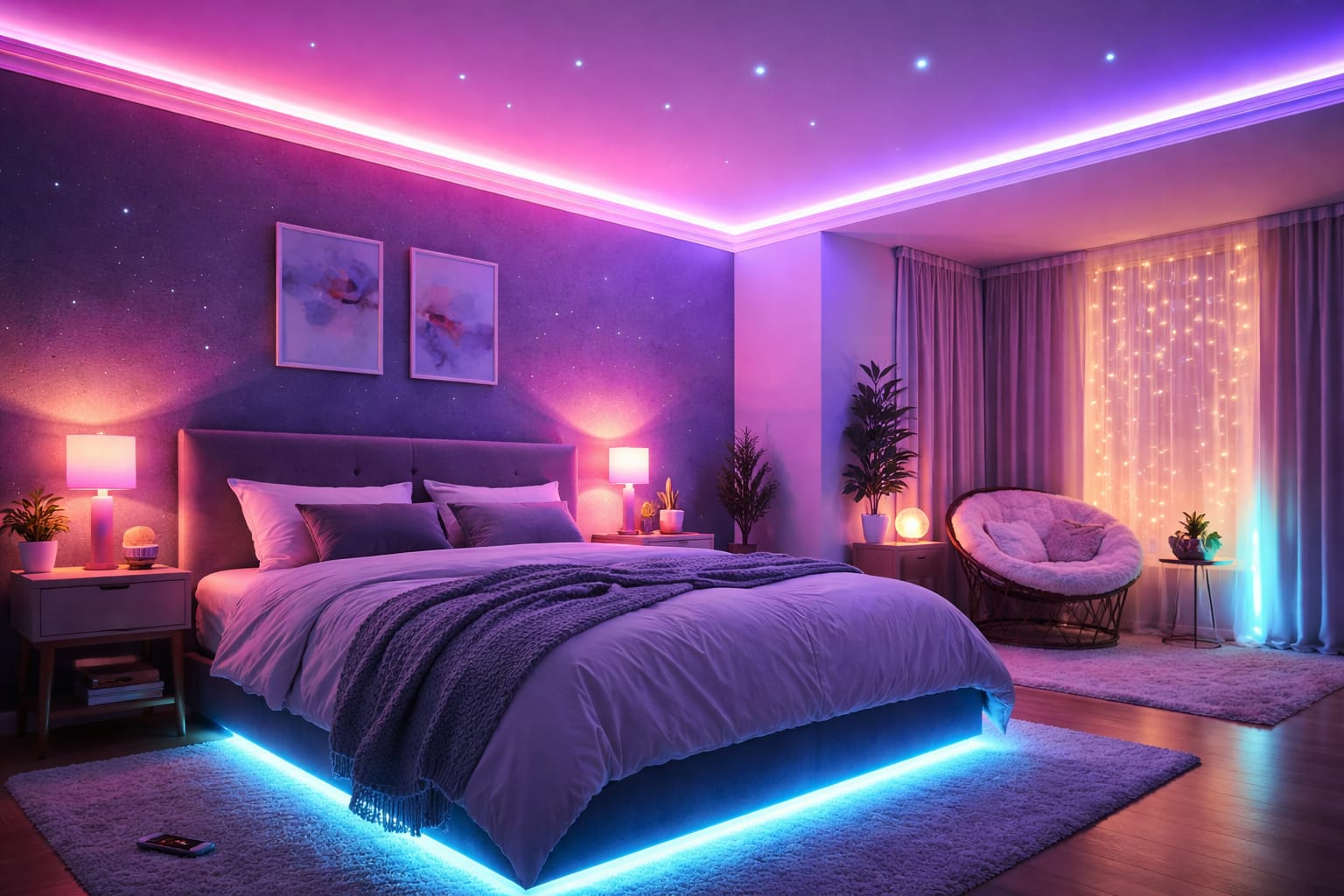
The best accent lighting option is LED strips, which work well behind a headboard, under the bed, or along shelving for a soft background glow. They are usually best as secondary lighting and not the only source in the room. These Alexa-compatible RGB LED strips can add an adjustable glow to your space without making it feel too harsh.
Best simple bedside upgrade
If you want an easy improvement, a dimmable bedside lamp is often the best option. A compact option like this LED bedside lamp provides softer light and better control without any rewiring.
Best Color Temperature for Sleep and Comfort
For most bedrooms, a warm color temperature is better than a cool one. Lower Kelvin values create the soft look that most people describe as cozy or relaxing. This is why warm white light is almost always the better default for evening bedroom lighting.
A range of 2700K to 3000K usually feels the most natural in a bedroom. It is warm enough to encourage relaxation without making everything appear too dim or orange. Neutral white light around 3500K can work in bedrooms that double as dressing or study spaces. However, cooler daylight tones often feel too stark when you are trying to unwind.
If you want a setup that works well for both morning and night, tunable lighting is often the best compromise. It allows you to use slightly cooler light when getting ready and shift back to warm white light later. This flexibility is one reason smart systems have become so popular in bedrooms.
If your main goal is to create a cozy, sleep-friendly bedroom, stick to a color temperature between 2700K and 3000K, and ensure your lighting is dimmable.
How bright should bedroom lights be?
A bedroom doesn’t need extreme brightness, but it does need adjustable lighting. Too little light makes activities like reading, dressing, and cleaning awkward. Too much light can make the room feel exposed and uncomfortable, especially at night. This is why dimming matters more than achieving the highest lumen number.
As a general rule, most bedrooms function well with 1,000 to 2,000 lumens of ambient lighting, depending on the room’s size and the amount of additional lighting available. A larger room may need more light, while a small room with bedside lamps and accent lighting may feel balanced with less. The best bedroom lights can move comfortably across different brightness levels rather than staying locked at one output.
If your room gets strong daylight during the day, you may prefer a softer evening setup to very bright artificial light. If the room is darker or is used a lot for reading and getting dressed, it may make sense to have a little more overhead brightness. The goal is balance, not raw intensity.
Are smart LED bulbs worth it?
For many bedrooms, yes. They are one of the easiest ways to make a room feel more flexible without replacing all the fixtures. They allow you to dim the lights from bed, set schedules, create evening scenes, and often adjust the color temperature without changing the entire setup.
They are especially worthwhile if you want your lights to support a routine. A gradual fade at night or a gentle brightening in the morning is much more conducive to a bedroom environment than a hard on/off switch. For couples, smart control can also make it easier to manage each side of the room separately. If that matters to you, these smart LED bulbs are a practical way to add individual bedside control.
That said, not every bedroom needs smart lighting. If you just want a warm, dimmed light, a good lamp and bulb might solve the problem. Smart features are most helpful when you know you will use scenes, schedules, or voice control.
Best Fixture Types and Placement
The most effective bedroom lighting plans typically incorporate multiple fixture types. Ceiling lights provide general illumination. Bedside lamps or sconces provide light for reading and other low-level evening activities. Accent lights add softness and atmosphere without making the room feel harsh.
Ceiling-mounted fixtures are useful for ambient lighting, but they should ideally be dimmable. Bedside lamps are ideal for personal control and softer light close to the bed. Wall sconces are a smart option if you want to free up nightstand space. LED strips are best for creating atmosphere rather than task lighting.
Placement matters as much as product choice. For example, a reading light should be close enough to the bed to be useful without shining across the whole room. Accent strips should be kept out of your direct line of sight. Overhead lighting should complement the room rather than dominate it. The same comfort rules often apply to shared spaces, which is why some of these principles appear in our living room lighting guide.
Why Layered Lighting Works Better
A layered setup usually works better than relying on one central fixture because bedrooms are used in different ways at different times. Overhead lighting alone can feel too harsh at night, and bedside lamps alone may not provide enough light for everyday tasks. Combining layers solves that problem.
The three most useful layers are ambient, task, and accent. Ambient lighting provides the room with its base brightness. Task lighting supports activities such as reading or dressing. Accent lighting adds mood and softness. When these layers can be controlled separately, it becomes much easier to adjust the room for optimal comfort.
This is one of the main reasons why people are happier with their bedroom lighting after making a few small changes. Often, the room did not need more light. It needed better layers and control.
Common Bedroom Lighting Mistakes
Using cool daylight bulbs as the main bedroom light is one common mistake. While they may look crisp, they often make the room feel more clinical than restful. Another mistake is relying on one bright ceiling fixture for everything from reading to winding down.
People also underestimate how important dimming is. A bedroom light that can only be turned on or off usually feels less comfortable than one that can be adjusted. While RGB strips can look great, they are usually an inadequate substitute for proper bedside or ambient lighting when used alone.
Another issue is ignoring unexpected LED behavior, such as flicker or residual glow. If you encounter strange behavior in a layered setup, our guide on diagnosing LED lights that glow when off can help you identify the cause before it ruins the room experience.
What should you choose?
For most bedrooms, the safest choice is a warm, dimmable setup with separate layers for general lighting, reading lighting, and ambient lighting.
- Main light: A warm, dimmable ceiling fixture or bulb.
- Bedside light: A lamp or sconce for reading and lower evening brightness.
- Accent light: strips or indirect lighting for atmosphere.
- The best color temperature for relaxation is 2700K to 3000K.
- The best upgrade path is smart LED bulbs if you want schedules, scenes, or tunable white control.
Key Takeaways
The most effective bedroom lighting setups are usually warm, dimmable, and layered. Most people find that a mix of ambient, bedside, and accent lighting works much better than one strong overhead fixture.
A warm white light between 2700 and 3000 Kelvin is usually best for comfort and evening relaxation. Smart bulbs are especially useful for schedules, scenes, and adjustable color temperature throughout the day.
When choosing bedroom lighting, consider comfort, dimming, and how you use the room. You will almost always end up with a better setup than if you chase brightness alone.
Share this guide!
If you found this guide helpful, save it for later or share it with a friend. It is especially useful for beginners, homeowners, and DIYers.
Share using the links below
Interested in learning more? Browse all related articles in our category section.
Pingback: Best LED Lights for Kitchen: Essential Buying Guide
Pingback: LED Chip Types Explained: Essential Guide Today - NeoLEDHub
Pingback: Best LED Bulbs for Living Rooms: Smart Guide 2026
Pingback: Best LED Lights for Bathrooms Lighting (2026) - NeoLEDHub
Pingback: LED Lighting Energy Myths: What’s True? - NeoLEDHub
Pingback: Best LED Bulbs for Bedrooms: Ultimate Guide 2026
Pingback: Best LED Bulbs for Bedrooms: Top Comfort Picks - NeoLEDHub
Pingback: Color Temperature Explained: Warm vs Cool Light and Best Kelvin by Room - NeoLEDHub
Pingback: Best Living Room LED Lights: Top Picks for Style & Ambience