Best Living Room LED Lights: Top Picks for Style and Ambiance
Selecting the ideal LED lights for your living room involves more than just choosing the brightest bulb. A good setup should be comfortable and flattering and work well with everyday routines, such as relaxing, reading, watching TV, or entertaining guests.
This guide covers brightness, color temperature, fixture types, dimming, smart controls, and practical product recommendations to help you create a balanced living room lighting setup.
Quick Answer
For most living rooms, the best LED lighting setup combines warm or neutral ambient light, focused task lighting, and an accent layer for mood or visual depth. Dimmable bulbs and smart controls make the room much more flexible.
- Aim for 15 to 20 lumens per square foot for general ambient lighting.
- Use warm white or soft neutral light bulbs for a comfortable everyday feel.
- Add a floor lamp or reading lamp instead of relying only on the ceiling fixture.
- Choose dimmable LED light bulbs and compatible dimmer switches whenever possible.
- Use TV backlighting or hidden strip lights for a softer evening ambiance.
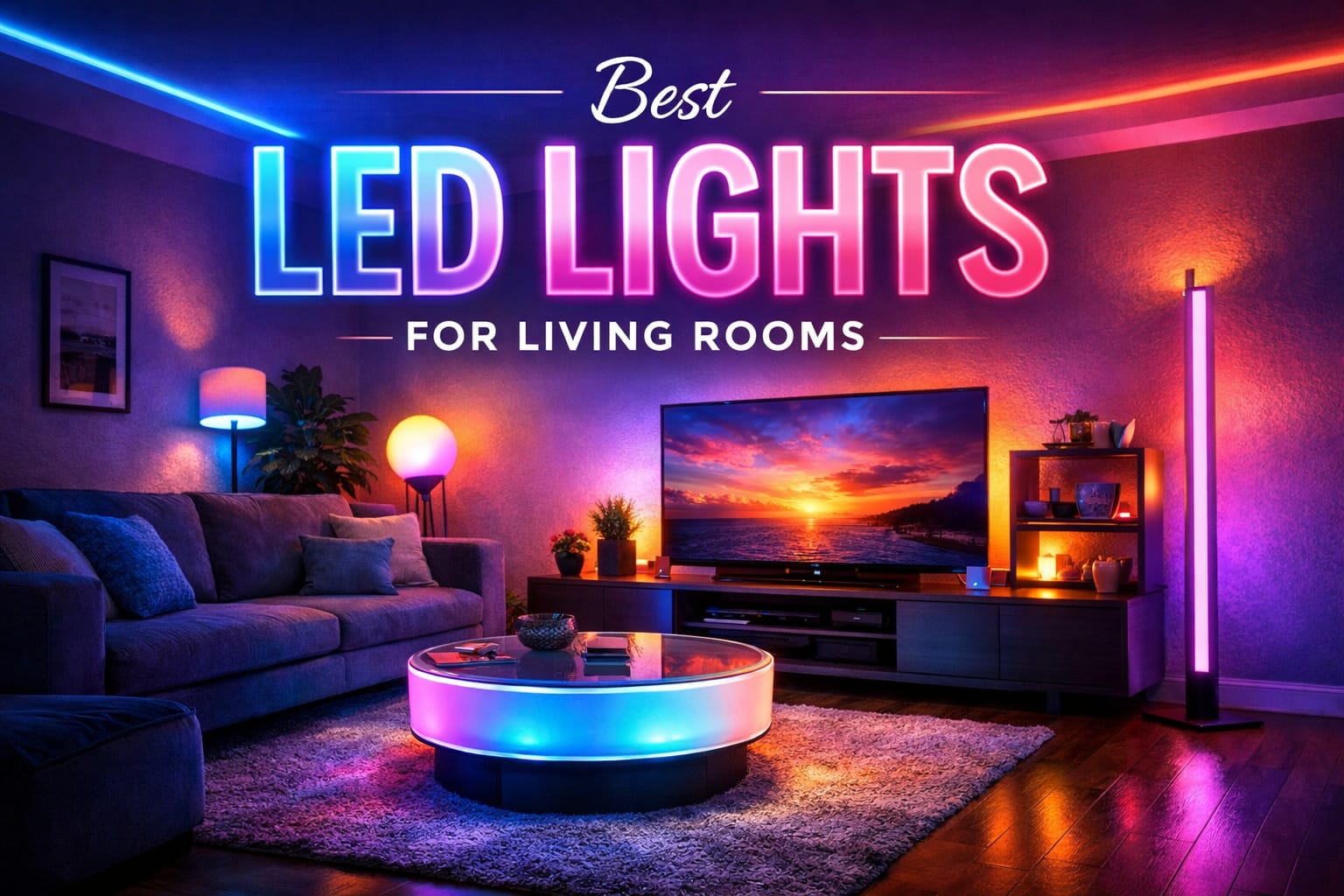
Table of Contents:
- Quick Answer
- Brightness Basics for Living Rooms
- Why Layered Lighting Works Better
- Choosing the Right Overhead Fixture
- Where Accent Lighting Makes the Biggest Difference
- Task Lighting for Reading, Screens, and Work Corners
- Choosing the Right Color Temperature
- Controls, Smart Features, and Running Costs
- Dimming Capabilities and Compatibility
- Smart Home Features Worth Considering
- Energy Efficiency and Long-Term Savings
- Fixtures, Installation, and Long-Term Value
- Popular Fixture Styles
- Installation Tips
- Maintenance and Longevity
- Common Mistakes and Budget Planning
- Selection Mistakes to Avoid
- Budget Planning and Value Analysis
- What Should You Choose?
- Key Takeaways
- Sharing This Guide
Brightness Basics for Living Rooms
A comfortable living room usually needs about 15 to 20 lumens per square foot of general ambient light. For a 200-square-foot room, that amounts to around 3,000 to 4,000 lumens total, distributed across multiple fixtures rather than one overly bright source.
When comparing products, focus on lumens rather than wattage. A modern LED bulb can produce the same brightness as an older incandescent bulb while using far less electricity. If you want a clearer breakdown of what the numbers on product packaging actually mean, our LED lighting buying guide covers the essentials.
Room shape also matters. High ceilings, dark walls, and large open layouts usually require more total output, whereas lighter finishes reflect light and make the same fixture appear brighter. This is why the best LED lights for living rooms should be chosen as part of a full room plan, not as individual products.
Why Layered Lighting Works Better
Layered lighting works better because the best living room lighting setups combine three layers: ambient lighting for overall visibility, task lighting for specific activities, and accent lighting for mood or visual emphasis. This combination makes the room more flexible and helps it feel finished rather than flat.
A bright ceiling fixture alone may cover the basics, but it rarely achieves the most comfortable result. Layered lighting lets you keep the room bright during the day, softer in the evening, and brighter in areas where people read, work, or watch television. This principle also works well for bedroom LED lighting, though living rooms usually require more flexibility for various activities.
If you’re keeping your existing lamps or ceiling fixture, start by upgrading the bulbs. Our guide to the best LED bulbs for living rooms compares brightness, color temperature, and smart features in a much more practical way than wattage labels ever will.
For a simple smart bulb that fits well into an ambient layer, this LED bulb that works with Alexa and Google Home gives you app control, dimming, and tunable white without overcomplicating the setup.
Choosing the Right Overhead Fixture
In most living rooms, the overhead fixture serves as the foundation for ambient lighting. Flush-mount, semi-flush, chandelier, and recessed fixtures all work well, but the best choice depends on the height of the ceiling, the size of the room, and how much light the fixture spreads across the space.
Recessed lighting is an especially good option for modern rooms because it keeps the ceiling clean and distributes light evenly when spaced correctly. Track lighting is another flexible option, especially if you like to rearrange furniture or want to direct light toward artwork, shelves, or a media wall.
Whatever style you choose, avoid fixtures that create hard glare or direct all the light straight down in one harsh pool. A living room should feel evenly lit and inviting, not like a showroom or an office.
Where Accent Lighting Makes the Biggest Difference
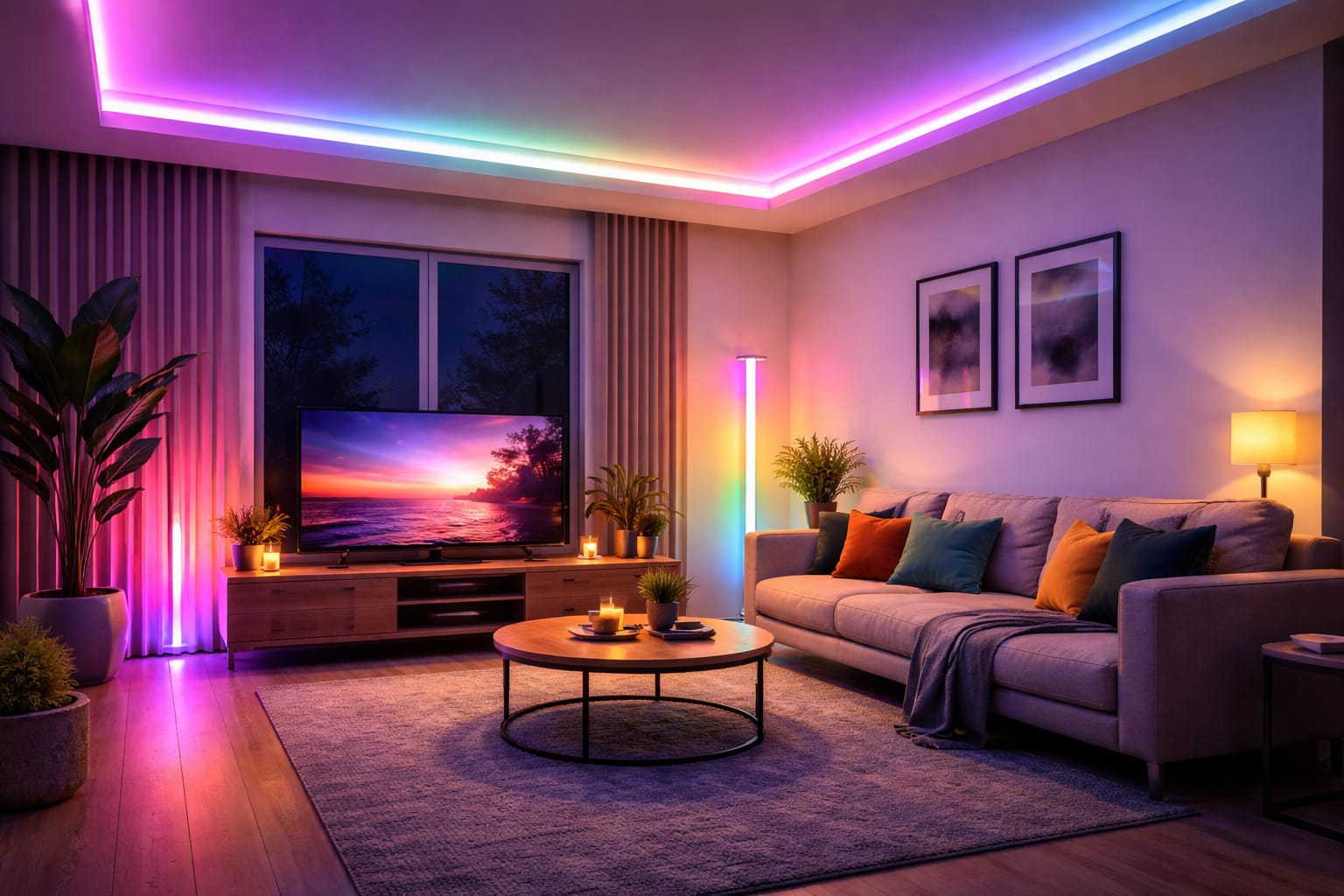
Accent lighting makes the biggest difference. It helps a living room feel deeper and more intentional. Wall sconces, shelf lighting, hidden LED strips, and spotlights can highlight different areas of the room without competing with the main ambient light.
Popular ways to add a soft glow include strip lights hidden behind furniture, along shelving, or above crown molding. They work especially well when you want the room to feel calmer at night without turning on the main ceiling light.
Accent lights do not need to be very bright. Their job is to shape the room visually, not overpower it. In most cases, the best living room LED lights include at least one subtle accent layer, which makes the space look more polished while using very little extra energy.
Task Lighting for Reading, Screens, and Work Corners
Many people underestimate the importance of task lighting in a living room. If you read in a chair, use a laptop on a side table, or occasionally work from the sofa, a focused lamp will do more to improve your comfort than simply turning on the ceiling fixture.
Floor lamps with adjustable heads are ideal for seating areas because they provide light where you need it without shining directly in your eyes. For work areas, slightly cooler light can improve clarity and focus, but it should still blend with the rest of the room.
TV zones usually benefit from indirect lighting and a soft background glow. Bias lighting behind the screen is especially helpful because it reduces eye strain during longer viewing sessions. It is also one of the easiest upgrades to justify when considering long-term value and energy savings.
Choosing the Right Color Temperature
Choosing the right color temperature can change how a living room feels, even when the brightness stays the same. For most homes, a warm white light of around 2700 to 3000 Kelvin creates the most comfortable everyday atmosphere. It feels relaxed, flattering, and easy to live with in the evening.
Neutral white light, around 3500K to 4000K, works well in modern spaces or living rooms that double as active family rooms. It looks cleaner and crisper. However, if you choose a color temperature that is too cool, the room may start to feel sterile.
Avoid mixing very warm and very cool light in the same space unless the different zones are clearly separated. Even high-quality fixtures can clash if their color temperatures are different.
Controls, Smart Features, and Running Costs
Once the brightness and color temperature are within the optimal range, controls enhance the user experience. Dimming, automation, and efficient operation transform good fixtures into a lighting system that suits daily life.
Dimming Capabilities and Compatibility
Dimmable LEDs are one of the best upgrades for a living room because they allow the same fixture to be used for bright daytime lighting and softer evening lighting. Just make sure the bulb and wall dimmer are compatible. Many flicker and buzzing problems result from using LED bulbs with older dimmer switches designed for incandescent loads.
Packaging usually states whether a bulb is dimmable, but that does not guarantee perfect performance with every switch. For reliable results, choose LEDs and dimmers that are specifically compatible with each other or with modern LED loads.
For accent lighting that sets the mood without adjusting the ceiling fixtures, consider this RGBIC floor lamp, which brings color and a dimmable ambient glow to an unused corner of the room.
Smart Home Features Worth Considering
Smart lighting: If you want routines, voice control, scenes, or adjustable color temperature without getting up from the sofa, smart lighting is worth considering. Wi-Fi, Bluetooth, Zigbee, and other platforms can all work well, but the best option depends on whether you want simplicity or a larger smart home system.
Tunable white bulbs are useful in living rooms because they can shift from a brighter, cooler light during the day to a warmer light at night. RGB bulbs and lamps offer more options for entertaining, but most people still find tunable white and reliable dimming the most valuable for everyday use.
If you already use Alexa, Google Assistant, or another ecosystem, choosing compatible products from the start will save you frustration later on. Good smart lighting makes the room easier to live with, not harder to manage.
Energy Efficiency and Long-Term Savings
LEDs use far less electricity than incandescent bulbs and typically have a much longer lifespan. This makes them a sensible choice for living rooms, where lights are used daily. Although the initial cost is often higher, the long-term operating cost is usually much lower.
According to the U.S. Department of Energy, LED lighting lasts dramatically longer than incandescent alternatives while using much less energy. This is especially important in rooms with multiple fixtures, where replacement frequency and electricity use can add up quickly.
If you want better efficiency, consistency, and quality control, Energy Star certified products are often a safer bet. In some areas, rebates can make higher-quality options more affordable from the start.
Fixtures, installation, and long-term value
The best living room LED lights are about more than just the specs on a box. Fixture style, installation quality, and long-term durability affect the room’s appearance and your satisfaction with the setup a year from now.
Popular Fixture Styles
Minimalist fixtures with simple lines remain a popular choice for modern living rooms because they blend in easily and make the room feel open. Matte black, brushed nickel, and mixed-material fixtures remain popular because they pair well with warm and neutral interiors.
Industrial and vintage-inspired styles can work well, too, especially if you want the fixture itself to have more visual character. However, be careful with exposed bulbs since they often create more glare than shaded or diffused designs.
Mid-century shapes, globe fixtures, and simple sculptural pendants work well in living rooms because they add style without being visually overwhelming. In most cases, it is better to choose one statement fixture and keep the rest of the lighting subtle.
Installation Tips
Simple bulb swaps are easy, but installing new fixtures, dimmer switches, recessed lighting, or making wiring changes requires more care. Always turn off the power at the breaker, confirm that the circuit is dead, and ensure that the box, bracket, and wiring are rated for the fixture being installed.
If you are replacing switches, installing new ceiling fixtures, or dealing with uncertain wiring, call a qualified electrician. Poor connections can cause flickering, buzzing, overheating, and other serious safety issues.
It is also worth considering how the room might change over time. If you expect to rearrange furniture, add shelving, or move the TV, flexible lighting, such as track heads, plug-in lamps, or smart bulbs, is easier to adapt than a fixed layout.
Maintenance and Longevity
One of the biggest advantages of LED lighting is that it usually requires minimal maintenance. In a well-planned living room, quality LEDs can last for years before replacement is necessary, especially in fixtures used a few hours each day rather than continuously.
However, heat still shortens the lifespan of LEDs. Enclosed fixtures, poor ventilation, and very cheap electronics can shorten a bulb’s life well before the packaging claims. Products designed for enclosed fixtures are the safer choice when airflow is limited.
Dusting shades, lenses, and diffusers periodically also helps maintain brightness. A room that feels dim after a few years is not necessarily underlit by design. Sometimes, fixtures are simply dirty, aging poorly, or filled with low-quality bulbs.
Common Mistakes in Budget Planning
Many living room lighting problems stem from a few predictable mistakes: insufficient total lumens, incorrect color temperature, poor dimmer compatibility, and allocating funds in the wrong places initially. Addressing these issues early on typically yields better results than chasing after trendy fixtures later on.
Selection Mistakes to Avoid
Avoid these selection mistakes:
– Relying on a single ceiling fixture to do everything. Even a bright fixture can leave corners dark, make seating areas feel flat, and create glare when all the light comes from above. Adding a lamp or accent lighting often improves the room more than increasing the raw brightness.
Another mistake is ignoring the color rendering index (CRI). While a CRI of 80 is generally acceptable, a CRI of 90 or above makes furnishings, artwork, and skin tones look better. This difference may not be obvious on the box, but it can be very noticeable once the lights are on every evening.
TV areas are another place where people often overlook an easy upgrade. This LED TV backlight kit adds a soft glow behind the screen, reducing eye strain and making movie viewing more comfortable without flooding the whole room with light.
Budget Planning and Value Analysis
If you are working with a limited budget, prioritize the lights you use most. This typically includes the main ambient fixture, its bulbs, and the lamp or lamps used for reading, lounging, or watching TV. These upgrades change the room more than decorative extras do.
It also makes sense to buy matching bulbs together when possible. This helps maintain consistent brightness and color temperature across the room and makes future replacements easier. A mix of cheap bulbs often saves very little money when you consider uneven performance and a shorter lifespan.
If you need help with lighting design beyond the living room, our LED Knowledge Center has more in-depth guides on selecting fixtures, understanding specs, and improving lighting quality throughout the home.
What should you choose?
For most homes, the best approach is an ambient layer of dimmable warm white or tunable white light, one useful task light, and one subtle accent upgrade. You don’t need a complicated system unless you want automation or color scenes.
- If you want easy mood changes and voice control, choose smart dimmable bulbs.
- If reading comfort is a priority, choose a floor lamp near seating.
- If you want a softer evening ambiance, choose hidden strip lighting.
- If screen glare and eye strain are common issues, choose TV bias lighting.
- First, choose quality bulbs before spending heavily on decorative fixtures.
Key Takeaways
The best living room LED lights are usually not one product, but rather a combination of ambient, task, and accent lighting that works together. Brightness, color temperature, glare control, and dimming are more important than the highest lumen number on the box.
For most rooms, warm or neutral dimmable light is the safest choice. Start with the main fixture and the bulbs you use most often. Then, add a reading lamp, accent strip, or TV backlight to solve a real comfort problem.
A living room lighting setup does not need to be expensive or overly technical to be effective. A few well-chosen LED upgrades can make the room more flexible and comfortable at night while reducing long-term costs.
Share This Guide!
If you found this guide helpful, save it for later or send it to someone planning a living room lighting upgrade. It is especially useful for homeowners, renters, and anyone trying to improve a room without wasting money on the wrong fixtures.
Use the links below to share it
Interested in learning more? Browse all related articles in our category section.
Pingback: Best LED Bulbs for Living Rooms: Smart Guide 2026
Pingback: Best LED Lights for Bedroom: Perfect Guide for 2026
Pingback: Best LED Lights for Kitchen: Buying Guide - NeoLEDHub
Pingback: Best LED Bulbs for Desk Lamps: Top-Rated Picks - NeoLEDHub
Pingback: Best LED Lights for Bedroom: Warm, Smart & Sleep Ready Picks
Pingback: Best LED Lights for Kitchen: Smart Picks for Better Lighting
Pingback: Best LED Lights for Bathrooms: Vanity, Ceiling & Shower LEDs