Reading LED Packaging: What the Labels Mean Before You Buy
Reading LED packaging becomes much easier once you know which numbers matter most. Rather than making assumptions based on marketing words or wattage claims, you can use the box to compare brightness, color temperature, dimming support, efficiency, and compatibility.
This guide breaks down the most useful information on modern light bulb boxes, helping you choose the right product faster, avoid common buying mistakes, and understand what each specification means in everyday use.
What to Check First on the Box
If you only check a few things before buying, start with the specs that affect performance the most every day. These details usually tell you far more than the marketing phrases on the front of the box.
- Brightness in lumens
- Color temperature in Kelvin
- – Dimmable or non-dimmable
- Base type and bulb shape.
- If needed, look for an enclosed fixture, damp, or wet rating.
If you want a broader understanding before comparing bulb labels, our LED lighting buying guide explains how brightness, color, and fixture compatibility work together in real-world buying decisions.
Table of Contents
- What to Check First on the Box
- Reading LED Packaging Step by Step
- How to Read the Lighting Facts Label
- Lumens on LED packaging explained
- How to Read Color Temperature
- Why CRI Matters on the Box
- Energy ratings and wattage
- Lifespan, warranty, and claims
- Beam Angle, Dimming, and Fixture Ratings
- Base types and certifications
- Common LED Packaging Mistakes
- Special features worth checking
- Key Takeaways
- Share this guide
Reading LED Packaging Step by Step
The easiest way to read LED packaging is to ignore the hype on the front of the box first and focus on practical buying questions. Ask yourself how bright you need the bulb to be, what color light you want, if it will dim, and if it will fit your fixture. Most buying mistakes happen when people only look at terms like “60W replacement” or “soft white” and skip the rest of the LED bulb label information.
This matters because LED technology defies the logic of old incandescent bulbs. Wattage no longer reliably indicates brightness, and two similar-looking bulbs can behave very differently once installed. One may dim smoothly, while the other may flicker. One may work in enclosed fixtures, while another runs too hot. One may emit a warm, comfortable light, while another makes the room look colder than expected.
That is why the box is so important. Once you understand the layout, you can quickly compare products and make better choices without relying on vague marketing phrases.
How to Read the Lighting Facts Label
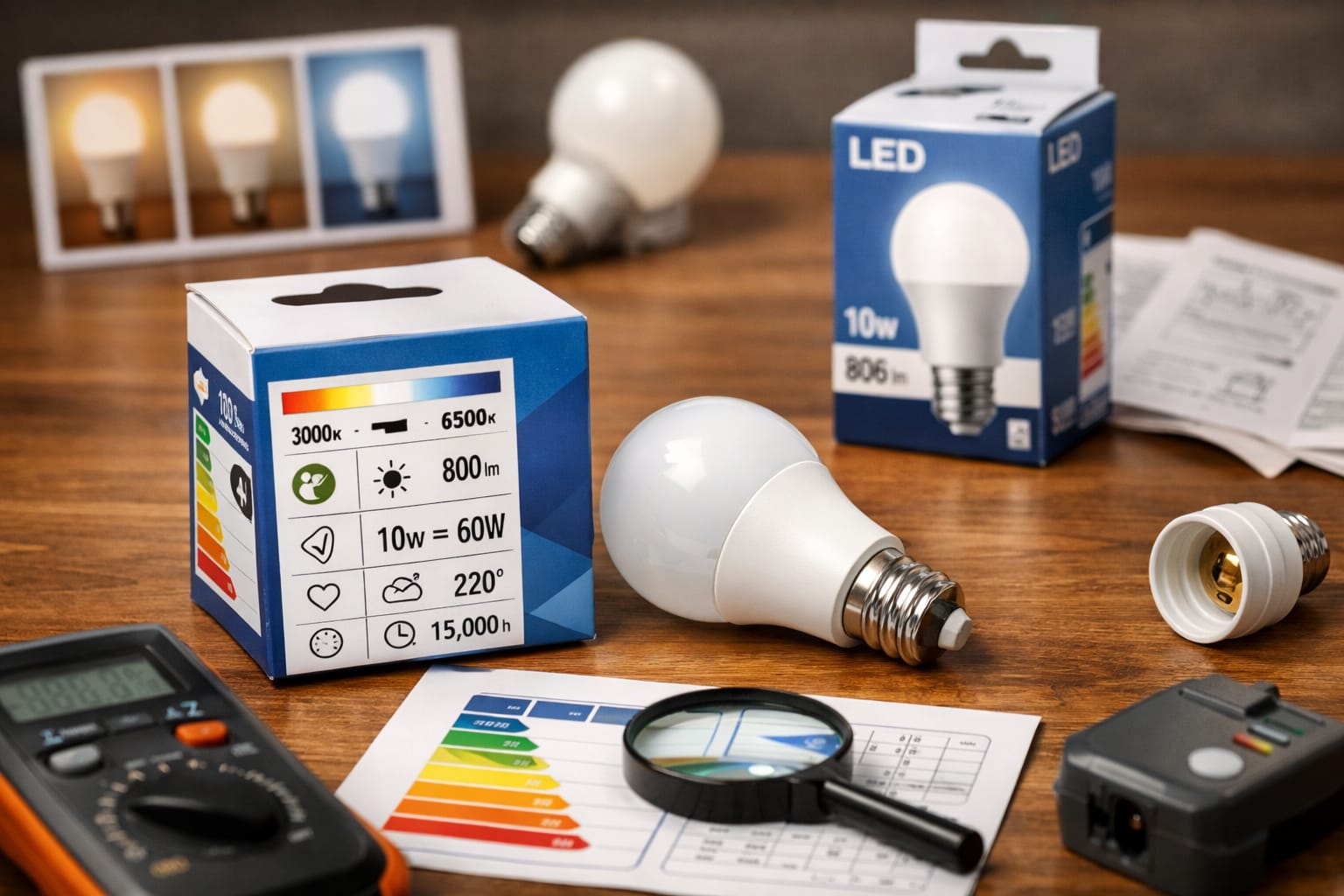
The Lighting Facts label is a standardized information panel found on many LED bulb boxes sold in North America. It works a bit like a nutrition label for light bulbs. Instead of relying on branding, you have access to a consistent set of facts, such as brightness, estimated energy cost, lifespan, light appearance, and wattage.
This is usually the best place to start when reading LED packaging because it helps you compare bulbs from different brands. While the front of the box may highlight style or convenience, the Lighting Facts section usually contains the most useful numbers.
According to the Federal Trade Commission, standardized lighting labels help consumers more easily compare light output, energy cost, and other key product details.
Simple buying rule: when the front of the box sounds impressive but the data panel looks vague, trust the data panel first.
Lumens on LED packaging explained
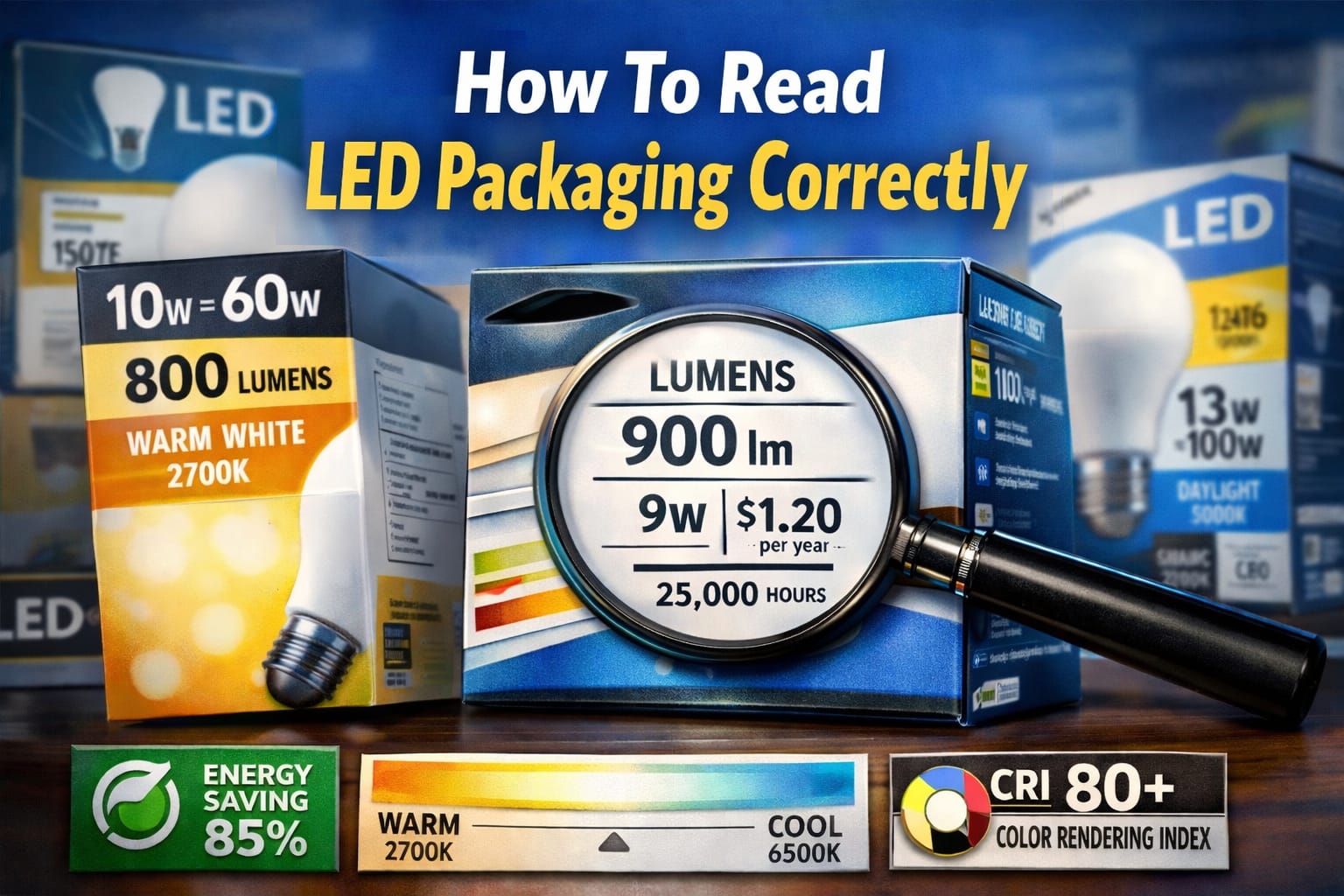
Lumens tell you how bright the bulb is. This is one of the most important aspects of reading LED packaging because brightness is what most buyers care about, even if they still think in watts. Higher lumens mean more light output.
As a rough guide:
- 450 lumens = low-output bulb, often close to the brightness of an old 40W incandescent bulb
- 800 lumens = the common household standard, often close to the brightness of an old 60W bulb.
- 1,100 to 1,600 lumens = brighter room or task lighting
- 2,000+ lumens = stronger output for larger spaces or utility areas.
This is why lumens matter more than wattage. A 9-watt bulb may be brighter than a 11-watt bulb if the design is more efficient. Once you understand what to look for, this smart LED bulb is a reliable everyday option. It gives you adjustable brightness and color temperature with clear, useful label specs.
For a deeper explanation of how brightness is measured, see our guide to lumens per watt.
When comparing two bulbs, first choose by lumens and only use wattage as a secondary efficiency check. This habit will prevent many disappointing purchases.
How to Read Color Temperature
Color temperature indicates whether light appears warm, neutral, or cool. Measured in Kelvin, it has a significant impact on the ambiance of a room. It is one of the most useful pieces of information in LED package specifications because the wrong color temperature can make a perfectly bright bulb feel uncomfortable in a room.
A simple breakdown looks like this:
- 2700K–3000K: Warm white. Softer and more relaxed.
- 3500K–4000K: neutral white, cleaner and more balanced
- 5000K+ = cool white or daylight, which is crisper and more clinical.
Warm white often works best in bedrooms and living rooms. Neutral white is a safer middle ground for kitchens, hallways, and bathrooms. Cooler, daylight-style bulbs work well in garages, laundry rooms, and other task-oriented spaces, but they can feel too harsh in areas focused on comfort.
If you need help deciding on a case-by-case basis, our full article on color temperature goes into more detail.
Why CRI Matters on the Box
CRI stands for Color Rendering Index. It measures how naturally colors appear under the bulb. This is one of the most overlooked parts of an LED bulb’s label, but it matters a lot if you care about how skin tones, food, fabrics, or paint colors look in real life.
In general:
- An 80 CRI is common and acceptable for many standard bulbs.
- A CRI of 90 or higher is noticeably better and often worth paying more for.
- A CRI of 95+ is considered premium for color-sensitive applications.
If the CRI is not shown, it may be because the manufacturer is not eager to highlight it. For areas such as kitchens, bathrooms, and wardrobes where accurate color rendering is desired, a higher CRI is usually preferable. If you want an easy-to-understand breakdown of CRI and related specifications, our LED lighting terms guide is helpful.
Energy ratings and wattage
When reading LED packaging, wattage still matters, but not in the same way as with incandescent bulbs. Now, wattage mainly tells you how much electricity the bulb uses, not how bright it is. This means that a low-watt bulb can still be very bright if it is efficient.
Most packages also show a wattage equivalent, such as “60W replacement” or “100W replacement.” This helps shoppers translate their old buying habits into the world of LEDs. While this can be useful, lumens are a more reliable indicator of brightness.
You may also see an estimated yearly energy cost. This figure is based on standard testing assumptions, so your actual cost will depend on local electricity prices and how often the bulb is used. Nevertheless, it is helpful for comparing products side by side. For a stronger outdoor or decorative option where energy use still matters, these waterproof RGB LED strip lights are an example of how modern LED products can combine low power draw with flexible output.
Lifespan, warranty, and claims
LED packages often make big claims about lifespan — sometimes 15,000, 25,000, or even 50,000 hours! These numbers matter, but they need context. They are based on test conditions, and real-world lifespan depends on heat, switching frequency, fixture type, and product quality.
A bulb in a cool, open fixture typically has a longer lifespan than one in a hot, enclosed fitting. Therefore, when reading LED packaging, do not treat the estimated lifespan as a guarantee that the bulb will perform the same way everywhere. It is better to view it as an estimate under reasonable conditions.
A warranty can be just as important. A five-year warranty often signals more confidence from the manufacturer than a vague “long life” promise. If a bulb keeps burning out early, our guide on LED bulbs can help you determine whether the issue is the bulb, the fixture, or the electrical setup.
Beam Angle, Dimming, and Fixture Ratings
Some bulb boxes provide additional information about how the light spreads. This information is more important for spotlights, reflector bulbs, and downlights than for standard A-shape bulbs. A narrow beam is useful for accent lighting, while a wide beam is better for general room lighting.
Dimming is much more important for everyday use. Assume a bulb is not dimmable if the box does not say it is. Using a non-dimmable bulb with a dimmer switch can result in flickering, buzzing, reduced range, or even bulb failure. Even if the bulb is dimmable, it’s still smart to check if the manufacturer mentions compatible dimmer types.
You should also look for wording indicating that the fixture is enclosed, damp-rated, or wet-rated. These details are easy to overlook, but they matter a lot.
- Enclosed fixture rated: safe for sealed or poorly ventilated fixtures.
- Damp rated: okay for areas with moisture, but not for direct water exposure.
- Wet rated: suitable for direct exposure to water, outdoors, or in exposed areas.
Knowing this information is one of the most practical parts of reading LED packaging because using the wrong bulb in the wrong fixture is a common reason for poor performance and early failure.
Even if a bulb matches the brightness you want, it can still be the wrong product if it is not rated for your fixture, moisture level, or dimmer setup. The compatibility details on the box are not small print. They are essential to your purchase.
Base types and certifications
Before buying, make sure the base type matches the socket. The E26 is the standard household screw base in North America, but many fixtures use the E12, GU10, or GU24 bases. Even if you get everything else right, you can still buy the wrong bulb if the base type does not match.
Shape also matters. A19, BR30, PAR38, candle, globe, and tube lamps all have different physical and optical properties. While the box usually makes both the shape and base type clear, it is worth double-checking instead of relying on appearance alone.
You should also look for safety and efficiency certifications, such as UL, ETL, or ENERGY STAR. While these certifications don’t guarantee perfection, they do indicate that the product has met certain safety, performance, or efficiency standards. The ENERGY STAR LED guide explains why certified products often provide better long-term value.
Common LED Packaging Mistakes
The most common mistake is buying based on wattage equivalent alone. The second is ignoring color temperature. Close behind are ignoring dimming and fixture compatibility. These details may seem minor, but they have a significant impact once the bulb is installed.
Another common mistake is buying the cheapest package without checking the CRI, warranty, or fixture rating. Low-cost bulbs aren’t necessarily bad, but if the packaging omits important specifications, it’s often a sign that the product is competing on price rather than performance.
Finally, many people forget to consider each room individually. The right bulb for a bedroom lamp is not necessarily the right one for a bathroom vanity or a recessed kitchen light. For larger utility spaces where bright output matters most, these high-output garage LED ceiling lights are an example of a product where the priorities of the packaging differ from those of a living room bulb.
Special Features Worth Checking
Some bulbs have features that go beyond the basic Lighting Facts label. These features may include smart home support, tunable white, full RGB color, motion activation, or voice assistant compatibility. If you are considering a connected product, it becomes even more important to read LED packaging because feature lists can get crowded quickly.
Look for clear statements about app support, connectivity type, and platform compatibility. If the packaging is vague about whether the product works with Alexa, Google Home, or HomeKit, don’t assume that it will integrate the way you want.
The best approach is simple: treat the box like a checklist, not just a marketing tool. Once you know how to read the label, compare important specifications, and recognize common pitfalls, buying LED bulbs becomes much easier and more accurate. For more help with specs, bulb types, and troubleshooting, visit our LED Knowledge Center.
Key Takeaways
The smartest way to read LED packaging is to focus on lumens, color temperature, dimming capabilities, base type, and fixture ratings before paying attention to the marketing language.
Lumens indicate brightness, Kelvin indicates how warm or cool the light will appear, and CRI indicates how naturally colors will appear once the bulb is installed.
Reading the box like a practical checklist instead of a sales pitch allows you to compare products faster, avoid common compatibility mistakes, and buy with more confidence.
Share this guide!
If you found it helpful, save it for later or share it with a friend. It is especially useful for beginners, homeowners, and DIY enthusiasts.
Share using the links below
Interested in learning more? Browse all related articles in our category section.
Pingback: Living Room LED Lights: Ultimate Guide for Perfect
Pingback: Best LED Lights for Bedroom: Perfect Guide for 2026
Pingback: Do Dimmer Switches Save Electricity? Real Truth Now
Pingback: LED Lighting Terms: What You Need to Know - NeoLEDHub
Pingback: LED Bulb Base Types: What You Need to Know - NeoLEDHub
Pingback: Color Temperature Explained: Warm vs Cool Light and Best Kelvin by Room - NeoLEDHub
Pingback: Best LED Bulbs for Bathroom Mirrors, Vanities, and Everyday Use - NeoLEDHub
Pingback: LED Lighting Terms Explained: What They Mean, Why It Matters
Pingback: How Much Electricity Does an LED Bulb Use? - NeoLEDHub