Best Outdoor LED String Lights for Any Space: Stylish Picks
It can be frustrating to try to make a patio, balcony, or backyard feel inviting when the lighting ends up being too harsh, too dim, or too fragile for real outdoor use. The best outdoor LED string lights solve this problem by providing a soft atmosphere, reliable performance, and an attractive design that looks good even after dark.
A smart purchase is not just about style. You also need the right bulb shape, weather resistance, spacing, and power source for your setup. This guide breaks down the most important factors so you can choose outdoor lighting that looks intentional, lasts through the seasons, and suits almost any space.
Table of Contents:
- What to Look for Before You Buy
- How Bright Should the Setup Feel?
- Bulb Style and Power Choices
- When Solar Is the Better Fit
- Why Durability Matters Outdoors
- What IP Ratings Really Mean
- Planning the Look Before Hanging
- Mistakes That Ruin the Result
- How to Handle Longer Runs
- Matching Products to Your Area
- Habits That Keep the Install Clean
- Checks to Do Before Powering On
- Questions Buyers Ask Before Choosing Patio String Lights
- Key Takeaways
- Sharing This Guide
How to Choose the Best Outdoor LED String Lights
Most people start by looking at photos, but a better approach is to begin with the space itself. Consider whether you need the lights to define a dining area, soften a fence line, brighten a pergola, or create a subtle outdoor ambiance over a seating area. Outdoor LED string lights that work on a compact balcony often differ from those that look balanced across a deep backyard or open deck.
That is also why layout matters more than product style. If you know where the anchor points are, how much span you need, and if you have a nearby outlet, choosing becomes easier. Readers who want broader planning ideas can refer to our complete LED lighting buying guide, especially if the goal is to coordinate lighting for multiple areas.
✅ Bulb spacing:
Closer bulb spacing creates a fuller glow over conversation areas, while wider spacing feels more decorative and works better when you want mood lighting instead of practical illumination.
✅ Color temperature:
For patios and evening seating, warm white lighting in the 2700K-3000K range usually feels relaxed and flattering. Cooler tones, on the other hand, can make an outdoor setup look less inviting.
✅ Power Source
Plug-in strands are ideal for regular use, while solar options are best when the installation area is far from an outlet and receives ample sunlight.
✅ Weather Rating:
Outdoor strands should be built to withstand moisture, wind, and seasonal temperature changes, especially if they will be left up year-round rather than for occasional gatherings.
Measure the actual hanging path, then add 10% to 15% extra length for draping, corners, and tension. String lights that look perfect on paper often end up too short once clips, sag, and anchor spacing are factored in.
Which level of brightness feels comfortable outside?
Many buyers make mistakes when considering brightness. They assume that a higher output always means better visibility, but outdoor decorative lighting works differently than task lighting. A dining patio usually looks best with a gentle effect rather than a glaring one. Much like indoor comfort zones, which often sit around 150-300 lm/m², outdoor spaces look best with a gentle effect. If the light shines directly at eye level, the area can feel smaller, harsher, and less relaxing than intended.
Which bulb style fits your space?
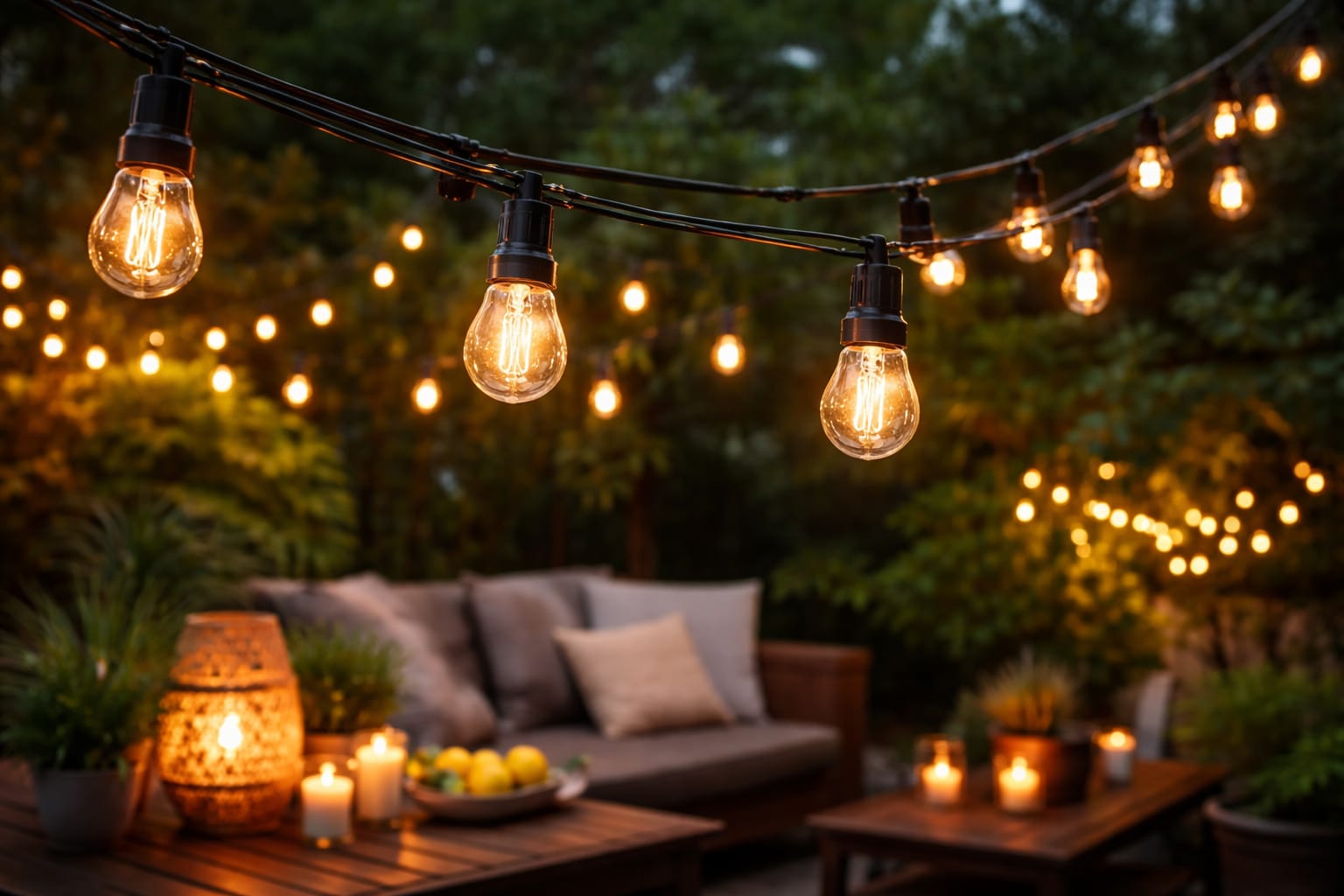
Globe bulbs create a softer, more playful look. Edison-style bulbs create a classic bistro look. Compact mini bulbs disappear visually when you want the architecture to stay in focus. This choice affects how the entire setup looks at night. In a narrow walkway or side yard, minimal strands may suffice, while broader zones often benefit from more visible bulbs that provide stronger lighting and define the space from a distance.
Power delivery matters, too. Plug-in sets usually produce steadier performance over longer distances, which is useful for lighting deep pergolas or larger spaces, like those seen in these LED lighting ideas for larger spaces. When comparing outdoor LED string light options, buyers should pay attention to whether the strand is expandable, dimmable, or intended mainly for decorative use.
For a balanced initial purchase, many people find that medium-spaced Edison bulbs with a warm tone work well. This set of shatterproof patio bulbs is a good example. They reduce eye strain and suit patios, pergolas, and backyard seating where you want a cozy look without sharp glare. They strike a practical middle ground between purely decorative, fairy-style strands and oversized, commercial strings.
Solar lights are ideal when there is strong daily sun exposure and no convenient outlet
They are especially useful for fences, detached pergolas, and garden edges, as trenching cables or running extension cords would be inconvenient in those areas. The best LED string lights are not necessarily the brightest plug-in option. They are the ones that fit the installation needs and are actually used.
Weather resistance matters more than people think
A strand may look great on day one, but it can quickly become disappointing if the sockets collect moisture, the bulbs are easily cracked, or the cable becomes brittle. You should choose proper weatherproof string lights for your actual conditions, not just based on the word “outdoor” on the product page. Wind exposure, salty air, full sun, and winter temperature swings create stress points that cheaper sets may not withstand over time.
Official efficiency and durability guidance is helpful in this area. The U.S. Department of Energy LED lighting efficiency guidance and the ENERGY STAR guide to LED lighting basics both emphasize the benefits of LEDs for lower energy use and a longer service life. However, real-world longevity still depends heavily on build quality and proper outdoor placement.
Do not assume that a decorative strand can withstand year-round exposure just because it works on a covered porch. Uncovered installations require stronger weather protection, better seals, and bulbs that can withstand movement, rain, and the occasional impact.
IP ratings provide a clearer way to judge a product’s protection than marketing adjectives alone
Our guide to IP ratings for LED lighting explains the details, but the short version is simple: The more exposed your lights are to direct rain and dust, the higher quality enclosure and better seals around the sockets you should choose.
Layout decisions that change the mood
The same strand can look elegant or messy, depending on how you hang it. Straight runs feel clean and architectural. Zigzag runs provide fuller coverage over a seating area. Perimeter runs outline the shape of a yard without cluttering the center.
If you want strong patio lighting without making the space too bright, a gentle crisscross pattern usually provides the best balance of light and visual appeal.
It also helps to think in layers. Overhead strands set the atmosphere, while path or wall lighting helps with navigation. This is why many outdoor spaces feel more inviting when designed like interior rooms. For example, the same mindset behind these dining room lighting decisions works outside, too. First, define the social zone, then add light only where it supports the experience, rather than flooding every corner.
Common mistakes buyers make with outdoor string lighting
include buying based on the daytime appearance instead of the nighttime effect. Another mistake is choosing cool-toned bulbs because they appear brighter in listings, even though many people later realize that warm tones are more relaxing. The best LED string lights for outdoor living spaces create a softer ambiance, rather than a clinical brightness, which is ideal for conversation, dining, or calm evening use.
People also forget to match the strand to the function of the space. For instance, a garage entry needs a different feel from a seating deck. This is why comparing outdoor mood lighting with more functional spaces, like these garage LED lighting setups can be helpful. Once you know whether you want décor, visibility, or both, identifying the right product becomes much easier.
Why longer runs need a plan
Longer spans look dramatic, but they require better support and smarter product selection. Over 50 feet, sagging, uneven tension, and connector strain become much more noticeable. If you want to light a larger area, these long backyard strands are useful for bigger patios and pergolas, as shorter decorative sets would look underpowered or require awkward connections.
Product recommendations for small, medium, and large areas
For small balconies or compact patios, lighter strands with moderate bulb size usually look best because they do not overwhelm the space. Medium patios, pergolas, and deck seating areas often benefit from standard Edison-style strings that can visually anchor the area. Larger yards require more reach and support. Sometimes, a layered approach combining string lights with other garden lights is necessary to prevent the outer edges from disappearing into darkness.
Solar strands are often the smartest solution for detached seating areas or decorative garden corners.
A set of solar hanging bulbs that avoid flicker works especially well when you want flexible placement without the hassle of extension cords crossing your yard. They are also useful for renters who want a cleaner installation and who may not be able to access permanent outdoor power.
If you are still shaping the overall look, think beyond the string itself. Hallways, kitchens, and patios all demonstrate that proportions matter. Readers often benefit from the ideas in our hallway lighting guide and kitchen lighting guide, where scale, spacing, and visual rhythm affect comfort just as much as brightness.
Clean Installation Habits
Even the best outdoor LED string lights can look cheap if the installation is sloppy. A neat setup uses consistent anchor spacing, tidy cable direction, and supports placed where you would expect them to be. Avoid bunching bulbs at one end or twisting them at odd angles. Symmetry isn’t mandatory, but visual intention is. This difference often separates a polished patio from a temporary-looking one.
Before hanging anything permanently, sketch the route and identify every connection point. This simple habit prevents wasted hardware and helps you avoid messy extension cord decisions. Readers who want to learn more about fixture performance, installation logic, and lighting behavior in general will find the LED Knowledge Center useful for building confidence before buying more products.
- ✓ Measure the full route, not just the straight-line distance
- ✓ Check outlet access before deciding between plug-in and solar
- ✓ Keep bulb spacing visually consistent across the main viewing angle
- ✓ Use outdoor-rated clips or guides instead of improvised fasteners
- ✓ Test the full run on the ground before the final installation
If the area has reflective surfaces, such as glass doors or pale walls, dimmer-looking bulbs often feel better because reflections amplify perceived brightness after dark.
Perform simple hanging checks before plugging in
walk the route in daylight and confirm that no bulb will sit where doors swing, chairs scrape, or branches rub. Then, check the nighttime sightline from your main seating position. Decorative bulbs that look centered from a ladder may still appear uneven from eye level. Those last small corrections often make the final result feel far more intentional.
Questions Buyers Ask Before Choosing Patio String Lights
At this point, most of the uncertainty revolves around brightness, durability, and ease of installation. The questions below focus on these decision points, helping you move from browsing to buying with clearer expectations about what will work best in an outdoor setting.
How bright should patio string lights be?
For patios and seating areas, aim for a soft, decorative glow rather than strong task lighting. Bulbs with a warm color temperature of around 2700K-3000K usually provide the most comfortable lighting, and moderate-output strands work better than overly bright sets. If the bulbs shine at eye level, the space may feel harsher and less relaxing at night.
Are solar string lights reliable for outdoor use?
Solar models are reliable when the panel receives strong sunlight for several hours daily and the lights are mainly used for ambiance. They are ideal for detached pergolas, fences, and garden edges. For all-night brightness or shaded areas, plug-in strands usually deliver more consistent performance.
What features matter most for year-round outdoor setups?
Look for shatterproof bulbs, outdoor-rated cable, sealed sockets, and a design that can withstand moisture and temperature changes. Longer runs also require sturdy support points. If the installation is fully exposed to rain and wind, durability matters more than decorative styling or a slightly lower purchase price.
Key Takeaways
The best outdoor LED string lights are the ones that match your space—not just the ones with the most attractive product photo. Bulb spacing, warm tone, weather resistance, and the right power source all determine whether the final result feels inviting or awkward at night.
For most patios and backyard seating areas, start with warm, shatterproof strands, and plan the layout before buying. When choosing between plug-in and solar outdoor string lights, consider outlet access and daily sun exposure instead of assuming one format is automatically better.
As outdoor spaces continue to become extensions of the home, good string lighting will matter more and more. A thoughtful setup can support dining, relaxing, and entertaining without overlighting the area. That’s why it’s important to get those string light choices right the first time.
Share this guide!
Save it or share it with someone planning a patio or backyard lighting setup.
Interested in learning more? Browse all related articles in our category section.