Ambient vs Task vs Accent Lighting: Which Type?
Understanding ambient vs task vs accent lighting forms the foundation of successful interior illumination. These three distinct categories serve different purposes within residential and commercial spaces, working together to create functional, comfortable, and visually appealing environments. Mastering how each layer contributes to overall room quality enables homeowners and designers to make informed decisions that enhance both practicality and aesthetic appeal throughout every area of their properties.
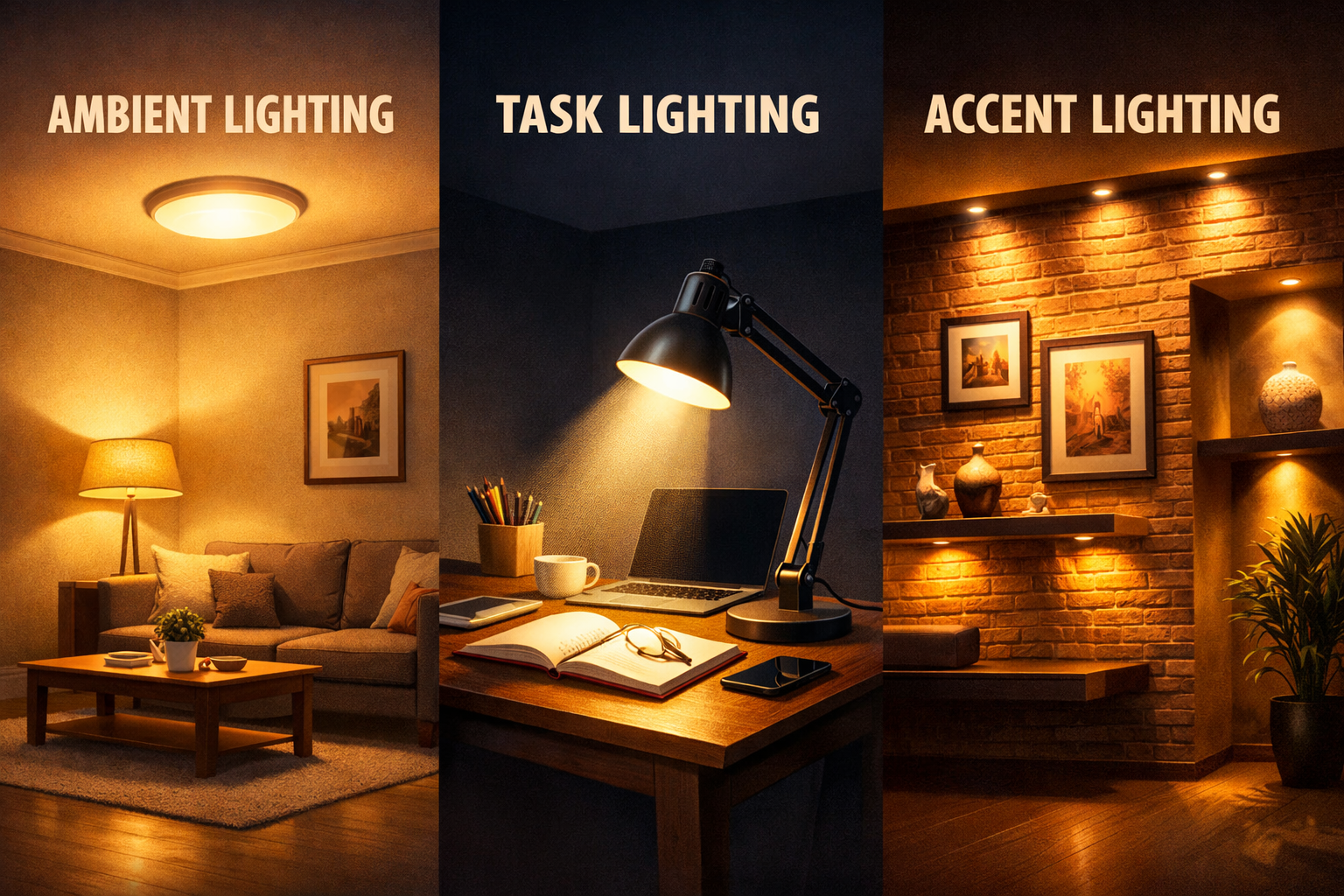
Table of Contents
Defining Ambient Light
Ambient light provides the base illumination layer that enables safe navigation and general visibility throughout spaces. This foundational component in any ambient vs task vs accent lighting scheme typically comes from ceiling fixtures, recessed downlights, or wall sconces that distribute light evenly across rooms. The primary goal involves creating comfortable background illumination without harsh shadows or excessively bright spots that cause visual discomfort during daily activities.
Effective ambient sources produce diffused, non-directional light that fills spaces uniformly. Ceiling-mounted fixtures with frosted glass diffusers or translucent shades scatter light in multiple directions, preventing the concentrated beams that create stark contrast between lit and shadowed areas. This three layer lighting approach begins with establishing appropriate ambient levels before adding specialized task or accent layers addressing specific functional decorative illumination requirements, often influenced by direct vs indirect lighting methods.
Brightness levels for ambient sources depend on room size and intended use. Living areas generally require 20-30 lumens per square foot for comfortable ambient illumination, while hallways and transitional spaces function adequately with 10-20 lumens per square foot. According to U.S. Department of Energy LED lighting efficiency guidance, modern LED fixtures deliver these outputs efficiently while consuming minimal electricity compared to traditional incandescent alternatives.
Natural daylight serves as supplemental ambient light during daytime hours, reducing artificial lighting requirements. Windows, skylights, and glass doors introduce sunlight that shifts in intensity and color temperature throughout the day. Successful lighting design fundamentals account for these natural contributions, designing artificial systems that complement rather than compete with available daylight in occupied spaces. For comprehensive foundation knowledge, lighting design fundamentals explores essential principles beyond individual layer types.
Understanding Task Illumination
Purpose and Placement
Task lighting concentrates higher intensity illumination on specific work surfaces where detailed activities occur. Reading desks, kitchen counters, bathroom vanities, and craft tables all require focused light that prevents eye strain during extended use. This component within the ambient vs task vs accent lighting framework addresses functional needs that general ambient sources cannot adequately support alone.
Proper task light positioning prevents shadows from obstructing work surfaces. Desk lamps mount behind and slightly above users’ shoulders, directing light onto pages or keyboards without backlighting that creates glare. Under-cabinet strips in kitchens install toward the front edges of upper cabinets, illuminating countertops without shadows cast by users standing at work surfaces. This three layer lighting approach demands careful geometric consideration during planning and installation phases.
Intensity Requirements
Task areas require 50-100 lumens per square foot depending on activity demands. Detailed work like sewing, electronics assembly, or technical drawing needs higher levels approaching 100 lumens per square foot, while general reading or computer use functions adequately with 50-75 lumens per square foot. These intensities supplement rather than replace ambient light, creating layered illumination that supports multiple simultaneous activities within single rooms.
Color rendering proves crucial for task applications requiring accurate color discrimination. High-CRI bulbs (90+) render colors naturally, essential for makeup application, food preparation, and crafts involving color matching. The ENERGY STAR guide to LED lighting basics explains how quality LED sources achieve excellent color rendering while maintaining superior energy efficiency compared to older technologies. If you struggle with inconsistent or poorly adjustable lighting during detailed work, using a reliable solution like an adjustable task light with precise brightness control can significantly improve visibility and reduce eye strain over time.
Exploring Accent Options
Accent lighting highlights specific architectural features, artwork, or decorative elements through focused beams that create visual drama. This layer within lighting design fundamentals operates at lower intensities than ambient or task sources, relying on contrast rather than absolute brightness to draw attention. Track lights, picture lights, and recessed adjustable fixtures deliver concentrated illumination that emphasizes chosen focal points throughout interiors.
Successful accent implementation in the ambient vs task vs accent lighting hierarchy requires roughly three times the intensity on highlighted objects compared to surrounding ambient levels. This ratio creates sufficient contrast without overwhelming spaces with excessive brightness that causes discomfort. A room with 20 lumens per square foot ambient light needs approximately 60 lumens per square foot on accented artwork to achieve noticeable visual emphasis without appearing garish or unbalanced.
Narrow beam angles concentrate light precisely on intended targets while minimizing spill onto adjacent surfaces. Track heads with 15-30 degree beam spreads illuminate individual paintings or sculptures without washing entire walls. Adjustable recessed fixtures with directional trims provide similar control, allowing users to aim light strategically after installation rather than relying on fixed positioning that limits future flexibility when rearranging furnishings or artwork.
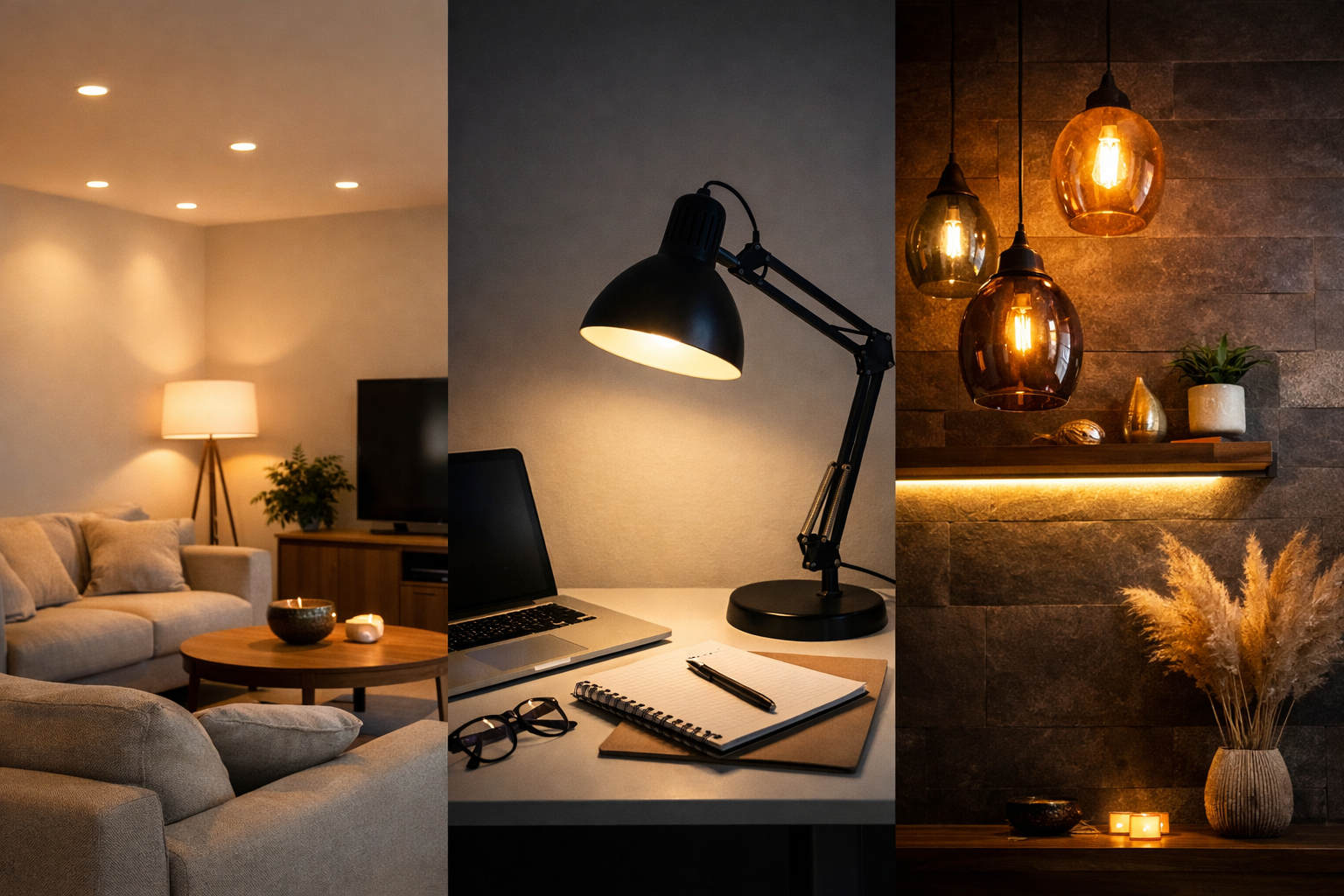
Wall washing represents a variation where accent sources graze vertical surfaces at shallow angles, emphasizing texture in stone, brick, or architectural details. Fixtures mount 12-18 inches from walls, creating smooth gradients that showcase material qualities. This functional decorative illumination technique adds depth and visual interest in spaces with limited architectural features, transforming plain surfaces into dynamic design elements through strategic light placement.
Layering Principles
Building Hierarchy
Successful spaces combine all three components of the ambient vs task vs accent lighting framework rather than relying on single sources. Beginning with adequate ambient light establishes the foundation, then adding task fixtures addresses functional requirements, and finally incorporating accent elements provides visual interest. This sequential three layer lighting approach ensures spaces meet practical needs while achieving aesthetic goals through thoughtful layering strategies, especially in lighting for open layouts.
Independent control for each layer enables flexible adaptation to different activities and times of day. Morning routines might activate all layers for maximum visibility during cleaning and preparation activities. Evening relaxation reduces or eliminates task and accent sources, relying primarily on dimmed ambient light that creates comfortable low-light environments conducive to unwinding before bedtime without harsh brightness that interferes with natural circadian rhythms.
Balance and Proportion
Avoiding excessive reliance on any single layer prevents common lighting design fundamentals mistakes. Rooms with only ambient sources appear flat and one-dimensional, lacking visual depth or focal points that create interest. Conversely, spaces emphasizing accent lights while neglecting adequate ambient illumination feel dark and cave-like, with isolated bright spots that cause uncomfortable glare and eye fatigue during extended occupation periods, making it essential to reduce glare effectively.
Proportion between layers depends on room function and user preferences. Entertainment spaces might emphasize ambient and accent components while minimizing task elements, creating atmospheric environments suited for socializing. Home offices reverse this priority, requiring robust task lighting supplemented by moderate ambient levels and minimal accent features that might distract from concentrated work activities demanding sustained focus and attention.
Fixture Selection
Choosing appropriate fixtures for each category in the ambient vs task vs accent lighting system requires understanding how different designs distribute light. Recessed downlights with wide flood beam spreads work well for ambient applications, while narrow spot trims suit accent purposes. Pendant fixtures can serve dual roles, providing ambient illumination when equipped with diffused shades or accent lighting when using clear glass that exposes visible bulb filaments.
Task fixtures prioritize adjustability and directional control over decorative appearance. Swing-arm lamps, gooseneck lights, and articulated desk lamps allow users to position illumination precisely where needed without fixed mounting that limits functionality. Under-cabinet LED strips provide permanent task solutions in kitchens and workshops where consistent positioning suits repetitive activities performed at dedicated work surfaces throughout daily routines, often planned through lighting layout planning.
Accent fixtures demand precise beam control to effectively highlight chosen elements within functional decorative illumination schemes. Track lighting systems offer maximum flexibility, with individually adjustable heads that redirect as needs evolve. Recessed adjustable fixtures provide similar capabilities within cleaner ceiling planes, though repositioning requires accessing housings rather than simply swiveling visible heads as with exposed track installations in contemporary or industrial aesthetics. For automated solutions, comprehensive smart system overview explores connected fixtures that enable remote control and automated scheduling.
Brightness Ratios
Contrast Management
Maintaining appropriate brightness ratios between layers prevents excessive contrast that causes eye strain. The three layer lighting approach recommends keeping task areas no more than three times brighter than surrounding ambient levels. Exceeding this ratio forces eyes to constantly readjust when shifting between work surfaces and adjacent areas, creating fatigue during extended use in spaces like home offices or detailed hobby workshops requiring sustained concentration.
Accent lighting in the ambient vs task vs accent lighting hierarchy similarly benefits from controlled contrast. The previously mentioned 3:1 ratio between accented objects and ambient backgrounds creates visual interest without overwhelming brightness that distracts from intended focal points. Higher ratios make highlighted elements appear artificially separated from surroundings rather than naturally integrated within cohesive interior compositions supporting balanced aesthetic presentations.
Dimming Capability
Installing dimmers on each layer enables dynamic ratio adjustment matching changing needs throughout days and seasons. Winter evenings might require full ambient output compensating for absent daylight, while summer evenings need minimal supplemental illumination. Task lights remain at consistent levels supporting specific activities, while ambient and accent layers adjust flexibly without affecting functional workspace illumination requirements during focused tasks.
Preset scenes store preferred combinations for common scenarios within lighting design fundamentals implementations. “Entertaining” mode might set ambient at 70%, task at 30%, and accent at 100%, creating welcoming atmospheres with visual drama. “Working” presets reverse these priorities, emphasizing task output while reducing ambient and accent levels that might cause glare on computer screens or reflective work surfaces during concentrated professional activities.
Living Spaces
Living rooms demonstrate the ambient vs task vs accent lighting framework through diverse fixture types serving complementary purposes. Ceiling fixtures or recessed downlights provide base ambient illumination enabling navigation and general activities. Floor lamps positioned beside reading chairs deliver focused task light for extended reading sessions without requiring overhead sources that might create unflattering shadows during conversations or television viewing, particularly when lighting high ceilings properly.
Accent opportunities abound in living spaces through picture lights illuminating artwork, uplights highlighting architectural features, and cove lighting emphasizing crown molding or tray ceilings. These elements within the three layer lighting approach add depth and visual interest that prevent rooms from appearing flat or monotonous. Table lamps on end tables contribute both ambient fill light and decorative elements, with translucent shades diffusing output while attractive bases serve as focal points during daytime hours.
Flexibility proves essential in multipurpose living areas supporting activities from entertaining to homework to relaxation. Independent switching for each layer enables customization without compromising functionality. Movie watching benefits from minimal ambient and task sources while maintaining low-level accent lighting preventing complete darkness. Cleaning requires all layers activated, while family game nights need moderate ambient levels supplemented by task fixtures illuminating playing surfaces.
Kitchen Applications
Counter Task Lighting
Kitchens demand robust functional decorative illumination implementations across all three categories. Under-cabinet LED strips provide essential task lighting for food preparation surfaces, eliminating shadows that ambient ceiling fixtures cannot adequately address. These strips mount toward cabinet front edges, directing light downward onto counters while preventing backlighting that creates glare on backsplashes or reflective appliances during cooking activities.
Island pendant fixtures serve dual purposes within the ambient vs task vs accent lighting framework. Positioned 30-36 inches above countertops, they deliver concentrated task illumination for meal preparation while contributing to overall ambient levels. Decorative pendant designs also function as accent elements, creating visual focal points that anchor open-plan layouts connecting kitchens with adjacent dining or living areas in contemporary floor plans.
Cabinet Interior Lighting
Interior cabinet lighting represents specialized accent applications highlighting dishware in glass-front installations while improving functional visibility in deep cabinets. Sensor-activated LED pucks or strips illuminate automatically when doors open, eliminating fumbling in dark storage spaces. This three layer lighting approach extends beyond main room illumination, addressing every area where improved visibility enhances safety, convenience, or aesthetic presentation throughout kitchen zones. For workspace-specific guidance, explore home office lighting setups that require precision task lighting.
Bedroom Implementations
Bedrooms prioritize relaxation while accommodating functional requirements through carefully balanced lighting design fundamentals. Ceiling fixtures with dimming capability provide adjustable ambient illumination suitable for cleaning during daytime and gentle evening light supporting bedtime routines. Warm color temperatures (2700-3000K) enhance restful atmospheres compared to cool whites that might interfere with natural sleep preparation and circadian rhythm regulation.
Bedside reading lights deliver focused task illumination without disturbing sleeping partners in the ambient vs task vs accent lighting hierarchy. Swing-arm wall sconces or adjustable table lamps direct light precisely onto pages while shielding bulbs from sleepers’ sight lines. Three-way bulbs or integrated dimmers enable intensity adjustment from bright reading levels to gentle nighttime navigation, preventing stumbles during bathroom trips without fully activating disruptive overhead fixtures.
Accent opportunities include cove lighting behind headboards, uplights highlighting artwork, or LED strips within closets showcasing clothing collections. These functional decorative illumination elements add visual interest during waking hours while remaining easily deactivated for sleep. Closet lighting deserves special attention, with ceiling fixtures or rod-mounted strips enabling accurate color matching and outfit coordination impossible under inadequate illumination from borrowed ambient sources.
Bathroom Strategies
Bathroom illumination within the three layer lighting approach emphasizes task lighting at vanities where grooming activities demand shadow-free visibility. Fixtures mounted on either side of mirrors at face height provide cross-illumination eliminating shadows under eyes, nose, and chin. This configuration proves superior to single overhead fixtures that create harsh shadows making shaving, makeup application, and skincare routines more difficult and less accurate.
Ambient lighting from ceiling fixtures supplements vanity task sources, ensuring safe navigation and adequate visibility throughout shower, toilet, and storage areas. Wet-location rated recessed downlights provide code-compliant illumination in shower enclosures, with dimming capability enabling spa-like atmospheres for relaxing soaks while maintaining bright settings for cleaning and maintenance activities requiring enhanced visibility.
Accent applications in bathrooms remain limited compared to living spaces but might include toe-kick lighting beneath vanities creating subtle illumination for nighttime use, or backlit mirrors providing decorative elements while contributing to overall task illumination. Color rendering proves crucial in these spaces, with high-CRI bulbs ensuring accurate skin tone perception that translates reliably to natural outdoor lighting conditions.
Control Integration
Modern control systems enhance the ambient vs task vs accent lighting framework through programmable scenes and automation. Smart switches enable creating preset configurations that recall specific combinations of brightness levels across all three layers simultaneously. Single button presses activate “morning,” “evening,” or “entertaining” modes without manually adjusting individual dimmers, streamlining daily routines through simplified operation accessible to all household members.
Motion sensors automate lighting in transitional spaces where manual switching proves inconvenient. Hallways, stairways, and closets benefit from automatic activation upon detecting movement, with preset delays extinguishing fixtures after areas remain unoccupied. This automation improves safety while eliminating energy waste from forgotten switches, supporting efficient lighting design fundamentals throughout residential installations requiring minimal user intervention during typical daily activities.
Voice control integration coordinates all three lighting layers with other smart home systems through unified commands. “Good night” routines simultaneously dim ambient sources, extinguish task fixtures, activate security lighting, adjust thermostats, and lock doors. This comprehensive automation simplifies complex multi-system interactions into single voice commands or scheduled triggers that execute consistently without requiring manual operation of individual controls. For expanded knowledge, visit the LED lighting knowledge center for deeper insights.
Mastering how ambient vs task vs accent lighting layers interact creates balanced, functional spaces supporting diverse activities while achieving aesthetic goals. This fundamental framework guides decisions from initial planning through fixture selection, installation, and ongoing operation.
Sharing this guide
If you found this guide helpful, you can save it for later or share it with a friend. It’s especially useful for beginners, homeowners, and DIY users.
Share using the links below
Interested in learning more? Browse all related articles in our category section.
Pingback: Lighting Placement Mistakes: Avoid Critical Errors
Pingback: Best LED Bulbs for Living Rooms: Smart Guide 2026
Pingback: Local vs Cloud Smart Lighting: Key Differences - NeoLEDHub
Pingback: Direct vs Indirect Lighting: Which Is Better? - NeoLEDHub
Pingback: Beginner Guide to Lighting Design - NeoLEDHub
Pingback: Lighting Layout Planning: Complete Step-by-Step - NeoLEDHub
Pingback: Bedroom Lighting Design: Expert Guide - NeoLEDHub
Pingback: Lighting for High Ceilings: Best Ideas - NeoLEDHub
Pingback: Lighting Design for Open Floor Plans: Best Ideas - NeoLEDHub
Pingback: Lighting for Narrow Hallways: Design Tips - NeoLEDHub
Pingback: Lighting Design for Staircases: Safety & Style - NeoLEDHub