Light Bulb Comparison: Lumens, Cost, Color & Which to Buy
Use this light bulb comparison guide to compare bulbs by lumen output first, not watts. Lumens tell you the real brightness; watts tell you how much energy the bulb uses. Then compare color temperature, CRI, dimming support, base type, fixture fit, rated lifespan, and running cost before buying.
For most homes, LED bulbs are the safest default because it offers low running cost, long life, instant brightness, and flexible options for different rooms. Halogen only makes sense when smooth dimming or a specific warm feel matters more than efficiency, while CFL is usually harder to justify for new purchases.
Quick Answer
For most homes, choose an LED bulb with the right lumen output, color temperature, base type, and dimming compatibility for the room. Compare brightness by lumens first, then check watts, CRI, rated lifespan, fixture fit, and running cost before buying.
- Brightness: compare lumen output, not old wattage labels.
- Cost: look at energy use and replacement frequency, not just the shelf price.
- Color: choose warm white for comfort and cooler light for task-heavy spaces.
- Quality: check CRI if faces, food, fabrics, or finishes need to look natural.
- Fit: confirm base type, bulb shape, dimming support, and fixture compatibility.
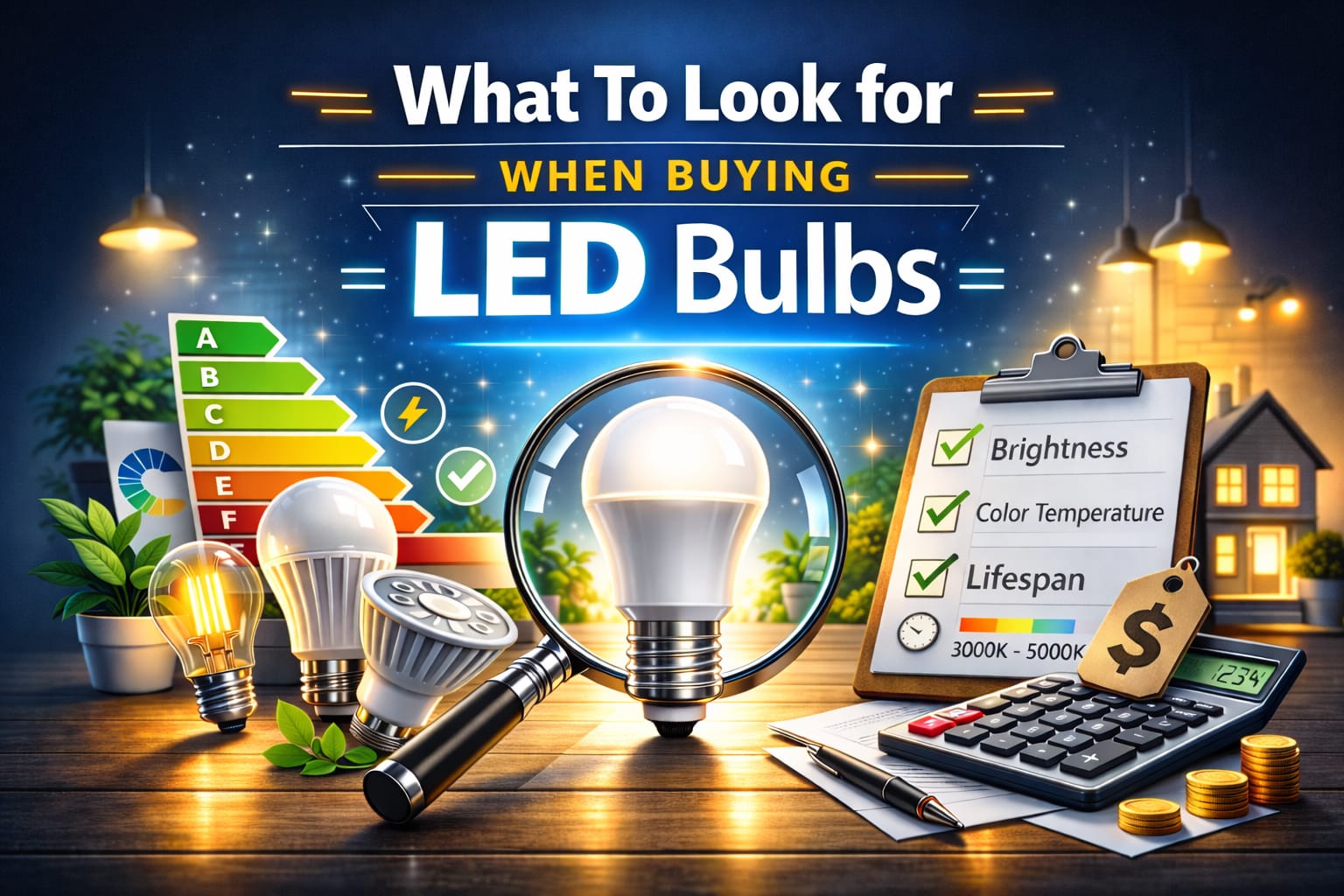
Table of Contents:
- Quick Answer
- What to Compare Before Buying a Light Bulb
- Lumens vs Watts: Compare Brightness First
- Running Cost and Lifespan: Why LED Usually Wins
- Color Temperature, CRI and Room Comfort
- Dimming, Base Type and Fixture Fit
- LED vs Halogen vs CFL: Which Makes Sense?
- Which Light Bulb Should You Choose by Room?
- Final Buying Checklist and Mistakes to Avoid
- FAQ
- Key Takeaways
- Sharing This Guide
What to Compare Before Buying a Light Bulb
The easiest way to compare light bulbs is to ignore the brand’s marketing for a moment and check the specs that actually affect the result in your home: lumens, watts, Kelvin, CRI, dimming compatibility, base type, bulb shape, fixture rating, and estimated life.
This matters because a bulb can be good on paper and still wrong for the room. A very cool, bright bulb may work well in a garage but feel harsh in a bedroom. A cheap bulb may look attractive on the shelf but cost more over time if it uses more power or fails sooner. A decorative bulb may look beautiful in an open pendant but feel too dim for a kitchen work zone.
Once you compare the right details, choosing a bulb becomes less about guessing and more about matching the product to the room, fixture, and use case. If you want a broader framework before comparing specific products, our LED lighting buying guide is a useful next step.
When comparing several bulbs, write down the lumens, watts, Kelvin, CRI, dimming support, base type, and rated life. This simple list filters out vague packaging claims like “soft glow,” “energy smart,” or “bright white.”
Lumens vs Watts: Compare Brightness First
The most important rule in any light bulb comparison is simple: compare brightness by lumen output, not watts. Watts tell you how much energy a bulb uses. Lumens tell you how much light the bulb gives off. This is why a modern 8W or 9W LED can often replace an older 60W incandescent-style bulb while using much less electricity.
Many buying mistakes happen because people still think in old wattage labels. Two bulbs may both be labeled ‘60W equivalent’, but beam angle, diffusion, color temperature, shade design, and fixture position can make them feel different once installed. If the room feels too dim or too harsh, the issue is often not just brightness; it is how the light is distributed and perceived.
For a reliable reference point, the U.S. Department of Energy explains that modern bulb labels are designed around lumens, estimated energy cost, color appearance, life, and energy use rather than old wattage assumptions. You can also read our deeper guide to lumens versus watts if you want a clearer conversion framework before choosing.
As a quick rule, start by matching the brightness level you need, then compare energy use. For example, an efficient A19 LED around 800 lumens is a common starting point for replacing many older 60W household bulbs.
Running Cost and Lifespan: Why LED Usually Wins
After brightness, compare the real cost of using the bulb. Shelf price is only one part of the decision. A bulb that costs less today can become more expensive if it uses more power, creates more heat, or needs replacing sooner.
This is where halogen bulbs often lose. They can produce attractive, warm light, but they use far more electricity than modern LED alternatives and usually have a much shorter lifespan. CFL bulbs are more efficient than halogen, but they are less appealing than LED for many new purchases because of warmup time, switching sensitivity, mercury content, and weaker dimming performance.
For most households, LED offers the best long-term value because it combines low energy use with a long rated life. This matters most in rooms where lights run for several hours a day, in hard-to-reach fixtures, and in homes replacing many bulbs at once. Our guides to LED bulb electricity usage and LED bulb lifespan explain these savings in more detail.
For a simple whole-home replacement starting point, 9W A19 LED bulbs for replacing 60W bulbs can make sense when you want a familiar shape, around 800 lumens, and lower everyday energy use.
Color Temperature, CRI and Room Comfort
Two bulbs can have similar lumens and still feel completely different because of color temperature. Warm white bulbs around 2700K to 3000K usually feel softer and more relaxing, which makes them a good fit for bedrooms, living rooms, and evening use. Neutral or cooler bulbs can feel cleaner and sharper, which can help in kitchens, offices, laundry rooms, garages, and task-heavy areas.
CRI, or Color Rendering Index, matters when you care about how colors look under the bulb. A higher CRI generally makes skin tones, food, artwork, fabrics, and room finishes look more natural. Halogen has traditionally performed well here, but many modern LEDs now offer strong color quality, especially in higher-quality product lines.
This is why “LED” is not enough as a buying criterion. A cheap LED can look flat, cold, or harsh. A better LED with the right Kelvin range and CRI can feel comfortable while still giving you the efficiency and lifespan benefits. If comfort is your top priority, our guide to the best soft white LED bulbs is a useful follow-up.
If you want one bulb type that can shift between warm evening light, cleaner task light, and colored scenes, RGBTW smart bulbs for adjustable color and app control fit better in this part of the decision than in a pure cost comparison.
Dimming, Base Type and Fixture Fit
A bulb can have the right brightness, color, and cost profile but still be wrong if it does not work with your dimmer or fixture. Dimming is one of the most common problem areas. Halogen usually dims smoothly, CFLs are often weak here, and LEDs work well only when the bulb and dimmer are compatible.
Do not stop at “dimmable: yes.” Check whether the bulb is designed for the dimmer type you already have, especially if you want smooth low-end dimming in bedrooms, dining rooms, living rooms, or media rooms. Poor pairing can cause flicker, buzzing, limited dimming range, or uneven output. For that specific issue, see our guide to the best dimmable LED bulbs with no flicker.
Do not assume every LED bulb works in every enclosed fixture or with every dimmer. Heat buildup, incompatible dimmers, and tight fixture shapes can shorten lifespan or cause flicker even when the bulb looks correct on the shelf.
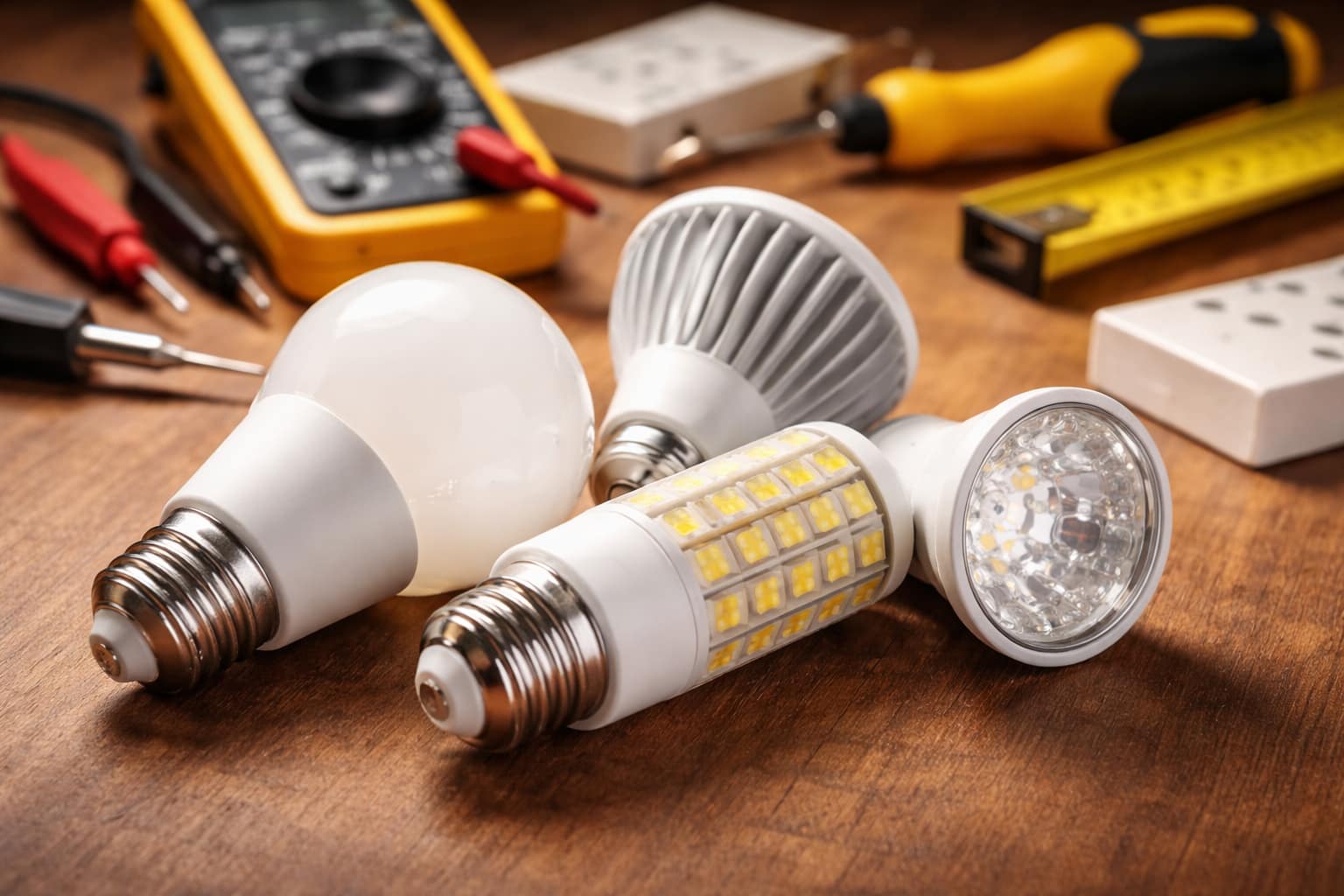
Base type and bulb shape also matter. Check whether you need E26, E12, GU10, BR30, PAR, A19, globe, candle, or another shape before comparing other specs. A bulb that is electrically compatible may still look wrong if it sticks out, creates glare, or sits behind a shade that blocks too much light. Our guide to LED bulb base types can help you avoid that mistake.
For open pendants, exposed sockets, and decorative fixtures where the bulb itself is visible, filament-style LED bulbs for exposed fixtures are a more natural choice than plain utility bulbs because appearance becomes part of the lighting result.
LED vs Halogen vs CFL: Which Makes Sense?
The clearest answer for most buyers is that LED bulbs should be the default choice. It is efficient, long-lasting, instant-on, widely available, and flexible enough for most rooms. That does not mean every LED bulb is perfect, but it does mean LED is usually the best place to start when comparing light bulbs today.
Halogen bulbs still has a place in narrower situations. It can offer warm, familiar light and smooth dimming, which some people still prefer in specific decorative or dimming-heavy setups. The tradeoff is higher energy use, more heat, and shorter life. In most everyday rooms, those downsides matter more than the benefits.
CFLs are usually the least compelling option for new purchases. It can be efficient compared with halogen, but it often loses to LED on warmup time, switching tolerance, dimming, disposal, and overall convenience. CFLs also require more careful handling and recycling because they contain mercury; the EPA provides guidance for safe cleanup and recycling if a CFL breaks or needs disposal.
✅ Choose LED for most homes.
Best overall balance of efficiency, lifespan, low heat, instant brightness, and room-to-room flexibility.
Use halogen only for narrow cases.
Still relevant when warm feel, compact form, or very smooth dimming matters more than running cost.
Avoid CFL for most new purchases.
Less attractive now because LED usually offers better instant use, dimming options, switching tolerance, and disposal convenience.
If you want a direct technology breakdown, our LED vs halogen vs CFL guide goes deeper into the strengths and weaknesses of each type.
Which Light Bulb Should You Choose by Room?
The best light bulb is not always the brightest one. It is the one that fits how the room is used. Bedrooms and living rooms usually benefit from warmer color temperatures, softer diffusion, and comfortable brightness. Kitchens, offices, bathrooms, garages, and task zones often need stronger light, better visibility, and sometimes a cleaner tone.
Simple Room-by-Room Decision Guide
- Bedrooms: warm white LED, soft output, good dimming if you use the light at night.
- Living rooms: warm white or adjustable white, good CRI, comfortable diffusion.
- Kitchens: higher lumens, neutral white, strong task visibility over counters.
- Home offices: enough brightness for reading and screen work, with color that does not feel harsh.
- Bathrooms: good CRI, instant brightness, and bulbs that tolerate frequent switching.
- Garages and utility areas: brighter output, efficient LED, practical visibility over decorative warmth.
- Open decorative fixtures: choose a bulb shape and finish that looks intentional, not just functional.
For comfort-focused rooms, our guide to the best LED bulbs for bedrooms is a good next read. For task-heavy spaces, the guide to the best LED bulbs for home offices is more relevant.
The main point is to compare bulbs by the room’s purpose, not just by technology. A bulb that looks perfect in a hallway may feel weak over a kitchen island, and a bulb that works in a garage may feel too cold in a bedroom.
Final Buying Checklist and Mistakes to Avoid
Before you buy, use this checklist to keep the comparison practical and avoid the most common mistakes:
- ✓ Check lumens first to compare real brightness, not old wattage habits.
- ✓ Compare watts and estimated running cost after you know the brightness you need.
- ✓ Choose the right Kelvin range for the room, not just the label name.
- ✓ Check CRI if color quality matters for faces, food, décor, clothing, or artwork.
- ✓ Confirm base type, shape, fixture fit, and enclosed-fixture suitability.
- ✓ Check dimming compatibility before buying bulbs for dimmer-controlled rooms.
- ✓ Think about total cost over time, not just today’s price.
The biggest mistakes are comparing bulbs by watts alone, choosing only by shelf price, ignoring color temperature, assuming all LEDs look the same, and forgetting to check dimming or fixture compatibility. A structured comparison helps you avoid buying a bulb that is bright enough on paper but uncomfortable, inefficient, or wrong for the fixture.
What Should You Choose?
For most households, choose LED. Then narrow the choice by room: warm white for comfort, higher lumens for task areas, high CRI for natural color, dimmable bulbs for mood control, and decorative shapes for exposed fixtures.
- Choose LED when you want the best long-term value.
- Choose warm white bulbs for bedrooms, living rooms, and evening spaces.
- Choose higher-output bulbs for kitchens, offices, garages, and task zones.
- Choose high-CRI bulbs when faces, food, finishes, or colors need to look natural.
- Choose halogen only when its smooth dimming or specific light feel matters more than efficiency.
- Avoid new CFL purchases in most cases unless there is a specific reason to use them.
You can also explore more practical lighting guides in the LED Knowledge Center.
FAQ
These are the questions that usually matter most when comparing bulbs in a store, online, or before replacing several lights at home.
Should I compare light bulbs by watts or by lumens first?
Start with lumens because they tell you how bright the bulb is. Watts only tell you how much power the bulb uses. Once the brightness is right, compare watts and running cost.
Why can two bulbs with similar lumens feel different?
Because lumens are only one factor. Color temperature, beam spread, diffusion, CRI, shade design, and fixture position can all change how bright or comfortable the light feels once installed.
Are LED bulbs almost always the best choice now?
For most homes, yes. LEDs usually offer the best mix of efficiency, lifespan, instant brightness, and flexibility. Halogen can still make sense in narrower dimming or decorative cases, while CFL is usually harder to justify for new purchases.
What is the best light bulb for most rooms?
A standard LED bulb with the right lumens, color temperature, base type, and fixture rating is the best choice for most rooms. Use warm white for comfort spaces and brighter or more neutral light for task areas.
Key Takeaways
When comparing light bulbs, start with lumens, not watts. Then compare color temperature, CRI, dimming behavior, base type, fixture fit, rated lifespan, and long-term running cost.
For most households, LED is the best option because it is efficient, long-lasting, instant-on, and flexible enough for most rooms. Halogen is mainly useful for narrower dimming or decorative cases, while CFL is usually less attractive for new purchases.
The right bulb is not just the cheapest or brightest one. It is the bulb that fits the room, fixture, comfort level, and long-term use case.
Sharing This Guide
If you found this guide helpful, save it for later or share it with someone who is comparing bulb options before buying new lighting for their home.
Interested in learning more? Browse all related articles in our category section.