LED vs. Halogen vs. CFL: Which Bulb Is Best for Your Home?
The short answer is that LEDs are the best choice for most homes. They use less electricity, last much longer, run cooler, and now provide light that works well in almost any room.
Halogen bulbs are still a good option in situations where smooth dimming or very high color accuracy is important, while CFLs are only worth keeping if you already have them installed. This guide breaks down the real differences so you can choose the right bulb for each space instead of relying on outdated assumptions.
Quick Answer
In most homes, LED bulbs are the best option overall because they combine low energy use, a long lifespan, instant brightness, and high-quality light. Halogen bulbs are still ideal for smooth dimming and color rendering. CFLs are no longer the best option for most buyers.
- LEDs use the least electricity and usually cost the least over time.
- Halogen bulbs produce excellent light quality, but they waste far more energy as heat.
- CFLs are more efficient than halogen bulbs, but they are slower, less flexible, and harder to dispose of.
- LEDs are typically the best choice for kitchens, living rooms, bedrooms, and utility areas.
- Halogen bulbs are the best choice when smooth dimming or a very high CRI is most important.
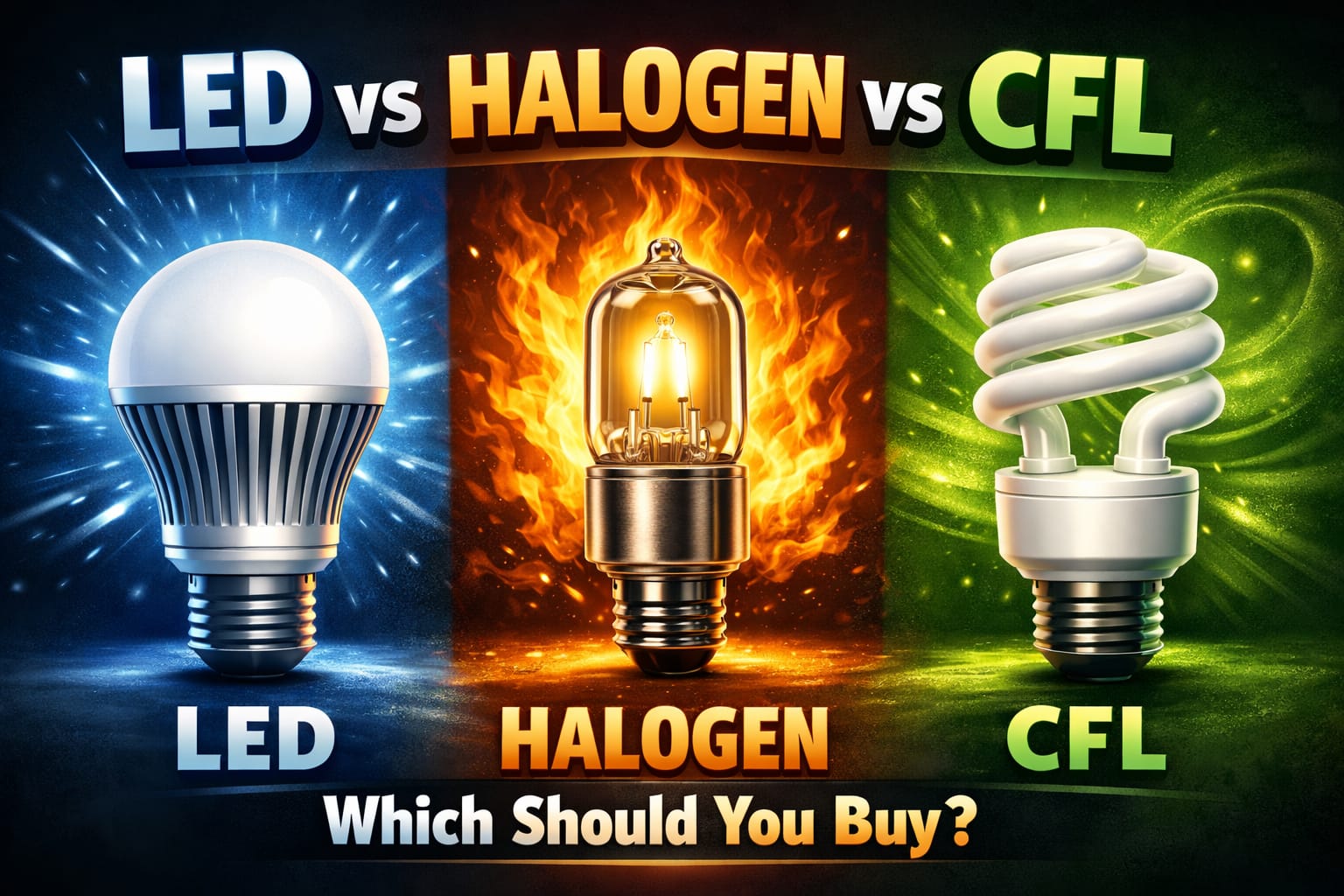
Table of Contents:
How These Bulb Types Work
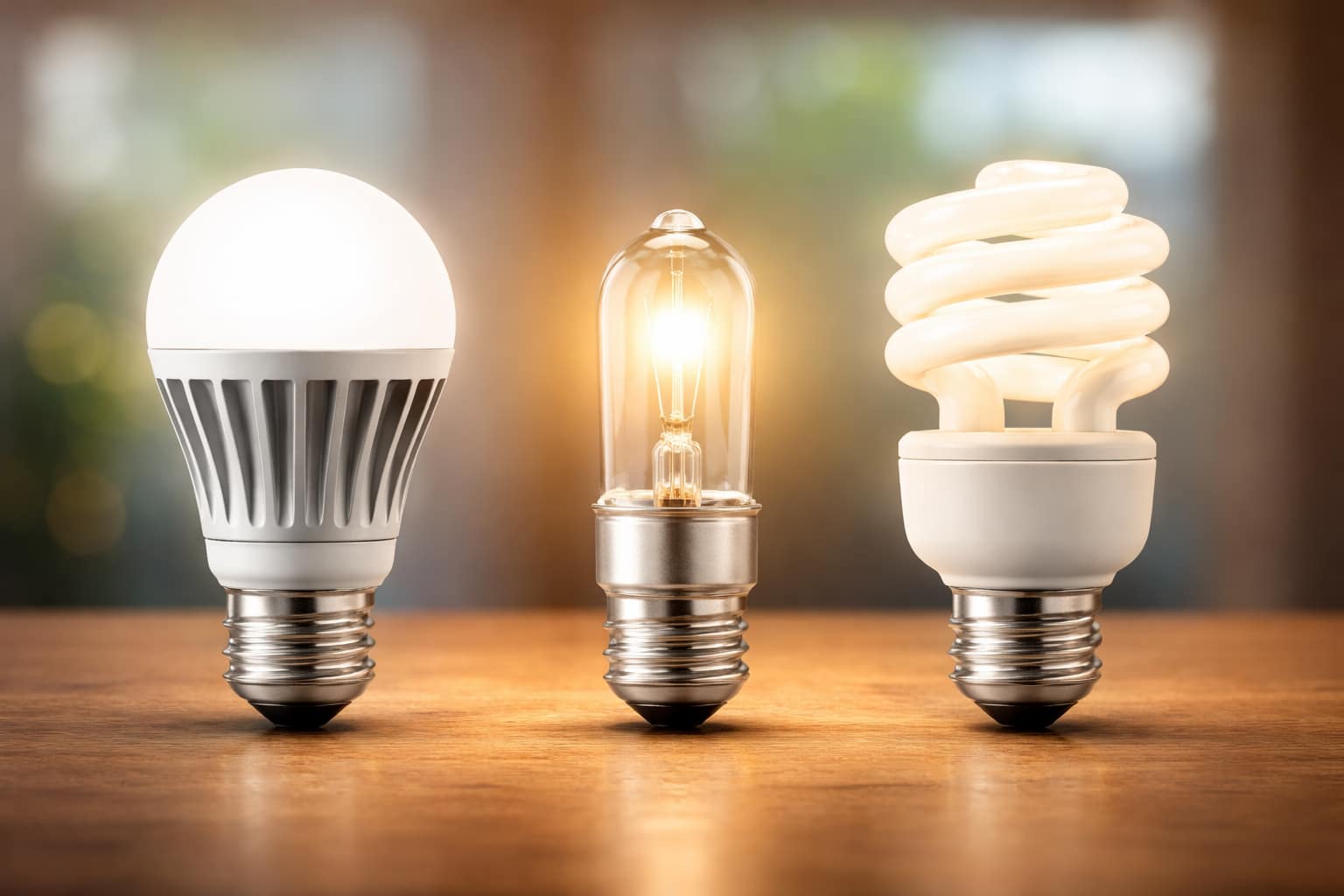
The easiest way to understand the difference between LEDs, halogens, and CFLs is to look at how each one produces light. Halogen bulbs work by heating a tungsten filament until it glows.
This gives them a familiar, warm light and strong color rendering. However, it also means that they waste a large amount of energy as heat.
CFL bulbs use electricity to excite mercury vapor, which activates a phosphor coating inside the bulb. This process is more efficient than heating a filament but usually results in slower startup, greater sensitivity to switching, and more disposal concerns. This is why CFLs were popular for years, especially before modern LEDs became affordable.
LED bulbs use semiconductors instead of filaments or gas-based lighting. This is why they turn on instantly, run cooler, and last much longer. If you want a broader overview of how LED products are chosen for homes, our LED lighting buying guide is a useful next step before comparing specific rooms or fixtures.
Energy Use and Running Costs
This is usually where the comparison becomes clear. For the same level of brightness, a halogen bulb often uses around 43 watts, a CFL uses about 13 to 15 watts, and a modern LED uses only about 8 to 10 watts. This means that LED bulbs typically provide the same useful light while using the least amount of electricity.
These differences add up faster than many people expect. In a single lamp, the yearly savings may not seem dramatic. Across a whole house, though, the difference becomes much more noticeable. Replacing 20 or 30 bulbs with LEDs can significantly cut operating costs, especially in rooms where lights stay on for hours each day.
This is why old bulb comparison charts still matter. Once you compare wattage, brightness, and yearly energy use, LEDs usually offer the best value overall.
If you’re looking for a simple starting point for common household fittings, these A19 LED bulbs are a practical example of the kind of low-wattage replacement that makes an obvious difference in energy usage.
Lifespan and Replacement Frequency
The short lifespan of halogen bulbs is one of the main reasons many homeowners have moved away from them. A halogen bulb may only last around 1,000 to 2,000 hours, meaning frequent replacement is necessary in heavily used rooms. This is manageable for a table lamp but much more inconvenient for ceiling fixtures, stairwells, outdoor lights, or any other hard-to-reach fixture.
CFLs improved this aspect quite a bit. Many models were rated for 8,000 to 15,000 hours, though their real-world lifespan often decreased when they were frequently turned on and off. This made CFLs better than halogens for long-running fixtures but less ideal for places like bathrooms, closets, and hallways.
LEDs are the clear winner here. Quality models often last 15,000 to 25,000 hours or more, and some even longer. For a clearer look at what those ratings mean in daily use, read our article on LED bulb lifespan, which explains how manufacturers rate them and why real longevity depends on heat, quality, and fixture conditions.
If the fixture is high up, enclosed, or difficult to access, bulb lifespan becomes more important than many people expect. Even when the bulb itself is inexpensive, frequent replacement quickly becomes frustrating.
Light Quality and Dimming
This is where halogen bulbs still have a few real strengths. Halogen bulbs produce warm, natural-looking light with excellent color rendering, and they dim smoothly with standard dimmers.
If how the room feels is more important to you than raw efficiency, halogen can still be appealing for decorative or dimming-heavy applications.
CFLs have always fallen short in this regard. Many older CFLs took time to warm up, dimmed poorly, and often looked less natural than other types of bulbs. Later models improved, but CFLs were rarely anyone’s preferred option for ambiance, smooth dimming, or high-end room lighting.
The quality of LED bulbs now covers a wide range. While cheap bulbs can disappoint, good ones offer strong color rendering, instant brightness, and reliable dimming when paired with a compatible control system. If dimming performance is important to you, it’s worth checking why some LED bulbs don’t dim properly before assuming the bulb itself is at fault. In many homes, a good dimmable LED bulb can provide most of the benefits of a halogen bulb without generating the same amount of heat or using as much energy.
Heat, Safety, and Environmental Impact
Halogen bulbs generate a lot of heat. This is one of their biggest drawbacks. Their high operating temperature can pose a problem in enclosed fixtures, near fabrics, or in fittings where the bulb sits close to other materials. It also means you are using electricity to generate unwanted heat.
CFLs run cooler than halogen bulbs, but they have a major environmental drawback: mercury. The amount is small, yet it changes how the bulb should be handled and disposed of. This is why CFLs never fully solved the problem. The EPA provides cleanup and disposal guidance because broken CFLs require more care than standard household bulbs.
LEDs usually come out on top here, too. They run cooler, contain no mercury, and reduce total energy demand over their long lifespan. This does not mean that disposal can be careless, but from a practical homeowner’s perspective, LEDs create fewer problems and fewer compromises than the other two options.
Where Each Bulb Type Makes Sense
In most rooms, LED is the obvious choice. Living rooms, kitchens, hallways, bedrooms, offices, bathrooms, and outdoor fixtures all benefit from their low energy use, long lifespan, and instant-on performance. LEDs also cope much better with frequent switching, which matters more than many people realize in everyday home use.
Halogen bulbs are still a good option in a narrower set of cases. If you have an older dimmer setup, want a very compact bulb, or care deeply about smooth dimming and excellent color rendering, halogen bulbs are still worth considering. In appliances or specialty fittings where direct LED replacements are limited, halogen replacement bulbs are a sensible stopgap when compatibility matters more than efficiency.
CFLs are mostly useful when you already have them and they still work, or when you have a tight budget for long-term fixtures. If you need that format, these E26 CFL bulbs fit those lower-priority fixtures that stay on for long periods. However, for most new purchases, CFLs no longer offer a compelling reason to choose them over LEDs.
For a broader side-by-side view of more bulb families, bases, and use cases, refer to our light bulb comparison guide, which goes beyond this three-way comparison and can help with fixture-specific choices.
What should you choose?
For most buyers, LED is the best choice overall. The main reasons are lower operating costs, a much longer lifespan, less heat generation, and greater practicality in everyday rooms.
- If you want the best value, choose LED.
- However, if you want smooth dimming and a very high CRI, halogen might still be a good option.
- If you already have CFL fixtures and use them for extended periods, it makes sense to keep CFLs temporarily.
- However, if you are buying bulbs for a whole-house upgrade, LEDs are usually the smartest long-term choice.
- If easy disposal is important to you, avoid CFLs unless you have a specific reason to use them.
Key Takeaways
When comparing LEDs, halogens, and CFLs, LEDs are the best fit for most homes because they use the least electricity, last the longest, run cooler, and now offer light quality that works well in nearly every common room.
Halogen bulbs are still a good option when smooth dimming, compact size, or excellent color rendering is more important than efficiency. CFLs are more efficient than halogens, but their warm-up time, switching sensitivity, and mercury content make them difficult to recommend for new purchases.
For the safest general recommendation, start with LEDs and only consider halogens or CFLs when a specific fixture, compatibility issue, or lighting preference provides a clear reason to do so.
Share this guide!
If this comparison helped you decide which bulb type makes the most sense, save it for later or share it with someone upgrading their home lighting.
Interested in learning more? Browse related articles in our category section.
Pingback: Light Bulb Comparison: Perfect Guide Smart Choices
Pingback: LED Lighting Terms: Essential Guide for Smart Buyers
Pingback: What Are LED Bulbs? Beginner Guide - NeoLEDHub
Pingback: LED Bulbs vs Halogen: Ultimate Smart Buying Guide
Pingback: LED vs Halogen Energy Consumption Compared - NeoLEDHub
Pingback: What Are LED Bulbs? Beginner Guide - NeoLEDHub
Pingback: LED vs Halogen Energy Consumption: Which Uses Less Power?