LED Color Temperature Guide: Understanding Warm vs Cool White Light on the Kelvin Scale
Understanding color temperature is essential when choosing LED lighting for your home or workspace. The right light can transform how a room feels, affects your mood, and even influences your productivity. This comprehensive guide explains everything you need to know about light measurement on the Kelvin scale, and how to select between warm white light and cool white light for different areas of your home.
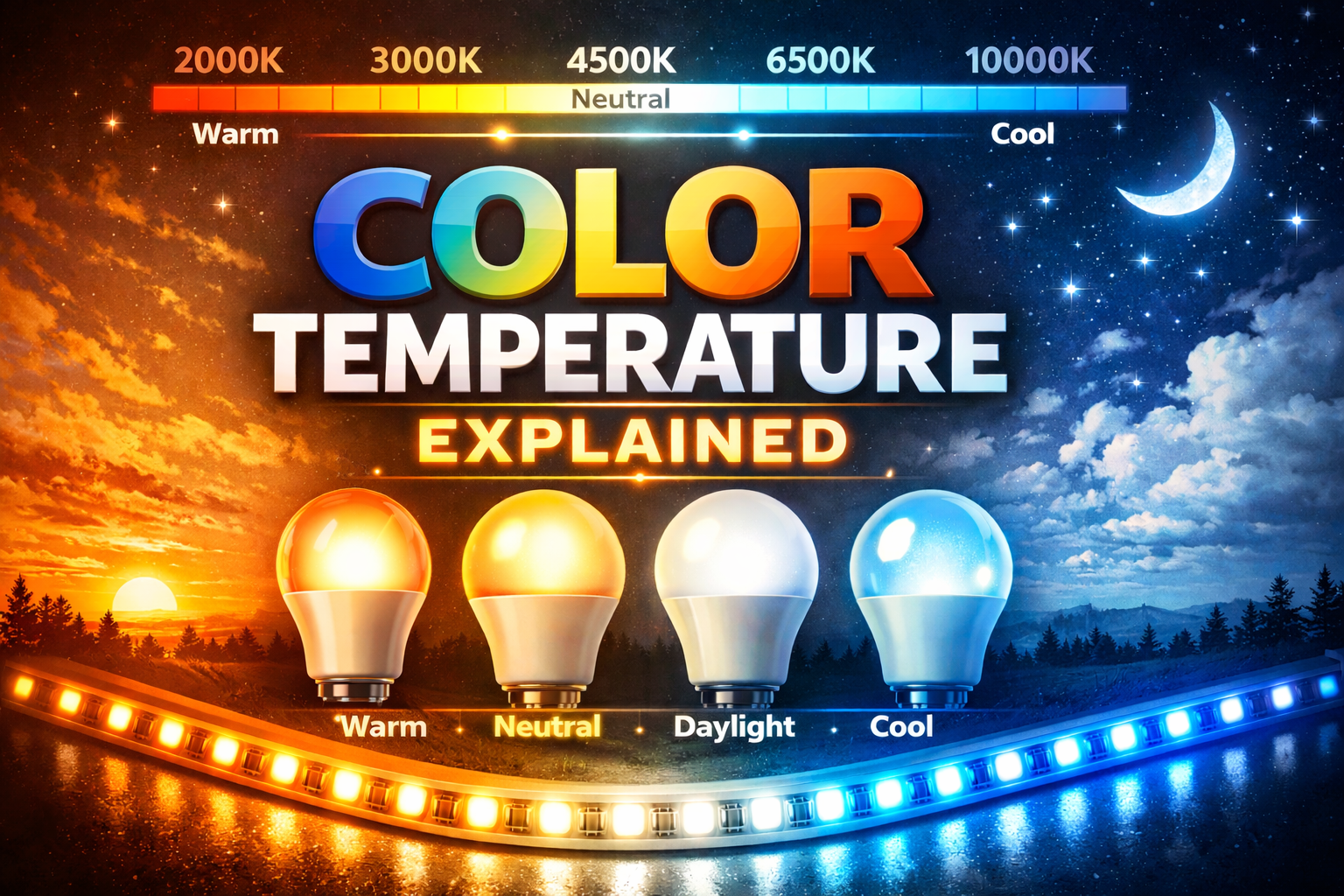
Table of Contents
What is color temperature?
Color temperature describes the appearance of light emitted by a bulb, ranging from warm yellowish tones to cool bluish tones. Despite the terminology, a higher value on the Kelvin scale actually produces light that appears cooler and more blue, while a lower measurement creates warmer, more orange-yellow illumination. This might seem counterintuitive at first, but it becomes clear once you understand the science behind it.
The concept comes from physics, specifically from observing how heated objects emit light. When metal is heated, it first glows red, then orange, yellow, white, and finally blue as the heat increases. This same principle applies to how we measure and describe light from bulbs, even though modern LED bulbs don’t actually heat up to produce their light output.
For homeowners and anyone selecting lighting, understanding how warm white light differs from cooler options helps you create the right atmosphere in each space. The same room can feel cozy and relaxing with one choice, or bright and energizing with another. If you’re new to LED technology, you might also want to explore how LED technology creates different light qualities for a deeper understanding.
Understanding the Kelvin scale
The Kelvin scale is the measurement system used to quantify how light appears, abbreviated as K. Named after physicist William Thomson, also known as Lord Kelvin, this scale provides a standardized way to describe light appearance. The values you see on bulb packaging directly correspond to how the illumination will look when turned on.
How the scale works
The measurement range for home lighting typically spans from about 1800K to 6500K. Lower numbers produce warmer, more amber light, while higher numbers create cooler, bluer illumination. Most residential lighting falls between 2700K and 5000K, which covers the spectrum from cozy evening ambiance to bright daytime conditions.
Traditional incandescent bulbs typically operated around 2700K, which is why many people associate this warm white light with “normal” indoor lighting. However, LED technology now gives us access to the full range of the Kelvin scale, allowing precise control over the ambiance and functionality of our spaces. If you want a dependable option, a solid example is a smart A19 bulb with adjustable color warmth, which is widely trusted for indoor setups.
Reading bulb packaging
When shopping for bulbs, you’ll find the rating printed on the box, usually near other specifications on the Kelvin scale. Some manufacturers also use descriptive terms like “soft white,” “bright white,” or “daylight” alongside the numerical value. Understanding both the numbers and these common terms helps you make informed choices without confusion.
According to the U.S. Department of Energy, paying attention to light measurements alongside brightness specifications ensures you select lighting that meets both your practical and aesthetic needs.
Warm white light versus cool white light
The distinction between warm white light and cool white light is fundamental to creating appropriate lighting in different settings. Each type serves specific purposes and creates distinct atmospheric effects that significantly impact how a space feels and functions.
Characteristics of warm white
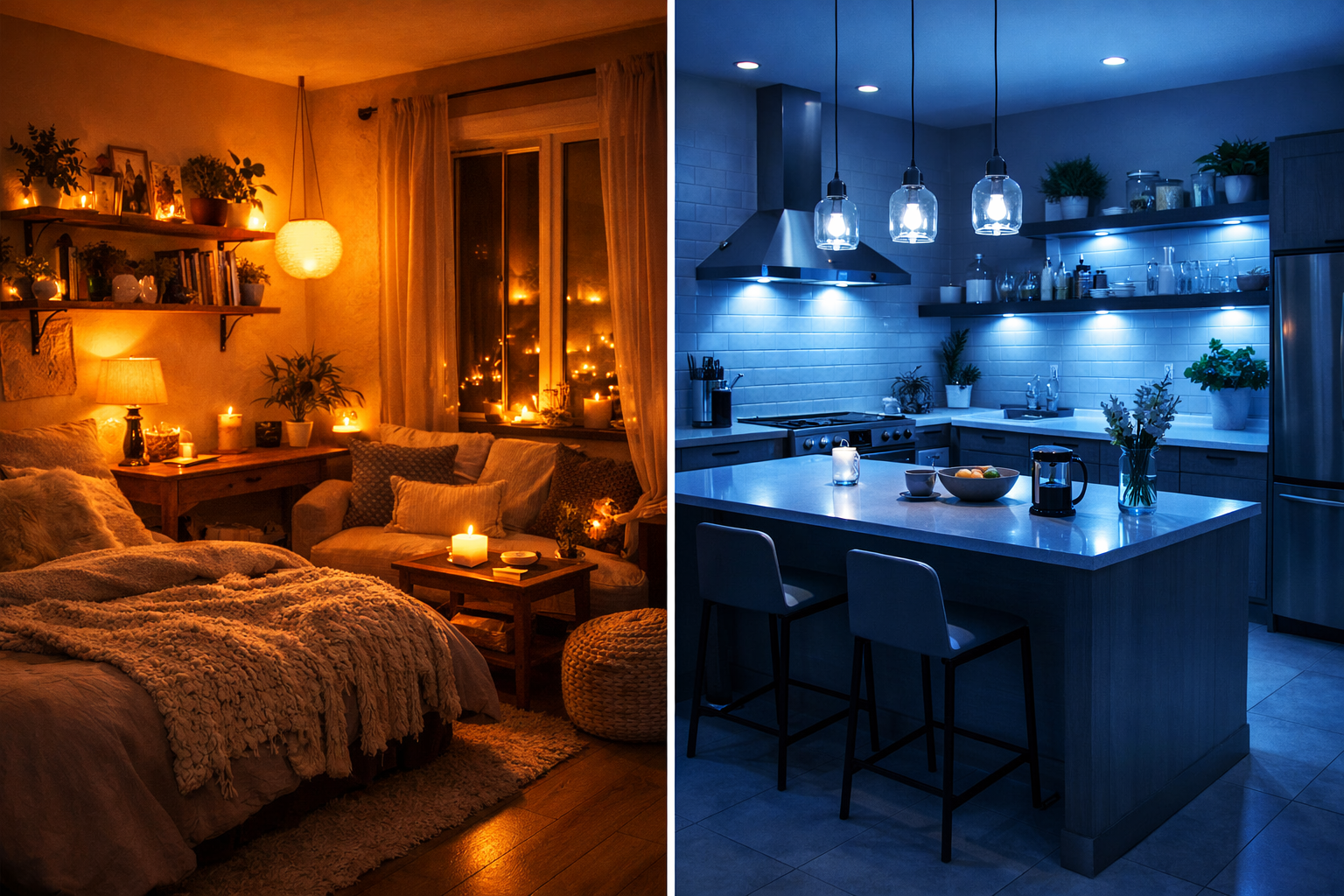
Warm white light, typically ranging from 2700K to 3000K, produces a yellowish or slightly orange glow reminiscent of traditional incandescent bulbs or candlelight. This type of illumination creates an inviting, relaxing atmosphere that feels comfortable and intimate. It softens shadows and makes spaces feel smaller and cozier.
Warm lighting works exceptionally well in residential settings where comfort is paramount. Living rooms, bedrooms, dining areas, and restaurants commonly use warm white light because it enhances skin tones, makes food look more appetizing, and promotes social interaction. The gentle quality of this illumination also reduces eye strain during evening hours.
Characteristics of cool white
Cool white light, ranging from 4000K to 5000K and beyond, emits a brighter, more neutral to bluish tone. This type of lighting appears crisp and clean, creating an alert and focused environment. It makes spaces feel larger and more open while providing excellent color accuracy for tasks requiring precision.
Offices, hospitals, retail stores, and task-oriented spaces benefit from cool white light because it enhances concentration and visibility. This range on the Kelvin scale mimics natural daylight, which explains why it feels energizing and helps maintain alertness during daytime hours. Many people also prefer cooler options in kitchens, bathrooms, and garages where detailed work occurs. Another practical alternative is a tunable white LED strip for flexible tone switching, which offers consistent results over time.
Common lighting ranges explained
Understanding specific ranges on the Kelvin scale helps you predict exactly how your lighting will appear. Each segment creates recognizable effects that suit particular applications and personal preferences.
Ultra warm (1800K-2400K)
This very low range produces amber light similar to candlelight or firelight. While uncommon for general illumination, these values create romantic, intimate settings perfect for restaurants, bars, or decorative accent lighting. Some people use ultra warm white light in bedrooms to promote relaxation before sleep.
Soft warm white (2700K-3000K)
This is the most popular range for residential lighting, matching traditional incandescent bulbs. It provides comfortable, inviting illumination suitable for living spaces, bedrooms, and dining rooms. Most people find this measurement on the Kelvin scale naturally pleasant and easy to live with daily.
Warm neutral (3000K-3500K)
Sitting between warm and neutral, this range offers slightly crisper light while maintaining warmth. It works well in transitional spaces, hallways, and areas where you want balanced lighting that’s neither too cozy nor too clinical. This measurement provides good color rendering without feeling harsh.
Neutral white (3500K-4500K)
Neutral values deliver clean, balanced light that appears neither noticeably warm nor cool. Commercial offices, retail environments, and modern kitchens often employ this range because it provides excellent visibility and accurate color perception without the yellowish cast of warmer options.
Cool daylight (5000K-6500K)
This range mimics natural daylight, producing bright, energizing cool white light with a slight blue tint at higher values. It’s ideal for task lighting, garages, workshops, and spaces requiring maximum visibility. Some people find very high measurements too stark for extended residential use, though they excel in functional settings.
How to choose the right option
Selecting appropriate lighting involves considering room function, personal preference, existing decor, and the activities that occur in each space. While guidelines provide helpful starting points, your unique needs should ultimately guide your decisions about whether to use warm white light or cool white light.
Consider room function
Think about how you use each space. Areas for relaxation benefit from warmer options, while spaces for detailed work need cooler values on the Kelvin scale. Kitchens present an interesting case—some prefer warm lighting for ambiance during meals, while others choose cooler options for food preparation accuracy. You might even consider different settings for different times of day.
The relationship between brightness and light appearance also matters significantly. If you’re unsure about brightness levels, learning about measuring light output effectively can complement your decisions on the Kelvin scale.
Personal preference matters
Individual sensitivity to light varies significantly. Some people find cool white light refreshing and energizing, while others perceive it as harsh or uncomfortable. Similarly, warm white light that one person finds cozy might feel dim or murky to another. Testing different options before committing to multiple bulbs saves money and frustration.
Maintain consistency
Using the same measurement throughout connected spaces creates visual harmony and prevents jarring transitions. When moving from a warm bedroom hallway into a cool bathroom, the shift can feel uncomfortable and disorienting. Try to keep values within 500-1000K of each other in adjacent rooms for smooth visual flow.
Effects on mood and productivity
Light measurements significantly influence human physiology, affecting circadian rhythms, mood, concentration, and overall wellbeing. Understanding these effects helps you make choices that support health alongside aesthetic preferences when selecting between warm white light and cool white light.
Circadian rhythm considerations
Cool white light with blue wavelengths suppresses melatonin production, the hormone that promotes sleep. Exposure to cooler values during evening hours can disrupt natural sleep patterns. Conversely, warm white light allows melatonin production to proceed naturally, supporting healthy sleep cycles when used after sunset.
This biological response explains why many experts recommend avoiding very cool lighting in bedrooms and evening spaces. Using warmer measurements during nighttime hours helps your body prepare for restful sleep naturally.
Productivity and focus
Cooler lighting increases alertness and cognitive performance during daytime hours. Studies show that cool white light can improve concentration, reduce errors in detail-oriented tasks, and maintain energy levels throughout the workday. This makes it valuable for offices, schools, and any environment requiring sustained mental effort.
Mood and emotional responses
Warm white light creates feelings of comfort, security, and intimacy, making it ideal for social settings and relaxation. Cooler options on the Kelvin scale can feel more energizing but may also seem sterile or impersonal if overused in residential settings. The emotional impact of lighting should align with each space’s intended purpose and your personal response to different values.
Common mistakes to avoid
Many people make preventable errors when selecting lighting for their homes. Recognizing these pitfalls helps you achieve better results from the start when choosing between warm white light and cool white light.
Mixing options incorrectly
Using wildly different values in the same room creates visual chaos and discomfort. While layered lighting can incorporate slight variations, keeping all light sources within 500K of each other maintains cohesion. Random mixing of warm and cool bulbs produces an unprofessional, disjointed appearance.
Ignoring existing decor
Light appearance interacts with paint colors, furniture, and decor. Warm white light enhances reds, oranges, and yellows while dulling blues and greens. Cool white light does the opposite. Consider how your chosen measurement will affect the colors already present in your space.
Always choosing the default
Many people simply replace burned-out bulbs with whatever’s available, missing opportunities to improve their lighting. Taking time to evaluate options on the Kelvin scale for each space creates better living environments. The default choice isn’t always the best choice for your specific needs.
Forgetting about adjustment periods
New lighting, especially if significantly different from what you had before, requires an adjustment period. Give yourself several days to adapt before deciding whether a choice works for you. Initial impressions can be misleading as your eyes and brain acclimate to the change between warm white light and cool white light.
Sharing this guide
If you found this guide helpful, you may want to save it or share it on social media, messaging apps, or bookmarking platforms so it’s easy to find again later. It can be especially useful for beginners, homeowners, or DIY users who are learning about this topic.
Understanding how to read the Kelvin scale empowers you to create lighting environments that support your lifestyle, enhance your spaces, and promote wellbeing. Whether you prefer the cozy glow of warm white light or the crisp clarity of cool white light, this measurement system provides the framework for making informed decisions. Take time to experiment with different values in your home, and you’ll discover how powerful proper lighting choices can be in transforming everyday spaces into perfectly tuned environments.
Interested in learning more? Browse all related articles in our category section.
Pingback: Best LED Bulbs Guide: Easy Tips for Smart Savings
Pingback: Beginner Guide to Lighting Design: Perfect Basics
Pingback: Warm Light vs Cool Light: Perfect Choice Explained