What Are LED Bulbs? Beginner Guide
If your eyes feel tired after a few hours at your desk, or your living room always feels too harsh no matter what you do, the problem is often the bulb itself. Cheap or poorly chosen bulbs flicker subtly, shift in color, or simply blast more intensity than you need. Understanding what are LED bulbs — and how to pick the right one — can make a bigger difference to your daily comfort than most people expect.
This beginner guide covers the basic technology behind LEDs, practical advice on choosing the right bulb for each room, and what to actually look for when buying. By the end you’ll know exactly what are LED bulbs, why they’ve replaced older technologies, and how to avoid the most common mistakes.
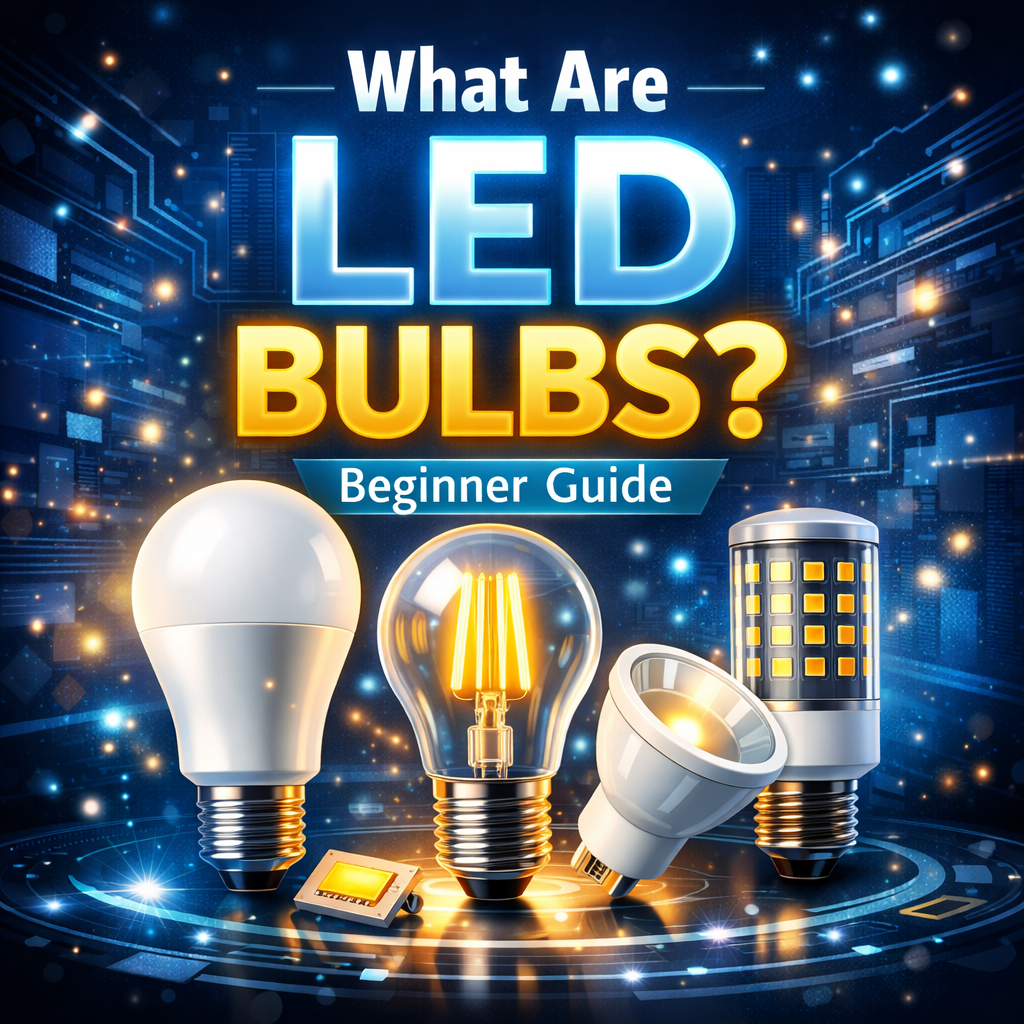
Table of Contents
- What Are LED Bulbs, Really?
- How Do LED Bulbs Work?
- Why Semiconductors Changed the Lighting Industry
- The Benefits of LED Lighting for Everyday Use
- The Real Impact on Your Electricity Bill
- LED vs Incandescent Bulbs: The Key Differences
- How Long Do LED Bulbs Actually Last?
- Picking the Right Shape and Fitting
- Warm, Cool, and Everything in Between
- Common Mistakes First-Time Buyers Make
- Reading the Label Without Getting Lost
- Matching the Bulb to the Room
- What to Check Before You Buy
What Are LED Bulbs, Really?
LED stands for Light Emitting Diode. A tiny semiconductor chip produces light when electricity passes through it — no filament, no gas, no burning anything. Just electrons moving through a material and releasing energy as visible light. When people ask what are LED bulbs, that’s the core answer: bulbs built around this semiconductor process rather than the heat-based methods used by older technologies.
The physical bulb is a housing for one or more of these chips, combined with a driver circuit that regulates electricity and a diffuser to spread the light evenly. The assembly fits standard fittings so you can swap an old bulb for an LED without changing your fixtures. For a deeper look at the internal mechanics, how LED bulbs actually produce light is worth reading alongside this guide.
How Do LED Bulbs Work?
A diode allows current to flow in one direction. In an LED, the diode is made from a semiconductor material — typically gallium nitride — engineered so that when current flows through it, electrons combine with electron holes and release photons. Those photons are the light you see.
Most household bulbs use a blue LED chip coated with a phosphor layer that converts some of that blue light into a broader spectrum, producing the warm or neutral white we associate with home lighting. The quality of this phosphor coating directly affects how natural colors look — a factor known as the Color Rendering Index, or CRI.
Why Semiconductors Changed the Lighting Industry
Before semiconductor-based lighting, every option relied on heat or ionized gas. Incandescent bulbs heated a tungsten filament until it glowed — converting most energy into heat rather than light. Fluorescent tubes used mercury vapor, required warm-up time, and involved toxic materials. Semiconductor lighting changed the equation by generating light directly from electrical energy, with minimal heat waste.
According to the U.S. Department of Energy, LED technology uses at least 75% less energy than incandescent lighting and lasts up to 25 times longer. That’s not a marketing claim — it’s a direct consequence of the underlying physics. Understanding how brightness and energy use are measured helps make sense of these numbers when comparing boxes in a shop.
The wattage figure on an LED box tells you almost nothing about brightness. Lumens are what matter — and most people still confuse the two.
The Benefits of LED Lighting for Everyday Use
The benefits of LED lighting go well beyond energy savings. What are LED bulbs doing differently from older options? They produce stable, consistent output with no warm-up delay, no flicker at low brightness levels (with quality dimmers), and a range of color temperatures older technologies couldn’t match. That stability is what makes them easier on the eyes during long work sessions.
If your eyes feel strained after hours under overhead lighting, check whether your bulbs have poor driver circuits — inconsistent current regulation causes invisible flicker your eyes detect even when your conscious mind doesn’t. Switching to a bulb with a high-quality driver makes a real difference. Options like a flicker-free warm LED bulb can eliminate the low-level strain that builds up over a full day.
Beyond comfort, the benefits of LED lighting include dramatically reduced maintenance. A bulb lasting 15,000 to 25,000 hours means you might only change it once a decade in a typical living room — an unglamorous benefit, but one you’ll appreciate the first time a bulb fails in a high ceiling.
The Real Impact on Your Electricity Bill
A standard 60W incandescent can be replaced by an 8W or 9W LED producing identical brightness. Run that bulb four hours a day and you save roughly 188 watt-hours daily on a single lamp. Across every bulb in a home, the annual saving typically runs between €50 and €150 depending on home size and local energy costs.
There’s a detailed breakdown of how much energy LED lighting can actually save if you want to calculate your specific household impact. If you’re still running incandescent or halogen bulbs anywhere, you’re paying a monthly premium for no practical benefit. The ENERGY STAR guide to LED lighting offers a straightforward comparison of certified LED performance versus older technologies.
LED vs Incandescent Bulbs: The Key Differences
An incandescent bulb produces light by heating a filament to around 2,700°C — a process that converts only about 5% of consumed energy into visible light. The other 95% becomes heat. That’s why they’re warm to the touch and why understanding what are LED bulbs doing differently matters: they don’t generate light through heat at all.
LED vs incandescent bulbs isn’t just an efficiency comparison — it’s a difference in fundamental technology. LEDs have no filament to break, don’t rely on a vacuum or gas, and don’t degrade rapidly with frequent switching. A quality LED maintains close to its original output until end of life; an incandescent dims noticeably toward the end. For a direct comparison across multiple types, how LED compares to halogen and CFL covers the full picture.
How Long Do LED Bulbs Actually Last?
The 25,000-hour figure on packaging is based on controlled laboratory conditions. In practice, factors like heat buildup in enclosed fixtures, voltage fluctuations, and using non-dimmable bulbs on dimmer switches can shorten the life of even a good LED significantly.
That said, even a real-world lifespan of 10,000–15,000 hours is several times longer than halogen or incandescent equivalents. A quality LED in a table lamp running three hours a day should last over ten years. The key is buying from reputable brands — what are LED bulbs at the cheap end of the market often cut corners on the driver circuit, which is what actually determines long-term reliability.
Picking the Right Shape and Fitting
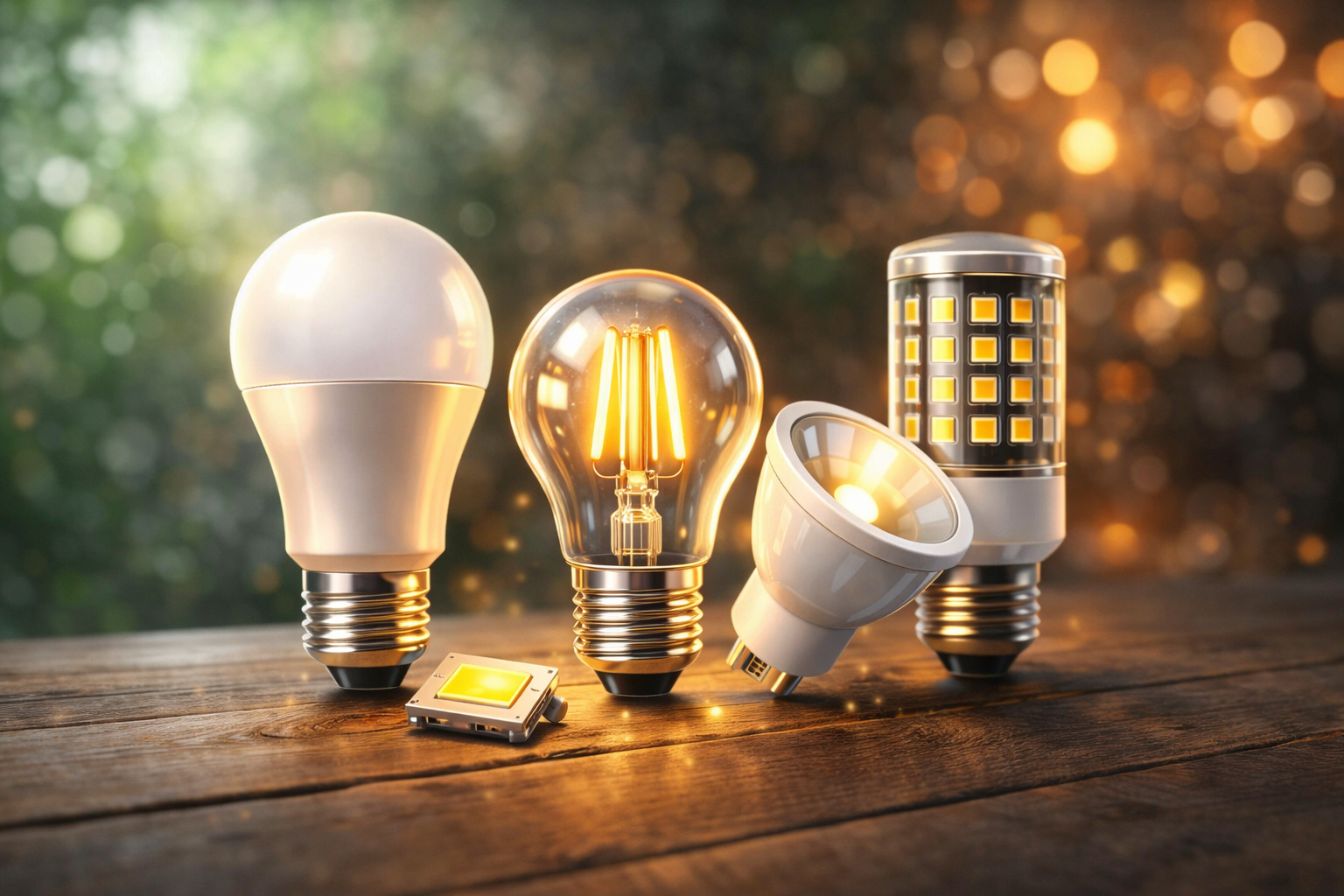
The A19 or A60 format — the classic bulb shape — is most common for table lamps and ceiling fittings. But there are also GU10 spotlights for recessed fixtures, candle bulbs for decorative fittings, globe bulbs for bathroom vanities, and tube LEDs for replacing fluorescent strips. Knowing what are LED bulbs available in your specific fitting type saves a wasted trip back to the shop.
Before buying, check two things: the base type (E27, E14, GU10, B22, etc.) and the maximum wattage your fixture supports. Because what are LED bulbs generating so little heat compared to older options, they’re almost always within the wattage limit — but still worth confirming. Some enclosed fixtures run hotter than open ones, so look for bulbs specifically rated for enclosed use if that applies.
Warm, Cool, and Everything in Between
Color temperature is measured in Kelvin. Around 2700K gives the amber glow of incandescent bulbs — comfortable for living rooms and bedrooms. Around 4000K produces a neutral white that works well in kitchens and bathrooms. Above 5000K enters daylight territory, useful for task lighting and workspaces where color accuracy matters.
Getting this wrong is one of the most common reasons people feel unsatisfied after switching to LED. A 6500K bulb in a bedroom will feel clinical and cold, and can interfere with sleep if used in the evening. Understanding how light color changes the feel of a space is genuinely useful before you commit to a multipack you can’t return.
If glare is a persistent issue — that sharp discomfort from some overhead LEDs — it’s often high color temperature combined with a bulb without proper diffusion. A frosted warm LED bulb softens light noticeably in open-plan rooms where harsh directional light becomes uncomfortable over time.
Common Mistakes First-Time Buyers Make
The most common mistake is buying by wattage alone. A 10W LED might produce anywhere from 650 to 1100 lumens depending on chip quality — wattage tells you energy consumption, not brightness. This is the core of what are LED bulbs confusion for new buyers, and it leads directly to rooms that feel dim despite “powerful” bulbs.
Another frequent error is ignoring CRI. What are LED bulbs with a CRI below 80 doing to your room? Making reds look brown, skin tones look flat, and spaces feel duller than they should. For living areas, aim for a CRI of 90 or above — it costs a little more but makes a visible difference.
A third error is using standard LEDs on incompatible dimmer switches. Not all LEDs dim smoothly — some flicker, buzz, or cut out at 30%. Always check packaging for dimmer compatibility. Exploring key LED lighting terms explained can help you decode the jargon on the box before buying the wrong thing.
Never install a standard non-dimmable LED on a dimmer switch. It won’t just perform poorly — it can damage both the bulb and the switch over time.
Reading the Label Without Getting Lost
The key numbers to focus on are: lumens (brightness), watts (energy use), Kelvin (color temperature), and CRI (color accuracy). Beam angle and rated hours matter depending on the application — a kitchen spotlight needs a tight beam; a bedside lamp does not.
As a rough guide: 450 lumens replaces a 40W incandescent; 800 lumens replaces 60W; 1100 lumens replaces 75W. Understanding what are LED bulbs actually delivering in usable light helps you verify those claims rather than just trusting them. A high-lumen bulb with a narrow beam angle might light one small patch brilliantly while leaving everything else dim.
Matching the Bulb to the Room
One of the real advantages of what are LED bulbs offering such variety is that you can tailor the light to each room’s function. Bedrooms benefit from warm, low-intensity light in the 2700K–3000K range that supports relaxation and doesn’t disrupt melatonin production — choosing the right bulbs for your bedroom makes a real difference to how restful the space feels. Kitchens and home offices work better with neutral to cool white around 3500K–4000K.
Bathrooms need enough brightness and color accuracy for grooming tasks without harsh glare. A high-CRI bulb in the 3000K–4000K range with a diffused cover tends to strike the right balance. For garages or utility rooms where task visibility matters more than ambiance, daylight-range bulbs above 5000K are appropriate.
In home offices, focus loss and headaches often trace back to lighting that’s too dim or too cool after extended periods. A dimmable LED in the 3500K–4000K range, positioned to illuminate your workspace without reflecting in your monitor, can improve comfort across a full workday. A dimmable neutral LED bulb is a reliable option where consistent lighting matters.
What to Check Before You Buy
By now the picture of what are LED bulbs should be clear: efficient, long-lasting, versatile, and — when chosen correctly — genuinely better for everyday comfort than anything that came before. Before spending money, check five things: lumens (not watts), color temperature for the room, CRI (aim for 90+ in living spaces), base fitting, and dimmer compatibility if relevant.
Brand reputation matters more than price point. A bulb that costs twice as much but lasts five times longer and maintains brightness throughout its life is always better value. Look for ENERGY STAR certification — it indicates third-party testing against consistent performance standards. If you’re focused on living areas, the best LED bulbs for living room comfort and ambiance covers the specific considerations that matter most for those spaces.
For a comprehensive walkthrough of the full decision process, what to look for before choosing LED lighting goes deeper on every factor. And if you want to stay on top of how what are LED bulbs evolving — smart bulbs, tunable white, full-spectrum options — the LED knowledge center connects the basics to more advanced topics as you’re ready for them.
- ✓ Check lumens — not watts — to know how bright a bulb actually is.
- ✓ Match color temperature to the room: warm for bedrooms, neutral for kitchens and offices.
- ✓ Aim for CRI 90+ in living spaces where color accuracy matters.
- ✓ Verify base fitting and dimmer compatibility before buying.
- ✓ Choose reputable brands — driver circuit quality determines long-term reliability.
Key Takeaways
What are LED bulbs at their core? Semiconductor-based light sources that generate light directly from electrical energy — no heat, no filament, no wasted 95%. That fundamental difference is why they last longer, run cooler, and use a fraction of the energy of older technologies.
Choosing the right LED means looking beyond the wattage. Lumens tell you brightness, Kelvin tells you tone, and CRI tells you color accuracy. Get those three right for each room and the upgrade will feel immediately noticeable — not just on your electricity bill, but in how comfortable the space actually feels to be in.
The market is flooded with options at every quality level, but what are LED bulbs worth buying all share the same traits: a reliable driver circuit, honest lumen ratings, and certification from a recognized body like ENERGY STAR. Pay a little more upfront and you won’t be replacing them again for years.
Sharing this guide
If you found this guide helpful, save it or share it with someone who’s still using old bulbs.
Interested in learning more? Browse all related articles in our category section.
Pingback: LED Bulbs vs Halogen: Ultimate Smart Buying Guide
Pingback: LED Bulbs vs Incandescent: Ultimate Smart Savings
Pingback: Best LED Bulbs for Bedrooms: Ultimate Guide 2026
Pingback: Best LED Bulbs for Living Rooms: Smart Guide 2026
Pingback: Are LED Bulbs Safe for Eyes? Facts Revealed - NeoLEDHub
Pingback: LED Bulb Lifespan: Essential Facts You Must Know
Pingback: Cheap vs Premium LED Bulbs: Performance vs Price
Pingback: Best LED Bulbs for Ceiling Fans: Expert Guide - NeoLEDHub
Pingback: Best LED Bulbs for Desk Lamps (Eye-Friendly) - NeoLEDHub
Pingback: Best LED Bulbs for Bathroom Lighting - NeoLEDHub
Pingback: Smart Lighting Systems: Guide 2026 - NeoLEDHub
Pingback: Do You Need a Smart Hub for Lighting? - NeoLEDHub
Pingback: Best LED Bulbs for Dining Rooms (Warm & Cozy) - NeoLEDHub
Pingback: Best LED Bulbs for Home Office - NeoLEDHub
Pingback: Best Dimmable LED Bulbs (No Flicker Picks) - NeoLEDHub
Pingback: How LED Bulbs Work: Amazing Technology Explained Simply
Pingback: Lumens vs Watts: Which Is Brighter? - NeoLEDHub
Pingback: LED Color Temperature: Warm vs Cool - NeoLEDHub
Pingback: How LED Lighting Works (Beginner Guide) - NeoLEDHub
Pingback: Best LED Bulbs for Brightness (High Lumens) - NeoLEDHub
Pingback: Best Soft White LED Bulbs (Warm Lighting) - NeoLEDHub