Bathroom Vanity Light Height Guide
It is frustrating when a bathroom looks good on paper but feels wrong the moment you switch the lights on. Harsh shadows, glare in the mirror, and uneven brightness usually happen because the fixture sits too high, too low, or too far from where your face actually is. A good bathroom vanity light height guide should solve that before you drill anything into the wall.
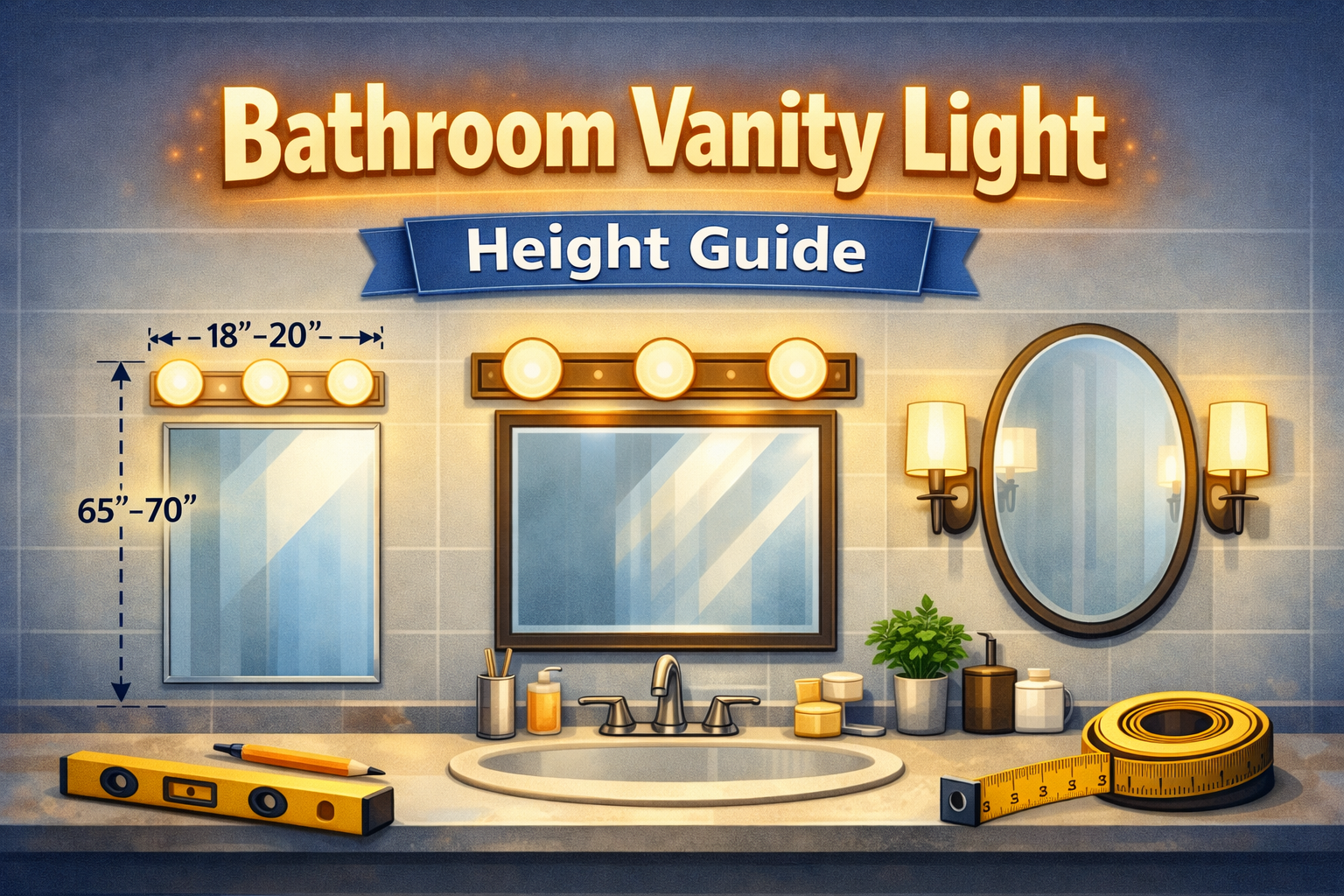
This article explains how to choose the right mounting height, how mirror size changes the decision, and what to do when your ceiling, sink width, or wall space creates awkward limits. You will also see how bathroom lighting placement affects comfort, grooming visibility, and the overall balance of the room.
In this guide:
- Why height matters around the mirror
- Placing one fixture above the mirror
- Useful height ranges to start with
- Using side-mounted lighting for better balance
- When side placement works best
- Adjusting for ceiling height and room size
- How to handle a tall mirror
- Mistakes that ruin mirror lighting
- A simple placement process
- Brightness and color choices that help
- Reducing glare and keeping output even
- How to test before final installation
- Questions people still ask before mounting
Why a bathroom vanity light height guide matters more than most people expect
Most people do not search for a vanity light placement solution until they already notice dark eye sockets, bright forehead hotspots, or annoying reflections in the glass. That is why proper vanity light placement is really about more than measurements. It is about getting light onto your face evenly, which is what makes shaving, makeup, skincare, and quick daily routines easier and more accurate.
The main question users want answered is simple: how high should the light go? In many bathrooms, the best result comes from keeping the fixture close enough to the mirror to illuminate the face directly, but not so close that the lamp becomes a bright line in your field of view. Good lighting design basics always start with where the task happens, and here the task happens at the mirror.
A second common question is whether one rule works for every vanity. It does not. Sink size, mirror height, fixture depth, and ceiling height all affect the result. A third common question is whether height matters more than bulb choice. In practice, both matter, but mirror lighting height usually comes first because even a great bulb struggles when the fixture is badly positioned.
If the light source is visible while you stand naturally at the sink, the fixture is often either mounted too low or chosen with poor shielding. Height and glare control should be judged together, not separately.
Common height ranges that give you a reliable starting point
For a single fixture above the mirror, many installers begin by centering the light roughly 75 to 80 inches from the finished floor. Another practical method is to leave about 3 to 6 inches between the top of the mirror and the bottom of the fixture. Those numbers are not magic, but they often produce better eye level lighting than fixtures mounted far above the mirror frame.
Those ranges work because they keep the beam close to the face instead of washing only the upper wall. In bathrooms where people want a softer look, warm lamps in the 2700K-3000K range can feel flattering. When the vanity is heavily task-oriented, many homeowners prefer 4000K-5000K for sharper visibility. The placement decision still comes first, because color temperature does not fix poor wall lighting height.
Placing one fixture above the mirror without creating shadows
When the design uses one fixture above the mirror, the goal is to center the light on the mirror and keep it visually tied to that zone. If the fixture floats too far upward, the face falls into shadow. If it hugs the frame too tightly, the bathroom can look cramped. This is where good vanity light placement becomes useful in a real-world way, not just as a number on a spec sheet.
Width matters too. A fixture that is too narrow may create a bright spot in the center and leave the sides weak. A fixture that is too wide can overwhelm the mirror visually. If you are planning the whole wall layout, it helps to compare the lamp with the mirror width, the sink width, and the rest of the room using ideas from this step-by-step lighting layout planning guide.
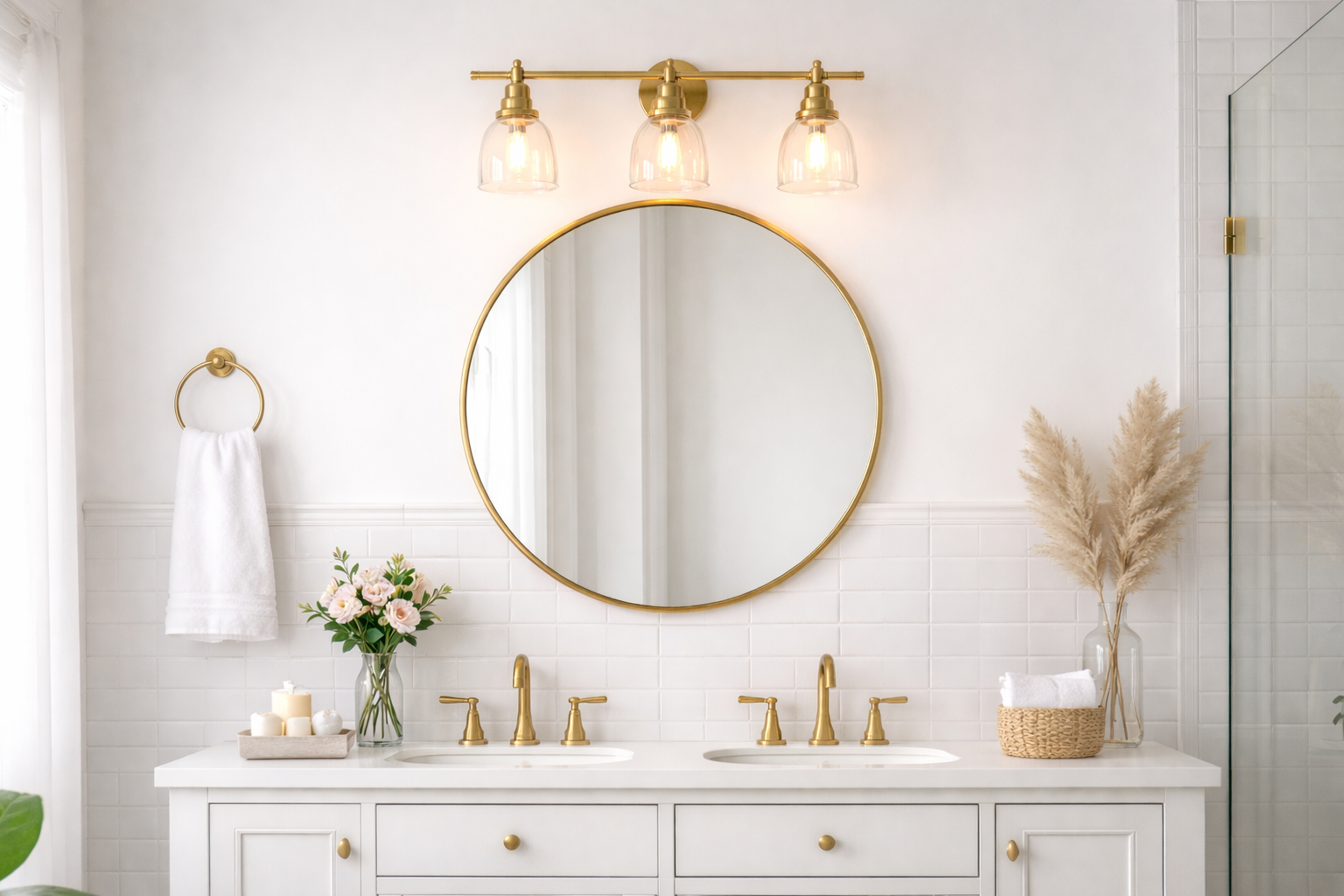
For homeowners who want an easy product style to work from, this modern vanity light fixture suits many above-mirror layouts because the multi-light design helps illuminate a wider grooming zone without forcing the fixture too high above the mirror.
How wide should the fixture be compared with the mirror
A useful rule is to keep the fixture somewhat narrower than the mirror, especially in medium bathrooms. That helps the light feel intentional rather than oversized. Still, the bigger issue is where the output lands. Balanced bathroom mirror lights should reach both sides of the face. If the lamp is narrow but powerful, the beam angle matters. Wide distribution over 100 degrees generally spreads more evenly than narrow beams under 45 degrees.
Do not judge width in isolation. A shallower mirror, bright wall color, and reflective countertop can make a modest fixture feel stronger than expected. That is also why people misread proper light spacing. They assume a bigger fixture solves everything, when in reality correct alignment often delivers more improvement than raw size.
Using side-mounted lighting for more even facial illumination
Side sconces often produce better facial lighting because they hit the face from both sides instead of only from above. That reduces the nose and brow shadows that many people notice with top-mounted fixtures. In a practical bathroom vanity light height guide, this is the point where it helps to stop thinking only about “how high” and start thinking about where the face is actually lit from.
A common starting point is to mount sconces so the light source sits near face level, often around 60 to 66 inches from the floor depending on user height and fixture shape. This makes bathroom mirror lighting placement more forgiving because the light reaches both sides of the face more evenly. If you are comparing layer roles in the room, this article on ambient, task, and accent lighting helps explain why vanity lights should behave primarily as task lighting.
If the sconce centerline is much higher than face level, you may recreate the same top-shadow problem that made the original setup look bad. Side placement only helps when the mounting height is still disciplined.
When side mounting works better than a top fixture
Side mounting is often the stronger choice when the mirror is tall, the vanity is used for detailed grooming, or the wall above the mirror is tight. It can also help when ceiling height makes an overhead fixture feel stranded. Many examples of bad lighting placement mistakes come from treating the mirror as decoration rather than a working task zone.
That said, sconces demand symmetry. Uneven spacing from the mirror edge, different mounting heights, or lamps with noticeably different shades will stand out fast. Good vanity light placement is not just about brightness. It is also about visual balance when you enter the room.
How ceiling height, room size, and wall proportions change the decision
A low ceiling usually pushes you toward restraint. You still want the fixture related to the mirror, but you may need a slimmer profile so the wall does not feel crowded. In rooms with more vertical space, the temptation is to mount higher just because there is room. Good vanity light placement should resist that instinct. Available wall space is not the same as ideal mirror lighting height.
Room size also affects perceived brightness. A small, reflective bathroom may need less output than people assume, while a larger matte-finish room can swallow light. If your home has compact dimensions, you may also benefit from this guide to lighting for low ceilings, because it shows how fixture depth and mounting decisions interact in tighter spaces.
The key is proportion. The mirror, fixture, and vanity should feel like one balanced composition. When one element drifts too far away, the entire wall looks disconnected even if the measured height seems technically acceptable.
What to do when the mirror is unusually tall
Tall mirrors reduce the free wall area above the frame, so forcing a standard top fixture into that zone can look cramped. In that case, either use a slimmer bar light or move to side-mounted options. The better choice depends on whether the mirror needs a cleaner architectural look or more forgiving face lighting.
People often ask whether the fixture can sit directly on top of the mirror. Sometimes yes, but only if the product is designed for that relationship and does not create visible glare. What matters is still the same: stable, even light across the face and sink area.
Mistakes people make when they choose the height by eye alone
The biggest mistake is centering the light on empty wall space instead of centering it on the user and the mirror. The second is ignoring the fixture’s actual light source position. Some lamps have bulbs that sit higher or lower inside the body, so the metal frame tells only part of the story. That is why every useful bathroom vanity light height guide needs to consider the emitted light, not only the fixture outline.
Another common error is using a very cool bulb with poor diffusion and assuming more brightness equals better grooming. In practice, harsh output can exaggerate skin texture and create unpleasant reflections. Both the U.S. Department of Energy LED lighting efficiency guidance and the ENERGY STAR guide to LED lighting basics reinforce that LED performance depends on the fixture, optics, and intended use, not just the lamp label.
The third mistake is forgetting maintenance. If bulb changes or cleaning become awkward because the fixture is tucked into an impractical spot, the installation was never truly solved in the first place.
A simple process that helps you place the fixture in the right spot
Before you fix the position permanently, it helps to work through a short decision sequence. This avoids guesswork and keeps the fixture placement tied to the mirror, the sink, and the person actually using the bathroom most often.
- 1
Measure the mirror first
Start with mirror width and top edge height, because the fixture should relate to that object, not to a random patch of wall.
- 2
Mark the user sightline
Stand at the sink and note where the eyes and face sit naturally in the mirror. This reveals whether a top fixture or side fixture will serve the task better.
- 3
Test temporary placement
Use painter’s tape or a cardboard outline to preview the fixture position before wiring or drilling. It is much easier to adjust on the wall than after installation.
- 4
Check glare from normal standing position
Look straight ahead, then slightly down into the sink. If the lamp is visually aggressive, change the height or pick a better-shielded fixture.
- 5
Confirm spacing with the full wall
Only finalize when the lamp, mirror, vanity, and side clearances look visually tied together. Good placement should feel balanced from across the room too.
That process is simple, but it answers the practical question behind every bathroom vanity light height guide: how do you avoid regretting the height after installation? By testing first, you catch issues that pure measuring cannot reveal.
Use this quick checklist before you commit to the final mounting point:
- ✓ The fixture is centered to the mirror, not just the wall space.
- ✓ The light reaches both sides of the face without creating strong brow shadows.
- ✓ Glare is controlled from normal standing and seated angles.
- ✓ Cleaning, bulb changes, and mirror access still feel practical.
- ✓ The final setup still looks balanced from the doorway, not only from the sink.
Brightness, color temperature, and comfort still shape the result
Once the height is right, output and color temperature decide how the mirror feels to use. A vanity area does not need extreme brightness, but it does need useful clarity. For comparison, living spaces often feel comfortable around 150 to 300 lux, while more task-focused zones can benefit from higher levels. In a bathroom, you want enough output to read the face honestly without making the room clinical.
That is why a bathroom vanity light height guide should never ignore lamp quality. Bad LEDs can flicker, distort skin tone, or create patchy diffusion. If you want ideas for fixture styles that fit this use case, this roundup of LED lights for bathrooms is a helpful next step before buying.
For a cleaner modern look, this bar-style vanity light fits bathrooms where a streamlined profile matters and where you want the light distribution to stay visually clean above the mirror line.
If your mirror area already gets strong daylight, avoid overcorrecting with an overly cool LED. Daytime and evening use can feel very different, so test the fixture at both times before deciding the setup is perfect.
How fixture shape affects glare, diffusion, and mirror comfort
Shade design matters more than people think. Clear glass can look elegant but may expose bright points unless the bulbs and mounting height are chosen carefully. Frosted diffusers often soften the result and make bathroom mirror lights easier on the eyes. That is especially important when the room uses lots of tile, stone, or polished chrome.
If glare has been a problem elsewhere in your home, this guide to reducing lighting glare explains the same principle in a broader way. In a vanity zone, the lesson is simple: the best bathroom mirror lighting placement still benefits from a fixture that controls direct visual brightness.
How to test the setup before you permanently install it
A final dry run can save you from a lot of frustration. Tape the fixture outline on the wall, stand at normal grooming distance, and use a temporary lamp or flashlight to simulate the beam direction. This is where a bathroom vanity light height guide becomes most practical, because the final answer often comes from seeing the setup, not just from reading numbers.
Try the test from several positions: directly in front of the sink, slightly back by the doorway, and from seated eye level if the bathroom will be used by people with different heights. You are checking for shadows, glare, and whether the light feels visually anchored to the mirror. A good result should look intentional from every common angle.
If you are still uncertain, a second pass with a similar fixture can help. Some homeowners prefer to use the same modern style again in another bathroom so placement decisions stay consistent across the home.
Questions people still ask before mounting the final fixture
People often worry that they need a universal rule, but they usually need a sensible range and a process. The best setups come from combining measurements with how the bathroom actually functions. That is why this guide keeps returning to the same core idea: the right height is the one that lights the face evenly and keeps the mirror area visually balanced.
For broader reading after this project, you can continue through the LED Knowledge Center to connect mirror lighting choices with the rest of your home lighting decisions.
Questions people ask before choosing the final mounting height
A lot of uncertainty comes from mixing visual style questions with task-lighting questions. The short answers below focus on the practical side, so you can make a clear decision when the mirror, wall space, and fixture size do not line up perfectly.
How far above a bathroom mirror should a vanity light be?
A practical starting point is placing the fixture about 3 to 6 inches above the mirror, or centering it around 75 to 80 inches from the floor. The best final position is the one that lights your face evenly without creating harsh glare while you stand at the sink.
Are side sconces better than one light above the mirror?
Side sconces often create more even facial lighting because they reduce shadows under the eyes, nose, and chin. A common mounting range puts the light source near 60 to 66 inches from the floor. They work especially well with tall mirrors, detailed grooming tasks, and bathrooms where overhead glare has been a problem.
What color temperature works best around a bathroom vanity?
For a softer and more flattering feel, many bathrooms work well around 2700K to 3000K. For sharper grooming visibility, 4000K can be a better fit. The right choice depends on your room finishes and daily routines, but correct fixture height still matters more than color temperature alone.
Key Takeaways
The right bathroom vanity light height guide is really about achieving even facial illumination, low glare, and clean visual proportion around the mirror. A fixture placed too high usually wastes light on the wall, while one placed too low can feel harsh and awkward in daily use.
In practical terms, a bathroom vanity light height guide should start with the mirror, not the empty wall. Use common ranges like 3 to 6 inches above the mirror or 75 to 80 inches from the floor for top fixtures, then test sightlines, glare, and brightness before drilling. That approach improves bathroom vanity light placement decisions far more than guessing by appearance alone.
As you refine the room, think beyond a single measurement. Good bathroom mirror lighting placement should support comfort, grooming accuracy, and the wider look of the bathroom. Once the height is correct, bulb quality, diffusion, and fixture style become much easier to choose with confidence.
Sharing this guide
If you found this guide helpful, save it or share it with someone planning a bathroom lighting update.
Interested in learning more? Browse all related articles in our category section.