Bathroom Vanity Light Height: 75–80 Inches Above the Floor
For most bathrooms, the best bathroom vanity light height is about 75 to 80 inches from the finished floor for a light above the mirror, or about 3 to 6 inches above the mirror frame. For side sconces, place the light source near face level, usually around 60 to 66 inches from the floor.
Use those measurements as a starting point, then adjust for mirror height, ceiling height, fixture depth, glare, and who uses the bathroom most. The goal is not just to follow a number, but to light the face evenly without harsh shadows or bright reflections in the mirror.

Quick answer: mount a vanity light above the mirror about 75 to 80 inches from the floor, or leave about 3 to 6 inches between the mirror and the fixture. For side sconces, keep the light source near face level, usually around 60 to 66 inches from the floor. Adjust slightly if the mirror is unusually tall, the ceiling is low, or the fixture creates glare.
Table of Contents:
Standard Vanity Light Height: 75–80 Inches From the Floor
The most useful starting point for standard vanity light height is 75 to 80 inches from the finished floor when the fixture sits above the mirror. This range usually keeps the light close enough to the face for daily grooming without pushing the beam too high onto the wall.
A second practical rule is to leave about 3 to 6 inches between the top of the mirror and the bottom of the fixture. This helps the light feel connected to the mirror instead of floating above it. It also gives you enough breathing room so the fixture does not look cramped against the frame.
Those numbers are not strict laws. A bathroom with a tall mirror, low ceiling, deep fixture, or shared family use may need a small adjustment. Good bathroom mirror light height should make the face easy to see, reduce brow and nose shadows, and keep the fixture visually balanced with the vanity wall. If you are planning the whole room from scratch, it helps to think in terms of task lighting first, because the mirror is where the task actually happens. This is the same principle behind good lighting design basics.
If the light source is visible and uncomfortable while you stand naturally at the sink, the fixture may be mounted too low, too close to eye level, or poorly shielded. Height and glare control should always be checked together.
How High Above the Mirror Should a Vanity Light Be?
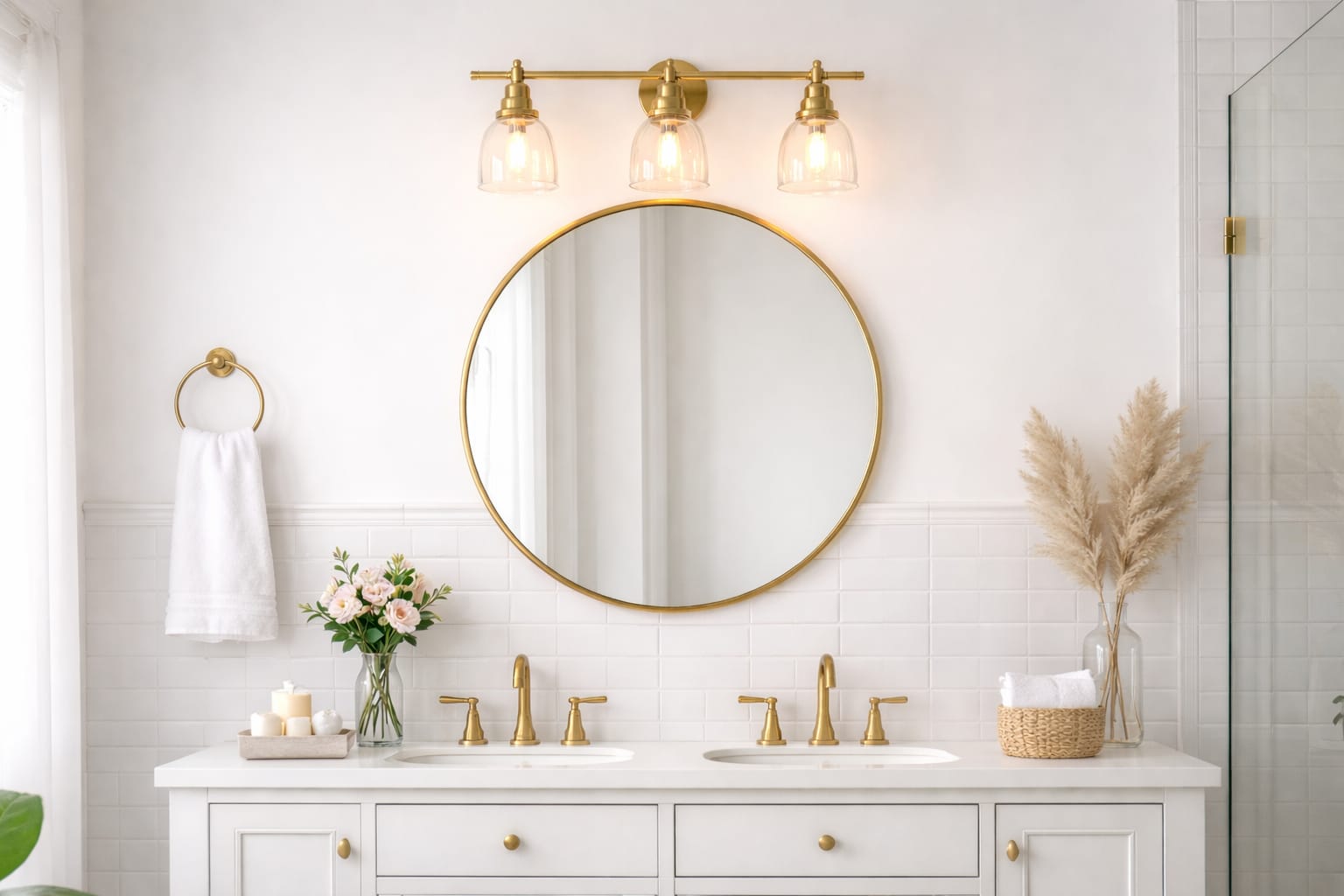
For most above-mirror fixtures, the best answer is simple: place the light about 3 to 6 inches above the mirror, then check whether the fixture centerline lands around 75 to 80 inches from the floor. If both rules work together, you usually have a strong starting point.
The fixture should be centered on the mirror, not just on the empty wall. If it floats too far upward, the face can fall into shadow. If it sits too tight against the frame, the wall can look crowded and the light may feel harsh. This is why vanity light height above mirror should always be judged with the mirror, sink, and user position in mind.
Width matters too. A fixture that is too narrow may brighten the center of the mirror while leaving the sides of the face weaker. A fixture that is too wide can overpower the mirror visually. As a practical rule, keep the fixture slightly narrower than the mirror in most medium bathrooms, then choose a beam spread or diffuser that lights both sides of the face evenly. If you are planning the whole vanity wall, this step-by-step lighting layout planning guide can help you compare fixture width, mirror width, sink width, and wall proportions.
For a standard above-mirror setup, a multi-light vanity fixture for above-mirror placement can work well when you need wider facial coverage without forcing the light too high on the wall.
Side Sconce Height: 60–66 Inches From the Floor
Side sconces often give better facial lighting than one fixture above the mirror because they light the face from both sides instead of only from above. That can reduce shadows under the brow, nose, and chin, which matters for shaving, makeup, skincare, and daily grooming.
A common starting point is to mount side sconces so the light source sits around 60 to 66 inches from the floor. This keeps the light near face level for many users. If the people using the bathroom are much taller or shorter than average, adjust slightly so the light lands around the face rather than above the forehead or below the chin.
Spacing matters as much as height. The sconces should sit at equal distances from the mirror edge, with the light aimed or diffused toward the face rather than into the eyes. In layered lighting terms, vanity lights should work mainly as task lighting, while the rest of the room can be supported by ambient light. This guide to ambient, task, and accent lighting explains that difference in more detail.
If the sconce centerline is much higher than face level, you may recreate the same top-shadow problem that made the original setup look bad. Side placement only helps when the mounting height is still disciplined.
Best Setup by Bathroom Type
The best vanity light placement depends on how the bathroom is used. A powder room can prioritize a clean look, while a main bathroom used for detailed grooming needs more even facial illumination. Use the guide below to choose the most practical setup before drilling or buying a fixture.
For a standard single mirror: use one fixture above the mirror, about 75 to 80 inches from the floor or 3 to 6 inches above the frame. This is the easiest solution when wall space is simple and the mirror is not unusually tall.
For detailed grooming: side sconces are usually better because they reduce shadows across the face. Keep the light source around 60 to 66 inches from the floor and space both sides evenly.
For a tall mirror: avoid squeezing a bulky fixture into a narrow gap above the frame. A slim bar light or side-mounted sconces usually look cleaner and perform better.
For a low ceiling or small bathroom: choose a low-profile fixture, control glare carefully, and avoid mounting higher just because the wall has empty space. The fixture should still relate to the mirror and face position.
Adjusting for Mirrors, Ceilings, and Room Size
A tall mirror reduces the free wall area above the frame. If you force a standard top fixture into that space, the bathroom can look cramped and the light may sit too close to the mirror. In that case, either choose a slimmer bar fixture or use side sconces instead. If the mirror is tall and wall space is limited, a slim bar-style vanity light for tall mirrors can be a cleaner option than a bulky multi-light fixture above the frame.
A low ceiling also changes the decision. You still want the vanity light tied to the mirror, but you may need a shallower fixture so the wall does not feel crowded. In rooms with more vertical space, do not mount the light higher just because there is room. Available wall space is not the same as ideal bathroom mirror lighting placement.
Room size affects perceived brightness too. A small bathroom with glossy tile, a pale countertop, and a reflective mirror can feel bright with less output. A larger bathroom with matte finishes may need more support from ceiling lights or additional layers. If your bathroom has compact dimensions, this guide to lighting for low ceilings can help you choose fixture depth and placement more carefully.
Mistakes to Avoid Before Installation
The biggest mistake is choosing the height by eye alone. Many vanity lights look centered on the wall but are not centered on the user, the mirror, or the actual grooming zone. Another common mistake is ignoring where the light source sits inside the fixture. Some designs place the bulbs higher or lower than the outer frame suggests, so the visible metal body does not always tell you where the light will land.
A third mistake is treating brightness as the only solution. More light does not always mean better mirror lighting. A very cool, harsh, or poorly diffused LED can exaggerate skin texture, create bright reflections, and make the mirror uncomfortable. Many lighting placement mistakes happen because the fixture is chosen for style first and tested for real use too late.
Before you install the fixture permanently, use this simple process:
- 1
Measure the mirror first
Start with mirror width and top edge height, because the fixture should relate to the mirror, not to a random patch of wall.
- 2
Mark the natural sightline
Stand at the sink and note where the eyes and face sit in the mirror. This reveals whether a top fixture or side sconces will serve the task better.
- 3
Preview the fixture position
Use painter’s tape or a cardboard outline to preview the fixture size and height before wiring or drilling.
- 4
Check shadows and glare
Look straight ahead, slightly down into the sink, and from the doorway. If the lamp feels visually aggressive, change the height or choose better shielding.
- 5
Confirm maintenance access
Make sure cleaning, bulb changes, and mirror access still feel practical. A technically correct height is not useful if the fixture is awkward to live with.
Use this checklist before committing to the final mounting point:
- ✓ The fixture is centered to the mirror, not just the wall space.
- ✓ The light reaches both sides of the face without strong brow shadows.
- ✓ Glare is controlled from normal standing and seated angles.
- ✓ Cleaning, bulb changes, and mirror access still feel practical.
- ✓ The final setup looks balanced from the doorway, not only from the sink.
Brightness, Color Temperature, and Glare
Once the height is right, brightness and color temperature decide how the mirror feels to use. A vanity area does not need extreme brightness, but it does need useful clarity. In many bathrooms, warm white light around 2700K to 3000K feels softer and more flattering, while 4000K can feel cleaner and sharper for grooming. Very cool light can look clinical if the room already has glossy tile or strong daylight.
Fixture shape also affects comfort. Clear glass can look elegant but may expose bright points unless the bulbs and mounting height are chosen carefully. Frosted diffusers usually soften the output and make bathroom mirror lights easier on the eyes. If glare has been a problem elsewhere in your home, this guide to reducing lighting glare explains the same principle in a broader way.
LED quality also matters. Poor diffusion, flicker, weak color rendering, or mismatched bulbs can make a correct installation feel worse than expected. The U.S. Department of Energy LED lighting guidance and the ENERGY STAR guide to LED lighting basics both reinforce that LED performance depends on the fixture, optics, and intended use, not just the label.
If you want more fixture ideas after choosing the mounting height, this roundup of LED lights for bathrooms is a useful next step before buying.
Test the vanity light at the time of day you use the bathroom most. Morning daylight, evening routines, and nighttime use can make the same fixture feel very different.
For broader reading after this project, you can continue through the LED Knowledge Center to connect mirror lighting choices with the rest of your home lighting decisions.
FAQ
These short answers cover the most common questions people ask before choosing the final mounting height.
How far above a bathroom mirror should a vanity light be?
A practical starting point is placing the fixture about 3 to 6 inches above the mirror, or centering it around 75 to 80 inches from the floor. The best final position is the one that lights your face evenly without creating harsh glare while you stand at the sink.
What is the standard vanity light height?
The standard vanity light height for a fixture above the mirror is usually about 75 to 80 inches from the finished floor. That range should be adjusted if the mirror is very tall, the ceiling is low, or the fixture creates direct glare.
Are side sconces better than one light above the mirror?
Side sconces often create more even facial lighting because they reduce shadows under the eyes, nose, and chin. A common mounting range puts the light source near 60 to 66 inches from the floor. They work especially well with tall mirrors, detailed grooming tasks, and bathrooms where overhead glare has been a problem.
Should vanity lights point up or down?
Both can work, but downward or well-diffused light is usually more useful for grooming because it sends light toward the face and sink area. Upward-facing fixtures can feel softer, but they may waste more light on the wall or ceiling if they are not designed carefully.
What color temperature works best around a bathroom vanity?
For a softer and more flattering feel, many bathrooms work well around 2700K to 3000K. For sharper grooming visibility, 4000K can be a better fit. The right choice depends on your room finishes and daily routines, but correct fixture height still matters more than color temperature alone.
Key Takeaways
For most bathrooms, the best bathroom vanity light height is about 75 to 80 inches from the floor for a fixture above the mirror, or about 3 to 6 inches above the mirror frame.
For side sconces, place the light source near face level, usually around 60 to 66 inches from the floor. This often gives better facial illumination than a single top-mounted fixture, especially for detailed grooming.
The final height should always be checked against mirror size, ceiling height, glare, fixture depth, and the people using the bathroom. Good placement should make the face easier to see and keep the mirror wall visually balanced.
Sharing This Guide
If you found this guide helpful, save it or share it with someone planning a bathroom lighting update.
Interested in learning more? Browse all related articles in our category section.