LED Light Diffusers: Hide Hotspots & Reduce Glare
If your LED strip looks dotted, your fixture feels too harsh, or you can see bright LED points directly, an LED light diffuser is usually the simplest fix. It spreads the light through a frosted, opal, or acrylic cover so the output looks softer, smoother, and less harsh.
This guide explains how LED light diffusers reduce glare, hide hotspots, affect brightness, and how to choose between frosted diffuser panels, acrylic light covers, and LED strip diffuser channels for real home, office, and DIY lighting setups.
Quick Answer
An LED light diffuser is worth using when you can see bright LED dots, harsh glare, or uneven light from a strip, panel, or fixture. Frosted and opal covers usually hide hotspots better, while clearer acrylic light covers preserve more brightness. For exposed LED strips, an aluminum LED strip channel with a frosted diffuser cover is often the cleanest upgrade because it hides dots, softens glare, and gives the strip a more finished look.
- Use a diffuser when LEDs look too sharp, dotted, or uncomfortable to view directly.
- Choose frosted or opal covers when hiding hotspots matters more than maximum brightness.
- Choose clearer acrylic covers when you want some glare reduction but need to keep more light output.
- For LED strips, channel depth and diffuser finish both affect how smooth the final light looks.
- The best diffuser balances comfort, appearance, brightness, and the type of fixture you are using.
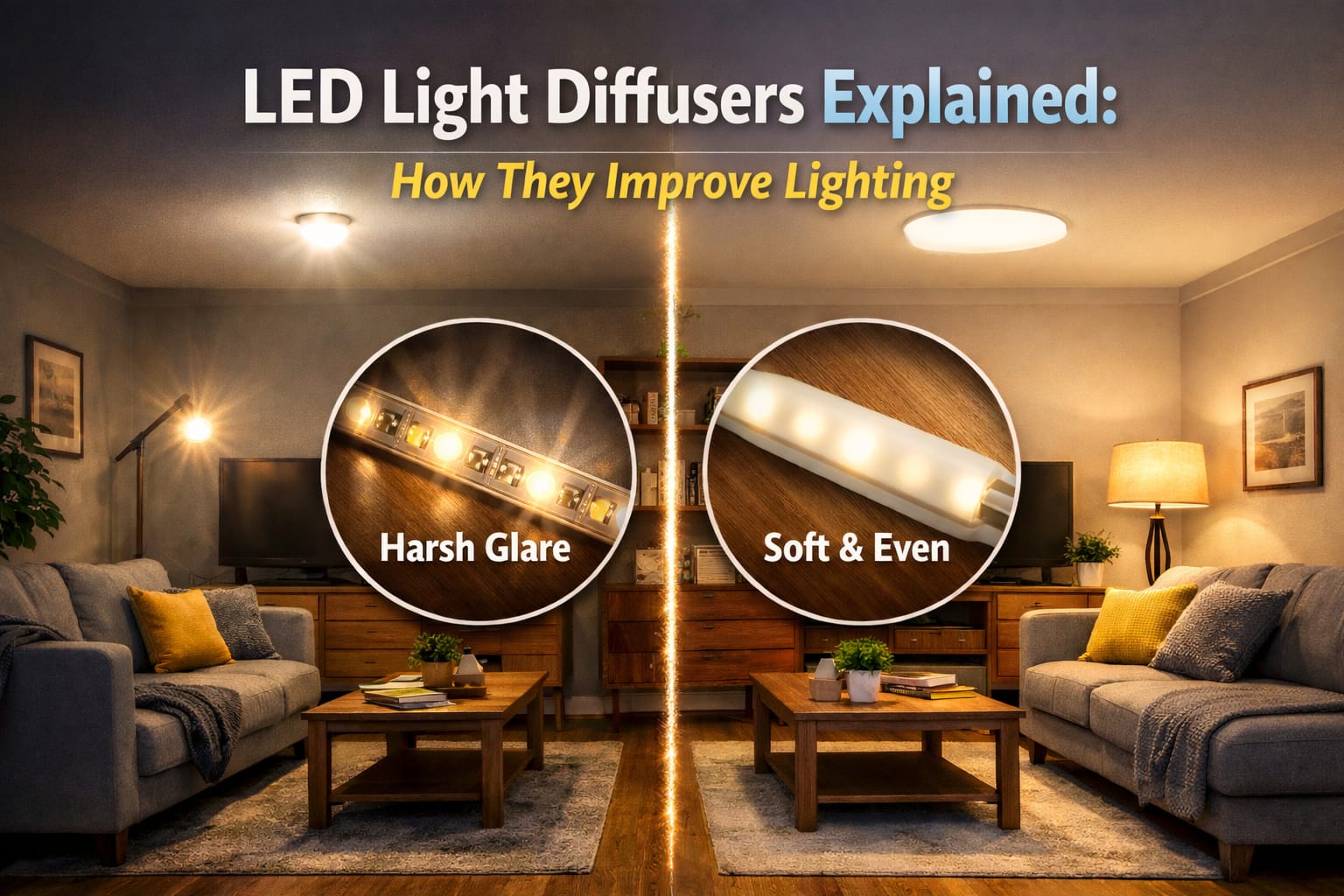
Table of Contents:
- How LED Light Diffusers Reduce Glare and Hotspots
- Best LED Diffuser Types for Strips, Panels, and Fixtures
- Frosted Diffuser Panels vs Acrylic Light Covers
- Will an LED Diffuser Make Lights Dimmer?
- Best Uses for LED Light Diffusers
- How to Install a Diffuser on LED Strip Lights
- Which LED Light Diffuser Should You Choose?
- Common LED Diffuser Mistakes That Cause Hotspots
- FAQ
- Key Takeaways
- Sharing This Guide
How LED Light Diffusers Reduce Glare and Hotspots
LED light diffusers sit between the LED source and your eyes. Instead of letting intense points of light shine directly from the diode, the diffuser scatters that light across a wider surface. This makes the light look smoother, softer, and more comfortable in real use.
This matters because LEDs are very bright for their size. Bare LED strips, exposed linear fixtures, and some ceiling lights can technically light a room well but still feel sharp, unfinished, or uncomfortable when the source is visible. A diffuser does not make the LED less powerful; it changes how that brightness reaches your eyes.
Glare reduction happens because the same light is spread across a larger apparent surface. Hotspots are reduced because the individual LED points blend into a more continuous band or panel of light. The result is not just a different style: it is better visual comfort, cleaner appearance, and a more polished lighting setup. For a broader room-level approach, our guide to lighting glare reduction explains how placement, brightness, beam angle, and surfaces also affect visual comfort.
If you want the broader technical background behind LED direction, beam shape, lenses, and diffusion, our guide to LED optical systems explains how these parts work together.
Best LED Diffuser Types for Strips, Panels, and Fixtures
The most common LED light diffusers are frosted plastic covers, opal lenses, acrylic light covers, diffuser panels, and aluminum channels with snap-in covers for LED strips. Each type changes the light differently depending on the material, thickness, surface finish, and distance between the LEDs and the cover.
Some diffusers are built into the fixture from the start, especially in ceiling panels, office luminaires, and decorative lights. Others are added separately to improve LED strips, cabinet lighting, shelf lighting, cove lighting, display lighting, and DIY projects that look too dotted or too harsh.
For beginners, the most important point is simple: the stronger the diffusion and the deeper the spacing, the smoother the light usually looks. The clearer and shallower the cover, the more brightness you keep, but the more likely you are to see LED dots.
Frosted Diffuser Panels vs Acrylic Light Covers
Frosted diffuser panels are usually better when your main goal is hiding hotspots and making the light feel softer. Their surface scatters light more aggressively, so you see fewer individual LED points and more uniform illumination. This makes them a strong choice for direct-view applications where the light source stays visible.
Acrylic light covers are one of the most practical and common options because they balance cost, durability, appearance, and decent optical performance. They are widely used in strip channels, ceiling fixtures, cabinet lighting, and custom DIY installations. Acrylic is often a good default choice when you want a cleaner look without getting too specialized.
If you are replacing a small ceiling light cover, softening a downlight, or testing a DIY panel project, an anti-glare LED diffuser sheet is a practical option because it spreads the light across a wider surface instead of only covering a narrow LED strip.
The real difference is how much softness you want and how much brightness you are willing to lose. Heavier frosting usually gives better glare reduction and hotspot hiding. Clearer acrylic usually preserves more raw output but may leave the LEDs more visible.
Choose frosted or opal if the LED dots bother you. Choose clearer acrylic if brightness matters more and the LEDs are not directly in your line of sight.
Will an LED Diffuser Make Lights Dimmer?
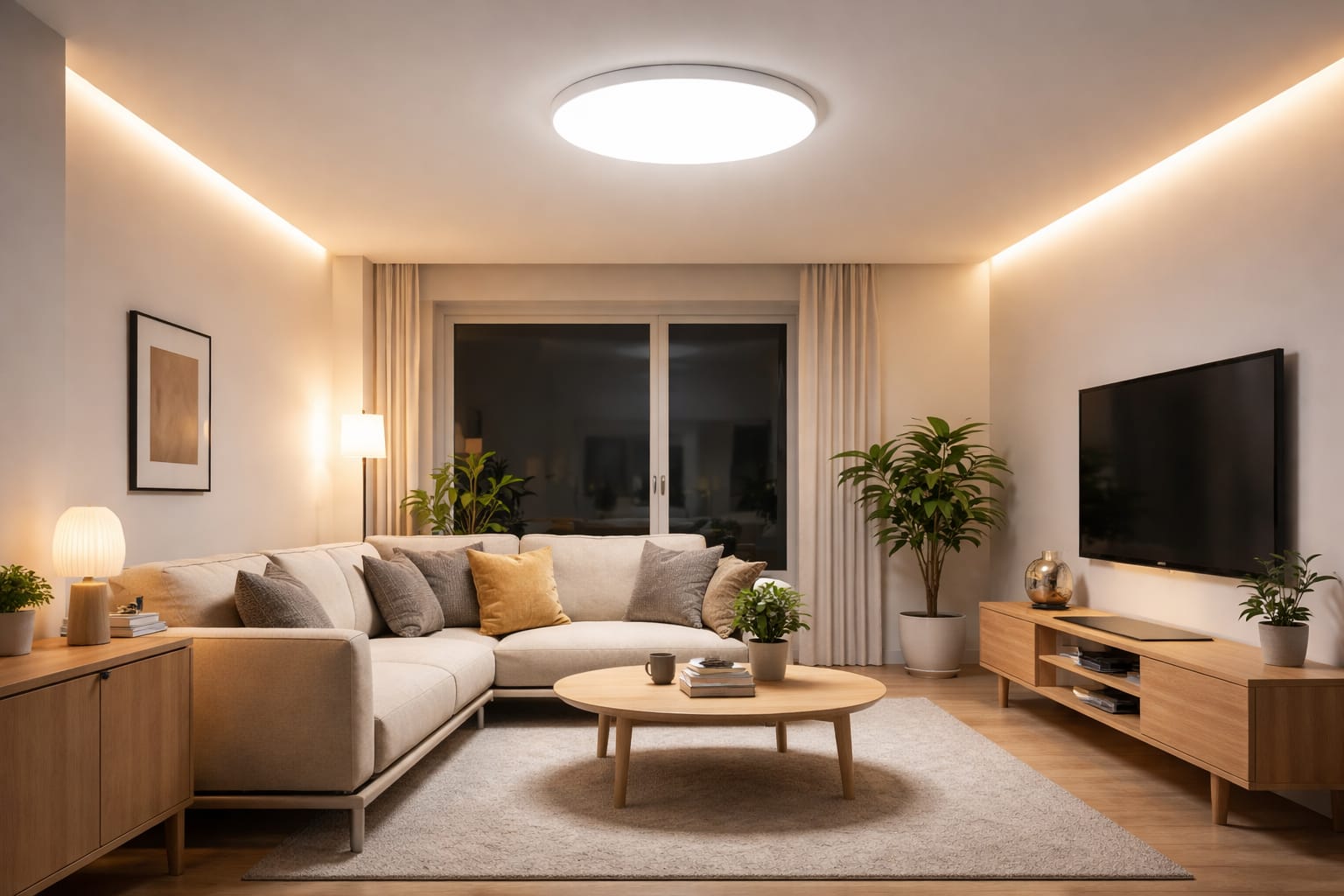
Yes, most LED diffusers reduce some brightness because part of the light is scattered, absorbed, or redirected. The important question is not whether you lose any output, but whether the comfort and smoother appearance are worth the tradeoff for your space.
A very soft frosted or opal diffuser may hide hotspots beautifully but reduce more visible brightness. A lighter acrylic cover may keep the room brighter but still show some LED points. This is why diffuser choice should depend on the problem you are solving: harsh glare, visible dots, uneven color, or an unfinished-looking strip.
For many home setups, the slight loss in brightness is worth it because the light feels easier on the eyes and looks more intentional. If you are comparing overall fixture performance, our guide on how LED lighting works can help explain why comfort, output, and efficiency are related but not identical.
Best Uses for LED Light Diffusers
LED light diffusers are most useful when the light source is visible, close to eye level, reflected on glossy surfaces, or used for long periods. In those cases, the visual difference is often immediate because the diffuser makes the light source feel less sharp and less distracting.
They work especially well for under-cabinet strips, shelf lighting, desk setups, vanity lighting, display lighting, ceiling panels, cove lighting, and exposed linear fixtures. They are also helpful in living rooms, bedrooms, kitchens, offices, and workstations where comfort matters as much as brightness. If you are deciding whether the light source should be visible or hidden, our guide to direct vs indirect lighting explains how placement changes comfort, glare, and the final look of a room.
For RGB or color-changing lighting, diffusers can also improve color blending. Without enough diffusion, different emitters may appear as separate colored points instead of one smooth output. If you are planning a complete lighting setup, our LED lighting buying guide can help you compare diffusion, output, color, and comfort together.
Best setup shortcuts:
- Under cabinets: use a frosted or opal strip diffuser to reduce visible dots on countertops.
- Desks and workstations: prioritize glare reduction over maximum brightness.
- Shelves and displays: choose a cleaner cover that hides the raw LED strip.
- Ceiling panels: use a diffuser that spreads light evenly across the full surface.
- RGB lighting: use stronger diffusion if you want smoother color blending.
How to Install a Diffuser on LED Strip Lights
For LED strips, diffusers are most often installed as part of an aluminum channel system. The strip goes inside the channel, and the diffuser cover snaps or slides into place. This softens the light, protects the strip, and gives the installation cleaner edges.
For most home strip-light projects, an aluminum LED strip channel with a frosted diffuser cover is the most practical setup because it improves diffusion, protects the strip, and makes the finished installation look more professional.
Spacing matters. If the LEDs sit too close to the diffuser, hotspots may still show through, especially with high-output strips or shallow channels. More distance between the LEDs and the cover usually improves blending, which is why deeper channels often look better when the goal is a smooth continuous band of light. If your goal is to make the strip itself less visible, our guide on how to hide LED strip lights gives more placement ideas for shelves, cabinets, coves, and indirect lighting.
Heat matters too. A diffuser is only one part of the system. A proper channel can also help support thermal behavior, which is why strip diffusion and heat management often belong in the same conversation. Our guide to thermal management principles explains why this matters more than many DIY installs account for.
Which LED Light Diffuser Should You Choose?
The right LED light diffuser depends on what bothers you most. If your main problem is visible LED dots, choose stronger diffusion and more spacing. If your main problem is glare, choose a cover that increases the apparent light surface and softens direct brightness. If your main problem is losing too much output, choose a lighter acrylic cover and keep the LEDs out of direct view when possible.
Visible LED Dots
Choose a frosted or opal diffuser with a deeper channel to improve blending and hide hotspots more effectively.
Harsh Light Near Eye Level
Use a frosted diffuser panel or soft acrylic cover to reduce direct glare and make the light more comfortable.
Maximum Brightness
Go with a clearer acrylic light cover if preserving output matters more than completely hiding LED points.
Clean LED Strip Finish
Use an aluminum channel plus frosted diffuser cover for better diffusion, protection, and a more polished installation.
In most normal home situations, the best diffuser is not the most specialized one. It is the one that gives enough glare reduction, enough hotspot hiding, and enough usable brightness for the room to still feel comfortable and practical.
Common LED Diffuser Mistakes That Cause Hotspots
A common mistake is using too little diffusion and expecting hotspots to disappear anyway. If the LEDs are bright or very close to the cover, a mild diffuser may not be enough. This is especially common with shallow LED strip channels.
Another mistake is going too heavy on frosting and then being disappointed that the setup looks dimmer than expected. Stronger diffusion can make the light more comfortable, but it cannot preserve every lumen. That tradeoff should be part of the decision before installation.
People also forget that geometry matters. A diffuser alone cannot always hide LED points if the strip is too close to the cover, the channel is too shallow, or the LEDs are very widely spaced. In many strip projects, channel depth is just as important as diffuser finish.
A clear cover may protect the LED strip, but it may not solve glare or visible dots. If your goal is softer light, choose the diffuser finish for comfort, not just protection.
FAQ
Do LED Light Diffusers Really Reduce Glare?
Yes. A diffuser reduces glare by spreading intense LED output across a larger visible surface. This makes the light feel less sharp and more comfortable, especially when the fixture or strip is visible.
What Diffuser Hides LED Hotspots Best?
Frosted and opal diffusers usually hide hotspots better than clear acrylic covers. For LED strips, a deeper channel also helps because it gives the light more space to blend before it reaches the cover.
Are Acrylic Light Covers Good for LED Lights?
Yes. Acrylic light covers are practical, common, and useful for many home lighting projects. They can protect the light source, improve appearance, and reduce some glare, although very clear acrylic may not hide LED points as well as frosted or opal options.
Do All LED Strips Need a Diffuser?
No. Hidden indirect LED strips may not need a diffuser if the light source is not visible. But exposed strips, under-cabinet strips, shelf lighting, desk setups, and direct-view installations usually look cleaner and feel more comfortable with a diffuser.
Key Takeaways
LED light diffusers make raw LED output softer, more even, and easier on the eyes. They are one of the best ways to improve visual comfort, reduce visible hotspots, and make a strip or fixture look more finished.
- Use diffusers when exposed LEDs look harsh, dotted, or distracting.
- Frosted diffuser panels and opal covers usually hide hotspots better than clearer covers.
- Acrylic light covers are a practical choice for many home and DIY installations.
- Glare reduction usually comes with some brightness loss, so choose based on the problem you need to solve.
- For LED strips, channel depth and diffuser finish both affect how smooth the final light looks.
Sharing This Guide
If you found this guide helpful, you can save it for later or share it with a friend. It’s especially useful for beginners, homeowners, and DIY users who want softer, cleaner LED lighting.
Share using the links below.
Interested in learning more? Browse all related articles in our category section.