Lighting Psychology: How Light Shapes Mood, Focus & Sleep
Lighting psychology looks at how natural and artificial light influences mood, energy, focus, and sleep. The way a room is lit does more than change how it looks. It also affects how your brain and body respond throughout the day.
This guide explains the science behind those effects and shows how to use brightness, color temperature, timing, and placement to create spaces that feel calmer, more productive, and more comfortable to live in.
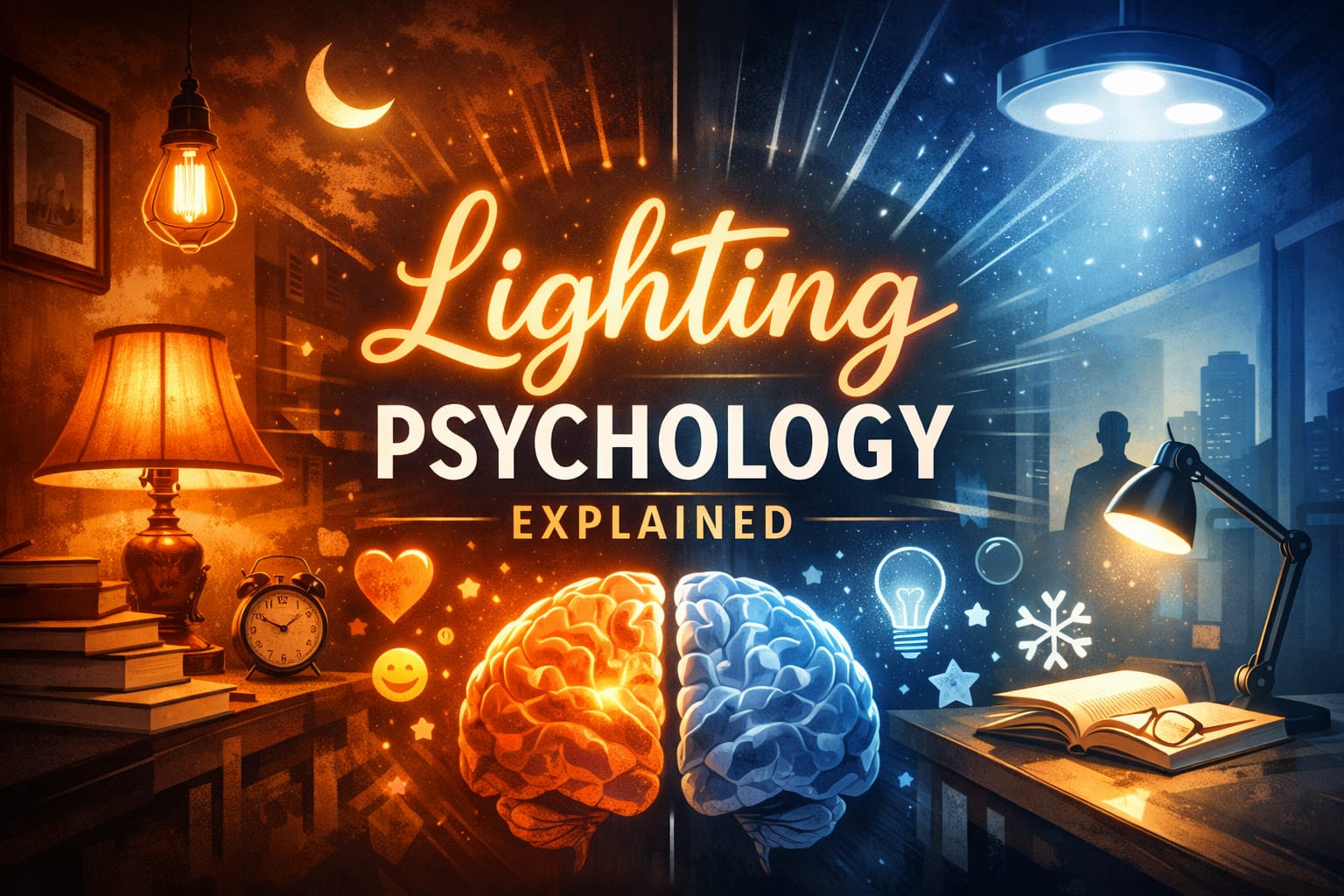
Table of Contents
- Foundations of light perception
- Biological mechanisms
- How color temperature affects behavior
- Brightness and intensity considerations
- Workplace applications
- Residential strategies
- Sleep optimization techniques
- Mood regulation through illumination
- Cognitive performance factors
- Seasonal considerations
- Therapeutic applications
- Implementation guidelines
- Key Takeaways
- Sharing this guide
Foundations of Light Perception
Human eyes contain specialized photoreceptors that detect different wavelengths of light and send signals to the brain. Those signals do much more than support vision. They also influence hormone release, alertness, and patterns of emotional response throughout the day.
One of the biggest breakthroughs in this field was the discovery of intrinsically photosensitive retinal ganglion cells. These cells respond strongly to blue-rich light and communicate with brain regions that regulate the body clock. That is one reason evening exposure to the wrong kind of light can make it harder to fall asleep.
Lighting also affects the body more broadly than many people realize. Good light placement and strong lighting design fundamentals can support natural rhythms, while glare, harsh contrast, and badly placed fixtures can quietly add stress over time.
How the Wavelength Spectrum Affects Mood
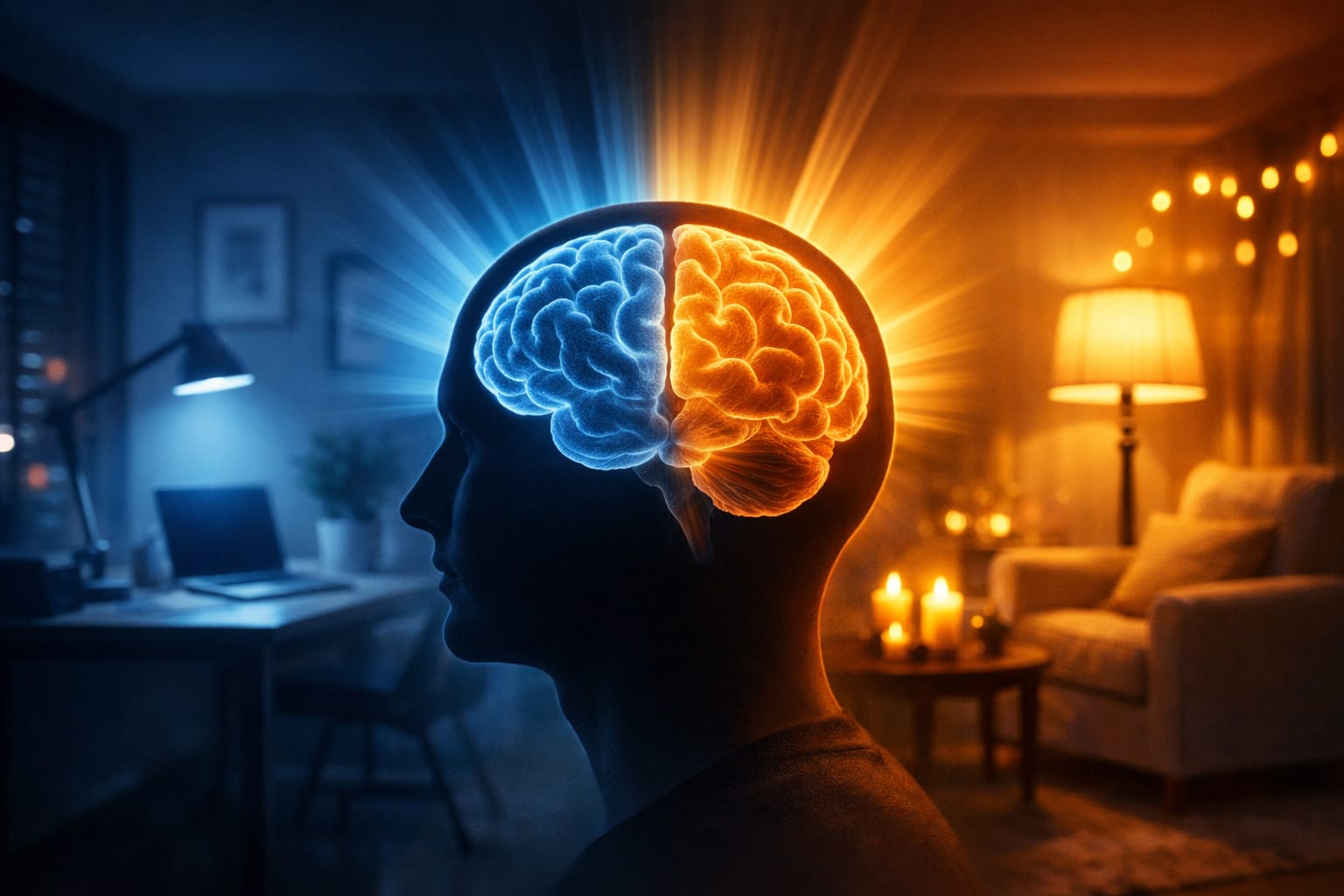
Different wavelengths can shape how alert or relaxed you feel. Blue-enriched light tends to increase alertness and concentration because it suppresses melatonin, which makes it especially useful in the morning or in work-focused settings. Redder and amber tones are much less stimulating and usually fit evening use better.
If harsh bedside lighting makes it harder to unwind, a soft adjustable bedside lamp can be a practical upgrade. It lets you lower brightness for reading or relaxing without flooding the room with overly cool light late at night.
Biological Mechanisms
The suprachiasmatic nucleus in the hypothalamus acts as the body’s master clock. Light signals reaching this region help align internal timing with the outside day-night cycle, which in turn affects hormone release, body temperature, and energy patterns across a 24-hour period.
Melatonin usually starts rising roughly two hours before normal sleep onset. Bright light during that window can suppress melatonin and delay sleep. Avoiding common lighting placement mistakes is one simple way to reduce that kind of disruption at home.
Cortisol follows almost the opposite pattern. It naturally rises in the morning to support wakefulness and then tapers off through the day. Morning light exposure helps reinforce that pattern, which is one reason bright daytime light can improve alertness and mental sharpness.
Photoreceptor Function
Rods and cones handle most of the visual work needed to see in different conditions, but melanopsin-containing cells are especially important for sensing ambient brightness and supporting circadian regulation. That helps explain why a room can feel psychologically “off” even when it is bright enough to see clearly.
Melanopsin is most sensitive around 480 nanometers, which falls in the blue-cyan range. Because of that, even modest blue-rich light in the evening can have a noticeable effect on the circadian system, even if it feels visually comfortable.
How Color Temperature Affects Behavior
Color temperature, measured in Kelvin, describes whether white light looks warm and amber-toned or cool and blue-white. This has a strong effect on how a space feels. Warm lighting around 2700K to 3000K usually feels calmer and more comfortable, while cooler lighting around 5000K to 6500K tends to feel sharper and more energizing.
In practical terms, cooler light often works better in task-heavy environments where concentration matters. The U.S. Department of Energy LED lighting guidance is also helpful for understanding how modern LEDs make that level of control easier than older lighting technologies.
Warmer light usually fits residential spaces better in the evening, especially in dining rooms, bedrooms, and living areas where the goal is to relax rather than stay highly stimulated.
If one room needs to handle both focus and relaxation, choose dimmable or tunable lighting instead of trying to make one fixed color temperature work for every situation.
Adaptive Systems
Tunable white systems can automatically shift color temperature throughout the day to follow a more natural pattern. Cooler light in the morning supports alertness, while warmer light in the evening makes it easier to wind down.
These systems reduce the need for constant manual changes and can make lighting feel more intuitive. They take some setup at first, but they are often one of the easiest ways to apply lighting psychology consistently in everyday life.
Brightness and Intensity Considerations
Brightness matters just as much as color temperature. Illuminance is measured in lux and describes how much light actually reaches a surface. Many offices aim for around 300 to 500 lux for general work, while more detailed tasks may need much more. The goal is to avoid both dim conditions and excessive brightness that creates fatigue.
Morning light exposure often needs to be fairly strong to help anchor the circadian rhythm. Daylight easily exceeds that threshold, but many indoor spaces stay much dimmer than people realize, especially in winter or in rooms with limited window access.
In the evening, lower light levels usually feel better and interfere less with melatonin. Using principles from our guide to reducing glare in lighting can also make dimmer spaces feel more comfortable rather than murky or visually tiring.
Contrast Ratios
Very bright task areas surrounded by darker zones can create visual stress because your eyes are forced to keep readjusting. More balanced contrast helps reduce fatigue and usually feels calmer over long periods of reading, working, or screen use.
A layered lighting approach is one of the easiest ways to control this. It spreads light more evenly, reduces harsh hotspots, and makes a room feel more comfortable overall.
Workplace Applications
Workspaces often benefit most from lighting that supports alertness, visual clarity, and stable energy through the day. When brightness, contrast, and color temperature are handled well, people usually feel less drained and can stay focused for longer.
Conference rooms may need brighter, cooler settings for active discussions, while presentation-heavy rooms often work better with more controlled lighting. In larger spaces, good planning for lighting in tall or open areas helps maintain comfort across the whole room.
Personal task lights can also make a big difference. They give each person more control over their immediate environment, which is useful because visual preferences and sensitivity to brightness vary more than many offices assume.
Shift Work Considerations
Night shift workers face a difficult trade-off because bright light is useful for staying alert at work but can also conflict with the body’s natural circadian pattern. Timed bright light during work hours, combined with darkness during sleep, can help, although full adaptation is rarely simple.
Workers who rotate between day and night schedules often have the hardest time. Gradual lighting changes and more careful control of light exposure outside work can reduce the disruption, even if they cannot remove it completely.
Residential Strategies
At home, lighting should support the natural shift from wakefulness to rest. Kitchens, bathrooms, and home offices usually benefit from brighter, clearer light during the day because those spaces are tied to activity and routine.
Living rooms and dining spaces often work better with softer, layered lighting in the evening. Overhead light can handle general visibility, while lamps and accent lighting add comfort without making the room feel harsh or flat.
Bedrooms deserve special attention because lighting choices there directly affect how easily you relax. Adjustable bedside lighting, low evening brightness, and darker sleep conditions usually matter more than a single powerful overhead fixture. The ENERGY STAR guide to LED lighting basics can help if you are comparing product types for these spaces.
Smart Controls
Smart controls can make these changes easier to maintain. Scheduled routines, dimming scenes, and occupancy-based lighting help align light levels with the time of day without relying on constant manual adjustments.
If you want more automation, our guide to smart lighting control systems explains how grouped room control can simplify day-to-day use across multiple spaces.
Sleep Optimization Techniques
The two hours before bed are especially important. Lowering brightness and reducing blue-rich light during that period gives melatonin a better chance to rise naturally, which usually makes sleep onset smoother and improves sleep continuity.
Screens can interfere more than people expect because they emit blue-rich light even at lower brightness settings. Night modes and filters can help, but reducing screen exposure altogether is usually the more reliable option for protecting a healthy circadian rhythm.
Morning light matters too. Opening curtains soon after waking or spending a little time outside helps anchor your internal clock, which often leads to more consistent sleep timing later in the day.
A very bright ceiling light right before bed can undo much of your evening wind-down routine, even if the room feels cozy in every other way. Bedroom lighting needs to be both warm and low in intensity.
Bedroom Environment
Blackout curtains or shades help block outdoor light that standard window treatments often let through. Even low levels of unwanted light during sleep can reduce sleep quality and next-day alertness.
Small light sources inside the room also matter. Alarm clocks, charging indicators, and standby LEDs can brighten a dark bedroom more than expected, so covering or reducing them is often worth the effort.
Mood Regulation Through Illumination
One of the clearest examples of the link between lighting and mood is seasonal changes in daylight. Reduced winter light can contribute to low mood in some people, while carefully timed bright light exposure can help support emotional wellbeing during darker months.
Consistent light exposure patterns also matter. Irregular lighting schedules can leave the body out of sync, which may show up as irritability, lower stress tolerance, and difficulty concentrating even before sleep problems become obvious.
During the day, brighter environments with access to natural light often feel better psychologically than dim rooms with flat or uneven illumination. That effect is not just visual. It influences how people feel and function.
Color Effects
Beyond white light, colored lighting can shape mood through both association and physiology. Blues often feel calm and focused, while warm yellow and orange tones usually feel softer, more social, and more intimate.
That does not mean every room needs dramatic colored lighting. In many cases, subtle control over warmth and saturation is enough to influence the mood of a space without making it feel artificial.
Cognitive Performance Factors
Lighting can affect attention, mental stamina, and task accuracy. Brighter, cooler light often supports focused work and helps reduce the heavy, sluggish feeling that builds up in poorly lit spaces.
Sleep quality also plays a major role here. Good evening light habits support better rest, and that rest helps memory consolidate overnight while also supporting learning.
Creativity is a little more nuanced. Analytical work often benefits from brighter, clearer conditions, while some people find slightly dimmer and warmer environments better for idea generation and relaxed thinking. Flexible lighting supports both modes more effectively than a one-setting room.
Seasonal Considerations
Winter often calls for more intentional lighting because daylight hours are shorter and many indoor spaces stay dim for most of the day. Brighter daytime lighting indoors can help compensate for that loss and make routines feel more stable.
Summer creates a different challenge, especially in places where evenings stay bright for a long time. Blackout shades and more careful evening light control become more important when the outside environment does not naturally signal bedtime.
Location matters too. Places with extreme daylight variation between seasons often need more active adjustments, while areas with steadier daylight patterns may need fewer seasonal changes.
Therapeutic Applications
Light is also used more formally in therapeutic settings. Timed light exposure can support people dealing with seasonal mood changes, some sleep phase issues, and adjustment problems related to jet lag or irregular schedules.
The exact timing matters. Morning exposure can help shift a delayed body clock earlier, while evening exposure may be used in the opposite direction in some cases. This is one reason light therapy works best when it is tailored to the specific problem.
Healthcare environments are also paying more attention to lighting design. Better daytime light, calmer evening conditions, and more thoughtful nighttime control can support sleep-wake cycles and make stressful spaces feel less disruptive.
Implementation Guidelines
Putting lighting psychology into practice starts with looking at how your space currently behaves. Check where the light feels too harsh, too dim, too cool at night, or too flat during the day. Those patterns are usually easier to spot once you think in terms of timing, brightness, and visual comfort.
Start with the rooms that affect your day the most. Bedroom and workspace changes are often the most noticeable because they influence sleep, mood, focus, and routine in direct ways.
You do not need a full smart home or a major renovation to see results. Swapping bulb color temperatures, adding a dimmer, improving fixture placement, or changing evening lighting habits can make a meaningful difference. For broader guidance, visit our LED knowledge hub.
Key Takeaways
Lighting psychology explains why light affects more than visibility. Brightness, timing, contrast, and color temperature all play a role in mood, focus, comfort, and sleep quality.
The most useful improvements are usually simple ones: brighter daytime light, warmer and dimmer evening light, darker bedroom conditions, and more balanced fixture placement across the room.
Once you start treating lighting as part of how a space feels and functions, not just how it looks, it becomes much easier to build rooms that support your energy, routines, and overall wellbeing.
Sharing this guide
If you found this guide helpful, save it for later or share it with someone who is trying to improve comfort, sleep, or focus at home.
Share using the links below
Interested in learning more? Browse all related articles in our category section.