Beginner’s Guide to Lighting Design: Room-by-Room Tips
Most rooms feel inadequate because they rely on a single ceiling light to do everything. Good lighting design works in layers, with each layer serving a different purpose, so the room feels comfortable, functional, and visually balanced instead of flat or harsh.
This guide explains the core concepts that beginners need to know, such as how to combine ambient, task, and accent lighting; how to choose fixtures and brightness levels; how to properly place lights; and how to avoid common mistakes that can make even well-furnished rooms feel off.
Quick Answer
A good lighting plan uses three layers: ambient light for overall visibility, task light for work and reading, and accent light for depth and focus. Once you match the type of fixture, brightness, color temperature, and placement to the room, the space will start to feel much more natural and usable.
- Plan ambient, task, and accent lighting together
- Use lumens and Kelvin, not guesswork, when choosing bulbs
- Place fixtures to reduce shadows and glare
- Adjust the plan by room because kitchens and bedrooms need very different lighting
- Add dimmers early if you want flexibility later
The Three Layers of Good Lighting
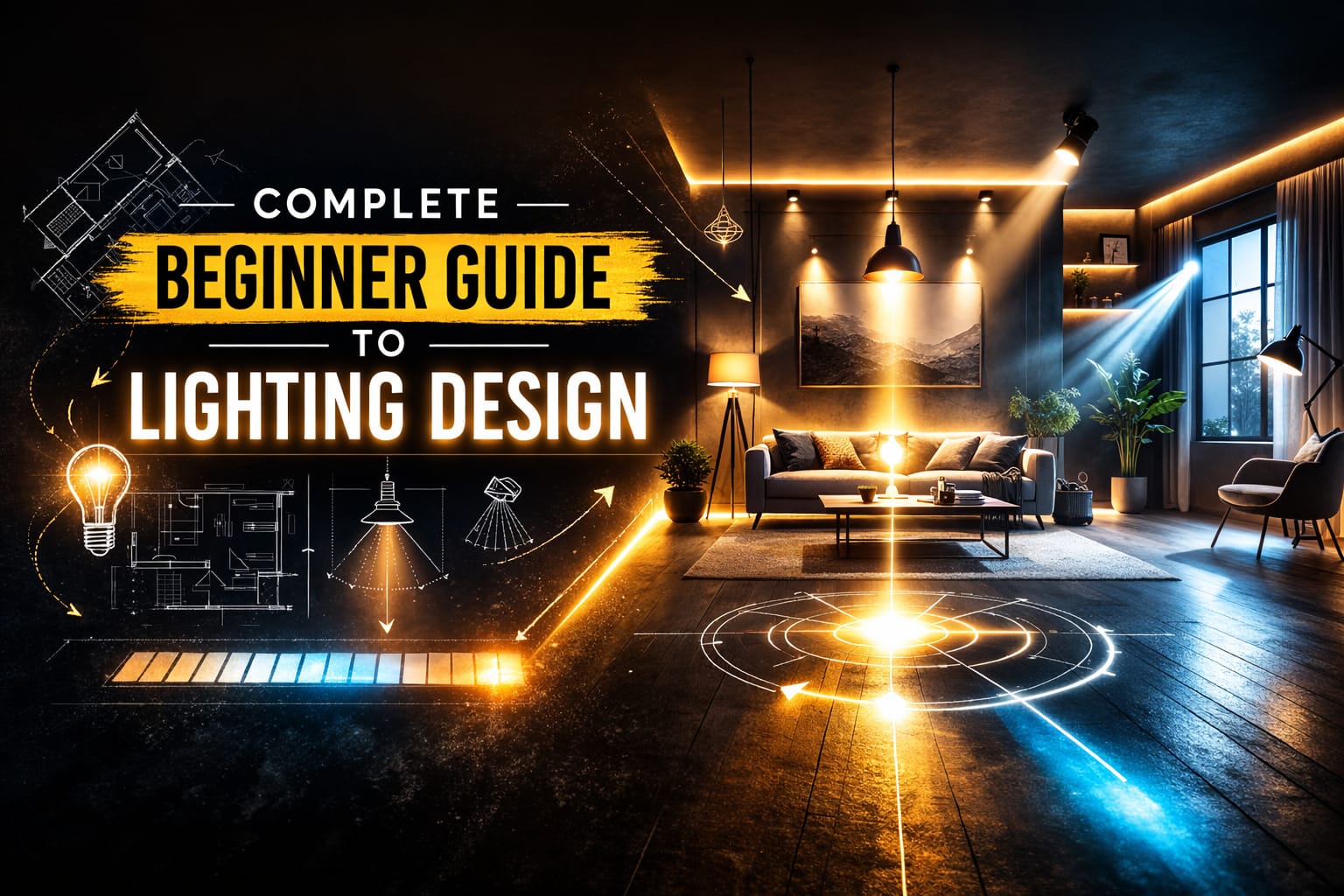
The most important concept in lighting design is that no single fixture should attempt to fulfill every lighting need in a room. Well-designed spaces combine ambient, task, and accent lighting, creating a balanced and adaptable atmosphere. Ambient lighting is the base layer. It provides the general brightness that allows you to move around safely and see the room comfortably. Ceiling fixtures, recessed lights, and some wall sconces usually handle this layer. The goal is not to create a dramatic effect. Rather, the goal is smooth, usable light that fills the space without leaving obvious dead zones. Task lighting is more focused. It is the light you need for activities where detail matters, such as reading, cooking, shaving, or working at a desk. Table lamps, under-cabinet lights, vanity lights, and desk lamps typically fall under this category. Without this layer, people often try to solve everything by brightening the ambient light, which usually makes the whole room feel harsher. Accent lighting adds shape and visual interest. It highlights artwork, architectural details, shelving, plants, and textured walls. This layer keeps a room from feeling flat. Although it runs at a lower intensity than the other two layers, it often makes the biggest difference in how finished the room feels once everything is turned on together.
How to Choose Fixtures, Brightness, and Color Temperature
The type of fixture you choose matters because it affects how much light you get and where it goes. Recessed cans keep ceilings clean and provide good ambient coverage. Pendants bring light closer to the ground and can illuminate specific areas, such as islands or dining tables. Wall sconces are flexible because they can provide ambient, task, or decorative lighting, depending on their height and beam direction. The right fixture suits the job and location, not just looks good on its own.
Brightness should be planned in lumens, not watts. Beginners often make the mistake of still thinking of wattage as a measure of light output, but with LEDs, that is no longer reliable. As a general rule of thumb, living spaces often work well with 20 to 30 lumens per square foot of ambient light, while kitchens and detailed work areas require more.
Color temperature affects how a room feels as much as brightness does. Warm white light, around 2,700 to 3,000 Kelvin, usually feels softer and more relaxed, so it fits well in bedrooms, living rooms, and dining spaces. Neutral white, around 3500-4000K, provides more clarity and is often better suited to kitchens, bathrooms, and work areas.
Bulb shape and beam style also matter. Standard A19 bulbs emit light in all directions, while reflector bulbs, such as BR and PAR shapes, emit light downward. This makes them ideal for recessed fixtures, spot lighting, and directional applications.
If a room feels off after an LED upgrade but the brightness seems fine, the color temperature is likely the problem. Using a warmer bulb usually solves the problem faster than adding more fixtures.
LEDs remain the default choice for most beginner-friendly plans because they are efficient and available in many beam types and color temperatures. They are also easy to use with modern controls.
Lighting Placement Principles That Change Everything
Even high-quality fixtures can produce disappointing results if they are not placed correctly. Your lighting design will improve quickly once you start thinking about where shadows will fall, where glare will appear, and which surfaces actually need light, rather than focusing solely on fixture count. This is why placement affects comfort as much as the fixtures themselves.
For recessed lighting, evenly spaced fixtures are usually better than one strong central source. In many rooms, cans spaced 4 to 6 feet apart, with perimeter fixtures set a short distance from the wall, create a more even wash of light.
Task lighting should be positioned so that it illuminates the work surface without putting the bulb directly in your eyes or positioning your body between the light and the task. Under-cabinet lighting should be placed toward the front of the cabinet, not buried at the back. Reading lamps work best when positioned slightly behind and above the shoulder rather than far out in front.
Accent lighting requires careful positioning. Artwork, shelving, and textured walls typically look better when lit from an angle rather than directly head-on. The wrong angle can create reflections and harsh glare instead of depth.
Ceiling height also affects the plan. Lower ceilings often require a softer light distribution and more careful placement so that the room does not feel overwhelmed by bright overhead sources.
Room-by-Room Lighting Design Basics
Living rooms require flexibility because they serve as spaces for multiple activities. A good plan usually starts with soft ambient light and adds task lighting near seating areas, as well as a few accent elements, to prevent the room from feeling flat. Floor lamps, table lamps, sconces, and dimmable ceiling lighting typically work better together than a single bright fixture.
Kitchens need stronger task lighting than most other rooms. General ceiling light is not enough on its own because upper cabinets and body position create shadows on counters. Under-cabinet lighting, pendants over islands, and brighter neutral-white light usually make the room much easier to use.
Bedrooms should go in the opposite direction. They still need enough light for dressing and cleaning, but the overall atmosphere should be calm and comfortable. Warm light, bedside task lamps, and dimmable ambient fixtures typically provide better lighting than bright overhead-only setups.
Bathrooms often present two lighting challenges: grooming and wet-zone lighting. Vanity areas require balanced, accurate lighting at face height to prevent shadows from distorting grooming tasks. Shower and tub areas need moisture-resistant fixtures placed with safety in mind. The goal is not just brightness. It is about clarity where detail matters and providing safe, durable lighting where water is present.
The broader lesson is that each room requires a different balance of layers, brightness, and control. A lighting plan that works beautifully in the bedroom may feel inadequate in the kitchen, and a kitchen lighting setup will often appear too harsh in a living room at night.
Controls, Dimmers, and Flexibility
A lighting plan improves significantly when the room can adapt to the time of day. Dimmers are usually the easiest first upgrade because they allow one fixture to accommodate different moods and activities. Brighter settings help with cleaning and organizing, while lower settings create a more relaxed atmosphere in the evening.
In practical terms, dimmers work best on main ambient lighting and fixtures that most strongly shape the room’s mood. This often includes living room ceiling lights, bedroom ambient lighting, dining room fixtures, and some bathroom or kitchen layers.
Modern control systems can group scenes, automate transitional spaces, and integrate lighting into broader smart home routines. Motion sensors are useful in areas such as hallways, stairways, closets, and mudrooms, where lights are often left on. Smart switches and voice control can make multi-layer rooms easier to manage as designs become more complex.
If you’re looking for a reliable dimmable ambient fixture to start with, this adjustable flush mount with dimming capability is a good example of a ceiling light that works well in beginner-friendly layered setups.
Common Lighting Design Mistakes to Avoid
The most common mistake is relying on one central ceiling light to illuminate the entire room. This usually creates shadows in the wrong places, a flat look, and a choice between “too bright” and “not bright enough.” Most rooms need more than one light source to feel balanced.
Another mistake is underestimating how much color temperature affects comfort. A room can have enough lumens and still feel wrong if the light is too cold or warm for its purpose. The same thing happens when people skip task lighting and try to solve everything by increasing ambient output. The room gets brighter but not necessarily more usable.
People also forget to plan for flexible controls early on. It’s much easier to install dimmers and split circuits during the initial setup than to retrofit the room later. The same goes for accent lighting. People often cut accent lighting first to save money, but then realize that the room still looks unfinished even though all the basic fixtures are in place.
The easiest way to avoid these problems is to make a short checklist of what you need before buying anything. Ask yourself: Which layers does the room need? Where will the shadows fall? What brightness range makes sense? What color temperature fits the purpose? Will the room need dimming or scene control? This small amount of planning can prevent a lot of wasted money.
- ✓ Before buying fixtures, plan ambient, task, and accent lighting
- ✓ Match color temperature to the room instead of using one type of bulb everywhere
- ✓ Calculate brightness in lumens instead of using old wattage habits
- ✓ Add dimmers to major circuits before finishing the room
- ✓ Use several fixtures with clear roles instead of one oversized light source
Key Takeaways
Good lighting design starts with layering. Ambient light provides the room’s foundation, task lighting supports specific activities, and accent lighting adds depth and interest that a single ceiling fixture cannot create alone.
Fixture choice, brightness, color temperature, and placement all influence how comfortable a room feels. When these four elements are considered together, the space usually feels more natural immediately.
The easiest improvements come from planning before buying, using multiple light sources, and adding dimming flexibility early on. These choices prevent many common beginner mistakes.
Share this guide if you found it helpful. Save it or share it with someone planning a lighting project.
Facebook | X (Twitter) | WhatsApp | LinkedIn