Best Living Room LED Lighting Setup for Cozy Ambience
For most living rooms, the best LED lighting setup starts with warm dimmable ambient light, then adds one focused task light and one subtle accent light for mood. This gives you enough brightness for daily use without making the room feel harsh at night.
This guide shows you how to plan a cozy, practical living room lighting setup with LED bulbs, floor lamps, TV backlighting, strip lights, dimmers, smart controls, and fixture styles.
Quick Answer
For most living rooms, the best LED lighting setup uses warm dimmable ambient light, one focused floor or reading lamp, and one soft accent layer such as TV backlighting or hidden LED strips. This setup gives you comfort, ambience, and flexibility without overlighting the room.
- Aim for 15 to 20 lumens per square foot for general ambient lighting.
- Choose warm white or soft neutral LED bulbs for a relaxed everyday feel.
- Add a floor lamp or reading lamp instead of relying only on the ceiling fixture.
- Use dimmable LED bulbs and compatible dimmer switches whenever possible.
- Add TV backlighting or hidden LED strips when you want a softer evening ambience.
Table of Contents:
- Quick Answer
- How Bright Should Living Room LED Lights Be?
- Best Living Room LED Setup: Ambient, Task and Accent Lighting
- Best Color Temperature for Living Room Ambience
- Smart Controls, Dimmers and Running Costs
- Fixtures, Installation and Long-Term Value
- Living Room LED Lighting Mistakes to Avoid
- What Should You Choose?
- FAQ
- Key Takeaways
- Sharing This Guide
How Bright Should Living Room LED Lights Be?
A comfortable living room usually needs about 15 to 20 lumens per square foot of general ambient light. For a 200-square-foot room, that means around 3,000 to 4,000 lumens total, but the light should be spread across several sources instead of coming from one harsh ceiling fixture.
When comparing LED bulbs, focus on lumens rather than wattage. Wattage tells you how much electricity a bulb uses, while lumens tell you how much visible light it produces. If you want a clearer breakdown of bulb labels, brightness, efficiency, and product specs, our LED lighting buying guide explains the essentials in more detail.
Room shape also matters. High ceilings, dark walls, large open layouts, and heavy furniture usually need more total output. If your living room is open-plan, oversized, or connected to another space, our guide to LED lights for large living rooms can help you avoid dark corners and underpowered fixtures.
For ambience, more brightness is not always better. A living room should feel flexible: bright enough for cleaning, reading, and family use, but soft enough for watching TV, relaxing, or spending time with guests in the evening.
Best Living Room LED Setup: Ambient, Task and Accent Lighting
The best living room LED lighting setup usually combines three layers: ambient lighting for general visibility, task lighting for reading or focused activities, and accent lighting for mood and depth. If you want to understand how each layer works before choosing products, this guide to ambient, task and accent lighting explains the difference in a simple way.
Start with the ambient layer. This is the main light in the room, usually from ceiling fixtures, table lamps, wall lights, or several lamps working together. The goal is even, comfortable light, not one harsh ceiling fixture doing all the work.
If you are keeping your existing lamps or ceiling fixture, start by upgrading the bulbs first. For bulb-specific recommendations, see our guide to the best LED bulbs for living rooms.
Add task lighting where people actually sit. If you read in a chair, use a laptop on a side table, or work from the sofa, a focused floor or table lamp will usually improve comfort more than simply increasing ceiling brightness.
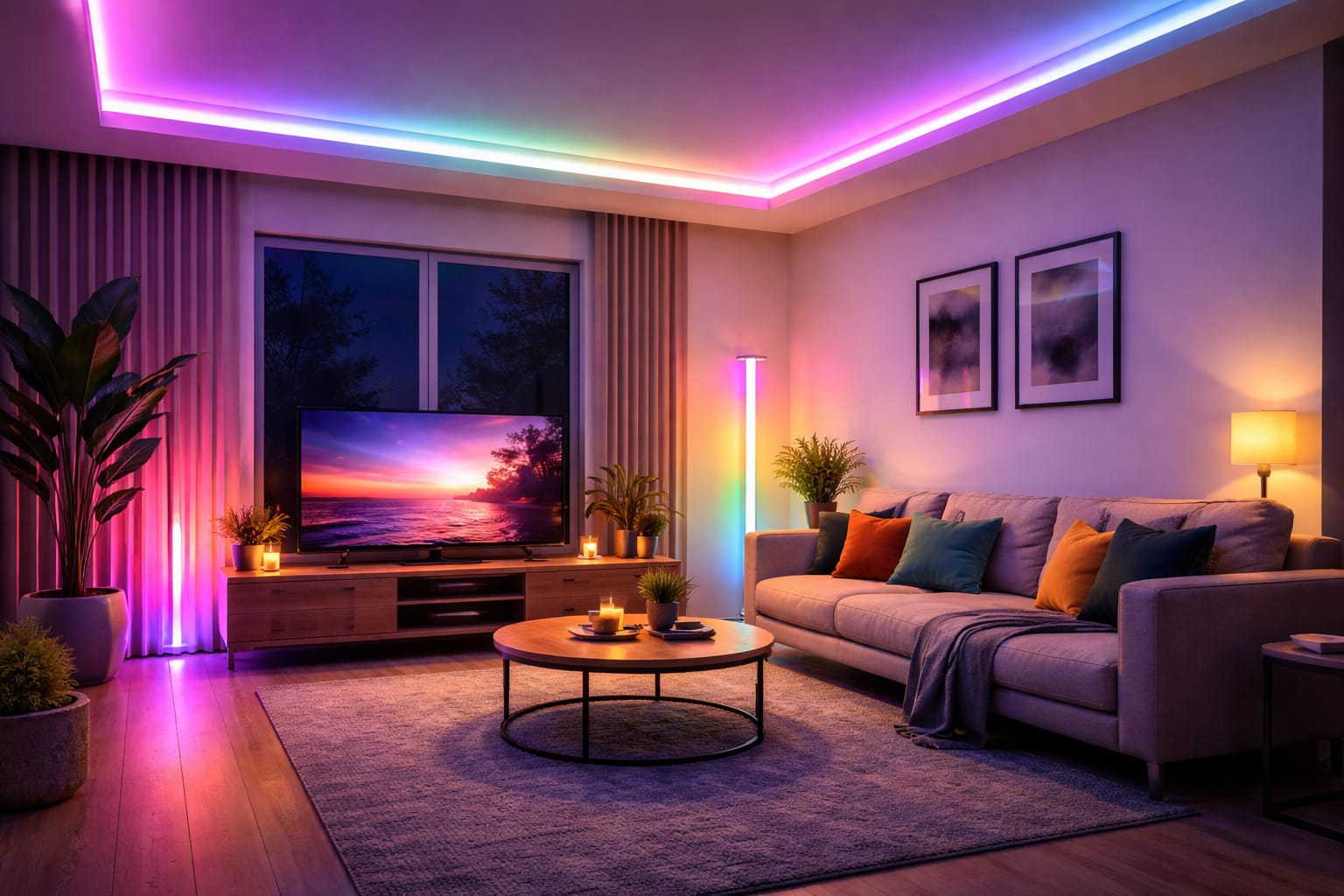
Use accent lighting to create ambience. Hidden LED strips, wall sconces, shelf lights, corner lamps, and TV backlighting can make the room feel softer and more intentional without overpowering the main light.
For corner mood lighting without changing your ceiling fixtures, a RGBIC floor lamp for corner mood lighting can add color and dimmable glow to an unused area of the room.
TV zones usually benefit from indirect lighting and a soft background glow. A LED TV backlight kit for softer movie-night viewing can reduce the contrast between a bright screen and a dark room without flooding the whole living room with light.
Best Color Temperature for Living Room Ambience
Color temperature can change how a living room feels even when brightness stays the same. For most homes, warm white light around 2700K to 3000K creates the most comfortable everyday atmosphere. It feels relaxed, flattering, and easy to live with in the evening.
Neutral white light around 3500K to 4000K can work well in modern rooms, active family rooms, or living rooms that also function as casual workspaces. If you are not sure what Kelvin numbers actually mean, this guide to color temperature for LED lights will help you understand warm, neutral, and cool white before buying bulbs.
For most living rooms, the safest choice is warm dimmable LED bulbs for the evening and tunable white bulbs if the room needs to shift between daytime activity and nighttime relaxation. Tunable white gives you more flexibility because you can use a brighter, cleaner tone during the day and a warmer tone at night.
Avoid mixing very warm and very cool bulbs in the same open space unless the zones are clearly separated. Even high-quality LED lights can look mismatched if the color temperatures fight each other.
Smart Controls, Dimmers and Running Costs
Once brightness and color temperature are right, controls make the room much more flexible. Dimming, scenes, schedules, and voice control help the same living room work for reading, movie nights, guests, cleaning, and everyday relaxation.
Dimmable LEDs are one of the best upgrades for a living room, but the bulb and wall dimmer must be compatible. Many flicker and buzzing problems come from using LED bulbs with older dimmer switches designed for incandescent bulbs.
Smart LED bulbs are worth considering if you want routines, voice control, app control, scenes, or adjustable color temperature without getting up from the sofa. If your goal is to control several lamps, strips, and bulbs together, this guide to smart lighting for living rooms explains how to plan scenes and controls without making the setup confusing.
For a simple option that fits well into an ambient living room layer, this dimmable smart LED bulb for Alexa and Google Home gives you app control, tunable white, and flexible dimming without making the setup overly complicated.
LEDs also use far less electricity than incandescent bulbs and typically last much longer. According to the U.S. Department of Energy, LED lighting uses much less energy and lasts dramatically longer than incandescent alternatives, which matters in living rooms with several fixtures used every day.
For better consistency, choose quality bulbs instead of the cheapest mixed packs. Better color consistency, smoother dimming, and a longer lifespan usually matter more in a living room than saving a small amount upfront.
Fixtures, Installation and Long-Term Value
The best living room LED lights are about more than the specs on a box. Fixture style, installation quality, heat control, and long-term durability all affect how the room looks and how satisfied you feel with the setup a year from now.
Minimalist fixtures, globe lights, simple sculptural pendants, matte black finishes, brushed nickel, and warm metallic details can all work well in living rooms. The safest approach is usually to choose one main visual fixture and keep the rest of the lighting subtle.
Be careful with exposed bulbs or very directional fixtures, because they can create glare unless the bulbs are diffused, low-glare, or placed away from direct sightlines.
Simple bulb swaps are easy, but installing new fixtures, dimmer switches, recessed lighting, or making wiring changes requires more care. Always turn off the power at the breaker, confirm that the circuit is dead, and make sure the box, bracket, and wiring are rated for the fixture being installed.
If you are replacing switches, installing new ceiling fixtures, or dealing with uncertain wiring, call a qualified electrician. Poor connections can cause flickering, buzzing, overheating, and other serious safety issues.
If you expect to rearrange furniture, add shelving, move the TV, or create a work corner later, flexible lighting such as plug-in lamps, smart bulbs, track heads, or movable floor lamps is easier to adapt than a fully fixed layout.
Maintenance matters too. Heat shortens LED lifespan, especially in enclosed fixtures with poor ventilation. Dusting shades, lenses, and diffusers also helps the room stay bright over time.
Living Room LED Lighting Mistakes to Avoid
Many living room lighting problems come from a few predictable mistakes: too few lumens, the wrong color temperature, poor dimmer compatibility, exposed glare, and spending too much on decorative fixtures before fixing the bulbs and layout.
Do not rely on one ceiling fixture to do everything. Even a bright fixture can leave corners dark, make seating areas feel flat, and create glare when all the light comes from above. Adding a lamp or accent light often improves the room more than increasing raw brightness.
Do not ignore CRI. A CRI of 80 is generally acceptable, but a CRI of 90 or above can make furniture, artwork, rugs, and skin tones look better. This is especially noticeable in living rooms where people spend time every evening.
Do not mix random bulbs. Buying different brands, color temperatures, or brightness levels for the same room can make the lighting feel uneven. When possible, buy matching bulbs together so the room feels intentional and replacements are easier later.
Do not spend the whole budget on the statement fixture. If the budget is limited, prioritize the lights you use most: the main ambient bulbs, the lamp near your favorite seat, and the accent light that solves a real comfort problem, such as screen glare or a dark corner.
If you need help with lighting design beyond the living room, the LED Knowledge Center has more guides on choosing fixtures, understanding specs, and improving lighting quality throughout the home.
What Should You Choose?
For most homes, the best approach is warm dimmable ambient light, one useful task light, and one subtle accent upgrade. You do not need a complicated system unless you want automation, voice control, or color scenes.
- For a small living room: choose warm dimmable bulbs and one compact floor or table lamp. If the room feels cramped or shadowy, these LED lighting ideas for small living rooms can help you brighten the space without making it feel harsh.
- For daily family use: use neutral or tunable white bulbs so the room can feel bright during the day and warm at night.
- For reading: place a focused floor lamp near the chair or sofa instead of making the whole room brighter.
- For movie nights: use TV bias lighting or a soft accent light behind the screen.
- For renters: prioritize plug-in lamps, smart bulbs, and LED strips that do not require wiring changes.
- For the best value: upgrade the bulbs you use every day before spending heavily on decorative fixtures.
FAQ
What type of LED lighting is best for living room ambience?
For ambience, start with warm white dimmable light around 2700K to 3000K, then add a focused task lamp and a soft accent layer such as TV backlighting or hidden LED strips. Tunable white bulbs are useful if you want brighter daytime light and warmer evening light from the same fixtures.
Are LED strip lights good for living rooms?
LED strip lights can be very good for living rooms when they are used as accent lighting, not as the only light source. They work best behind TVs, shelves, furniture, or architectural details where they add a soft glow without creating glare. If your main goal is a better movie-night setup, compare the best LED strip lights for TV backlighting before choosing a kit.
Are smart LED bulbs worth it for a living room?
Smart LED bulbs are worth it if you want dimming, routines, voice control, scenes, or adjustable color temperature. If you only need one simple light level, standard warm dimmable bulbs may be enough.
Key Takeaways
The best living room LED lighting setup is usually not one product, but a balanced combination of warm ambient light, one practical task light, and one subtle accent light.
Brightness, color temperature, glare control, CRI, and dimming matter more than choosing the highest lumen number on the box. For most rooms, warm or neutral dimmable light is the safest starting point.
A living room lighting setup does not need to be expensive or overly technical to be effective. A few well-chosen LED upgrades can make the room more comfortable, more flexible, and better suited to everyday life.
Sharing This Guide
If you found this guide helpful, save it for later or send it to someone planning a living room lighting upgrade. It is especially useful for homeowners, renters, and anyone trying to improve a room without wasting money on the wrong fixtures.
Use the links below to share it
Interested in learning more? Browse all related articles in our category section.