Smart Lighting for Living Rooms: Setup Ideas for TV & Relax
Most living rooms do not need a complicated smart home system. A good smart lighting setup for a living room starts with three simple layers: a dimmable main light, a warmer lamp near the sofa, and one accent source such as a TV backlight or a set of light bars.
That combination solves the common problems: harsh movie lighting, dark reading corners, flat evening ambience, and awkward one-switch control. Start with smart bulbs and fixed scenes first; add strips, bars, or automation only where they improve TV time, reading, relaxing, or open-plan zones.
Quick Answer
The best smart lighting setup for living room comfort is a dimmable main bulb or ceiling light, a lamp near the seating area, and a hidden accent light behind the TV or media wall. For most homes, a smart bulb pack with dimming and color control is the easiest first step because it lets you create useful scenes before adding more fixtures.
- For movie nights, dim the main light and use a soft TV backlight or side glow.
- For reading, keep one brighter lamp close to the sofa or chair.
- For relaxing, use warm 2700K to 3000K scenes at lower brightness.
- For open layouts, group lights by zone, not by product type.
- For beginners, start with two or three fixed scenes before adding automation.
Table of Contents:
Best Living Room Smart Lighting Setup
A strong living room smart lighting setup starts with layers, not gadgets. One bright ceiling fixture is often too harsh for relaxing, while one soft lamp may be too dim for reading, guests, or cleaning. Smart lighting works best when each light has a clear job and can be controlled separately.
The three useful layers are ambient light for general visibility, task light for activities like reading, and accent light for depth around shelves, walls, or the TV area. Once those layers are independent, the room becomes easier to control because you are no longer asking one bulb to handle every situation.
For a practical setup, treat the sofa area, TV wall, reading corner, and main ceiling light as separate zones. This is especially important in open-plan rooms, where one switch can light half the home in a way that feels too bright or visually flat. If you need a broader setup process, this smart lighting setup guide explains how to plan zones before buying extra devices.
Scenes are what make smart lights for living room use feel effortless. Most homes only need four: daytime brightness, evening relaxation, movie mode, and guest mode. A useful scene changes brightness, warmth, and zones together, so you do not have to adjust each light one by one every night.
This is why adjustable brightness and color temperature matter more than dramatic color effects. A warm, low-output scene can make the seating area feel calm, while a brighter neutral scene helps when tidying up or doing a quick task. For more detailed control, the guide on grouping smart lights by room is a useful next step.
Common Living Room Lighting Mistakes
The most common mistake is focusing only on brightness. Many people install a very bright smart bulb, add colorful strips later, and expect the room to feel upgraded. In practice, the ceiling light still dominates everything, so the space remains harsh during TV time and uneven during relaxed evenings.
Another mistake is expecting automation to fix poor placement. It will not. If lamps are in the wrong spot, if LED strips are visible from normal seating angles, or if the brightest source is directly above the sofa, no app can make the layout feel balanced. Smart controls improve a good lighting plan; they do not replace one.
Avoid exposed LED strips at eye level, overly saturated colors behind the TV, and one giant scene that turns every light on at once. These choices can create glare, visual fatigue, and a room that feels less refined instead of more comfortable.
Before adding more devices, decide what each light is supposed to solve: visibility, reading, TV comfort, background ambience, or open-plan zoning. If you are planning automation beyond one room, this home lighting automation guide gives useful context before you invest in more hardware.
Best Smart Light Mix: Bulbs, Lamps and TV Backlights
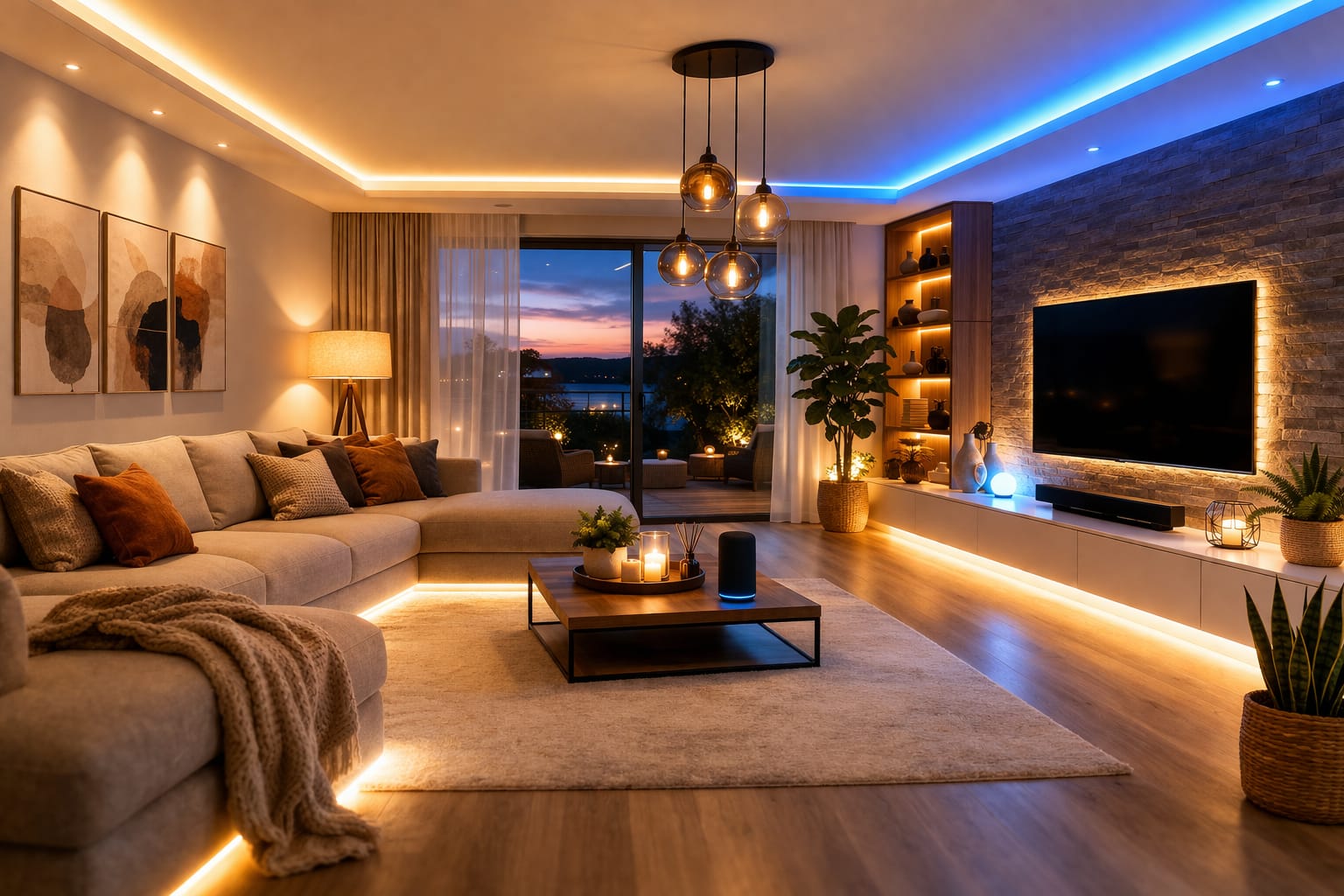
For most living rooms, the best mix is simple: a dimmable main light, one floor or table lamp near the seating area, and one accent light near the TV, shelves, or media wall. This gives the room enough flexibility without making the setup feel like a complicated renovation.
Choose smart lights for living room use by function. The main light provides coverage. The lamp adds comfort and helps with reading or conversation. The accent light creates depth and reduces the flat look that often happens when all the brightness comes from the ceiling.
LED strips work best when they are hidden from direct view and used to wash a surface with light. Placed behind a TV, under floating shelves, or along a media wall, they can make a living room feel more architectural. Used poorly, they create dots, hot spots, glare, and distracting color patches.
For TV areas, an RGBIC TV backlight strip for a softer TV glow can work well because it adds controlled background light and improves the perceived contrast around the screen. In a living room smart lighting setup, this kind of bias lighting is usually more useful than random decorative color because it gives the media zone a clear purpose.
Voice features can also help, but only when they trigger useful scenes instead of constant manual adjustments. A voice-controlled lighting setup works best when commands like “movie time” or “relax” activate fixed brightness and color settings that you already tested from the sofa.
Medium Living Room Scene Plan
In a medium living room, the goal is not maximum brightness. The goal is to keep the seating area comfortable, the TV area controlled, and the room flexible enough for reading, guests, and unwinding at night. A practical plan might look like this:
- Daytime scene: main light at moderate brightness with a neutral tone for general use.
- Reading scene: sofa lamp brighter than the rest of the room, with the ceiling light reduced.
- Movie scene: main light dimmed very low, TV backlight on, and saturated colors avoided.
- Guest scene: balanced brightness from the ceiling and side lighting so the room feels open but not harsh.
Test each scene from the actual sofa and TV position. A setup that looks good while standing near the switch may feel too bright, too dim, or too distracting from the place where you actually use the room.
This is also where many one-bulb upgrades fail. Someone buys a very bright smart bulb, connects it to an app, and expects the entire living room to feel better. The room may be smarter, but it is not necessarily more comfortable. A balanced setup should be judged by comfort, contrast, and usefulness, not just by the number of app features.
Simple Automation and Voice Control
Automation is most valuable when it removes repeated decisions. In living rooms, that usually means an automatic soft evening scene, a brighter late-afternoon preset, and a one-step TV scene. Too many conditions can quickly become annoying, especially if the room changes brightness unexpectedly while people are watching TV or talking.
A better approach is to start with two or three reliable routines and make them predictable. Voice control should launch named scenes, not constant raw adjustments. It is easier to say “movie time” or “relax” than to ask for exact brightness percentages every night.
If your setup uses Alexa, a curated guide to smart LED bulbs for Alexa can help you compare bulbs that are better suited to voice control, routine-based dimming, and predictable everyday scenes. For broader fixture planning, the living room LED lights guide is useful alongside your app setup.
Which Smart Lights Should You Choose for Your Living Room?
The right choice depends on how you use your living room most often. The best setups are rarely the most expensive ones. They match the room size, seating layout, screen use, and how much control you want every day.
- For rooms used mostly for TV and relaxing: choose warm bulbs plus a hidden TV backlight.
- For reading and conversation: add a dedicated lamp near the seating area.
- For open-plan rooms: create separate zones for the sofa, TV wall, and main ceiling light.
- For a minimal setup: start with smart bulbs and two fixed scenes before adding strips or bars.
- For a media wall: use smart TV ambient light bars for media walls to add side glow and depth without renovation.
It is also worth considering efficiency and light quality. The U.S. Department of Energy’s LED lighting efficiency guidance explains how LED systems deliver useful light while using less energy, and the ENERGY STAR guide to LED lighting basics is useful for understanding color, dimming, and product quality.
As you refine the room, keep a close eye on overlighting. More fixtures do not automatically create more comfort. Many living rooms feel better when the brightest source is dimmed and side lighting is used to gently support the space instead of overpowering it.
For readers interested in a deeper look at product choice, placement, brightness, efficiency, and long-term planning, the LED Knowledge Center is a useful next step.
FAQ
What Smart Lights Are Best for a Living Room?
For most living rooms, the best smart lights are dimmable bulbs for the main fixture, a lamp near the sofa, and one hidden accent light behind the TV or media wall. This gives you practical scenes without making the room feel overdesigned.
Should I Start with Smart Bulbs or LED Strips?
Start with smart bulbs if your room still relies on one main light or if you want simple scenes quickly. Add LED strips later when you have a clear accent area, such as behind the TV, under shelves, or along a media wall.
Are TV Backlights Worth It in a Living Room?
TV backlights can be worth it when they are soft, hidden, and not overly saturated. They help balance the screen with the surrounding wall, reduce the harsh contrast of a dark room, and make movie scenes feel more comfortable.
Key Takeaways
The most effective smart lighting ideas for living rooms focus on roles, not gadgets. Your main light provides coverage, your lamp adds comfort, and your accent lighting creates depth. When these roles are clear, the room becomes easier to use and control.
Start simple, test scenes at the times you actually use the room, and adjust brightness before adding more hardware. This prevents wasted purchases and helps you build a setup that feels intentional.
The best smart lighting setup for a living room is one you stop noticing because it fits naturally into daily life. The goal is better mood, better usability, and enough flexibility for TV, reading, relaxing, and guests.
Sharing This Guide
If you found it helpful, save it or share it with someone who still relies on old bulbs.
Interested in learning more? Browse all related articles in our category section.