LED Lighting for Small Rooms: Perfect Guide Today
Selecting appropriate LED lighting for small rooms requires understanding how fixture size, placement strategies, and brightness levels interact with limited square footage creating functional comfortable environments without overwhelming confined spaces. This comprehensive guide examines compact space illumination principles, wall-mounted light solutions, color temperature selection, and layering techniques that maximize perceived room dimensions while providing adequate illumination supporting diverse activities throughout efficiently designed residential spaces requiring thoughtful lighting approaches.
Table of Contents
Size Matters
Fixture size considerations represent the most critical aspect of LED lighting for small rooms where oversized fixtures visually overwhelm spaces creating cramped oppressive feelings. Compact flush-mount ceiling fixtures, slim pendant lights, and low-profile wall sconces maintain proportional relationships with limited square footage. A 10×10 foot bedroom requires fixtures measuring 15-20 inches diameter maximum avoiding massive chandeliers or bulky ceiling fans dominating visual attention throughout confined living areas.
Scale calculations help determine appropriate fixture dimensions throughout compact space illumination planning. Room width plus length in feet approximates suitable chandelier diameter in inches for larger spaces though this formula yields excessive sizes for tiny rooms. Small space modifications reduce recommendations by 30-40% ensuring fixtures complement rather than dominate environments. Understanding these proportional relationships prevents common sizing errors undermining aesthetic and functional objectives throughout residential installations.
Multi-bulb fixtures provide adequate brightness without physical bulk throughout LED lighting for small rooms implementations. Three-bulb flush-mounts deliver sufficient illumination while maintaining minimal ceiling clearance. Distributed smaller fixtures prove superior to single large sources creating better light distribution without spatial domination. These strategic choices maximize functionality while preserving precious visual space throughout efficiently designed environments. Similar principles apply across different spaces as discussed in dining area guides.
Low Profile Options
Ultra-slim LED panels measuring 1-2 inches thick provide excellent compact space illumination without protruding significantly from ceilings. These contemporary fixtures suit modern aesthetics while addressing fixture size considerations in rooms with standard or low ceilings. Recessed can lights disappear completely into ceilings though require adequate plenum space for installation throughout new construction or major renovation projects.
If you want a dependable option, a solid example is Smart Ceiling Light, which performs reliably in everyday use.
Brightness Balance
Achieving proper brightness levels throughout LED lighting for small rooms requires balancing adequate illumination against overwhelming confined spaces with excessive light. Small rooms need 20-30 lumens per square foot for general ambient lighting. A 100 square foot bedroom requires 2,000-3,000 total lumens distributed across multiple fixtures creating comfortable even illumination without harsh shadowing or glaring hotspots throughout compact space illumination implementations.
However, psychological factors influence optimal brightness beyond mathematical calculations. Dimmer lighting makes small spaces feel more intimate and cozy while bright illumination expands perceived dimensions. This dual effect creates strategic opportunities where morning routines benefit from energizing brightness while evening relaxation suits subdued levels. Understanding these dynamic requirements supports flexible LED lighting for small rooms enabling varied brightness throughout daily cycles.
Color rendering index (CRI) affects perceived brightness and comfort throughout compact space illumination. High CRI fixtures (90+) render colors naturally requiring less total light for comfortable visibility. Budget LEDs with poor CRI create dull lifeless spaces needing excessive brightness compensating for inadequate color quality. Investing in quality high-CRI sources proves worthwhile throughout LED lighting for small rooms where every aspect contributes to overall environmental comfort throughout confined residential spaces. According to U.S. Department of Energy LED lighting efficiency guidance, CRI significantly affects quality.
Task Requirements
Specific activities determine localized brightness needs within LED lighting for small rooms implementations. Reading corners require 50-75 lumens per square foot concentrated at task surfaces. Makeup application demands 75-100 lumens per square foot with even facial illumination. These task-specific fixture size considerations guide supplemental lighting beyond general ambient sources supporting varied activities throughout multipurpose compact environments.
Adjustable task lamps enable customization without permanent installations throughout rental situations or evolving needs. Clip-on reading lights, pivoting desk lamps, and flexible gooseneck fixtures provide targeted illumination exactly where needed. These portable solutions complement fixed compact space illumination supporting functional flexibility throughout efficiently designed small residential spaces.
Color Temperature
Color temperature selection profoundly influences perceived spaciousness throughout LED lighting for small rooms. Warm white (2700-3000K) creates cozy intimate atmospheres though may make small spaces feel smaller through psychological association with enclosed comfortable environments. Cool white (4000-5000K) expands perceived dimensions through association with open outdoor daylight though feels sterile in bedroom or living room contexts requiring warmth and comfort.
Neutral white (3500K) balances expansion effects and comfort throughout compact space illumination compromising between competing objectives. This middle ground suits multipurpose small rooms serving both relaxation and task-oriented activities. Understanding how color temperature affects spatial perception enables intentional choices supporting specific goals throughout LED lighting for small rooms requiring careful consideration of psychological impacts.
Tunable white fixtures enable dynamic color temperature adjustment throughout daily cycles supporting varied activities and moods. Morning cool white promotes alertness while evening warm white encourages relaxation. This flexibility maximizes small space versatility adapting illumination characteristics to changing needs without multiple fixture installations throughout LED lighting for small rooms implementations requiring adaptable solutions. Workspace considerations detailed in office guides inform temperature choices.
Consistency Matters
Maintaining consistent color temperature across all fixtures within LED lighting for small rooms prevents jarring visual discontinuity. Mixing 2700K and 5000K sources creates uncomfortable contrast undermining cohesive design. Staying within 500K ranges ensures visual harmony throughout compact space illumination. Replacing all bulbs simultaneously prevents gradual temperature drift as individual bulbs age creating unintentional mismatches.
Smart LED systems enable synchronized color temperature control across multiple fixtures simplifying consistency maintenance. Whole-room color coordination occurs automatically without manually matching individual bulbs. These intelligent solutions prove particularly valuable throughout LED lighting for small rooms where visual cohesion critically affects perceived quality throughout limited square footage magnifying any inconsistencies.
Layered Approach
Implementing layered lighting proves essential throughout LED lighting for small rooms creating depth and visual interest preventing flat monotonous illumination. Ambient ceiling fixtures provide general visibility. Task lamps illuminate specific work areas. Accent lights highlight artwork or architectural features. These three components work together creating dynamic environments supporting varied activities throughout compact space illumination requiring functional versatility.
However, small spaces limit fixture quantity requiring creative layering strategies. Dual-purpose fixtures combining ambient and accent functions consolidate roles reducing clutter. Under-shelf LED strips provide both task lighting and decorative accents. Strategic multi-functionality maximizes lighting diversity without overwhelming limited square footage throughout LED lighting for small rooms implementations requiring efficient consolidation.
Independent control over lighting layers enables scene creation throughout compact space illumination. Bright ambient plus task lighting supports productive work sessions. Dimmed ambient with accent lighting creates relaxing evening atmospheres. This selective layer activation transforms single small rooms into multipurpose spaces adapting to changing needs throughout daily cycles requiring flexible LED lighting for small rooms supporting diverse activities.
Minimalist Execution
Small space layering requires restraint avoiding excessive fixtures creating visual chaos. Three well-chosen fixtures prove superior to six mediocre sources throughout LED lighting for small rooms. Quality over quantity principles ensure each fixture serves clear purposes without redundancy. This disciplined approach maintains clean uncluttered aesthetics throughout compact space illumination requiring careful curation.
Hidden LED strips behind furniture or crown molding provide ambient illumination without visible fixtures. These concealed sources create floating effects expanding perceived space through indirect lighting. Understanding invisible fixture size considerations enables dramatic illumination without physical intrusion throughout LED lighting for small rooms maximizing limited visual real estate.
Vertical Space
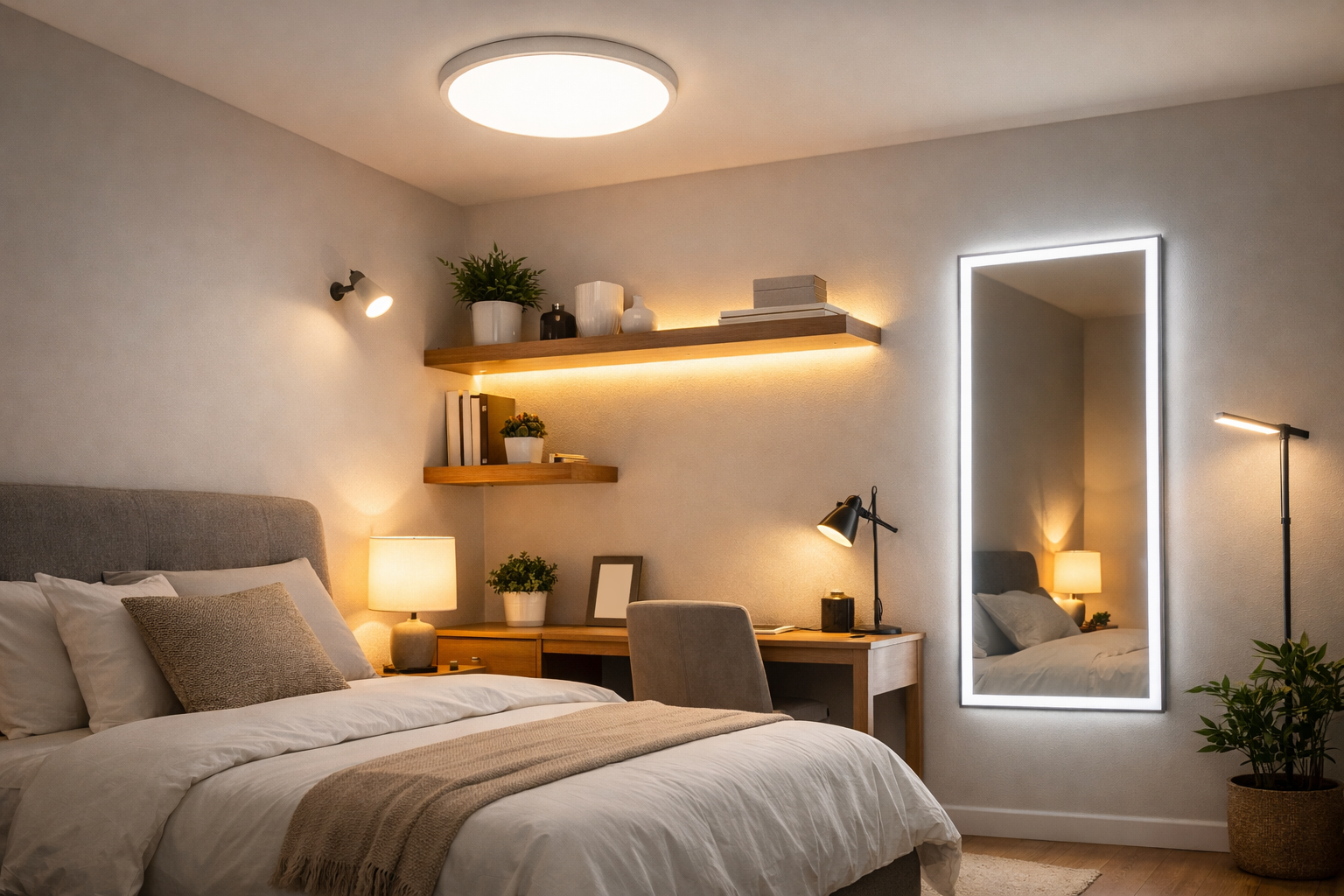
Utilizing wall-mounted light solutions maximizes usable floor and surface space throughout LED lighting for small rooms. Sconces flanking beds eliminate nightstand lamp requirements freeing valuable surface area. Swing-arm wall lamps provide adjustable task lighting without occupying desk space. These vertical installations preserve horizontal real estate throughout compact space illumination requiring efficient spatial utilization.
Wall-mounted light solutions require electrical box installation though hardwired fixtures create clean permanent installations without visible cords. Planning electrical locations during construction or renovation enables optimal positioning. Retrofit situations may use plug-in wall sconces with cord covers maintaining clean appearances throughout LED lighting for small rooms implementations working within existing electrical infrastructure.
Another practical alternative is Slim LED Wall Sconce, which offers consistent results over time.
Vertical illumination washing walls with light expands perceived room dimensions throughout compact space illumination. Uplights directed at ceilings create height illusions. Wall grazing emphasizes texture and depth. These fixture size considerations focus on beam direction rather than physical size maximizing spatial expansion effects throughout LED lighting for small rooms requiring perceptual enhancement.
Mounting Height
Proper mounting height affects both functionality and aesthetics throughout wall-mounted light solutions. Bedside sconces install 30-36 inches above mattress height for comfortable reading. Bathroom vanity lights position at 60-65 inches above floor centering at face level. Understanding these ergonomic standards ensures wall-mounted light solutions serve intended purposes throughout LED lighting for small rooms requiring proper positioning.
Architectural constraints sometimes prevent ideal positioning requiring creative adaptations. Adjustable swing-arm fixtures compensate for non-optimal mounting locations. Extendable cord covers accommodate unusual electrical box positions. These pragmatic solutions enable wall-mounted light solutions despite challenging conditions throughout compact space illumination requiring flexible problem-solving approaches.
Mirror Placement
Strategic mirror positioning amplifies illumination throughout LED lighting for small rooms doubling apparent light output through reflection. Large mirrors opposite windows maximize natural light penetration. Mirrored closet doors reflect artificial illumination extending reach throughout compact space illumination. These reflective strategies enhance brightness without additional fixtures throughout small residential spaces requiring efficiency maximization.
However, mirror placement requires careful consideration preventing glare or awkward fixture reflections. Positioning mirrors perpendicular rather than directly opposite bright sources avoids blinding reflections. Understanding these optical principles ensures mirrors enhance rather than complicate LED lighting for small rooms throughout implementations requiring thoughtful spatial planning.
Backlit mirrors combine functional illumination with space-expanding reflectivity throughout compact space illumination. Built-in LED strips provide task lighting for grooming while mirror surface amplifies general room brightness. These integrated solutions consolidate multiple functions reducing fixture quantity requirements throughout LED lighting for small rooms requiring efficient multi-purpose components. Reference ENERGY STAR guide to LED lighting basics for quality standards.
Reflective Surfaces
Beyond mirrors, glossy finishes on walls, ceilings, and furniture amplify illumination throughout LED lighting for small rooms. Semi-gloss or satin paint reflects more light than flat finishes brightening rooms without additional fixtures. Metallic or glass decorative elements create sparkle and visual interest multiplying fixture size considerations impact throughout compact space illumination requiring strategic material selection.
However, excessive reflectivity creates glare and visual discomfort. Balancing reflective and matte surfaces prevents overwhelming brightness while maintaining adequate light distribution. Understanding these material interactions supports cohesive LED lighting for small rooms integrating fixtures with architectural finishes throughout holistic environmental design.
Multifunctional Fixtures
Fixtures serving multiple purposes maximize value throughout LED lighting for small rooms where every element must justify space consumption. Ceiling fans with integrated lighting provide air circulation and illumination in single installations. Headboard-mounted reading lights eliminate nightstand lamps. These consolidated solutions reduce clutter while maintaining functionality throughout compact space illumination requiring efficient integration.
Shelving with built-in LED strips provides storage and ambient lighting simultaneously. Lighted mirrors combine grooming illumination with reflective space expansion. Understanding these multi-functional opportunities enables creative fixture size considerations addressing multiple needs through single installations throughout LED lighting for small rooms requiring innovative space-saving strategies.
Smart bulbs transform existing fixtures into versatile lighting systems without additional hardware throughout compact space illumination. Color-changing capabilities enable mood adjustment. Programmable scheduling automates lighting without occupancy sensors. These intelligent solutions maximize existing fixture utility throughout LED lighting for small rooms leveraging technology creating sophisticated control without physical expansion. Principles discussed in kitchen guides apply across spaces.
Convertible Designs
Adjustable fixtures adapt to changing needs throughout LED lighting for small rooms. Movable track lighting redirects illumination as furniture arrangements evolve. Articulating wall sconces serve reading or ambient roles through position adjustment. This flexibility proves valuable throughout compact space illumination where rigid permanent installations limit future adaptation throughout evolving residential requirements.
Magnetic mounting systems enable fixture repositioning without new electrical work. LED puck lights attach to metal strips powered by single connections. These modular approaches support experimental layouts discovering optimal configurations throughout LED lighting for small rooms encouraging iterative refinement rather than permanent commitment.
Cord Management
Visible cords create visual clutter undermining clean aesthetics throughout LED lighting for small rooms. Hardwired fixtures eliminate cords entirely though require professional installation. Plug-in fixtures need careful cord routing using wall-mounted channels, under-furniture paths, or decorative covers maintaining tidy appearances throughout compact space illumination requiring visual discipline.
Battery-powered LED fixtures avoid cords completely throughout wall-mounted light solutions requiring no electrical access. Motion-activated closet lights, wireless picture lights, and portable reading lamps provide flexibility without infrastructure requirements. However, battery maintenance and limited brightness restrict applications throughout LED lighting for small rooms where permanent solutions prove more practical for primary illumination.
For a more permanent upgrade, many users switch to smart led strip lights, which is widely trusted for indoor setups.
Cable management accessories including clips, raceways, and cord concealment channels maintain organized appearances throughout compact space illumination. Color-matching covers blend with walls becoming nearly invisible. Understanding these practical details ensures fixture size considerations extend beyond fixtures themselves addressing complete installation aesthetics throughout LED lighting for small rooms requiring comprehensive planning.
Wireless Power
Emerging wireless power transmission technologies promise cord-free fixtures receiving electricity through electromagnetic fields. While currently limited to low-power applications, this technology may eventually eliminate cord management challenges throughout LED lighting for small rooms. Understanding developing capabilities helps anticipate future options throughout compact space illumination requiring forward-thinking strategies.
Rechargeable fixtures bridge current limitations providing cordless operation during use while requiring periodic charging connections. Portable table lamps, reading lights, and decorative accents offer placement flexibility without permanent cord routing. These hybrid solutions balance convenience and practicality throughout LED lighting for small rooms seeking wireless benefits.
Dimming Capability
Adjustable brightness proves essential throughout LED lighting for small rooms enabling single fixture systems serving varied activities and moods. Morning preparations require full brightness while evening relaxation suits subdued levels. Dimming capability transforms static installations into dynamic systems adapting to changing needs throughout compact space illumination without additional fixtures.
LED-compatible dimmers ensure smooth operation throughout wall-mounted light solutions and ceiling fixtures. Standard incandescent dimmers often cause LED flickering or limited range. Verifying compatibility prevents performance issues throughout LED lighting for small rooms requiring reliable dimming supporting versatile residential applications.
Smart dimming systems enable remote control, scheduling, and scene programming throughout compact space illumination. Automated evening dimming prepares for sleep without manual intervention. Morning gradual brightening provides gentle wake-up illumination. These intelligent features maximize fixture size considerations utility throughout LED lighting for small rooms leveraging automation supporting convenient sophisticated control. Additional resources available at comprehensive knowledge centers provide detailed guidance.
Minimum Brightness
LED dimming ranges typically reach 10-25% minimum brightness compared to near-zero for incandescent bulbs. This limitation affects night light applications throughout LED lighting for small rooms where extreme dimming proves desirable. Understanding minimum brightness capabilities prevents disappointment from dimming expectations throughout compact space illumination requiring very low light levels.
Premium dimmable LEDs achieve lower minimum levels through superior driver engineering though cost more than standard products. Applications requiring extreme dimming justify this investment throughout LED lighting for small rooms prioritizing versatile low-light capabilities. Matching product specifications to actual requirements optimizes value throughout fixture selection decisions.
Natural Light
Maximizing natural light reduces artificial illumination requirements throughout LED lighting for small rooms. Sheer curtains diffuse sunlight while maintaining privacy. Skylights or solar tubes bring daylight into windowless spaces. Understanding natural light integration reduces fixture quantity needs throughout compact space illumination supporting efficiency and sustainability.
However, natural light varies by time and weather requiring flexible artificial supplementation throughout LED lighting for small rooms. Morning eastern exposure provides abundant early daylight needing minimal artificial assistance. North-facing rooms require consistent artificial illumination compensating for limited natural light. Understanding these dynamics enables appropriate fixture size considerations throughout room-specific planning.
Light-colored window treatments maximize natural light penetration throughout compact space illumination. Heavy dark curtains block beneficial daylight requiring increased artificial lighting. Strategic textile selection balances privacy, light control, and aesthetic preferences throughout LED lighting for small rooms integrating natural and artificial sources throughout holistic environmental design.
Seasonal Variations
Seasonal daylight changes affect artificial lighting needs throughout LED lighting for small rooms. Winter’s shortened days require extended artificial illumination while summer enables reduced usage. Understanding these annual patterns helps project energy consumption and usage throughout compact space illumination varying seasonally requiring adaptive strategies.
Deciduous trees near windows create dramatic seasonal variations. Summer foliage blocks direct sun reducing indoor brightness and cooling needs. Winter bare branches admit maximum daylight though offer no solar heat contribution. These natural dynamics affect wall-mounted light solutions requirements throughout LED lighting for small rooms responding to changing environmental conditions.
Common Mistakes
Oversized fixtures represent the most frequent error throughout LED lighting for small rooms where proportional relationships critically affect aesthetic success. Chandeliers dominating tiny bedrooms create oppressive feelings. Bulky table lamps consume precious surface space. Understanding fixture size considerations prevents these common problems throughout compact space illumination requiring disciplined scale management.
Insufficient layering creates flat monotonous illumination lacking depth and visual interest throughout LED lighting for small rooms. Single ceiling fixtures provide adequate visibility though fail creating welcoming atmospheres. Incorporating multiple light sources at varied heights adds dimension throughout compact space illumination transforming basic functionality into sophisticated environmental quality.
Neglecting dimming capability limits versatility throughout LED lighting for small rooms forcing compromise between competing brightness needs. Fixed-brightness installations serve limited activity ranges. Including dimming from initial installation provides flexibility supporting diverse uses throughout compact space illumination adapting to evolving requirements throughout residential spaces.
Color Mismatches
Mixing color temperatures creates jarring discontinuity throughout LED lighting for small rooms where visual cohesion proves particularly important. Replacing bulbs individually as they fail often introduces temperature variations. Purchasing complete bulb sets ensures consistency throughout compact space illumination preventing gradual drift toward mismatched combinations.
Recording bulb specifications enables future matching when replacements become necessary. Photographing packaging or maintaining purchase records prevents guesswork years later. This documentation discipline ensures long-term color consistency throughout LED lighting for small rooms requiring sustained aesthetic quality throughout extended operational periods.
Sharing this guide
If you found this guide helpful, you can save it for later or share it with a friend. It’s especially useful for beginners, homeowners, and DIY users.
Share using the links below
Interested in learning more? Browse all related articles in our category section.