LED vs Halogen Energy Consumption: Smart Savings
Understanding LED vs halogen energy consumption helps homeowners make informed decisions about lighting upgrades. The difference between these technologies extends beyond initial purchase price to encompass operational costs, environmental impact, and long-term value. Modern households seeking to reduce electricity bills while maintaining quality illumination need accurate information about how these bulb types compare in real-world applications.
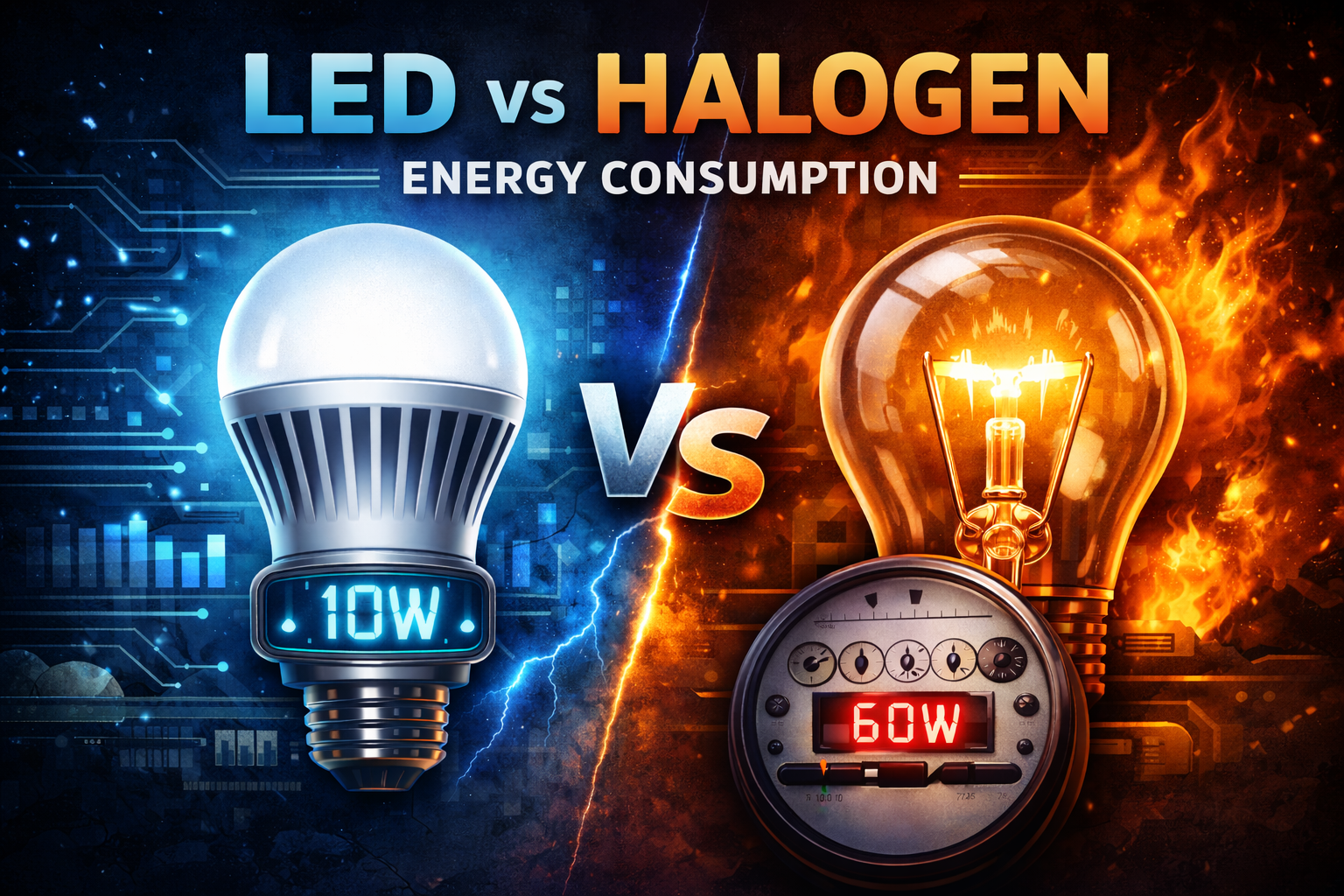
Table of Contents
Understanding Power Basics
Electrical power measured in watts determines how much energy a bulb draws from your home’s electrical system. When comparing LED vs halogen energy consumption, the wattage difference reveals immediate operational cost disparities. A typical 60-watt halogen bulb produces similar brightness to a 9-watt LED equivalent, demonstrating the fundamental efficiency gap between these technologies.
Lumens measure actual light output, while watts indicate electrical consumption. This distinction matters because manufacturers design LEDs to maximize lumens per watt, achieving superior halogen bulb efficiency ratios. Traditional incandescent and halogen technologies waste substantial energy as heat rather than visible light, reducing their practical effectiveness for illumination purposes.
According to U.S. Department of Energy LED lighting efficiency guidance, modern LEDs convert approximately 95% of consumed electricity into light, with only 5% lost as heat. This represents a dramatic improvement over halogen technology, where the conversion ratio inverts dramatically.
Understanding these fundamentals helps consumers evaluate lighting power usage accurately. For those looking to debunk common misconceptions, common misconceptions about LED efficiency provides additional context about widespread misunderstandings in the marketplace.
Direct Wattage Comparison
Practical examples illustrate the LED vs halogen energy consumption difference clearly. A standard 50-watt halogen spotlight requires only a 7-watt LED replacement to match brightness levels. This 85% reduction in electrical draw translates directly to lower monthly utility bills without sacrificing illumination quality or coverage area.
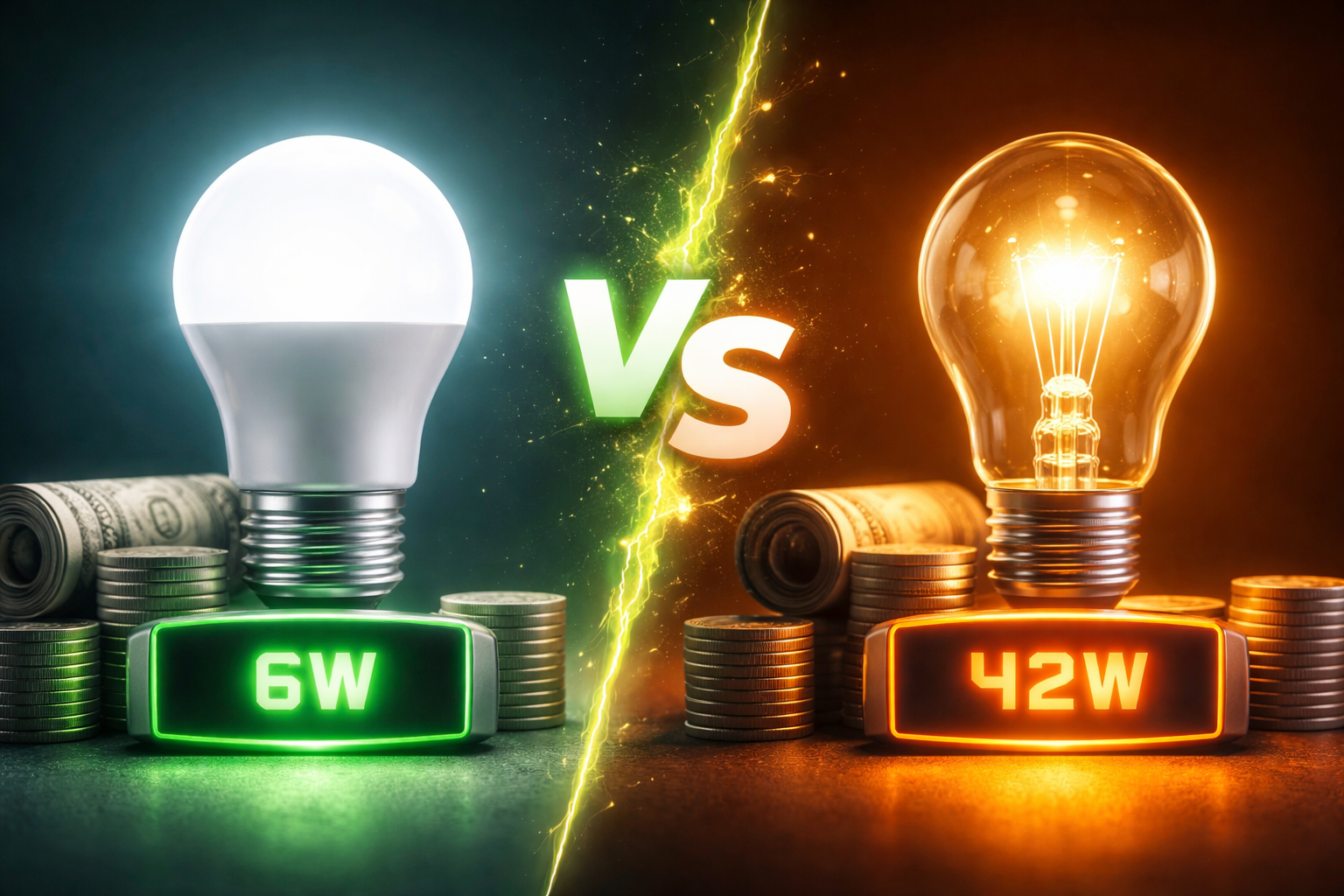
Kitchen recessed lighting typically uses multiple fixtures, amplifying consumption differences. Six halogen downlights drawing 50 watts each consume 300 watts total, while equivalent LED installations require just 42 watts combined. If you want a dependable option, a solid example is energy monitoring smart plug with real-time display, which is known for stable long-term performance.
Outdoor security lighting presents another striking comparison. A 150-watt halogen floodlight demands substantial power, whereas a 20-watt LED floodlight delivers comparable coverage with significantly reduced operating costs. This difference becomes especially noticeable in installations requiring dusk-to-dawn operation throughout the year.
Track lighting systems highlight cumulative effects. Five halogen track heads at 40 watts each total 200 watts, compared to 35 watts for five equivalent LED heads. The LED energy savings multiply across multiple rooms, creating substantial annual reductions in household electricity consumption patterns.
Efficiency Ratings Explained
Lumens Per Watt Measurements
Efficacy ratings express how efficiently bulbs convert electricity into visible light. Quality LEDs achieve 80-100 lumens per watt, while halogen technology manages only 12-18 lumens per watt. This five-to-eight-fold efficiency advantage explains why LED vs halogen energy consumption comparisons consistently favor newer technology regardless of application or fixture type.
The ENERGY STAR guide to LED lighting basics provides standardized testing criteria for evaluating bulb performance. Certified products meet strict efficiency thresholds, ensuring consumers receive genuine LED energy savings rather than marginal improvements over older technologies.
Color Rendering Impact
Color Rendering Index (CRI) affects perceived quality but doesn’t significantly impact lighting power usage. High-CRI LEDs maintain superior efficiency despite producing fuller color spectrums. Halogen bulbs naturally achieve excellent color rendering but at tremendous energy consumption penalties that undermine their practical value in most residential applications.
Warm-white LEDs matching halogen’s color temperature consume identical power to cool-white versions. This flexibility allows homeowners to replicate traditional lighting aesthetics while capturing full halogen bulb efficiency improvements. For comprehensive comparisons across multiple technologies, detailed analysis of all three major bulb types explores additional options and trade-offs.
Heat Generation and Waste
Halogen bulbs convert approximately 90% of consumed electricity into infrared radiation rather than visible light. This thermal waste increases cooling costs during summer months, creating a secondary expense beyond direct electricity consumption. The LED vs halogen energy consumption gap widens when accounting for air conditioning loads in warmer climates.
Enclosed fixtures amplify heat-related concerns. Halogen bulbs in recessed cans or ceiling fixtures create hot spots that potentially damage surrounding materials. LEDs remain cool enough to touch even after hours of continuous operation, eliminating fire hazards and extending fixture lifespans through reduced thermal stress on components and finishes.
Touch-sensitive applications benefit dramatically from LED adoption. Reading lamps, desk lighting, and bedside fixtures using halogen technology present burn risks, especially in households with children. LED energy savings extend beyond electricity bills to include safety improvements and reduced insurance liability in commercial installations.
Cost Calculations
Monthly Operating Expenses
Calculating actual costs requires multiplying wattage by usage hours and electricity rates. A 60-watt halogen bulb operating 5 hours daily consumes 9 kilowatt-hours monthly. At $0.13 per kWh national average, this totals $1.17 monthly per bulb. An equivalent 9-watt LED costs just $0.18 monthly, saving $0.99 per fixture.
Whole-house calculations reveal dramatic LED vs halogen energy consumption differences. Twenty fixtures switched from 60-watt halogens to 9-watt LEDs save approximately $238 annually at typical usage patterns. These savings accelerate in homes with above-average lighting needs or higher electricity rates in coastal urban areas.
Payback Period Analysis
LED bulbs cost more initially but recover the premium through reduced lighting power usage. A $5 LED replacing a $3 halogen saves approximately $12 annually in electricity costs. The two-dollar price difference pays back within two months of typical operation, after which all savings become pure profit over the bulb’s remaining lifespan.
Bulk retrofits offer faster payback through volume pricing and compounded halogen bulb efficiency gains. Professional contractors often negotiate per-bulb costs below $3 for quality LEDs when purchasing dozens simultaneously. Homeowners planning renovations should consider these economies of scale when budgeting electrical upgrades.
Lifespan Impact on Total Expenses
Rated lifespan dramatically affects total ownership costs. Quality LEDs operate 25,000-50,000 hours compared to 2,000-4,000 hours for halogen bulbs. This ten-to-twenty-fold longevity advantage means homeowners replace LEDs once per decade rather than annually, eliminating repeated purchase expenses and installation labor costs.
Difficult-to-access fixtures magnify replacement cost differences. Cathedral ceilings, outdoor soffit lighting, and chandelier installations require ladders or professional assistance. LED energy savings include avoided service calls that might cost $75-150 per visit when factoring technician time and travel expenses in metropolitan areas.
Commercial applications see even greater benefits from extended LED lifespans. Retail stores operating 12-16 hours daily burn through halogen bulbs quarterly. Switching to LEDs reduces maintenance disruptions while improving the LED vs halogen energy consumption equation through uninterrupted operation and eliminated emergency replacement scenarios during business hours.
For detailed guidance on selecting appropriate replacements, comprehensive purchasing recommendations helps consumers navigate specifications, certifications, and quality indicators when evaluating available products.
Environmental Considerations
Carbon Footprint Reduction
Reduced electricity consumption directly lowers carbon emissions from power generation. Each 50-watt halogen replaced with a 7-watt LED prevents approximately 150 pounds of CO2 emissions annually, assuming typical coal-fired generation mixes. Nationwide adoption accelerates progress toward climate targets while reducing individual household environmental impacts measurably.
Manufacturing energy remains minimal compared to operational savings. While LED production requires more complex processes than halogen assembly, the lighting power usage advantage overwhelms embodied energy differences within weeks of installation. Lifecycle assessments consistently favor LEDs when analyzing cradle-to-grave environmental profiles across all major impact categories.
Resource Conservation
Extended LED lifespans reduce raw material extraction for replacement bulb manufacturing. Fewer production cycles mean less mining, processing, transportation, and packaging waste. The halogen bulb efficiency disadvantage extends to resource depletion when considering the cumulative material flows required to maintain equivalent illumination over multi-year periods.
Recycling programs accept both technologies but LED materials recovery proves more valuable. Semiconductor components contain recoverable metals worth reclaiming, whereas halogen bulbs consist primarily of low-value glass and tungsten. Proper disposal channels minimize landfill contributions while supporting circular economy initiatives in electronics manufacturing sectors.
Real-World Testing Results
Independent laboratory testing confirms manufacturer claims about LED vs halogen energy consumption. Side-by-side measurements using calibrated power meters show LED bulbs drawing 80-90% less electricity than halogen equivalents at identical lumen outputs. These controlled conditions eliminate variables like voltage fluctuations or temperature effects that might skew casual observations.
Home monitoring reveals similar results in typical installations. Smart plugs tracking daily consumption patterns demonstrate consistent LED energy savings across various fixture types and operating schedules. Users report measured reductions matching or exceeding published specifications, validating the practical reliability of efficiency ratings for purchase decision-making purposes.
Extreme condition testing exposes performance variations. LEDs maintain rated efficiency across wide temperature ranges, while halogen bulb efficiency degrades in very cold environments. Outdoor winter installations in northern climates show LEDs performing as expected, whereas halogens draw additional power during warmup periods without producing proportional light output increases initially.
Dimming Efficiency
Dimmed operation reveals additional consumption differences. Halogen bulbs dimmed to 50% brightness still consume approximately 60% of full power due to resistive load characteristics. LEDs dimmed to 50% typically draw only 40-45% of maximum wattage, maintaining superior efficiency throughout the entire brightness range available in dimmable models.
Dimmer switch compatibility varies between technologies. Standard incandescent dimmers work reliably with halogen bulbs but may cause flickering or buzzing with incompatible LEDs. LED-specific dimmers ensure smooth operation while preserving lighting power usage advantages. Retrofit projects should budget for dimmer replacements when upgrading from halogen to LED technology in controlled circuits.
Minimum brightness levels differ substantially. Halogen dimmers typically reduce output to 10-15% before filaments extinguish, while quality LED dimmers achieve 1-5% minimum levels without instability. This extended range enables subtle mood lighting impossible with halogen technology, adding functional benefits beyond the core LED vs halogen energy consumption comparison.
Seasonal Variations
Winter months amplify consumption differences in colder climates. Increased indoor lighting usage during extended darkness hours compounds daily LED energy savings. A household operating lights an additional 3 hours daily from November through February accumulates substantial extra savings compared to equivalent halogen installations during these peak consumption periods.
Summer heat interactions create secondary effects. Halogen bulb waste heat increases air conditioning loads, while LEDs contribute negligible thermal burdens to cooling systems. In hot climates, this interaction can add 10-20% to the effective halogen bulb efficiency penalty when accounting for cascading impacts on whole-house energy consumption beyond direct lighting circuits.
Holiday lighting presents extreme examples. Decorative installations using hundreds of bulbs demonstrate the LED vs halogen energy consumption difference at scale. Traditional halogen string lights might consume 300-500 watts, while LED alternatives deliver comparable brightness using only 20-30 watts total. For more insights into efficient illumination practices, explore additional educational resources covering various applications and technologies.
Retrofit Considerations
Fixture Compatibility
Most halogen fixtures accept LED replacements without modifications. Standard base types like GU10, MR16, and E26 allow direct substitution, immediately reducing lighting power usage without rewiring or structural changes. However, some enclosed fixtures require LED bulbs specifically rated for confined spaces where heat dissipation limitations might affect performance or longevity expectations.
Transformer-based low-voltage halogen systems sometimes require additional attention. Electronic transformers designed for 50-watt minimum loads may not function properly with 7-watt LED replacements. In these cases, transformer replacement or LED drivers ensures reliable operation while capturing full efficiency benefits from upgraded bulbs in track lighting and display applications.
Prioritizing Replacement Locations
Strategic retrofit sequencing maximizes early returns. Target high-usage areas first: kitchens, living rooms, and outdoor security lighting typically operate longest daily. Replacing twenty 50-watt halogen bulbs in these locations saves approximately $200 annually, while bedroom reading lamps used 30 minutes daily save only $5 yearly despite identical per-bulb LED energy savings potential.
Difficult-access fixtures deserve early attention regardless of usage hours. Cathedral ceiling installations and exterior soffit lighting justify immediate LED upgrades to eliminate future replacement hassles. The halogen bulb efficiency disadvantage combines with maintenance cost avoidance to make these locations priority retrofit candidates even when absolute consumption remains moderate.
Sharing this guide
If you found this guide helpful, you can save it for later or share it with a friend. It’s especially useful for beginners, homeowners, and DIY users.
Share using the links below
Interested in learning more? Browse all related articles in our category section.
Pingback: Smart LED Bulbs Energy Efficient? Ultimate Truth - NeoLEDHub