LED vs. Halogen: Energy Consumption: Which uses less power?
Although LEDs and halogen bulbs can deliver similar brightness, they do not use electricity in the same way. In most real-world applications, an LED uses far less power than a comparable halogen bulb. This results in lower operating costs, less wasted heat, and a much more efficient lighting setup.
This guide compares wattage, heat output, dimming behavior, lifespan, and operating costs to show where the biggest savings come from and what to consider when upgrading an existing halogen fixture.
Quick Answer
In short, LED bulbs typically use 80% to 90% less electricity than halogen bulbs to produce a similar light output. Therefore, they are usually the better choice for energy savings and lower long-term costs.
- A 50W halogen bulb can often be replaced with a 7W to 9W LED bulb.
- LEDs waste much less energy as heat.
- High-use fixtures show the fastest payback.
- Dimmers and transformers may require a compatibility check first.
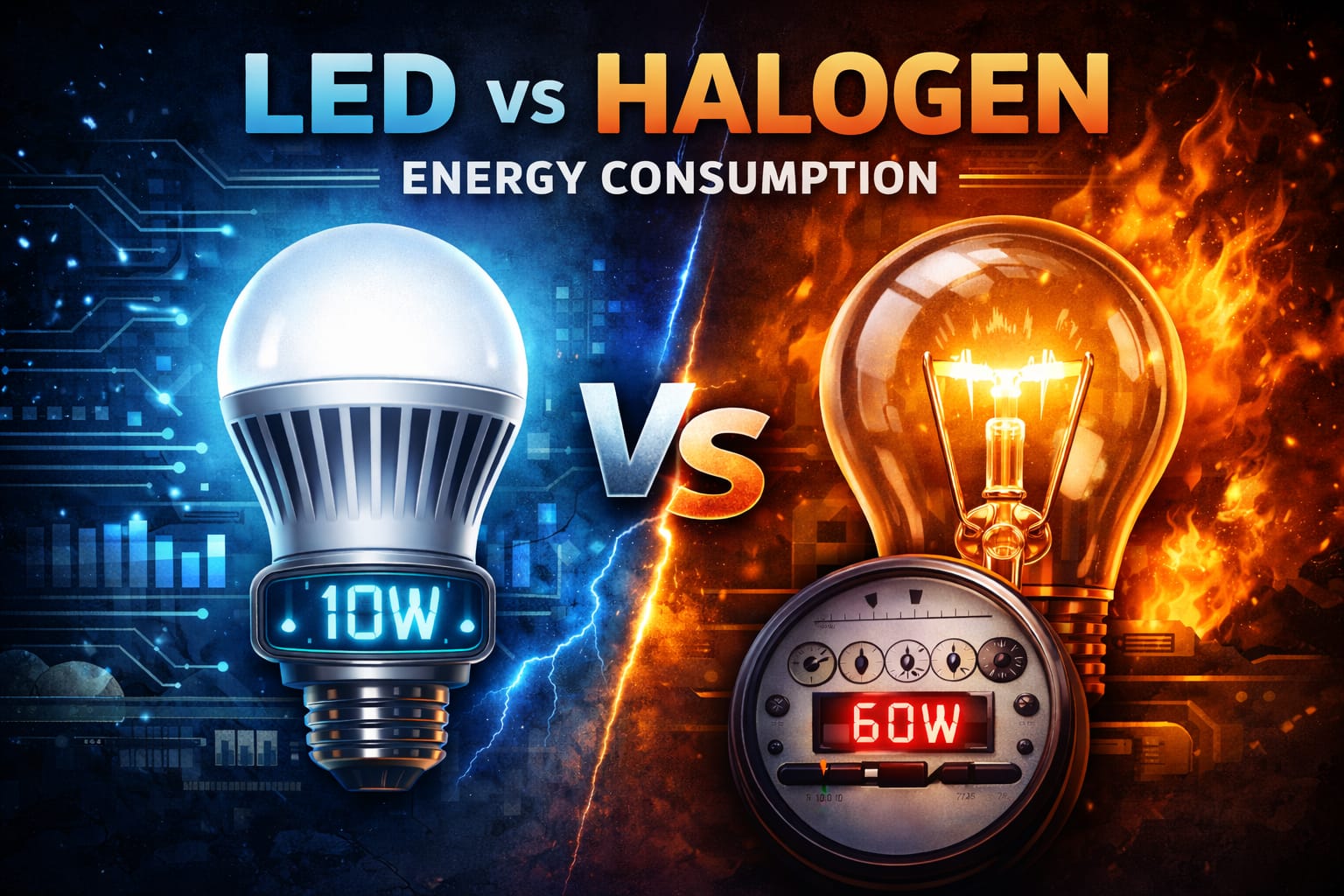
Table of Contents:
- Quick Answer
- Understanding Power Basics
- Direct Wattage Comparison
- Efficiency Ratings Explained
- Heat Generation and Waste
- Cost Calculations
- Lifespan Impact on Total Expenses
- Environmental Considerations
- Real-World Testing Results
- Dimming Efficiency
- Seasonal Variations
- Retrofit Considerations
- What Should You Choose?
- Key Takeaways
- Sharing This Guide
Understanding Power Basics
Watts tell you how much electricity a bulb uses, while lumens tell you how much light it produces. This distinction is important because a lower wattage does not necessarily mean a dimmer light. In the debate over energy consumption between LEDs and halogens, the key question is how much power each bulb needs to reach the same usable brightness. A typical 60-watt halogen bulb is often matched by an LED using around 9 watts. This difference in power consumption is the clearest sign of the efficiency difference: the LED delivers similar output while drawing only a fraction of the electricity. The main reason is that LEDs are built to convert more electricity into usable light rather than excess heat. Halogen bulbs produce good light quality, but they are much less efficient. For a broader look at common misconceptions about efficiency, our guide on common LED energy myths provides useful context.
Direct Wattage Comparison
Side-by-side examples illustrate the difference clearly. For example, a standard 50-watt halogen spotlight often only needs a 7-watt LED replacement to produce similar brightness. This results in a significant reduction in power consumption without sacrificing useful illumination.
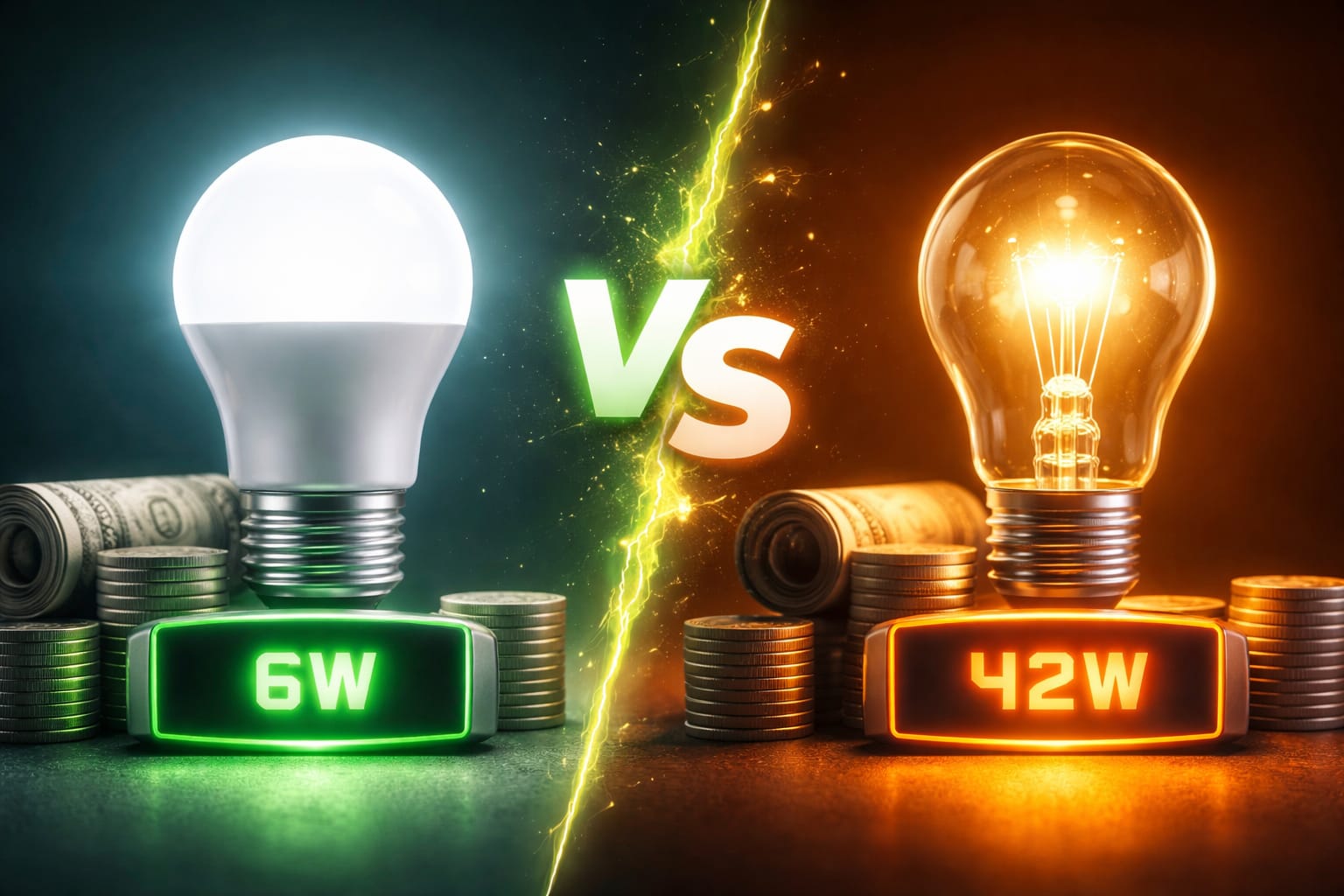
Kitchen recessed lighting is a good example because the wattage of multiple fixtures adds up quickly. Six 50-watt halogen downlights draw 300 watts in total, whereas six comparable LEDs may need only about 42 watts combined. Plugging one of those fixtures into an energy monitoring smart plug can help you see the difference more clearly.
Outdoor security lighting shows the same pattern. A 150-watt halogen floodlight can often be replaced by a lower-wattage LED floodlight that covers the same area but costs far less to run.
Track lighting also illustrates how savings compound over time. Five 40-watt halogen heads draw 200 watts, whereas five LED heads with a similar output may use closer to 35 watts total. Across several rooms, that difference becomes hard to ignore.
Efficiency Ratings Explained
Once you look beyond the initial wattage difference, efficiency ratings demonstrate why LEDs consistently outperform other options. The most useful metric is lumens per watt because it shows how much visible light you get for the electricity you use.
Lumens per watt measurements
Quality LEDs often deliver around 80 to 100 lumens per watt, and sometimes more, while halogen bulbs usually deliver much less. This is why comparisons of the energy consumption of LEDs and halogen bulbs consistently favor LEDs across most household applications. The ENERGY STAR guide to LED lighting basics is useful because it explains how certified products are tested and why efficiency claims matter when comparing bulbs. Color rendering impact: Color Rendering Index (CRI) affects how natural colors appear under a bulb, but does not negate the efficiency advantage of LEDs. Halogen bulbs are known for their strong color quality, yet they use much more power. Modern warm-white LEDs can recreate much of the familiar halogen look without the same energy penalty. For a broader side-by-side comparison, see our guide to LEDs vs. halogens vs. CFLs.
Heat Generation and Waste
One of the biggest hidden differences is heat generation. Halogen bulbs waste much of their energy by producing heat rather than visible light. This is why they feel much hotter when in use and cost more to operate.
This extra heat can be significant in enclosed fixtures and during warmer months. In a room with several halogen bulbs, you are paying for more than just light. You are also paying for unnecessary heat that can make cooling systems work harder.
LEDs also improve practical safety. Reading lamps, desk lamps, and bedside fixtures are much more comfortable to use when the bulbs and surrounding fixtures do not get nearly as hot after extended use.
Cost Calculations
The difference in running costs becomes much more obvious once watts are converted to actual electricity usage. Even when the savings per bulb seem small at first, they add up quickly when lights are used daily or spread across multiple fixtures.
Monthly operating expenses
Monthly operating expenses can be calculated by multiplying wattage by daily usage hours and your electricity rate. For example, a 60-watt halogen bulb used five hours a day consumes about nine kilowatt-hours per month. An equivalent 9-watt LED uses about 1.35 kilowatt-hours over the same period.
This difference may seem minor for one lamp, but it becomes significant across a home. Switching twenty fixtures from 60-watt halogens to 9-watt LEDs can save a meaningful amount over a year, especially in homes where lights are on for long periods each day. Our guide on how much LED lights save per year provides more detailed information on whole-home savings.
Payback Period Analysis
Although LEDs usually cost more upfront, the payback period is often shorter than expected. In a high-use fixture, the lower electricity usage can offset the price difference within months rather than years.
The return on investment is even better when you factor in the longer lifespan and fewer replacements required. That is why switching out the most frequently used halogen bulbs first is usually the smartest move for achieving quick savings.
Start with kitchen lights, living room fixtures, and exterior lights that stay on for long periods. You will usually see the benefit of an LED upgrade fastest in those places.
Lifespan Impact on Total Expenses
Energy use is not the only cost difference. Lifespan matters, too. Quality LEDs often last much longer than halogen bulbs, meaning fewer replacements, less maintenance, and lower overall costs.
This is especially important for hard-to-reach fixtures, such as those on high ceilings, in outdoor soffits, or in chandeliers, where replacing a failed bulb can be inconvenient or require extra equipment. In these locations, the value of a longer-lasting LED extends beyond the energy bill.
Commercial spaces experience the same effect on a larger scale. Long operating hours and repeated bulb changes make halogen lighting expensive to maintain, whereas LEDs reduce both electricity use and disruption. For more information on longevity, see our guide on LED bulb lifespan.
Environmental Considerations
The energy difference between LEDs and halogen bulbs affects their environmental impact as well. Lower electricity demand generally means lower emissions from power generation, especially when lights are used heavily over time.
Reducing Your Carbon Footprint
Replacing halogen bulbs with LEDs reduces the electricity needed to achieve the same brightness, which usually lowers the associated carbon footprint. The exact impact depends on your local power mix, but the trend is clear: lower energy use means lower ongoing emissions. Although LEDs are more complex to manufacture, their long service life and lower operating consumption typically offset the initial manufacturing costs over time. This is one reason why they are widely considered the more efficient long-term choice.
Resource Conservation
A longer lifespan means fewer replacement bulbs need to be manufactured, packaged, shipped, and discarded. Over several years, this reduces the use of materials and waste compared to repeatedly replacing halogen bulbs in the same fixture.
Proper recycling is important for both types of bulbs, but the greater environmental benefit comes from needing fewer replacements and using less electricity throughout the product’s lifetime.
Real-World Testing Results
Real measurements typically confirm what the specifications suggest. When matched for similar brightness, LEDs typically draw far less power than halogen bulbs, and the difference is easy to spot using a plug-in power meter or energy monitor.
Home users often notice the same pattern in everyday use. Lights that run for hours each evening show the clearest savings, while short-use fixtures still benefit but take longer to make a visible difference in the bill.
Performance can vary slightly depending on bulb quality, driver design, and fixture conditions, but the overall efficiency gap remains wide. In practical terms, LEDs almost always win on energy consumption when properly matched as a replacement.
Dimming Efficiency
Dimming efficiency adds another layer to the comparison. Halogen bulbs use less power when dimmed but not as efficiently as many people assume. LEDs typically maintain a significant efficiency advantage across the dimming range, particularly with high-quality dimmable models.
That said, compatibility matters. Older dimmers designed for halogen or incandescent bulbs may cause flickering, buzzing, or unstable low-end dimming with some LEDs. Using a compatible dimmer allows you to maintain savings while enjoying smooth performance.
LEDs also tend to offer deeper dimming in well-matched systems, which improves comfort and flexibility in living rooms, bedrooms, and media spaces.
If your current halogen setup uses an older dimmer or low-voltage transformer, check its compatibility before switching to a new bulb. Even if the bulb itself fits, the control gear may still cause problems.
Seasonal Variations
Seasonal use can make savings feel more noticeable. In winter, lights are often on for longer periods of time due to shorter daylight hours, which allows inefficient halogen bulbs to contribute more to the bill.
In the summer, the extra heat from halogen bulbs can exacerbate the problem, especially in smaller rooms or warm climates where cooling costs are already high. This is one reason why LED upgrades can be more beneficial than their wattage suggests. Our monthly savings switching to LEDs guide explains how seasonal shifts can affect real bills.
Holiday lighting is another easy example. Large decorative installations magnify the difference between efficient and inefficient bulbs quickly. For a broader understanding of these savings, see our LED energy savings guide.
Retrofit Considerations
Most halogen-to-LED upgrades are straightforward, but a few practical checks can help you avoid frustration. Base type, fixture enclosure, dimmer behavior, and transformer setup can affect how smoothly the replacement process goes.
Fixture compatibility
Many halogen fixtures accept LED replacements with the same base type, including common formats such as GU10, MR16, and E26. In simple cases, the swap is as easy as replacing the bulb.
The main exceptions are enclosed fixtures, low-voltage systems, and older transformers with minimum load requirements. These setups may still work, but they require closer inspection before buying in bulk.
Prioritizing Replacement Locations
If you are not replacing every halogen bulb at once, start with the fixtures that are used the most. Kitchens, living rooms, exterior floodlights, and hallway fixtures usually provide the fastest and most noticeable results.
Hard-to-reach locations are also good places to start. Even if they are not used constantly, the reduced need for replacements makes LEDs far more convenient for high ceilings, soffits, and stairwell fixtures.
Want to learn more about LED efficiency, bulb types, and how to read packaging specs? The LED Knowledge Center provides the technical details you need to make more informed comparisons.
What should you choose?
For most homes, LEDs are the better choice. They use much less electricity, last far longer, and produce less wasted heat. Halogen bulbs are only useful in a shrinking number of situations where older fixtures have not yet been updated.
- Choose LED for lower power usage and operating costs.
- Install LEDs in high-use fixtures first for the fastest payback.
- Check dimmers and transformers before replacing low-voltage halogen bulbs.
- Prioritize LEDs for enclosed, hard-to-reach, or heat-sensitive fixtures.
Key Takeaways
The difference in energy consumption between LEDs and halogen bulbs is significant. For similar brightness, LEDs usually use dramatically less electricity, run cooler, and cost less to own over time.
To see the biggest improvement the fastest, replace halogen bulbs in fixtures that stay on the longest or are the hardest to reach. This approach will improve savings and convenience right away.
For most households, switching from halogen to LED bulbs is one of the simplest lighting upgrades you can make. Once compatibility is confirmed, the long-term case for LEDs is usually easy to justify.
Share This Guide!
Share this guide if it helped you compare LEDs and halogen bulbs more clearly. Save it for later or send it to someone planning a lighting upgrade.
Interested in learning more? Browse related articles in our category section.
Pingback: Smart LED Bulbs Energy Efficient? Ultimate Truth - NeoLEDHub
Pingback: LED Bulbs vs Halogen: Ultimate Smart Buying Guide
Pingback: Standby Power Usage of Smart Lights - NeoLEDHub
Pingback: LED Wattage Equivalent Chart Guide - NeoLEDHub
Pingback: Are Smart LED Bulbs Energy Efficient? Real Cost to Run