Stop LED Bulb Buzzing: Quick Fixes That Work Fast
If you’ve recently installed LED bulbs and noticed an annoying buzz or hum, you’re not alone. LED bulb buzzing is a common issue that can disrupt your peace and signal underlying electrical problems. The good news is that most buzzing sounds have simple solutions you can implement yourself. This comprehensive guide walks you through every cause, diagnostic step, and proven fix to restore quiet operation to your lighting system.
Table of Contents
- Understanding the noise phenomenon
- Primary causes behind the sound
- Dimmer-related problems
- Electrical infrastructure concerns
- Bulb quality and design factors
- Diagnostic steps to identify the source
- Immediate fixes you can try
- Advanced solutions for persistent noise
- Prevention tips for future installations
- When to call a professional
- Sharing this guide
Understanding the noise phenomenon
LED bulb buzzing manifests as a low-frequency hum, high-pitched whine, or intermittent crackling sound emanating from your light fixtures. Unlike incandescent bulbs that operate with simple heating elements, LEDs rely on electronic driver circuits that convert alternating current into the direct current required by the diodes. These drivers can produce audible vibrations when components resonate at frequencies within the human hearing range, typically between twenty and twenty thousand hertz.
The sound itself doesn’t always indicate immediate danger, but it serves as an important diagnostic clue about electrical compatibility or component quality. Many homeowners first notice the issue after upgrading from traditional bulbs, expecting silent operation similar to what they experienced before. The reality is that LED technology introduces new variables into your lighting system, and understanding these factors helps you achieve the quiet performance you expect from modern lighting.
Sound characteristics vary based on the root cause. A steady hum often points to dimmer switch compatibility issues, while crackling or popping suggests loose electrical connection points. High-pitched whining typically indicates driver circuit problems within the bulb itself. Recognizing these patterns accelerates your troubleshooting process and helps you apply the most effective solution.
Primary causes behind the sound
Several factors contribute to LED bulb buzzing, with incompatible dimmers topping the list. Traditional dimmer switches were engineered for resistive loads like incandescent bulbs, which draw significantly more power than efficient LEDs. When you connect an LED to an incompatible dimmer, the phase-cut dimming circuitry can cause the driver components to vibrate audibly. This mismatch between old dimming technology and new lighting creates harmonic frequencies that resonate through the bulb housing. If you want a dependable option, a solid example is a wall dimmer switch built specifically for LED loads, which offers consistent results over time.
Electrical wiring issues represent another common culprit. A loose electrical connection at the socket, wall switch, or junction box creates intermittent contact that forces the LED driver to work harder to maintain consistent output. This additional strain generates heat and vibration within the driver components. Similarly, undersized wiring or poor grounding can introduce voltage fluctuations that manifest as audible noise through the sensitive electronics.
Manufacturing quality plays a significant role in noise generation. Budget LED bulbs often use cheaper driver components that lack proper dampening or shielding. Capacitors, inductors, and transformers within these drivers can physically vibrate when alternating current passes through them. Premium bulbs typically include potting compounds or structural reinforcements that minimize these vibrations, explaining why they operate more quietly despite using similar technology.
Dimmer-related problems
Dimmer switch compatibility issues cause the majority of LED bulb buzzing complaints. Standard incandescent dimmers use a phase-cutting technique that rapidly switches the electrical circuit on and off to reduce brightness. This works perfectly with resistive loads but creates problems for LED drivers that expect clean, stable power input. The rapid switching introduces electrical noise into the circuit that the driver components amplify into audible sound.
Even dimmers labeled as LED-compatible can cause buzzing with certain bulb brands due to variations in driver design. Each manufacturer implements their own circuitry approach, and not all combinations work harmoniously. The minimum load requirement of many dimmers also creates issues, as a single LED bulb may not draw enough current to allow the dimmer to function properly. This insufficient load causes the dimmer to operate erratically, producing the characteristic hum you’re trying to eliminate.
If you experience LED bulb buzzing only when dimming, the solution usually involves replacing your dimmer with a model specifically designed for LED loads. Look for dimmers with adjustable minimum load settings and compatibility lists that include your bulb brand. Some advanced models include interference filtering that actively reduces electrical noise before it reaches your bulbs. You might also find success with addressing related dimmer-induced flickering issues that often accompany buzzing sounds.
Electrical infrastructure concerns
Your home’s electrical infrastructure directly impacts LED performance and noise levels. A loose electrical connection anywhere in the circuit path creates resistance that generates heat and intermittent current flow. These fluctuations force the LED driver to constantly adjust its output, causing internal components to work overtime. The resulting stress manifests as buzzing, humming, or crackling sounds that worsen over time if left unaddressed.
Poor grounding or inadequate neutral connections introduce another layer of complexity. LEDs require stable voltage references to operate correctly, and a compromised ground allows electromagnetic interference to enter the circuit. This interference couples into the driver circuitry, creating noise that radiates as audible sound. Older homes with aluminum wiring face additional challenges, as aluminum connections can loosen over time and create the exact resistance issues that trigger LED bulb buzzing.
Voltage fluctuations from your utility provider or heavy appliances on the same circuit can also contribute to the problem. When voltage drops momentarily, the LED driver attempts to compensate by drawing more current to maintain brightness. This compensation cycle stresses the driver components and generates audible vibrations. Installing a whole-house surge protector or dedicated circuit for sensitive lighting can help stabilize voltage and reduce these fluctuation-related noises.
Bulb quality and design factors
The internal construction of your LED bulbs significantly influences their acoustic performance. Premium manufacturers invest in driver designs that minimize component vibration through careful engineering and quality materials. They use potting compounds to encapsulate driver circuits, preventing individual components from resonating against the bulb housing. Budget alternatives often skip these refinements to reduce production costs, resulting in products that buzz even under ideal electrical conditions.
Driver efficiency ratings provide clues about potential noise issues. Higher efficiency drivers generate less waste heat and experience reduced thermal stress on components. This thermal stability translates to quieter operation because the driver maintains consistent performance without the expansion and contraction cycles that create mechanical vibrations. Checking for ENERGY STAR certification or similar quality marks helps you identify bulbs engineered to higher standards.
Bulb form factor also matters, as enclosed fixtures trap heat that can accelerate driver component degradation. When a driver overheats, capacitors and inductors change their electrical characteristics, often becoming noisier in the process. This explains why LED bulb buzzing sometimes develops gradually over weeks or months rather than appearing immediately after installation. Ensuring adequate ventilation around fixtures extends driver life and maintains quiet operation. Another practical alternative is a replacement LED driver module for quieter regulated output, which performs reliably in everyday use.
Diagnostic steps to identify the source
Begin your troubleshooting by isolating whether the noise originates from the bulb itself or the electrical infrastructure. Turn off power to the circuit and carefully remove the buzzing bulb, then install it in a different fixture on a separate circuit. If LED bulb buzzing follows the bulb to its new location, you’ve confirmed a defective or low-quality component that requires replacement. If the sound disappears, your investigation should focus on the original fixture and its electrical supply.
Test dimmer involvement by temporarily removing the dimmer from the circuit entirely. Turn off the breaker, bypass the dimmer by connecting the line and load wires together with a wire nut, and restore power to operate the fixture at full brightness. If this eliminates the noise, you’ve proven dimmer switch compatibility as the root cause. Document which dimmer model and LED bulb combination failed to work together, as this information guides your replacement selection.
Inspect all connection points for signs of looseness or corrosion. Power off the circuit and check the bulb socket for worn spring contacts or discoloration indicating overheating. Examine the wire connections at the switch and junction box, ensuring all wire nuts are tight and conductors are properly seated. A loose electrical connection often reveals itself through visible arcing damage or a burning smell, though subtle looseness can create buzzing without obvious visual cues.
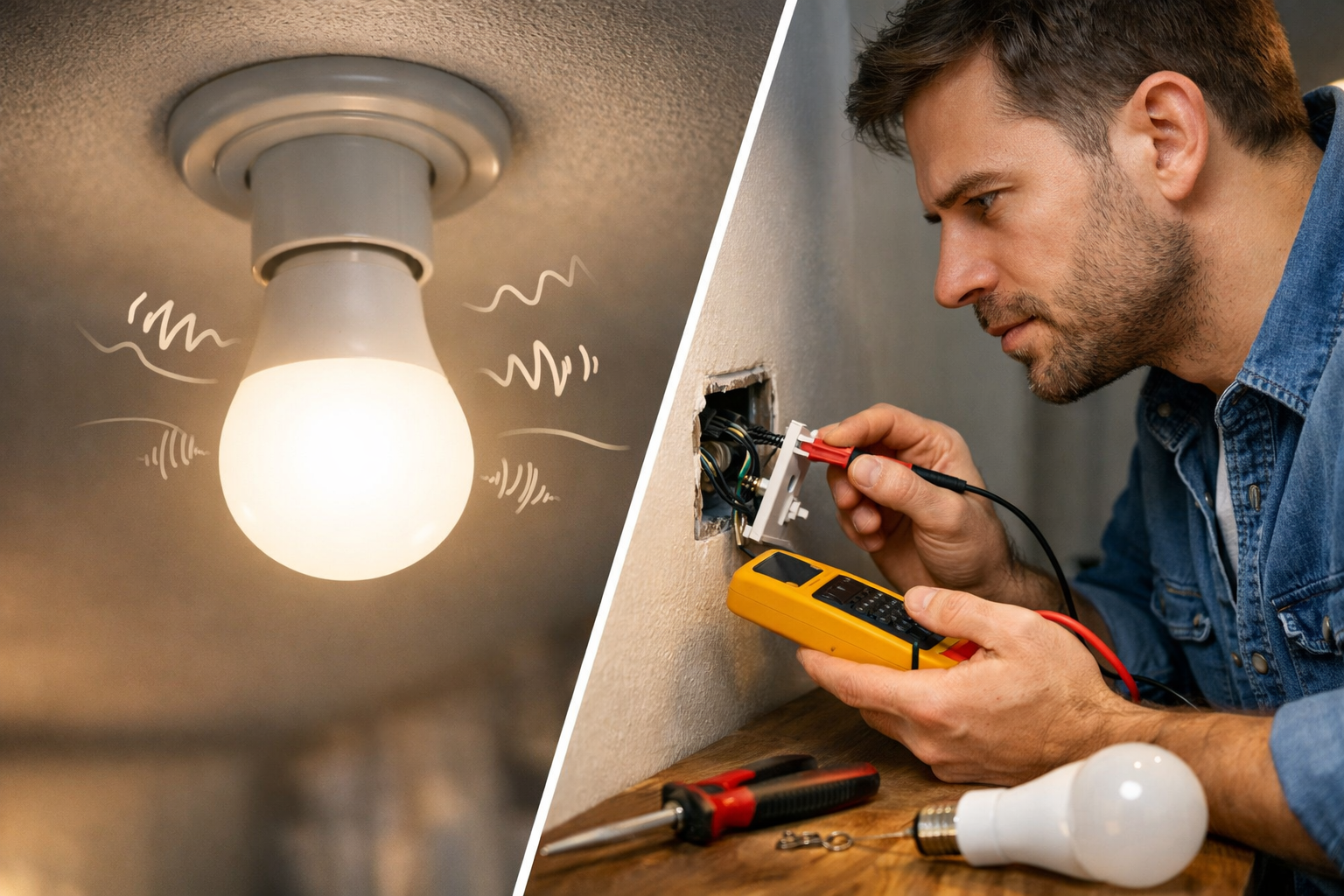
Use a multimeter to measure voltage at the fixture socket. With power on and the bulb removed, you should read approximately one hundred twenty volts AC in North American installations. Significant deviation from this value suggests supply problems that might contribute to driver stress and noise generation. Also measure voltage while the bulb operates under load, watching for fluctuations that exceed two or three volts. Such instability indicates electrical issues requiring professional attention before they damage your LED bulbs.
Immediate fixes you can try
The fastest solution for LED bulb buzzing involves trying a different bulb brand or model in the affected fixture. Not all LEDs use identical driver designs, and switching manufacturers often resolves compatibility issues without any electrical modifications. Choose a premium brand with positive reviews specifically mentioning quiet operation, and verify that the bulb’s specifications match your fixture requirements. This simple swap frequently eliminates noise problems when dimmer switch compatibility or electrical quality issues aren’t the underlying cause.
If you’re using a dimmer, try adjusting it to different brightness levels to find a sweet spot where buzzing minimizes or disappears. Many LED-dimmer combinations operate quietly at certain points in the dimming range while buzzing at others. This temporary workaround doesn’t address the root incompatibility but can provide immediate relief while you plan a permanent fix. Document which brightness settings work best for future reference.
Tighten the bulb in its socket by giving it an extra quarter turn beyond the point where it first makes contact. Sometimes LED bulb buzzing results from inadequate contact between the bulb base and socket terminals, creating a high-resistance connection that introduces noise. Ensure you don’t over-tighten, as this can damage the socket or bulb base. The goal is firm contact without excessive force. For stubborn problems, you might encounter situations similar to LED lights that won’t turn on after extensive troubleshooting.
Advanced solutions for persistent noise
Replace incompatible dimmers with models engineered specifically for LED loads. Modern LED dimmers include enhanced circuitry that provides cleaner power output and reduces the phase-cutting noise that triggers LED bulb buzzing. Look for features like adjustable low-end trim, which lets you set the minimum brightness level to match your bulbs’ requirements. Many manufacturers maintain online compatibility databases where you can verify that specific dimmer and bulb combinations will work together harmoniously.
Install an electromagnetic interference filter between your dimmer and LED bulbs if replacing the dimmer isn’t immediately feasible. These filters smooth out the electrical noise that causes driver components to vibrate, often reducing or eliminating buzzing sounds. Choose filters rated for your circuit’s amperage and verify compatibility with dimming applications. While not as effective as a proper LED dimmer, quality filters provide a cost-effective intermediate solution that extends the usable life of existing equipment.
Address loose electrical connection issues by tightening all wire nuts and terminal screws throughout the circuit. Turn off the breaker and systematically work through each connection point, ensuring wires are properly stripped and fully inserted into connectors. Replace any damaged wire nuts or corroded terminals you discover during this process. For push-in connections, consider replacing them with screw terminals that provide more reliable long-term contact. This thorough electrical maintenance often resolves multiple issues simultaneously.
Consider installing a bypass capacitor if you’re comfortable with more advanced electrical work. This component helps stabilize voltage delivery to LED bulbs and can significantly reduce buzzing in some installations. Connect the capacitor across the switch output according to manufacturer specifications, typically requiring a value between point one and point five microfarads rated for at least two hundred fifty volts AC. This modification works particularly well when dimmer switch compatibility issues prove difficult to resolve through replacement alone. For comprehensive installation guidance on various LED configurations, refer to resources about connecting LED strip lights and similar systems.
Prevention tips for future installations
Prevent LED bulb buzzing by researching compatibility before purchasing new bulbs or dimmers. Check manufacturer websites for compatibility lists that specify which bulb and dimmer combinations have been tested to work together. This proactive approach saves time and frustration compared to discovering incompatibilities after installation. Many lighting manufacturers provide detailed technical support that can recommend specific products for your application.
Invest in quality LED bulbs from reputable manufacturers rather than choosing the cheapest options available. Premium bulbs incorporate better driver designs with proper component dampening that prevents the vibrations causing audible noise. While they cost more initially, these bulbs typically last longer and operate more reliably, providing better long-term value. Read customer reviews focusing on noise complaints to identify products with proven quiet operation in real-world conditions. For a more permanent upgrade, many users switch to a long-life LED bulb with a quiet integrated driver, which is known for stable long-term performance.
Ensure your home’s electrical system maintains proper voltage levels and grounding. Schedule periodic inspections with a licensed electrician to identify and correct any loose electrical connection points before they cause problems. This preventive maintenance protects not only your LED bulbs but all electronic equipment in your home from damage due to electrical anomalies. According to the National Fire Protection Association, proper electrical maintenance significantly reduces fire risks and equipment failures.
Avoid installing LED bulbs in fully enclosed fixtures unless they’re specifically rated for that application. Trapped heat accelerates driver component degradation, which can lead to buzzing that develops over time even if the bulb initially operated quietly. Check the bulb packaging for enclosure ratings and follow manufacturer recommendations about proper installation environments. Adequate thermal management extends bulb life and maintains consistent performance characteristics.
When to call a professional
Contact a licensed electrician if LED bulb buzzing persists after trying different bulbs and checking visible connections. Professional electricians have specialized equipment to diagnose problems like voltage irregularities, electromagnetic interference, or hidden wiring issues that aren’t apparent through basic troubleshooting. They can measure power quality parameters and identify electrical infrastructure problems that require expert repair.
Seek professional help immediately if you notice any signs of electrical danger alongside the buzzing sound. These warning signs include flickering lights, burning smells, discolored outlets or switches, or buzzing that comes from the electrical panel rather than individual fixtures. Such symptoms suggest serious electrical problems that pose fire hazards and require urgent professional attention. Never ignore these red flags in favor of continued troubleshooting.
Consult an electrician when dealing with older homes that may have outdated wiring or inadequate grounding systems. Aluminum wiring, knob-and-tube systems, or ungrounded circuits all create challenging conditions for LED operation. A professional can assess whether your electrical infrastructure needs upgrades to properly support modern lighting technology. These improvements benefit your entire electrical system beyond just resolving LED bulb buzzing issues. For additional troubleshooting resources and expert guidance, visit the comprehensive knowledge center covering all aspects of LED technology.
Sharing this guide
If you found this guide helpful, you can save it for later or share it with a friend. It’s especially useful for beginners, homeowners, and DIY users.
Share using the links below
Interested in learning more? Browse all related articles in our category section.
Pingback: LED Bulbs Burning Out Fast: Critical Fixes Now - NeoLEDHub
Pingback: LED Lights Blinking Randomly: Ultimate Fix Guide 2026
Pingback: Lighting Design for Open Floor Plans: Smart Tips - NeoLEDHub