What Are LED Bulbs? Beginner Guide
Whether you’re looking to lower your electricity bills or simply want brighter, longer-lasting lighting, understanding LED bulbs is the first step toward making smarter choices for your home. This comprehensive guide breaks down everything beginners need to know about LED lighting technology, from how these innovative bulbs work to which types best suit different rooms and purposes.
Table of Contents
- What Are LED Bulbs?
- How LED Technology Works
- LED vs Traditional Bulbs
- Types of LED Bulbs
- Understanding Brightness and Color Temperature
- Energy Savings with LED Bulbs
- Choosing the Right LED Bulb
- Installation and Compatibility
- Lifespan and Durability
- Common Mistakes to Avoid
- Environmental Benefits
- Share This Guide
What Are LED Bulbs?
LED stands for Light Emitting Diode, representing a revolutionary advancement in lighting technology. Unlike traditional incandescent or fluorescent bulbs that generate light through heating filaments or exciting gases, LED bulbs produce illumination through semiconductor materials that emit light when electrical current passes through them. This fundamental difference makes them significantly more efficient and durable than older lighting options.
These modern bulbs have transformed residential and commercial lighting since becoming widely available in the early 2000s. Today, energy-efficient bulbs based on LED technology dominate the market, offering homeowners an impressive combination of longevity, reduced energy consumption, and versatile design options. The technology continues to improve each year, with manufacturers developing smarter, more affordable options for every lighting need. If you want a dependable option, a solid example is voice-controlled LED bulbs with low energy draw, which performs reliably in everyday use.
What makes LED bulbs particularly appealing is their ability to instantly reach full brightness without any warm-up period. When you flip a light switch, the response is immediate and complete. This instant-on capability, combined with their superior brightness output per watt consumed, represents just one of many practical advantages that have driven their widespread adoption in homes, offices, and public spaces worldwide.
How LED Technology Works
The science behind LED lighting technology involves a process called electroluminescence. When electricity flows through the semiconductor material inside an LED chip, electrons move through the material and release energy in the form of photons, which we perceive as visible light. This process is remarkably efficient because it converts electricity directly into light without first generating excessive heat as a byproduct.
The semiconductor chip sits at the heart of every LED bulb, typically mounted on a heat-conducting material that helps dissipate the minimal warmth the chip does produce. A driver circuit regulates the electrical current, ensuring stable operation and protecting the LED components from voltage fluctuations. The entire assembly is then enclosed in a bulb housing, which may include diffusers to spread light evenly and lenses to direct illumination where needed.
Different semiconductor materials and coatings produce different colors of light. White LED bulbs, the most common type for home use, typically use a blue LED chip coated with a yellow phosphor material. When the blue light passes through this phosphor coating, it creates white light that appears natural to our eyes. Manufacturers can adjust the phosphor composition to create warmer or cooler white light, giving you options for different moods and applications.
LED vs Traditional Bulbs
The differences between LED bulbs and their traditional counterparts are substantial and favor modern LED technology across nearly every metric. Incandescent bulbs, which dominated homes for over a century, work by heating a thin filament until it glows. This process wastes approximately 90% of the energy consumed as heat rather than light, making them extremely inefficient by today’s standards.
Compact fluorescent lamps (CFLs) represented an intermediate step between incandescent and LED technology. While CFLs use less energy than incandescent bulbs, they contain small amounts of mercury, require time to reach full brightness, and still cannot match the efficiency and longevity of LED alternatives. CFLs also degrade gradually over time, producing less light as they age, whereas LED bulbs maintain consistent brightness throughout most of their operational life.
When comparing operational costs, LED bulbs demonstrate clear advantages. A typical 60-watt incandescent bulb can be replaced by a 9-watt LED that produces equivalent light output, representing an energy reduction of 85%. Over the bulb’s lifetime, this translates to significant savings on electricity bills. Additionally, because LED bulbs last 15 to 25 times longer than incandescent versions, you’ll replace them far less frequently, reducing both inconvenience and long-term costs. Another practical alternative is standard-fit LED bulb replacing 60-watt incandescent output, which offers consistent results over time.
Types of LED Bulbs
The variety of LED bulb types available today ensures you can find the perfect option for any fixture or application. Standard A-shaped bulbs represent the most common type, designed to fit traditional lamp sockets and provide omnidirectional light similar to the incandescent bulbs they replace. These versatile bulbs work well in table lamps, floor lamps, and overhead fixtures throughout your home.
Globe bulbs feature a spherical shape that distributes light in all directions, making them ideal for bathroom vanity lighting or decorative fixtures where the bulb remains visible. Their uniform shape creates pleasing aesthetics while providing functional illumination. Candle or flame-tip bulbs mimic the appearance of traditional candelabra bulbs, offering an elegant touch for chandeliers and decorative lighting where style matters as much as function.
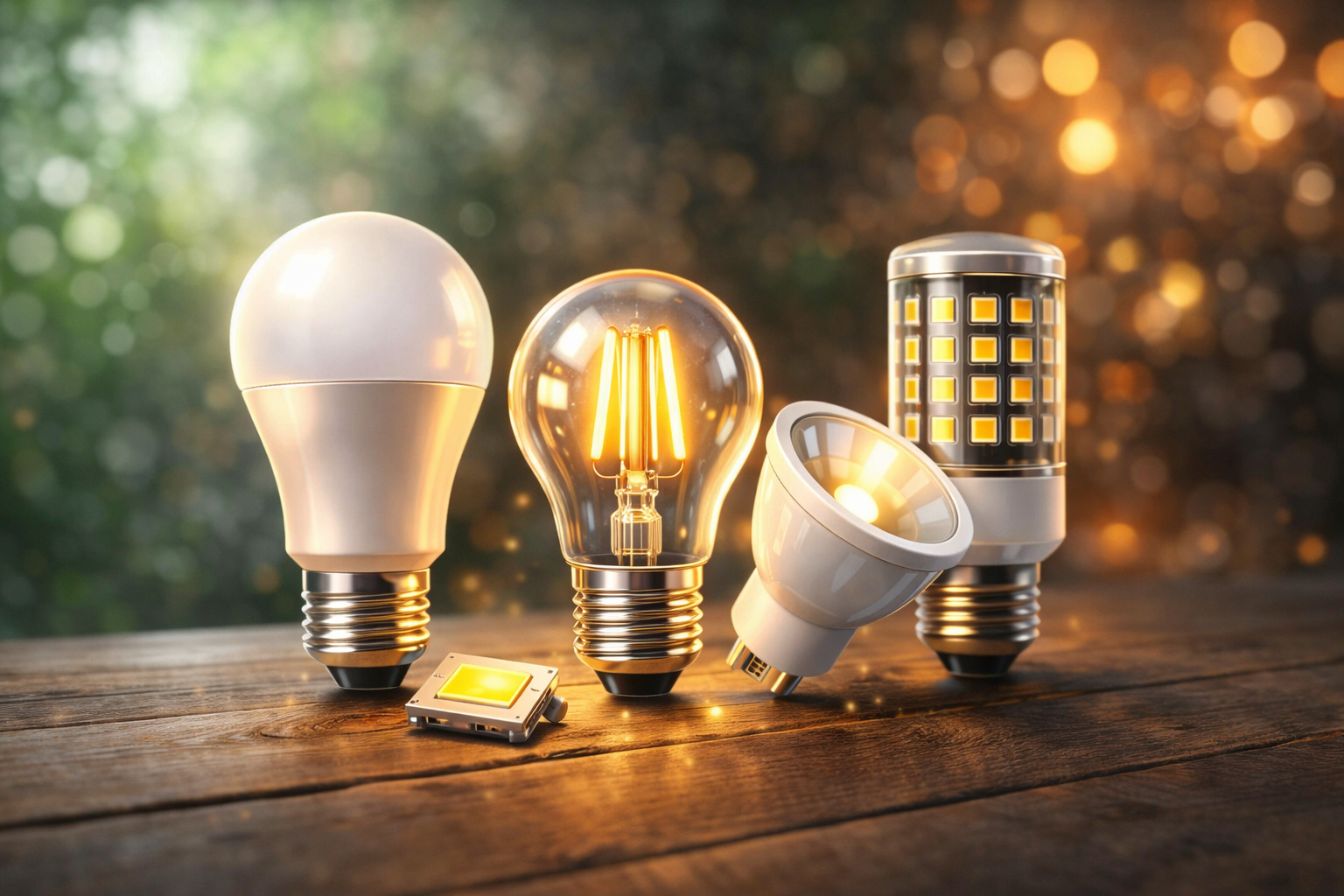
Reflector and spotlight bulbs concentrate light in specific directions, perfect for recessed lighting, track lighting, or accent illumination. BR and PAR bulbs fall into this category, with numbers indicating their diameter in eighths of an inch. Tube-style LED bulbs replace fluorescent tubes in commercial and residential settings, offering direct retrofits that eliminate the need for ballast replacement in many cases.
Specialty LED Options
Smart LED bulbs have gained popularity for their connectivity features, allowing you to control brightness, color, and scheduling through smartphone apps or voice assistants. These bulbs integrate with home automation systems, enabling you to create custom lighting scenes, adjust colors to match your mood, or automatically turn lights on and off based on your daily routine. While they cost more initially, smart bulbs add convenience and additional energy-saving potential through automated scheduling.
Dimmable LED bulbs provide flexibility in lighting levels, though they require compatible dimmer switches designed specifically for LED technology. Vintage-style LED bulbs recreate the aesthetic of Edison bulbs with visible LED filaments, combining nostalgic appearance with modern efficiency. Outdoor-rated LED bulbs feature weather-resistant construction suitable for exterior fixtures, while color-changing RGB LED bulbs offer millions of color options for creative or decorative applications.
Understanding Brightness and Color Temperature
Brightness in LED bulbs is measured in lumens rather than watts, marking a shift from how we evaluated incandescent bulbs. Lumens directly measure the amount of light a bulb produces, while watts simply indicate energy consumption. A 60-watt incandescent bulb typically produces around 800 lumens, so an LED bulb providing 800 lumens gives you equivalent brightness regardless of its lower wattage.
For reference, a 40-watt incandescent equivalent produces approximately 450 lumens, a 75-watt equivalent generates about 1,100 lumens, and a 100-watt equivalent delivers roughly 1,600 lumens. When selecting LED bulbs, focus on the lumen rating to ensure you get the brightness level you need. The packaging clearly displays this information, making it straightforward to choose appropriately bright bulbs for each room and fixture.
Color temperature, measured in Kelvin (K), describes the appearance of the light from warm to cool. Lower Kelvin values (2700K-3000K) produce warm, yellowish light similar to traditional incandescent bulbs, creating cozy atmospheres ideal for bedrooms and living rooms. Mid-range values (3500K-4100K) offer neutral white light suitable for kitchens and bathrooms. Higher values (5000K-6500K) generate cool, bluish-white light that mimics daylight, preferred for workspaces and task lighting where clarity and alertness matter.
The Color Rendering Index (CRI) indicates how accurately colors appear under a particular light source, with higher numbers representing better color accuracy. Quality LED bulbs typically offer CRI ratings of 80 or above, with premium options reaching 90 or higher. This becomes particularly important in areas where color perception matters, such as bathrooms for makeup application or kitchens for food preparation.
Energy Savings with LED Bulbs
The energy savings potential of LED bulbs represents one of their most compelling advantages. According to the U.S. Department of Energy, residential LED bulbs use at least 75% less energy than incandescent lighting and last up to 25 times longer. This dramatic reduction in energy consumption directly translates to lower electricity bills month after month.
Consider a household that replaces twenty 60-watt incandescent bulbs with 9-watt LED equivalents. If each bulb operates an average of five hours daily, the annual energy savings would amount to approximately 186 kilowatt-hours. Depending on local electricity rates, this could represent savings of $20 to $40 per year or more, with the savings continuing year after year as the long-lasting LED bulbs continue operating.
Beyond direct energy savings, LED bulbs produce significantly less heat than incandescent alternatives. This reduced heat output can lower cooling costs during warm months, as your air conditioning system doesn’t need to work as hard to compensate for heat generated by lighting. In commercial settings with extensive lighting installations, this secondary benefit can result in substantial additional energy savings throughout the year.
Choosing the Right LED Bulb
Selecting the appropriate LED bulb begins with understanding your specific lighting needs for each space. Start by identifying the fixture type and base size, as LED bulbs come with various base configurations including standard medium (E26), candelabra (E12), and pin bases for specialty fixtures. Check your existing bulbs or fixture specifications to ensure compatibility before purchasing.
Next, determine the appropriate brightness level based on room size and purpose. Living rooms and bedrooms typically benefit from softer lighting in the 800-1,600 lumen range per fixture, while kitchens and workspaces may require brighter illumination of 1,600-3,000 lumens for larger areas. Remember that multiple lower-wattage bulbs often provide better light distribution than a single high-wattage bulb.
Color temperature selection significantly impacts the ambiance of your space. For warm and inviting atmospheres in bedrooms, dining rooms, and living areas, choose bulbs in the 2700K-3000K range. Kitchens, bathrooms, and home offices function well with 3500K-4100K neutral white light. Garages, workshops, and areas requiring precision work benefit from cooler 5000K-6500K daylight temperatures that enhance visibility and reduce eye strain.
Consider whether you need dimmability for certain fixtures. If your room has dimmer switches, verify that you purchase LED bulbs specifically labeled as dimmable and ensure your existing dimmer switch is LED-compatible. Standard dimmer switches designed for incandescent bulbs may not function properly with LED bulbs or could cause flickering, buzzing, or reduced bulb lifespan.
Installation and Compatibility
Installing LED bulbs is typically as straightforward as replacing any traditional bulb. Ensure the power is off before removing old bulbs, then simply screw or insert the new LED bulb into the socket. Most LED bulbs are designed as direct replacements for incandescent or CFL bulbs, requiring no modifications to existing fixtures or wiring.
However, certain situations require additional consideration. Enclosed fixtures can trap heat, potentially shortening LED bulb lifespan even though they generate less heat than incandescent alternatives. Look for LED bulbs specifically rated for enclosed fixtures if you’re installing them in recessed cans, covered ceiling fixtures, or completely enclosed outdoor lights. These bulbs feature enhanced heat dissipation designs that prevent premature failure.
For three-way lamps that offer multiple brightness settings, you’ll need special three-way LED bulbs that provide the same functionality. Standard LED bulbs won’t work properly in three-way sockets, operating at only one brightness level. Similarly, if you’re replacing fluorescent tubes, verify whether your fixture requires ballast-compatible LED tubes or bypass tubes that work with the ballast removed.
When installing LED bulbs in existing dimmer systems, test the compatibility carefully. If you experience flickering, buzzing, or limited dimming range, you may need to upgrade to an LED-compatible dimmer switch. Modern LED dimmers provide smooth, flicker-free dimming across the full range and often include minimum brightness adjustments to optimize performance with specific LED bulbs.
Lifespan and Durability
The exceptional lifespan of LED bulbs stands as one of their most impressive characteristics. Quality LED bulbs typically last 15,000 to 50,000 hours, with many premium options rated for even longer operation. To put this in perspective, if you use a bulb for three hours daily, a 25,000-hour LED bulb would last approximately 23 years before requiring replacement.
Unlike incandescent bulbs that burn out suddenly when the filament breaks, LED bulbs gradually decrease in brightness over their lifetime through a process called lumen depreciation. Manufacturers typically rate LED bulb lifespan as the point where the bulb produces 70% of its original brightness, designated as L70. Even at this point, the bulb continues functioning, just with slightly reduced light output.
The solid-state construction of LED bulbs makes them far more durable than fragile incandescent or fluorescent alternatives. LED bulbs resist shock and vibration, making them ideal for applications where bulbs might experience physical stress, such as garage door openers, ceiling fans, or outdoor fixtures exposed to wind. This durability reduces replacement frequency and associated maintenance costs in both residential and commercial settings. For a more permanent upgrade, many users switch to motion-activated LED bulb suited for inside and outside, which works well in real-world home environments.
Temperature extremes affect LED bulb performance differently than traditional bulbs. While extreme heat can shorten LED lifespan, extreme cold doesn’t impact operation and may actually improve efficiency. This makes LED bulbs excellent choices for outdoor applications in cold climates, where traditional bulbs might struggle or fail completely during winter months.
Common Mistakes to Avoid
One frequent mistake newcomers make is choosing LED bulbs based solely on wattage rather than lumens. This old habit from the incandescent era can result in rooms that are too dim or unnecessarily bright. Always check the lumen rating to ensure you’re getting the actual brightness you need, as different LED bulbs with the same wattage can produce varying light output.
Another common error involves purchasing the cheapest LED bulbs available without considering quality factors like CRI, color temperature consistency, or warranty coverage. While budget LED bulbs have improved dramatically in recent years, extremely cheap options may suffer from poor color rendering, shorter lifespans, or inconsistent performance. Investing a bit more in quality bulbs from reputable manufacturers typically provides better long-term value.
Many people overlook color temperature compatibility when replacing multiple bulbs in the same room or fixture. Mixing 2700K warm white bulbs with 5000K daylight bulbs creates an unappealing, inconsistent appearance. When replacing bulbs in multi-bulb fixtures or throughout a room, ensure all bulbs have matching color temperatures for cohesive, professional-looking illumination.
Failing to verify dimmer compatibility before purchasing dimmable LED bulbs leads to frustration when bulbs flicker or fail to dim smoothly. Not all LED bulbs dim equally well, and not all dimmers work with all LED bulbs. Check manufacturer compatibility lists or purchase small quantities initially to test performance before committing to larger purchases for whole-home upgrades.
Environmental Benefits
The environmental advantages of LED bulbs extend well beyond their reduced energy consumption. Lower energy usage directly translates to reduced greenhouse gas emissions from power plants, contributing to climate change mitigation efforts. Widespread adoption of LED lighting represents one of the most accessible and impactful changes individuals can make to reduce their carbon footprint.
Unlike CFL bulbs, LED bulbs contain no mercury or other hazardous materials, eliminating concerns about toxic exposure or special disposal requirements. When LED bulbs eventually reach end of life, they can often be recycled through electronics recycling programs, recovering valuable materials and keeping components out of landfills. This safer composition makes LED bulbs easier to handle throughout their lifecycle.
The extended lifespan of LED bulbs dramatically reduces manufacturing demand and waste generation compared to frequently replaced incandescent bulbs. Manufacturing fewer bulbs means less resource extraction, reduced manufacturing energy consumption, and decreased transportation emissions. Over a typical LED bulb’s lifetime, you might have replaced an incandescent bulb 20-25 times, representing significant resource savings at scale.
Share This Guide
If you found this beginner’s guide to LED bulbs helpful, consider bookmarking it for future reference or sharing it with friends and family who might benefit from understanding LED lighting technology. Many homeowners appreciate having a comprehensive resource that explains the basics of modern lighting in clear, accessible terms without overwhelming technical jargon.
Making the switch to LED bulbs represents one of the simplest yet most effective upgrades you can make to improve your home’s energy efficiency while enhancing lighting quality. With the information provided in this guide, you’re now equipped to confidently select, install, and enjoy the numerous benefits these remarkable bulbs offer for years to come.