What Is a Smart Lighting Ecosystem? Simply explained
A smart lighting ecosystem represents the interconnected network of devices, protocols, and software that work together to create intelligent illumination throughout your home. Understanding how these components communicate and function as a unified system helps you build an efficient, responsive environment that adapts to your lifestyle and preferences.
If you’re starting from scratch and want to understand how smart lighting works in general, check our complete smart lighting systems guide before building your ecosystem.
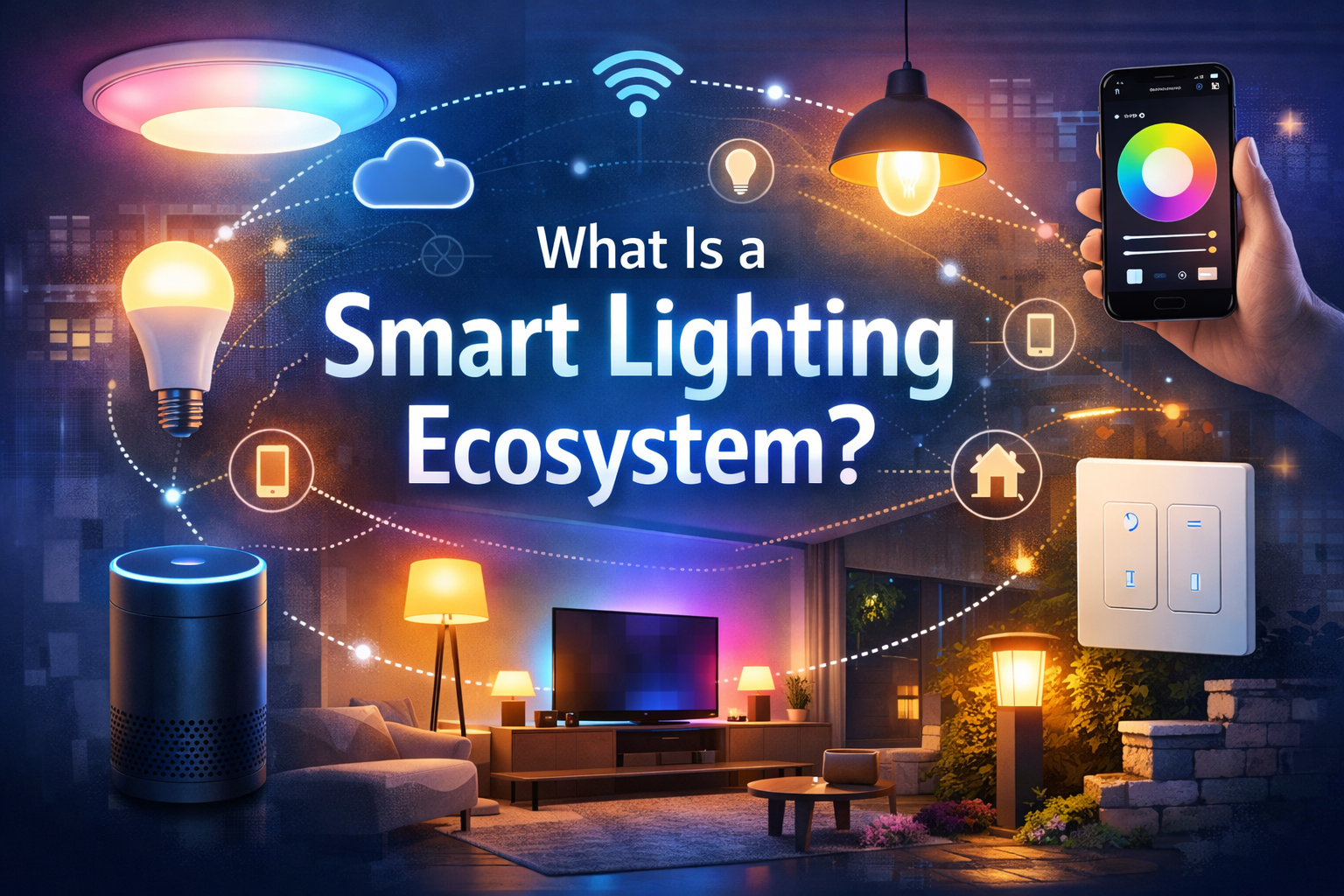
Table of Contents
Defining the ecosystem
The term smart lighting ecosystem describes more than individual intelligent bulbs or switches. It encompasses the entire framework of connected lighting devices, control interfaces, communication standards, and cloud services that enable coordinated functionality. This holistic approach transforms isolated smart devices into an integrated system capable of sophisticated automation and responsiveness.
At its foundation, a smart lighting ecosystem requires three essential elements: hardware endpoints that produce light, a communication infrastructure that transmits commands and status information, and control software that manages the entire network. These elements must work seamlessly together to deliver the convenience and efficiency that define modern illumination systems.
The value of an ecosystem approach extends beyond simple remote control. When properly configured, your lighting control platform anticipates needs, responds to environmental conditions, and adapts to patterns without constant manual intervention. This intelligence emerges from the interaction between components rather than the capabilities of any single device.
Core components
Smart bulbs and fixtures
Smart bulbs form the most visible element of any smart lighting ecosystem. These devices integrate wireless communication modules directly into the bulb housing, allowing them to receive commands and report status independently. Modern options include white-spectrum bulbs that adjust color temperature, full-color RGB variants, and specialized bulbs for specific applications like accent lighting or outdoor use.
Smart fixtures represent an alternative approach where intelligence integrates into the lighting fixture itself rather than individual bulbs. This design works particularly well for permanent installations like ceiling lights, track lighting, and architectural elements. Fixtures often support multiple bulbs while requiring only a single connection point to your network.
Control interfaces
Control interfaces provide the means to interact with your smart lighting ecosystem. Smartphone applications serve as the primary interface for most users, offering visual controls, scheduling features, and scene management. These apps connect to your home network and communicate with lighting devices either directly or through cloud services. If you want a dependable option, a solid example is a smart light starter kit with hub and app control, which is widely trusted for indoor setups.
Voice assistants add another control layer, enabling hands-free operation through spoken commands. Integration with platforms like Amazon Alexa, Google Assistant, or Apple HomeKit allows natural language control without reaching for your phone. Physical switches and remote controls provide tactile alternatives, particularly valuable for guests or situations where voice and app control prove impractical.
Hubs and bridges
Many smart lighting ecosystem implementations require a central hub or bridge to coordinate communication between devices. These hubs translate between different protocols, manage device authentication, and often provide local processing to reduce cloud dependency. Hub-based systems typically offer more reliable performance and lower latency compared to purely cloud-dependent alternatives.
Hubless systems eliminate this requirement by using Wi-Fi for direct device communication. While simpler to set up initially, these systems may encounter scaling challenges as device counts increase. The choice between hub-based and hubless architectures significantly impacts your ecosystem’s structure and capabilities, so explore hands-free control options before committing to a specific approach.
For a deeper comparison between different smart hardware approaches, you can also read our smart bulbs vs smart switches guide.
Software updates periodically break compatibility or introduce new limitations as manufacturers modify APIs and cloud services. Maintain awareness of firmware updates for all devices and platforms in your smart lighting ecosystem. Review update notes before installing to identify potential compatibility impacts, and consider deferring updates until stability reports emerge from other users.
Energy efficiency
Energy efficiency represents a primary advantage of smart lighting ecosystem deployment. LED technology inherent in most smart bulbs consumes significantly less power than traditional incandescent bulbs, while intelligent controls ensure lights operate only when needed. This combination dramatically reduces electricity consumption compared to conventional lighting approaches. To understand exactly how these savings add up, our guide on LED lighting efficiency breaks down the numbers in practical terms. For a more permanent upgrade, many users switch to smart LED bulbs with scheduling and dimming capability, which offers consistent results over time.
Occupancy-based automation eliminates the common waste of lights left on in empty rooms. Motion sensors and door contacts trigger lights when spaces become occupied and extinguish them after detecting vacancy. These automated behaviors operate consistently without requiring conscious effort or behavior changes from household members.
Dimming capabilities provide additional efficiency gains by reducing output when full brightness isn’t necessary. Unlike older dimming technologies that waste excess energy as heat, LED dimming achieves true power reduction proportional to brightness decrease. A bulb dimmed to fifty percent typically consumes approximately forty to fifty percent of its full-power energy draw.
Daylight harvesting strategies adjust artificial lighting based on available natural light. Sensors measure ambient illumination and reduce or disable artificial lights when sufficient daylight exists. This approach maintains consistent lighting levels while minimizing unnecessary electrical consumption during daylight hours, particularly valuable in rooms with large windows or skylights.
Future-proof planning
Future-proofing your smart lighting ecosystem requires balancing current needs with anticipated technological evolution. Select platforms and protocols with strong industry support and active development communities. Established standards with broad manufacturer adoption demonstrate greater longevity compared to proprietary solutions from smaller companies that may exit the market.
Prioritize devices supporting over-the-air firmware updates. This capability allows manufacturers to add features, improve performance, and patch security vulnerabilities without requiring physical access or replacement. Verify that update mechanisms work reliably and that manufacturers maintain active support for products beyond initial launch periods.
Consider total cost of ownership beyond initial purchase prices. Factor in potential replacement costs if manufacturers discontinue cloud services or products become obsolete. Open standards and local processing capabilities reduce dependency on vendor-specific infrastructure that may disappear as companies pivot or fail.
Plan for gradual migration rather than complete system replacement. Design your lighting control platform architecture to support mixed generations of devices and protocols. This flexibility allows you to upgrade incrementally as new technologies emerge while protecting existing investments. Modular approaches prevent technological advancement from rendering your entire smart lighting ecosystem obsolete simultaneously. For a comprehensive reference on lighting technology and product guidance, visit our LED knowledge center.
Sharing this guide
If you found this guide helpful, you can save it for later or share it with a friend. It’s especially useful for beginners, homeowners, and DIY users.
Share using the links below
Interested in learning more? Browse all related articles in our category section.
Pingback: Zigbee Smart Lighting: Ultimate Guide & Setup - NeoLEDHub
Pingback: LED Lighting Buying Guide: Smart Choices Beginners
Pingback: Energy Saving Lighting for Apartments: Smart Guide
Pingback: Matter Smart Lighting: Complete Guide & Benefits - NeoLEDHub