LED Bulb Base Types: What You Need to Know
Buying a bulb should be simple, yet many people end up holding a new LED that looks perfect but will not lock into the fixture. The problem is rarely wattage or color temperature first. It is usually the base. Understanding led bulb base types helps you avoid returns, prevent poor fit, and choose bulbs that actually work the first time.
From common household screw bases to small chandelier fittings and spotlight pins, each design serves a specific purpose. Once you know how to read base labels and compare shapes, shopping becomes much easier. This guide breaks down the differences in plain language so you can match the right bulb to the right socket with confidence.
Contents
- Why the base match matters
- Fit and safety basics
- Screw bases at home
- Pin and twist-lock options
- E26 and E27 differences
- Spotlight comparisons
- Common buying mistakes
- Reading labels and packaging
- Best room matches
- Dimmers and voltage
- Decorative small sockets
- Before you buy
- When the fixture should change
- Final buying advice
Why the base match matters
A bulb can have the perfect brightness, beam angle, and color warmth, but none of that matters if the base does not fit the socket. That is why the first thing to check is the connection point at the bottom of the bulb. If the bulb feels loose, will not turn fully, or needs force, stop immediately. A bad fit can damage the holder, create unreliable contact, or leave you thinking the bulb is faulty when the real issue is compatibility.
Many homeowners start by learning how LED bulbs work in everyday fixtures, but the practical next step is knowing the base code printed on both the old bulb and the fitting. Once you build that habit, led bulb base types stop being confusing labels and start becoming a simple matching system you can use in seconds.
Take a quick phone photo of the old bulb base before shopping. That visual reference is often faster and more reliable than trying to remember a code from memory in the aisle.
How led bulb base types affect fit and safety
Some bases are made to screw in gently, some push and twist, and others use pins that must align precisely with a socket. That physical design affects more than convenience. It influences contact pressure, stability, and whether the bulb sits at the correct depth inside the fixture. When led bulb base types are matched properly, the lamp turns on smoothly, remains secure, and delivers consistent performance without unnecessary stress on the fitting.
This matters even more in enclosed fittings, recessed housings, or fixtures that already run warm. A poorly seated bulb can flicker, buzz, or fail early. It can also create false troubleshooting steps, especially when users blame the dimmer or the bulb quality first. Good base matching is not a technical detail for enthusiasts only. It is one of the most basic ways to keep home lighting safe, reliable, and frustration-free.
Screw bases you will see most at home
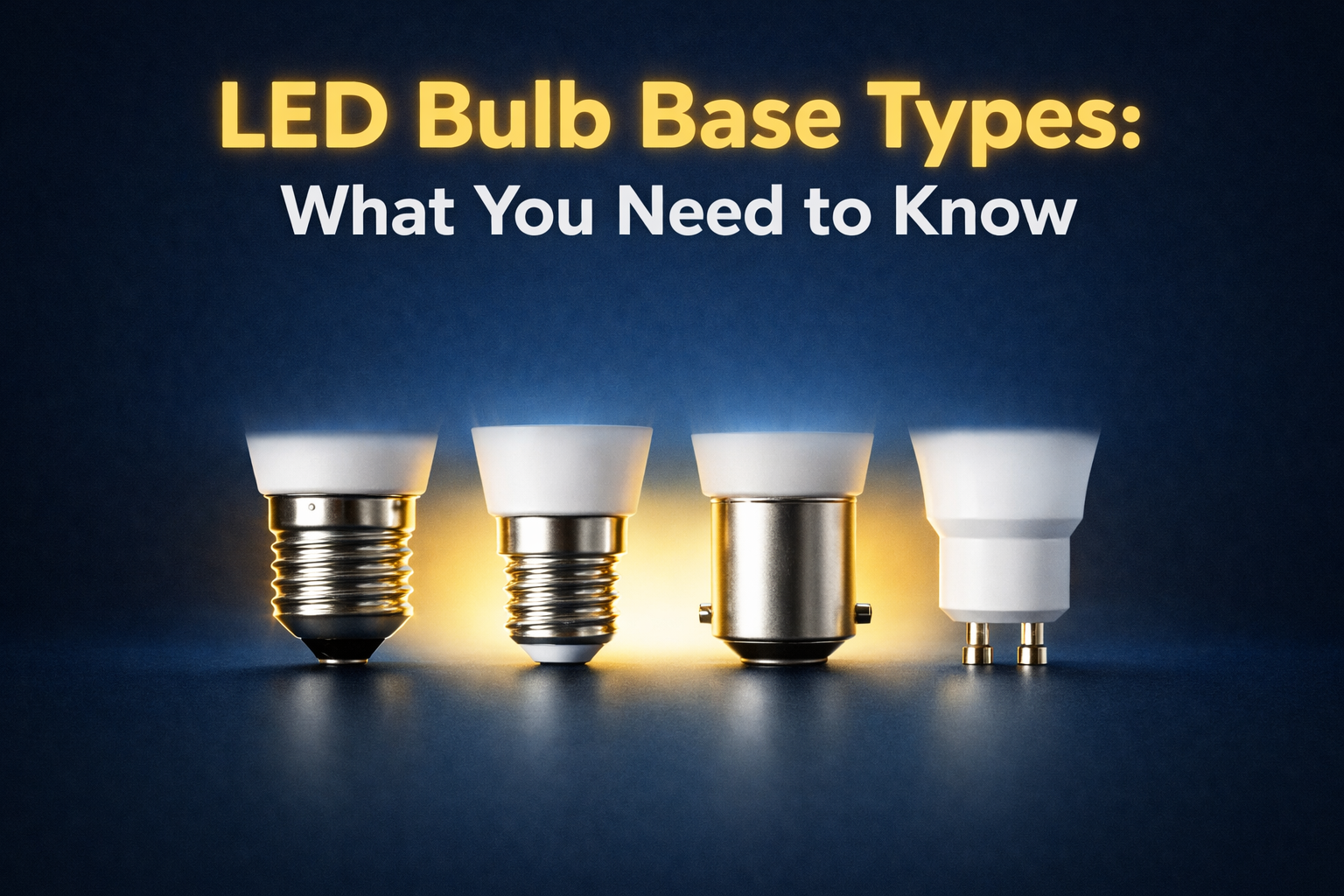
The most familiar group is the Edison screw family, including E26, E27, E14, and E12. The number refers to the approximate diameter in millimeters, while the letter points to the Edison screw format. In many homes, E26 or E27 is the standard for general lamps, ceiling fittings, and table lamps. Smaller options like E14 or E12 are more common in decorative fixtures where the holder needs a narrower neck and a slimmer bulb shape.
If you are replacing a standard household bulb and want a straightforward option that can reduce eye strain in everyday lamps, an E26 LED bulb with a standard base that fits most household light fixtures is often the most practical place to start. It also pairs well with guidance on choosing the right LED bulbs for recessed lighting when you are comparing fixture shapes and brightness needs at the same time.
Pin and twist-lock options for targeted lighting
Not every bulb base screws in. Spotlight and specialty fixtures often use pin-based or twist-lock formats such as GU10, MR16-compatible pin arrangements, GU24, or bi-pin designs. These bases are built for secure placement in directional fixtures where beam control matters. Kitchens, display lighting, and track systems often rely on this style because the bulb must sit at a precise angle and remain stable once installed.
This is where many shoppers get overwhelmed by shape similarities. A bulb can look close enough to fit, yet still have a different locking method or voltage requirement. That is why led bulb base types should always be checked alongside the socket design, not by appearance alone. For readers comparing room-specific lighting performance, our guide to dimmable LED bulbs with smoother performance is a useful next read.
Why E26 and E27 confuse so many buyers
The phrase E26 vs E27 bulb base appears constantly because these two sizes are extremely close. In practice, many fixtures and bulbs can work across both formats, especially in normal household use. Even so, they are not identical on paper. E26 is commonly associated with North American mains standards, while E27 is widely used in Europe and many international products. The physical size difference is small, but regional ratings and fixture expectations can still matter.
If you are buying for a desk lamp, pendant, or living room fixture, the safest move is to match what the fixture label specifies instead of assuming close enough is always fine. That becomes especially important when you are selecting the best LED bulbs for a home office, where comfort and consistent performance matter every day. The broader world of led bulb base types becomes much easier once you stop guessing and start matching printed codes.
Spotlight choices and directional beam setups
Another frequent source of confusion is GU10 vs MR16 bulbs. These are often compared together because both are used in spotlights, but they are not interchangeable by default. GU10 bulbs usually use a twist-lock base and line voltage, while MR16 often refers to a reflector shape that is commonly paired with pin bases and lower-voltage systems. The shape may look familiar, yet the socket and electrical setup can be completely different.
If you want a practical option for spotlights and directional fittings that can avoid flicker in focused task lighting, a GU10 LED bulb designed for spotlights and directional lighting fixtures is worth considering. It is especially relevant in kitchens or feature lighting, and it can complement room planning ideas from our article on LED bulbs that suit dining room fixtures.
Common mistakes people make when replacing bulbs
The biggest mistake is assuming the bulb shape tells you the base. It does not. A candle bulb could use E12, E14, or another format depending on the market and fixture. A reflector bulb could be built around different pin arrangements. Another mistake is forcing a bulb that almost fits. If it resists, the fit is wrong. That extra pressure can damage the socket or leave the contact unreliable enough to cause blinking, intermittent power, or early failure.
Never assume similar-looking spotlight bulbs share the same voltage or socket style. Matching the beam shape without checking the base and electrical requirements is one of the fastest ways to buy the wrong replacement.
People also forget to think about the fixture itself. Bathroom fittings, decorative sconces, and enclosed ceiling mounts each place different demands on the bulb. That is why articles on LED bulbs for bathroom environments often discuss moisture, bulb shape, and socket style together. Once you know the common errors, led bulb base types stop feeling random and start making practical sense.
Read the bulb and fixture labels before anything else
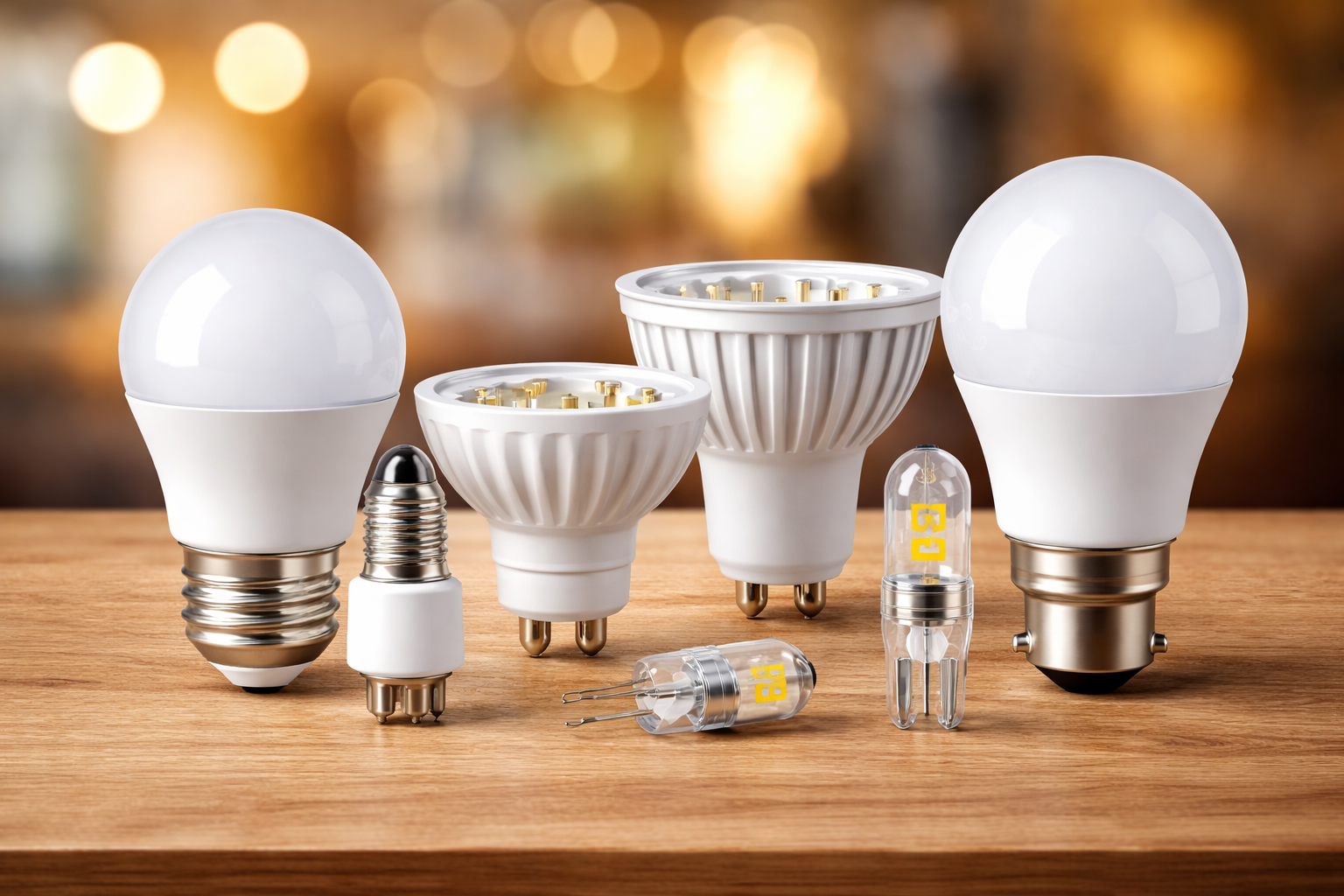
The easiest way to identify types of light bulb bases is to look for the code on the old bulb, the fixture label, or the product packaging. Most reputable brands print this clearly, even when the bulb shape gets the main marketing attention. You will usually see the base code near the wattage, voltage, and color temperature details. Matching that code first saves time and prevents those annoying almost-right purchases that end up back in the box.
A good companion resource is our guide to reading LED packaging details correctly, especially if all the technical numbers start blending together. For broader efficiency basics, both the U.S. Department of Energy LED lighting efficiency guidance and the ENERGY STAR guide to LED lighting basics help explain what labels mean beyond the base alone.
Where each base tends to work best in the home
Large screw bases like E26 and E27 are common in floor lamps, table lamps, ceiling fixtures, and many pendants. Smaller screw bases such as E12 or E14 appear in chandeliers, decorative wall lights, and compact decorative lamps where the bulb must look refined as well as fit correctly. GU10 is widely used for track lighting, kitchen spotlights, and display beams. Bayonet styles like B22 still appear in some regions and older fittings, so checking the market-specific standard matters.
When you think about led bulb base types by room instead of by code alone, they become easier to remember. General living spaces usually lean toward standard screw bases. Decorative pieces favor small bases. Focused beam fixtures need lock-in or pin options. That simple framing is also why the LED Knowledge Center is useful for connecting bulb format, fixture style, and real-world room planning without getting lost in jargon.
If you manage several fixtures at once, group old bulbs by base on a table before ordering replacements. That five-minute sorting step prevents mixed-up purchases and makes bulk buying much easier.
Dimmers, transformers, and voltage still matter
A correct base does not guarantee perfect performance. Some fixtures use transformers, some use dimmers that are picky about LED loads, and some were designed around older halogen systems. This is why shoppers comparing GU10 vs MR16 bulbs need to think beyond the visible connection. Socket style, voltage, and control gear all work together. Ignoring one of those pieces can lead to flicker, buzzing, dimming problems, or bulbs that fail much earlier than expected.
The same logic applies to screw-base lamps when dimmers are involved. If your fixture is temperamental, the bulb may be fine but the control setup may not be. Looking at led bulb base types and electrical compatibility as a pair is the best way to troubleshoot intelligently instead of replacing random parts and hoping something improves.
Small decorative sockets need extra attention
Decorative fixtures create a different kind of challenge because appearance and fit matter equally. Chandelier arms, exposed wall sconces, and ornamental pendants often use compact sockets such as E12 or E14. A bulb that is technically compatible can still look oversized, extend too far, or disrupt the intended style of the fixture. That is why checking the base code should happen alongside shape, bulb width, and visible finish.
If you need a smaller option for decorative fittings that can stabilize brightness in chandelier lighting, an E12 LED bulb with a small base designed for chandeliers and decorative lighting can be a smart match. This is also where terms like types of light bulb bases become useful in online searches, because decorative sockets vary widely and a photo alone often does not tell the full story.
Quick checklist before you buy a replacement
Before adding a bulb to your cart, run through a short set of checks. It takes less than a minute and can save you from most common buying errors. This is especially useful when comparing E26 vs E27 bulb base questions or trying to remember whether a spotlight uses a twist-lock or pin connection.
- ✓ Check the exact base code on the old bulb or the fixture label.
- ✓ Confirm whether the bulb screws in, pushes in, or twists to lock.
- ✓ Verify voltage and dimmer compatibility for spotlights and older systems.
- ✓ Make sure bulb shape and width still fit the fixture housing or shade.
- ✓ Keep the old bulb until the new one is installed and tested successfully.
Once you start using a checklist like this, led bulb base types become much less intimidating. You stop shopping by guesswork and start buying with a simple repeatable process.
When replacing the fixture makes more sense
Sometimes the smartest answer is not finding a rare bulb base. If a fixture uses an outdated socket, struggles with LED compatibility, or has damaged contacts, replacing the fitting may be cheaper and more reliable in the long run. This is particularly true when you keep adapting modern bulbs to an old system that was never designed for them. A newer fixture can open up better availability, better efficiency, and simpler maintenance.
That decision is easier once you understand the broader landscape of led bulb base types. Instead of hunting endlessly for an awkward specialty bulb, you can ask whether the fixture itself is the real bottleneck. In many homes, updating the holder or replacing the fitting once is less frustrating than repeating the same compatibility problem every time a bulb burns out.
If the socket is cracked, scorched, loose, or repeatedly causing intermittent power, stop replacing bulbs and inspect the fixture. The base may no longer be the actual problem.
Final buying advice for confident bulb choices
The easiest way to shop well is to treat the base code as the starting point, not an afterthought. First match the socket. Then confirm shape, brightness, dimming behavior, and color temperature. That order removes most of the uncertainty people feel when comparing standard lamps, decorative bulbs, or spotlight replacements. Once you do it a few times, the labels become familiar and the process gets much faster.
In the end, led bulb base types are simply the connection language of lighting. Learn that language once, and you will make better choices across table lamps, chandeliers, recessed spotlights, and everyday ceiling fixtures. Whether you are deciding between screw bases, small decorative sockets, or directional spotlight fittings, a careful match now saves money, hassle, and repeat purchases later.
Key Takeaways
Choosing the right bulb starts with the base, because the socket connection determines whether the bulb will fit, stay secure, and operate properly. Small differences between formats such as standard screw bases, decorative small bases, and spotlight connections can completely change compatibility, even when bulbs look similar at first glance.
The most practical habit is to check the code on the old bulb or fixture before shopping, then confirm voltage, dimmer behavior, and bulb shape. That approach helps you avoid the most common mistakes, especially around close comparisons like E26 and E27 or spotlight choices that appear alike but use different sockets or electrical setups.
As LED lighting continues to improve, matching the correct base will remain one of the simplest ways to make better buying decisions. Once you understand the basic families and where they are typically used, future replacements become quicker, easier, and much less frustrating.
Sharing this guide
If you found this guide helpful, save it or share it with someone who’s still using old bulbs.
Interested in learning more? Browse all related articles in our category section.