Best TV Backlights: LED Strip Lights Behind Your TV for Movies, Gaming, and Eye Comfort
Choosing the best TV backlight is not just about adding color behind the screen. The right LED strip should fit your TV size, create a smooth wall glow, dim low enough for night viewing, and match how you watch movies, sports, or games. For most homes, the best LED strip lights for TV backlighting are simple to mount, easy to control, and bright enough to improve immersion without distracting from the picture.
This guide explains when to choose a basic RGB strip, when RGBIC or screen-sync lighting is worth paying for, and what to check before buying LED lights behind a TV. The goal is simple: a cleaner setup, better comfort in dark rooms, and a backlight that looks intentional instead of cheap.
Quick Answer
The best TV backlight for most people is a dimmable LED strip that matches your screen size, mounts cleanly behind the TV, and offers the right control style for your setup. Choose basic RGB for a simple glow, RGBIC for richer color effects, and screen-sync lighting if you want movies or games to feel more immersive.
- USB power keeps many setups simple and tidy.
- RGB glow is affordable and easy to control.
- RGBIC effects create richer gradients and more movement.
- Soft brightness is easier on the eyes at night.
- Strong adhesive is important for a clean, lasting installation.
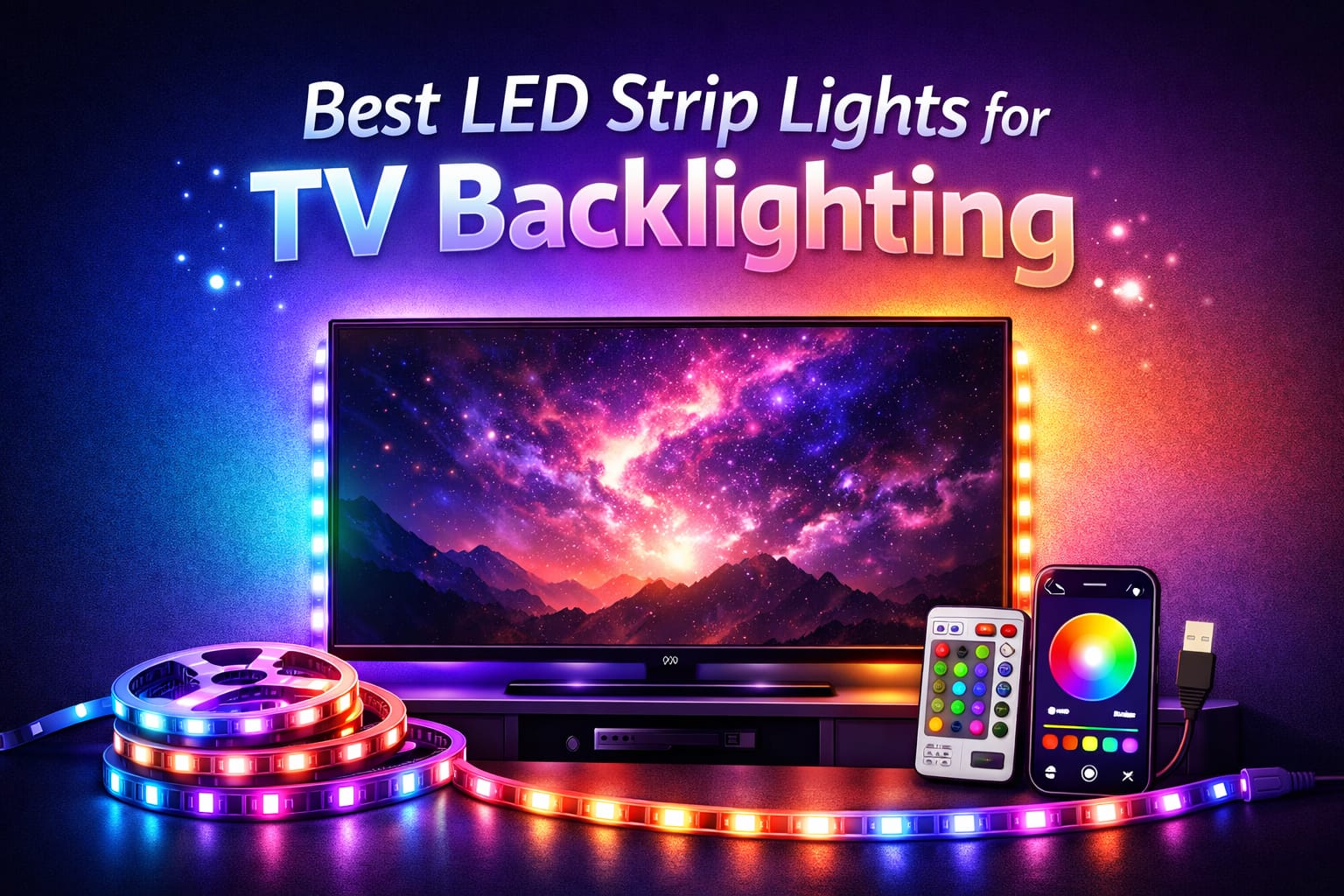
Table of Contents:
- Quick Answer
- Best TV Backlight Options by Use Case
- How TV Backlighting Improves Viewing Comfort
- Screen-Sync TV Backlights vs Static Glow
- How to Install LED Lights Behind a TV
- RGB vs RGBIC TV Backlights
- Common Mistakes That Ruin TV Glow
- Best Brightness and Color for TV Backlighting
- Is It Worth Paying More for Premium Features?
- Which TV Backlight Should You Choose?
- Key Takeaways
- Sharing This Guide
Best TV Backlight Options by Use Case
If you are searching for the best TV backlights, the smartest choice depends on how you actually use your screen. A simple LED strip can be perfect for a bedroom TV, while a gaming setup may benefit more from RGBIC effects or screen-sync lighting. The right option should match your TV size, room brightness, wall color, and how much control you want.
For most people, the best starting point is not the most expensive backlight. It is the setup that creates a clean glow, stays easy to adjust, and does not distract from the picture. Use the quick breakdown below to choose the right type before comparing specific LED lights behind your TV.
Best TV Backlight Type for Each Setup
Use this as a fast buyer’s guide before choosing between basic RGB, RGBIC, USB-powered, or screen-sync TV backlights.
- ✓Best overall — A dimmable RGB or RGBIC strip with strong adhesive, smooth brightness control, and enough length for your screen size.
- ✓Best budget option — A simple USB-powered RGB strip if you want an affordable glow that turns on easily with the TV.
- ✓Best for gaming — RGBIC or screen-sync lighting if you want stronger color changes, movement, and a more immersive wall effect.
- ✓Best for movies — A softer static glow or subtle warm-white setting that reduces contrast without pulling attention away from the screen.
- ✓Best for large TVs — A longer strip or wall-powered setup with stable output across the full back edge of the screen.
- ✓Best minimalist setup — A uniform, low-brightness glow instead of fast effects or highly saturated colors.
This is also where many buyers overspend. Screen-sync systems are exciting, but they are not necessary for every living room. If your main goal is comfort, a reliable dimmable strip may be enough. If your main goal is a more dramatic movie or gaming setup, RGBIC or reactive lighting becomes much easier to justify.
How TV Backlighting Improves Viewing Comfort
The main reason people buy TV backlights is not just for decoration. It’s for comfort. A bright screen against a completely dark background forces your eyes to constantly adjust between intense highlights and deep darkness. Over time, this can be tiring, even if your picture settings are technically fine. A soft glow behind the display reduces that contrast, making long viewing sessions easier on the eyes.
There is also a design benefit. The screen looks less like a dark rectangle floating on the wall and more like it is integrated into the room. If you are still learning the basics of strip selection, this beginner’s guide to LED strip lights explains the fundamentals before you compare TV-focused options.
While good backlighting is often described as cinematic, the real advantage is more practical. It reduces harshness, adds depth, and makes the TV wall look intentional instead of empty, especially in rooms where the screen is the main focal point.
Why Does Ambient Glow Help?
Controlled ambient light is more helpful than maximum brightness. Many buyers assume that stronger output means better results, but it usually creates a more distracting halo. The best TV backlights work when the glow stays behind the screen rather than competing with it. Bias lighting matters more than flashy brightness because the goal is support, not spectacle.
Mount the strip slightly inward from the outer edge of the TV instead of placing it right on the rim. This small gap often produces a smoother wash on the wall and conceals hot spots more effectively, particularly on slimmer, contemporary panels.
Many people notice the difference between decorative accent lighting and a thoughtful media setup here. A strip that looks exciting in product photos can become annoying during actual viewing if the glow is too bright or active. A good backlight should calm the viewing environment instead of pulling your eyes away from the screen.
Screen-Sync TV Backlights vs Static Glow
One of the most important decisions is whether you want a fixed background color behind the TV or a system that reacts to what’s on the screen. Both options can work well, but the experience is very different. Static lighting is easier to live with, more affordable, and better suited to viewers who mainly want comfort and a subtle mood boost.
Sync systems are more dramatic. They can mirror colors in games, action scenes, and music, creating a more immersive experience. If that sounds appealing, a screen-reactive TV backlight setup can be a good option because it adds content-based ambiance without requiring a larger, room-wide system.
However, not everyone benefits from dynamic effects. Some people simply prefer a steady glow that complements the picture and blends into the background. The right answer depends less on trends and more on how you use your TV on an average evening.
Who Benefits Most from Sync Effects?
Gamers, sports fans, and viewers who enjoy spectacle usually benefit most from adaptive lighting. If you enjoy strong color transitions and an energetic wall effect, sync features can make your setup feel wider and more alive. In contrast, people who mainly watch dramas, the news, or slower-paced content often prefer a steadier ambient light that improves comfort without changing every few seconds.
Many homes use the TV as part of a shared living room rather than a dedicated cinema space. In those rooms, a calmer system is easier for everyone to enjoy. The best setup fits your habits, not just the product page’s marketing.
How to Install LED Lights Behind a TV
Even the best hardware can be disappointing if the installation is rushed. TV LED backlight strips require a clean path, solid adhesion, and proper spacing around the panel. Dust, uneven surfaces, sharp corners, and loose cable routing can ruin the finished look more quickly than most buyers expect. The quality of the mounting often separates a premium-looking setup from one that always feels temporary.
Before attaching anything, wipe the rear panel, plan the route, and decide if you want full perimeter coverage or coverage on only three sides. Understanding strip flexibility, corner handling, and connection points is key to a clean installation, which is why this guide on how to connect LED strip lights is useful before mounting the final setup.
Placement also affects wall diffusion. If the TV is very close to the wall, the halo will be tighter and more concentrated. If the TV is slightly offset on a mount, the light will spread wider and softer. The spacing often determines whether the result feels elegant or overly intense.
USB Power vs. Wall Adapter
The power source is one of the most overlooked setup choices. USB power is convenient because, on many models, the strip can turn on with the TV, which keeps the setup simple and tidy. However, wall-powered systems may offer stronger and more stable output, which can be useful for larger screens or more advanced sync systems. The right choice depends on how much brightness and control you need.
If you are unsure how much output your room needs, this practical LED strip light brightness guide can help you avoid buying a strip that is too weak or too strong. The best LED lights behind a TV are rarely the brightest. They are the ones that create the right glow for your viewing distance, wall color, and typical lighting conditions.
RGB vs RGBIC TV Backlights
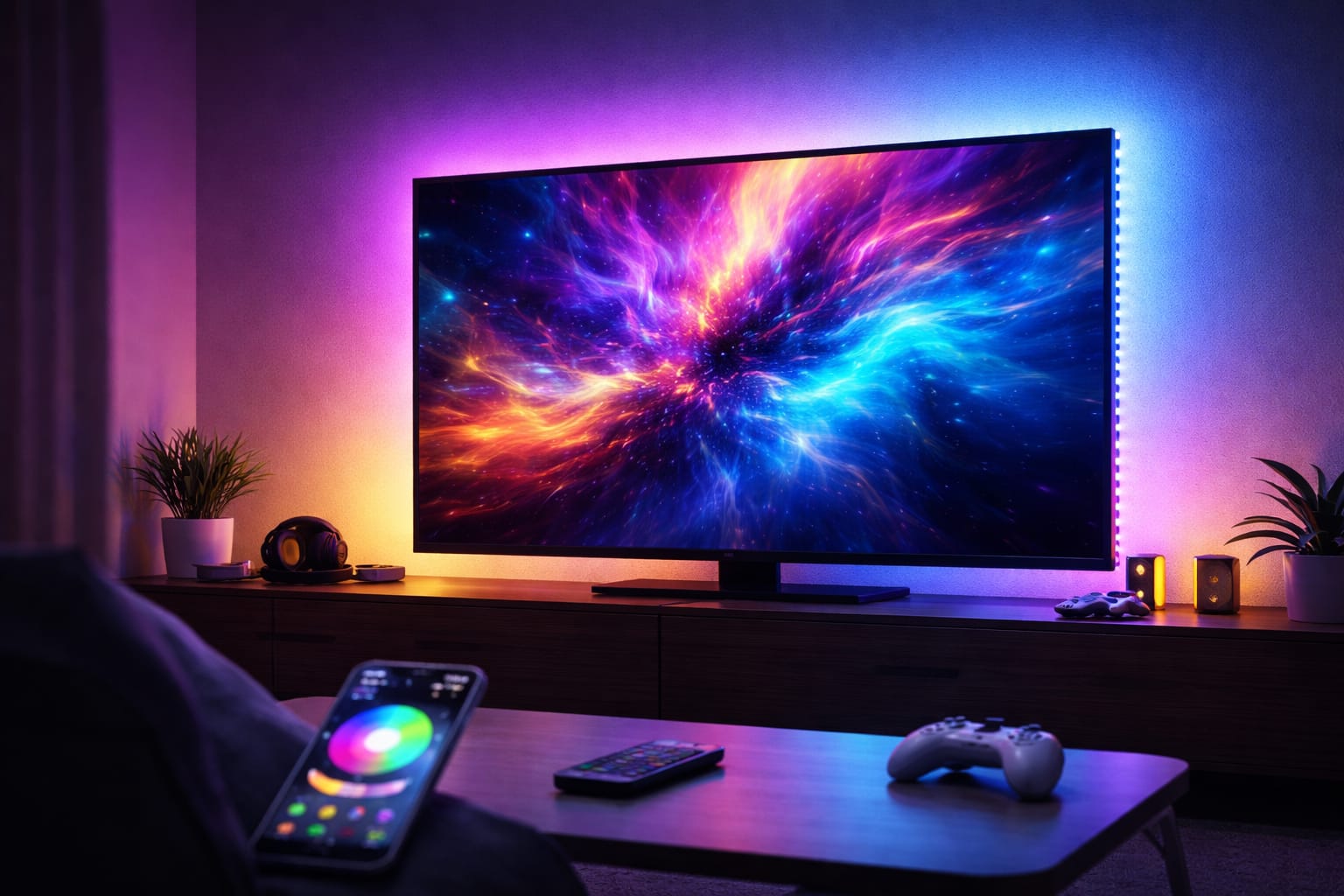
Many buyers who are comparing TV backlights eventually come across the question of whether to choose an RGB or an RGBIC backlight. Both options can look good, but they create different moods. Standard RGB LED strip lights usually display one color across the entire strip at a time, which is ideal for a uniform, calmer background. RGBIC, on the other hand, can display multiple zones and colors at once, creating more movement and depth.
RGB vs. RGBIC TV Backlighting: Which Fits Your Setup?
RGB Strips
RGB strips are a better fit if you want a simple, uniform glow behind the screen and an easier setup for casual movie watching or everyday TV use.
RGBIC Strips
They are ideal for those who want multiple colors, dramatic gradients, and a stronger immersive effect during movies, gaming, or music playback.
If you want a more in-depth comparison before buying, this breakdown of RGB vs. RGBIC LED strips provides a broader explanation of the trade-offs. For many living rooms, the best option isn’t necessarily the most advanced one. It’s the option that matches how subtle or dramatic you want the wall effect to be.
Common Mistakes That Ruin TV Glow
A disappointing result usually comes down to a few common mistakes. The first is using lighting that is too intense. The second mistake is buying based only on flashy marketing instead of your actual setup needs. The third mistake is ignoring whether the strip produces stable, usable light. If you want to add soft backlighting to ease eye strain, balanced output matters more than aggressive color effects.
Another mistake is assuming that every strip type is automatically suitable for a TV. Some products are designed for shelves, ceilings, or long under-cabinet runs rather than close, wall-facing backlighting. That is why reviewing the main types of LED strip lights beforehand is helpful.
The final pitfall is expecting a TV strip alone to improve a room with poor ambient lighting. Even a good TV strip may only partly improve the experience if overhead lighting causes reflections or harsh contrast. Good backlighting works best as part of a broader room-lighting strategy.
Avoid These Placement Errors
Mounting the strip too close to the outer edge can create visible hot spots. Leaving major gaps can create an uneven glow. Placing the TV against a glossy wall can also exaggerate reflections and make the halo appear disorganized. Even the best TV backlighting options still require thoughtful placement to achieve a refined look.
If reflections are already an issue in your room, this practical lighting glare reduction guide can help you arrange the space around the TV so that the backlight works with the screen instead of against it.
Best Brightness and Color for TV Backlighting
Brightness control is a major reason some setups feel premium while others feel cheap. Good TV backlighting lets you lower the intensity enough for nighttime viewing while maintaining a clean halo. Many people searching for TV LED backlight strips assume that more light automatically means greater comfort. However, in practice, the sweet spot is often lower than expected. Good dimming and stable color matter more than raw output.
Warm tones can create a cozy atmosphere, while cooler whites can produce a more technical bias-lighting effect. Color scenes can be fun, but not every room needs saturated blue or purple every night. The best backlighting setup allows you to easily adjust the lighting depending on whether you are watching a film, gaming, or simply using the TV as a soft evening accent.
Choosing the correct output depends on the strip itself, wall color, and room size. Pale walls spread light more effectively than dark, textured walls, which may require slightly more intensity for the same visual result. This is why reading this guide on how to choose LED strip lights before committing to a specific product tier is worth your time.
How to Match Room Lighting
TV backlighting works best when it complements the room’s existing lighting instead of competing with it. For example, if your space already has warm lamps, a cold, bright backlight may look out of place. In a minimal, modern room, a controlled cool-white glow or subtle color gradient can look more integrated. Good design isn’t about using one setting forever. It’s about having enough flexibility to keep the lighting comfortable in different contexts.
Before buying, it helps to review the basics, especially if you are comparing several models with different controllers and brightness levels. It makes sense to think in terms of real needs rather than hype because the best setup serves your room rather than dominating it.
What to Check Before Buying TV Backlights
- ✓TV size — Match strip length to your screen dimensions.
- ✓Control type — remote, app, or voice assistant access
- ✓Color mode — RGB for a uniform glow or RGBIC for segmented effects.
- ✓Power source — USB for convenience or an adapter for stronger output.
- ✓Brightness level — balanced ambient glow without overpowering the picture.
Is It Worth Paying More for Premium Features?
Premium models can be worth it, but only if the features match your priorities. Higher-end options often offer better app control, more responsive sync, cleaner gradients, and steadier output. The ability to deliver smoother sync and steadier brightness is more important than many buyers realize because it makes the product feel more polished during real viewing than a cheaper product with inconsistent performance.
Budget-friendly options can be excellent when your goal is simple ambient light rather than advanced scene tracking. Many people find that the best TV backlighting comes from mid-range products that get the basics right: reliable adhesive, easy controls, stable dimming, and enough customization without unnecessary complexity. More expensive does not automatically mean better for every room.
It also helps to consider the energy efficiency of the product. Compared with many older lighting types, TV backlights use relatively little electricity, and trusted resources like the U.S. Department of Energy’s LED lighting efficiency guidance and the ENERGY STAR guide to LED lighting basics explain why LED-based ambient lighting is generally an efficient choice when used thoughtfully.
To gain a broader understanding of LED concepts, setup decisions, and room planning, check out the LED Knowledge Center before choosing a strip. It’s much easier to make a good purchase when you understand the lighting principles behind the products.
Which TV Backlight Should You Choose?
The right choice depends on whether you care most about comfort, immersion, simplicity, or visual drama. The best LED strip lights for TV backlighting usually fit your room and viewing habits without needing constant adjustment.
- For small or medium TVs, choose a simple, USB-powered strip with easy dimming.
- For movie comfort in dark rooms, prioritize soft output and steady color.
- For gaming or action-heavy content, consider RGBIC or screen-reactive sync.
- For a shared living room setup, pick calmer effects with fast brightness control.
- For a minimalist look, use a uniform glow instead of constantly shifting colors.
Key Takeaways
The best LED strip lights for TV backlighting do more than add color. They reduce harsh screen contrast, make the TV wall feel more finished, and improve comfort during long viewing sessions when brightness and placement are handled well. A strong setup is rarely the loudest one. It is the one that supports the screen naturally.
For practical buying, focus on dimming control, installation quality, power source, and whether you want a uniform glow or more advanced segmented effects. Keeping those factors in mind makes it much easier to spot the right option and avoid paying extra for features that do not improve the real experience.
As TVs keep getting thinner and living rooms become more multi-purpose, backlighting remains one of the easiest upgrades for both comfort and atmosphere. Choose carefully now, and you will end up with a setup that still feels smart, clean, and enjoyable long after the novelty of colored lights fades.
Sharing This Guide
If you found this guide helpful, save it or share it with someone choosing LED strip lights for a TV wall or media setup.
Interested in learning more? Browse all related articles in our category section.