Best LED Bulbs for Recessed Lighting: BR30 vs PAR30
Choosing the best LED bulbs for recessed lighting starts with the bulb type and fixture fit. For most standard recessed cans, BR30 bulbs are the easiest choice for soft, wide general lighting, while PAR30 and PAR38 bulbs work better when you need a tighter beam, stronger task light, or more control in kitchens, taller ceilings, and accent areas.
This guide helps you compare recessed lighting bulb types, sizes, beam angles, brightness, dimming compatibility, color temperature, and moisture ratings so you can avoid glare, flicker, dark spots, poor fit, and bulbs that do not match your room or housing.
Quick Answer
For most recessed cans, start with a BR30 LED flood bulb for soft general recessed lighting if it fits your housing. Choose PAR30 or PAR38 when you need a more focused beam, brighter task lighting, or better control over where the light lands.
- Living rooms and bedrooms: BR30, warm white, wide beam, dimmable.
- Kitchens: higher lumens, good CRI, BR30 or PAR38 depending on the fixture and ceiling height.
- Accent lighting: PAR30 or PAR38 for a tighter, more directional beam.
- Bathrooms: damp-rated or wet-rated bulbs depending on moisture exposure.
- Dimmers: check bulb and dimmer compatibility before buying a full set.
Table of Contents:
- Quick Answer
- Recessed Lighting Bulb Types: BR30 vs PAR30 vs PAR38
- What to Check Before Buying Recessed LED Bulbs
- How Bright Should Recessed LED Bulbs Be by Room?
- Beam Angle and Color Temperature
- Best Recessed LED Bulbs by Use Case
- Best Dimmable Recessed Bulbs: Avoid Flicker and Buzzing
- Installation, Housing, and Trim Compatibility
- Which Recessed LED Bulb Should You Buy?
- FAQ
- Key Takeaways
- Sharing This Guide
Recessed Lighting Bulb Types: BR30 vs PAR30 vs PAR38
The most important decision is not only “which LED bulb is best,” but also which recessed lighting bulb type fits your fixture and the way you use the room. BR30, PAR30, and PAR38 bulbs can all work in recessed lighting, but they do not spread light the same way.
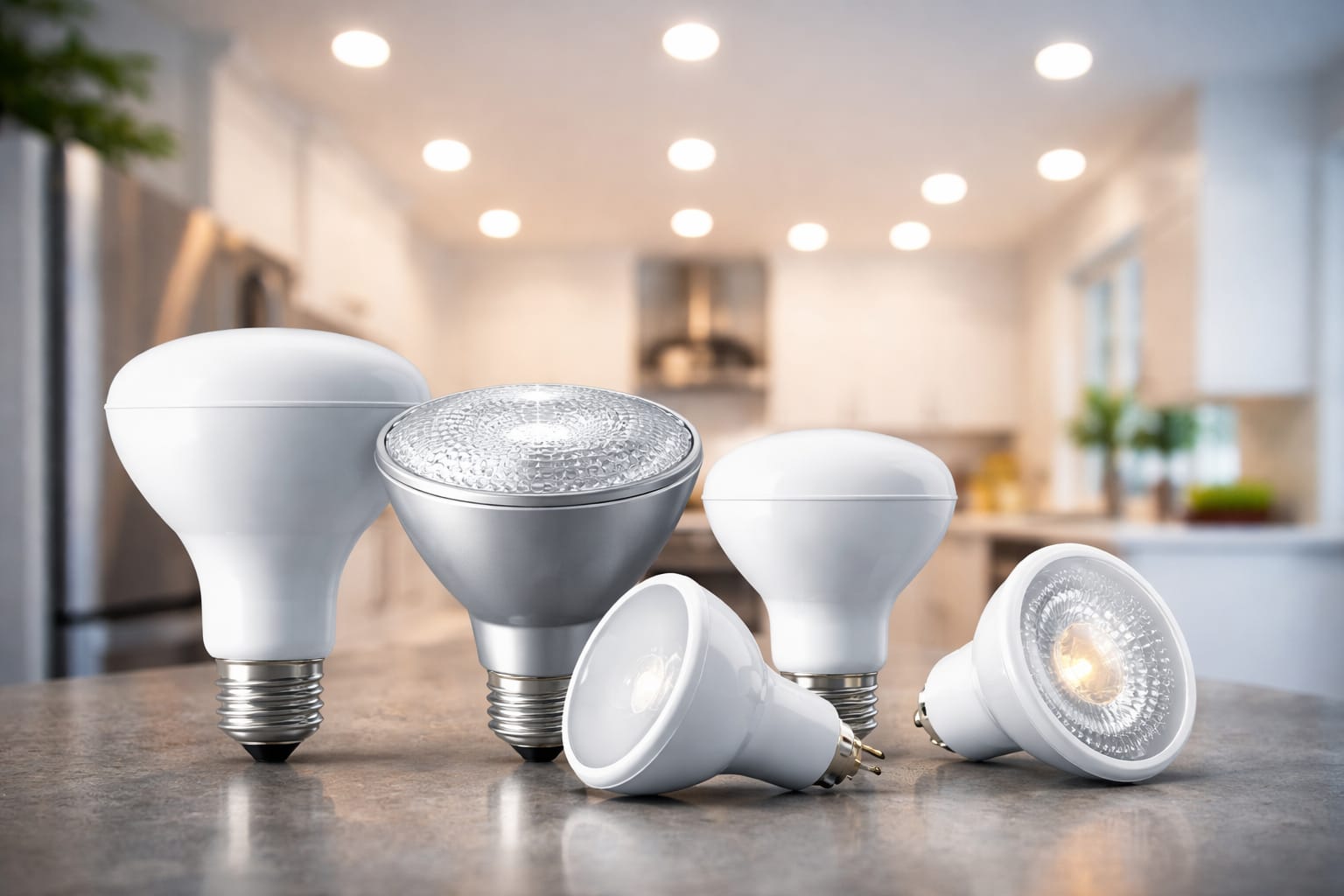
BR30 bulbs are usually the safest starting point for standard home recessed cans. They create a softer, wider flood of light, which works well for bedrooms, living rooms, hallways, and general ceiling lighting where comfort matters more than sharp direction.
PAR30 bulbs usually provide more beam control than BR30 bulbs. They are useful when you want recessed lighting to feel more focused, such as over counters, reading areas, display walls, or smaller zones where the light needs to land more precisely.
PAR38 bulbs are larger and often better for stronger output, taller ceilings, kitchens, and task areas when the housing can support the size. They can be a better choice when a soft BR30 flood feels too weak or too spread out.
Best starting point: Use BR30 for soft everyday lighting, PAR30 for tighter control, and PAR38 for brighter task lighting or taller ceilings. Always confirm the bulb size, base, and housing clearance before buying.
GU10 and MR16 bulbs may also appear in smaller recessed fixtures, but they often need specific sockets, transformers, or low-voltage compatibility. They are useful in compact housings, but they are not the easiest replacement choice for most standard recessed cans. For broader bulb terminology, this beginner’s guide to understanding bulb basics explains the core terms in more detail.
What to Check Before Buying Recessed LED Bulbs
Before comparing brands, check the basics: bulb shape, bulb size, base type, lumens, beam angle, dimming compatibility, color temperature, CRI, and moisture rating. A high-quality bulb can still perform badly if it does not match the recessed housing or the room’s purpose.
Lumens tell you how much light the bulb produces. For general recessed lighting, many rooms work well with bulbs around 650 to 1,000 lumens per fixture, but kitchens, bathrooms, and work areas may need more. Wattage is less useful than lumens because LED bulbs can produce similar brightness with very different energy use.
Beam angle controls how widely the light spreads. A wide beam creates softer, more even room lighting, while a narrow beam creates more focused light. Ceiling height matters too: lower ceilings usually need wider beams to avoid harsh spots, while taller ceilings may need a more controlled beam so the floor does not feel dim.
CRI matters when color accuracy is important. A CRI above 80 is usually acceptable for general use, while CRI 90+ is better for kitchens, bathrooms, closets, artwork, and any room where colors should look natural rather than dull or distorted.
Do not choose recessed bulbs by wattage alone. The wrong size, beam angle, or housing fit can still create glare, excess heat, dark spots, or poor coverage even if the bulb seems bright enough.
How Bright Should Recessed LED Bulbs Be by Room?
Brightness only works when it matches the room. Kitchens, bathrooms, bedrooms, hallways, and living rooms do not need the same output, even if the recessed fixtures look similar. The goal is not just to buy the brightest bulb, but to create even coverage without glare, harsh hot spots, or dim corners.
Kitchens usually need stronger recessed lighting because prep, cooking, cleaning, and counter work require clear visibility. Many kitchens work best with bulbs in the 800- to 1,000-lumen range per fixture when spacing is planned properly. For larger kitchens, taller ceilings, or task zones above counters, sinks, or islands, a PAR38 recessed bulb for brighter kitchen task lighting can be a better fit if your housing supports the larger size.
Bathrooms often need brightness levels similar to kitchens because shaving, makeup, grooming, and mirror use require clear light. A neutral color temperature around 3000K to 4000K usually works better than very warm or very cool light because it keeps skin tones and surfaces looking more natural. In bathrooms, always check whether the bulb needs a damp or wet rating.
Living rooms and bedrooms usually feel better with softer output, warmer color temperature, and wider beams. Around 600 to 750 lumens per fixture may be enough in many relaxing spaces, especially if the room also has lamps or layered lighting. If you need ideas beyond recessed fixtures, our guide to LED bulbs for bedroom lighting covers other comfortable options for the space.
Hallways, closets, and transition areas usually need practical, even light rather than very high output. Neutral white bulbs can help these areas feel clear without making them harsh. If the room uses a ceiling fan instead of recessed cans, our guide to the best LED bulbs for ceiling fans explains the different requirements.
Beam Angle and Color Temperature
Beam angle and color temperature decide how recessed lighting feels once the bulb is installed. A bulb can have enough lumens and still look wrong if the beam is too narrow, too wide, too warm, or too cool for the room.
Narrow beam angles around 15 to 30 degrees are better for accent lighting, artwork, textures, display walls, or specific features. Medium beams around 35 to 50 degrees offer a practical balance for many home setups. Wide flood beams above 60 degrees create softer, broader coverage and are often more comfortable for living spaces and bedrooms.
Do not buy one bulb style for every recessed fixture in the house. Match the beam angle to the ceiling height and room purpose, then keep similar bulbs together within the same room for a consistent look.
For color temperature, 2700K to 3000K usually feels warm and comfortable in bedrooms, living rooms, and dining rooms. Around 3500K to 4000K works well in kitchens, bathrooms, hallways, and multipurpose spaces because it looks cleaner without becoming too cold. Cool white above 5000K is better reserved for garages, utility rooms, workshops, and areas where visibility matters more than atmosphere.
For taller rooms where recessed bulbs need more throw and better beam control, this guide to lighting for high ceilings can help you plan the full setup beyond the bulb choice.
If you want to understand how LED components affect output, efficiency, and color quality, this guide on how modern bulb technology works gives useful background without needing to change your buying process.
Best Recessed LED Bulbs by Use Case
The best recessed LED bulb depends on what the room needs to do. A bedroom, kitchen, bathroom, and accent wall may all use recessed lighting, but they should not always use the same bulb.
- Best for general room lighting: BR30 LED flood bulbs with a wide beam and warm or neutral white color temperature.
- Best for kitchens: higher-lumen BR30 or PAR38 bulbs with good color rendering and controlled glare.
- Best for accent lighting: PAR30 or PAR38 bulbs with a narrower beam angle.
- Best for bathrooms: damp-rated or wet-rated bulbs with neutral white color temperature and good CRI.
- Best for bedrooms: warm white, dimmable, wide-beam bulbs that can create softer light at night.
Better brands usually stand out through consistent brightness, color quality, dimming performance, and warranty support. Established manufacturers are also less likely to overpromise on lifespan, lumen output, or color consistency. ENERGY STAR certification can also help when comparing unfamiliar products because certified bulbs are tested for efficiency and performance standards.
Smart recessed bulbs can be useful if you want app control, schedules, scenes, or adjustable color temperature. They are not necessary for every room, but they can make sense in multipurpose spaces where you want brighter light during the day and warmer, softer light at night.
Best Dimmable Recessed Bulbs: Avoid Flicker and Buzzing
Dimmable recessed bulbs are useful in rooms that change purpose throughout the day. A kitchen may need bright task light in the morning and softer light in the evening. A bedroom may need clear light while getting ready and very low light at night.
The problem is that not every bulb labeled dimmable performs well. Poor bulb-and-dimmer combinations can cause flicker, buzzing, sudden jumps in brightness, limited dimming range, or lights that never get low enough. Before buying a full set, check the manufacturer’s dimmer compatibility list and test one or two bulbs if possible. If flicker is the main issue in your setup, this guide to the best dimmable LED bulbs with no flicker explains what to look for before replacing multiple bulbs.
Premium dimmable bulbs can often dim below 10% of full output, which is helpful for bedrooms, hallways, and evening use. Cheaper bulbs may stay too bright even at the lowest setting, which defeats the purpose of dimming in comfort-focused rooms.
If your recessed lights flicker or feel unstable at low brightness, switching to a PAR30 dimmable recessed bulb for smoother low-level dimming can help when the fixture and dimmer are compatible. This is especially important in bedrooms, quiet rooms, video recording spaces, or anywhere flicker becomes distracting.
For general efficiency and performance background, the ENERGY STAR guide to LED lighting basics explains what certified LED products are tested for and why quality differences matter.
Installation, Housing, and Trim Compatibility
Even a strong recessed bulb can perform poorly if it does not match the fixture, housing, trim, or room conditions. Before buying, confirm the bulb length, diameter, base type, voltage, beam spread, and whether the housing has enough clearance for heat management.
A bulb that is too large may not sit correctly inside the recessed can. A bulb that sits too deep can waste light or create shadows. A bulb that sticks out too far can look awkward or increase glare. This is why recessed light bulb sizes matter as much as brightness.
IC-rated housings can be in contact with insulation, while non-IC housings need clearance. Heat buildup is especially important in recessed fixtures because poor ventilation can reduce bulb life. For more detail on what shortens or extends LED performance over time, see our guide to LED bulb lifespan.
Trim style also affects the final result. Baffle trims can reduce glare, reflector trims can increase brightness, and adjustable or eyeball trims can help aim light toward a specific area. Matching the bulb beam angle with the trim makes recessed lighting more comfortable and more useful.
For safety and efficiency basics, the U.S. Department of Energy LED lighting guidance is a useful external reference, especially when comparing LED performance with older incandescent or halogen lighting.
Which Recessed LED Bulb Should You Buy?
Choose the bulb that fits your recessed housing first, then match brightness, beam angle, color temperature, dimming, and moisture rating to the room.
- Choose BR30 if you want soft, wide, comfortable light for everyday rooms.
- Choose PAR30 if you need a more controlled beam in a smaller or more focused area.
- Choose PAR38 if you need stronger light for kitchens, taller ceilings, or task zones.
- Choose warm white for bedrooms, living rooms, and dining rooms.
- Choose neutral white for kitchens, bathrooms, hallways, and multipurpose rooms.
- Choose damp- or wet-rated bulbs anywhere moisture is present.
- Choose verified dimmable bulbs if the room uses a dimmer switch.
Once the bulb type is clear, the next step is understanding how it fits into the wider lighting plan. The Lighting Knowledge Center brings together related guides on bulb choice, lighting performance, efficiency, dimming, and room-by-room setup.
FAQ
What Type of Bulb Is Best for Recessed Lighting?
BR30 is usually best for soft general recessed lighting in standard home cans. PAR30 or PAR38 is better when you need a more focused beam, stronger task light, or more control over the direction of the light.
Are BR30 and PAR30 the Same Size?
They are similar in diameter, but they are not the same type of bulb. BR30 bulbs usually spread light more softly, while PAR30 bulbs create a more controlled beam. Always check the fixture dimensions and manufacturer recommendations before replacing one with the other.
Can I Use PAR38 Bulbs in Recessed Lighting?
Yes, if the recessed housing supports the larger bulb size and heat requirements. PAR38 bulbs can work well for kitchens, taller ceilings, and task lighting, but they may be too large for some standard cans.
Do Bathroom Recessed Lights Need Special Bulbs?
Bathroom recessed lights should use damp-rated bulbs when humidity is present. If the bulb may be exposed to direct water, such as in some shower areas, use a wet-rated option that is approved for that location.
Why Do Dimmable Recessed LED Bulbs Flicker?
Flicker often comes from poor compatibility between the LED bulb and dimmer switch. It can also happen with low-quality bulbs, older dimmers, or setups where the bulb cannot dim smoothly at low brightness.
Key Takeaways
The best LED bulbs for recessed lighting depend first on bulb type and fit. BR30 is usually the easiest choice for soft general lighting, while PAR30 and PAR38 are better for focused or brighter light.
Match the bulb to the room: kitchens need stronger task lighting, bathrooms need moisture-rated bulbs, bedrooms need softer dimmable light, and accent areas need tighter beam control.
Before buying a full set, check recessed light bulb size, housing clearance, base type, dimmer compatibility, beam angle, color temperature, CRI, and damp or wet rating.
Sharing This Guide
If you found this guide helpful, save it for later or share it with a friend.
Interested in learning more? Browse all related articles in our category section.