Best LED Bulbs for Ceiling Fans: What Size Base Do You Need?
When choosing the best LED bulbs for ceiling fans, the biggest mistake is buying a bulb that is bright enough but has the wrong base, size, or fixture compatibility. Before comparing brands, check whether your fan uses an E12, E17, or E26 socket, how much clearance the globe has, and whether you need a dimmable or enclosed-fixture-rated LED bulb.
This guide shows you how to choose the right ceiling fan bulb before buying, including when to use A15 bulbs, candelabra base bulbs, dimmable LEDs, and enclosed-rated bulbs. The goal is to avoid flicker, poor fit, harsh light, or early failure in tight fan light kits. If you are new to bulb types in general, this beginner’s guide to LED bulbs is a useful place to start.
Quick Answer
For most ceiling fans, choose a compact LED bulb that matches the socket and fits inside the globe without touching the glass. Many fans use E12 candelabra bulbs, while some use E26 medium-base bulbs in smaller A15 shapes. If the fan has a dimmer or an enclosed globe, choose bulbs clearly rated for dimming and enclosed fixtures.
- Check the socket first: E12, E17, or E26.
- Measure the bulb clearance inside the light kit.
- Choose A15 or compact candelabra bulbs when space is tight.
- Use dimmable LED bulbs if the fan has a dimmer switch.
- Use enclosed-rated bulbs if the globe traps heat.
Table of Contents:
- Quick Answer
- Why Ceiling Fan Bulbs Need Extra Attention
- E12, E17, or E26: How to Find the Right Ceiling Fan Bulb Base
- How Bright Should Ceiling Fan Bulbs Be?
- Do You Need Dimmable LED Bulbs for a Ceiling Fan?
- A15 vs A19: Which Bulb Size Fits Ceiling Fans Better?
- Best Color Temperature for Ceiling Fans
- Does Vibration Matter?
- Do Ceiling Fan Bulbs Need to Be Enclosed-Fixture Rated?
- Energy Efficiency and Running Cost
- Lifespan and Reliability
- Installation Tips
- Common Problems and Fixes
- What Should You Choose?
- Key Takeaways
- Sharing This Guide
Why Ceiling Fan Bulbs Need Extra Attention
Ceiling fan fixtures present a few challenges that aren’t typically encountered with table lamps or standard ceiling lights. Constant vibration, compact globes, upward-facing sockets, and limited airflow can affect a bulb’s performance over time.
This is why the best LED bulbs for ceiling fans are chosen more carefully than random bulbs from a drawer. Even if a bulb matches the socket, it may still be the wrong choice if it is too large, runs too hot in an enclosed globe, or fails to dim properly with the fan controls.
Older fans can be especially tricky because many use smaller sockets or tighter light kits than modern fixtures. Checking the actual requirements first can prevent you from ordering bulbs that work on paper but not in practice.
If the fan light is too harsh for a bedroom or living space, softer options, such as soft white LED bulbs, are usually a better fit than cooler, daylight bulbs.
Why LEDs Usually Win
LEDs are a good choice for ceiling fans because they are more resistant to vibration than incandescent bulbs and produce much less heat. Their solid-state construction means there is no fragile filament that can come loose over time, which is one reason they tend to last much longer in fan fixtures.
They also use far less electricity, which matters even more in multi-bulb ceiling fan light kits. If you want a broader look at quality differences across price tiers, our guide on cheap versus premium LED bulbs explains what you are paying for.
E12, E17, or E26: How to Find the Right Ceiling Fan Bulb Base
Before comparing brightness or color temperature, make sure you know the socket type. The most common options are E12 candelabra, E17 intermediate, and E26 medium-base. Ceiling fans often use smaller sockets than standard household fixtures, especially in decorative or compact light kits.
Candelabra base bulbs are especially common in fan light kits with smaller glass shades or decorative arms. Medium base bulbs are also used, but usually in fans that have more room for larger bulb shapes. Getting this wrong is the fastest way to waste time and money.
If you are unsure, check the existing bulb, the fan manual, or the manufacturer’s product page. You can also measure the threaded metal base directly if the labeling is unclear.
If the old bulb is still available, measuring the threaded base is usually the easiest way to check the socket size. E12 is small, E17 is in the middle, and E26 is the standard household size. That simple check can save you from ordering the wrong bulb shape and base combination.
How Bright Should Ceiling Fan Bulbs Be?
Brightness should be based on the room, not just the fan. If the ceiling fan is the main light source, you need enough total lumens to make the room feel properly lit. If the fan is only one part of the lighting plan, you may not need as much output from each bulb.
A common rule of thumb is around 10 to 20 lumens per square foot from all light sources combined. That means a bedroom, living room, or office with a ceiling fan may need very different bulb output depending on the room size, ceiling height, and how many sockets the fan uses.
This is also where compact bulb shapes become limiting. Smaller candelabra base bulbs usually produce less light than full-size bulbs, so some decorative fan fixtures simply cannot match the output of a large overhead light. That is normal, but it matters when you are choosing the best LED bulbs for ceiling fans for rooms where the fan does most of the lighting work.
Use Lumens, Not Just Watt Equivalents
Packaging often shows incandescent wattage equivalents, but lumens are more useful when you compare actual brightness. Two bulbs labeled 60-watt equivalent may still differ in output, beam pattern, or efficiency. If you want a better feel for how those numbers affect a room, our guide to color temperature differences also helps explain why equal brightness can still feel very different in practice.
Do You Need Dimmable LED Bulbs for a Ceiling Fan?
If your fan light is controlled by a dimmer, then yes, you should use dimmable LED bulbs. Non-dimmable LEDs often flicker, buzz, shut off early, or behave unpredictably on dimmer circuits. That is one of the most common reasons people think the bulb is bad when the real problem is compatibility.
Even with dimmable bulbs, older dimmer switches can still cause issues if they were designed for incandescent loads only. In those cases, switching to an LED-compatible dimmer usually fixes the problem. This matters a lot in ceiling fans because people often expect the light and fan controls to “just work” together.
If smooth low-end dimming matters to you, it is worth buying better bulbs instead of the cheapest option. When flicker becomes noticeable, switching to dimmable LED bulbs designed for stable output is usually a much better move than guessing at random replacements.
Good dimmable ceiling fan bulbs should dim smoothly, hold steady at lower brightness levels, and avoid abrupt jumps or dead zones. Cheap bulbs may technically dim, but still perform badly enough to be frustrating in daily use. That is one reason reading user reviews can be helpful when choosing the best LED bulbs for ceiling fans.
A15 vs A19: Which Bulb Size Fits Ceiling Fans Better?
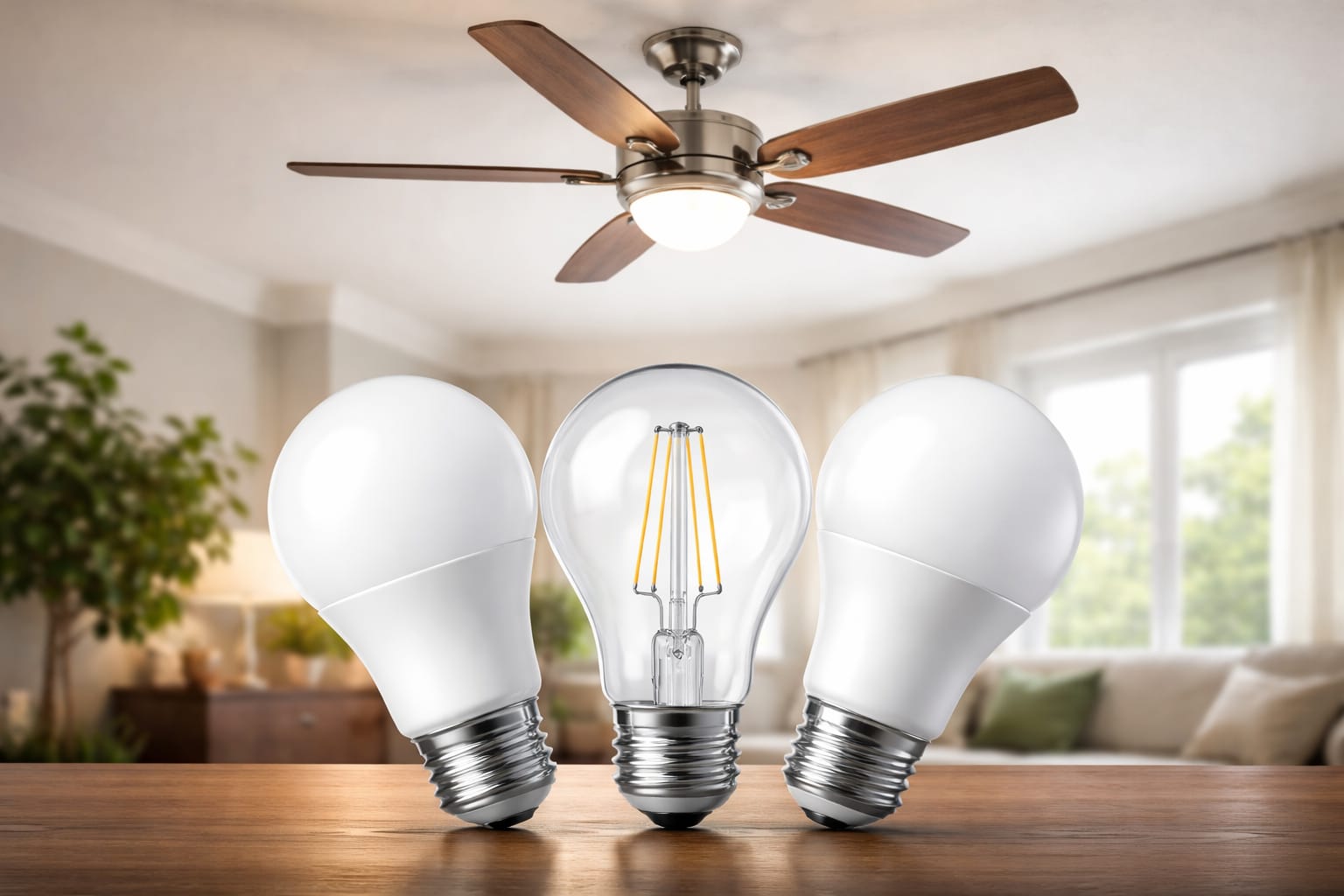
This is one of the most significant issues with ceiling fan bulbs in the real world. Even if a bulb matches the socket, it may not fit under the globe or shade. Many fan light kits are compact, so standard A19 bulbs are often too wide or long to fit properly.
That is why smaller shapes, such as A15 bulbs, compact globe bulbs, or decorative candelabra base bulbs, are often the better choice. These bulbs fit more easily inside tight glass covers and provide decent output when matched correctly to the room.
Before buying, measure the inside of the light kit and compare it with the bulb dimensions listed by the manufacturer. This one step can prevent a lot of pointless returns.
Measure the Globe Clearance Before Buying
Check the maximum length and width that the fixture can accept. Leave a little breathing room rather than choosing the tightest possible fit, especially if the globe closely encloses the bulb and could cause heat to build up around it.
Best Color Temperature for Ceiling Fans
For most bedrooms and living rooms, bulbs with a color temperature in the 2700K to 3000K range are the safest choice. They are more comfortable and less harsh and usually suit the everyday role that ceiling fan lights play in homes.
Neutral white bulbs, around 3500K to 4000K, work well in kitchens, home offices, and other task-focused spaces where you want better clarity without making the room feel cold. Cooler, daylight bulbs can appear brighter but may feel too stark in many residential settings.
This is why the best LED bulbs for ceiling fans are not always the brightest option on the shelf. In shared living spaces, comfort is as important as raw output. For more information on balancing ambiance and visibility in room planning, see our guide on the best LED bulbs for living rooms.
Keep the Bulbs Matched
For multi-bulb fan fixtures, use bulbs of the same brand and color temperature in every socket. Mixing bulbs often makes the fixture look uneven, and the differences are much more noticeable when the bulbs are placed next to each other.
Does Vibration Matter?
Yes, but less than with older bulb types. One reason LEDs work so well in ceiling fans is that they can handle vibration much better than incandescent bulbs can. There is no fragile filament that can break, so LED bulbs are naturally better suited to moving fixtures.
That said, build quality still matters. Better-made bulbs tend to last longer in vibrating fixtures, especially in compact ceiling fan light kits. Some products are labeled for use with ceiling fans or for vibration resistance, which is worth prioritizing if reliability is your main concern.
Make sure the bulbs are properly seated in the sockets, too. A bulb that is only partly tightened can gradually work itself loose and start flickering, even if the bulb itself is fine.
Do Ceiling Fan Bulbs Need to Be Enclosed-Fixture Rated?
Heat is one of the main reasons LED bulbs fail prematurely in ceiling fans. Many fan light kits use enclosed or semi-enclosed globes that trap warm air around the bulb. That is why enclosed-rated LEDs are often the safer choice, especially in upward-facing or tightly covered fixtures.
A bulb not rated for enclosed use may light up fine initially, but long-term heat stress can shorten its lifespan or cause performance instability. If the fixture is tight and the bulb sits inside a small globe, enclosed-fixture compatibility matters more than many people realize.
If your fan uses a very enclosed globe and you want better long-term stability, prioritize compact, enclosed-fixture-compatible bulbs over brightness.
Some fan housings allow more airflow than others, which helps. However, a bulb designed for enclosed fixtures is usually safer than one that depends on open-air conditions to stay cool.
Energy Efficiency and Running Cost
LEDs use far less electricity than incandescent or halogen bulbs to achieve the same brightness. This is especially important for ceiling fans, which often use two, three, or four bulbs at once. Multiply that wattage difference by every hour the light is on, and the savings add up quickly.
A four-bulb fan with 60-watt incandescent bulbs uses 240 watts in total. Switching to four LED replacements, each using around 8 to 10 watts, drops that total wattage drastically. The U.S. Department of Energy’s LED lighting efficiency guidelines explain why this efficiency gap leads to meaningful long-term savings.
If you have recessed lights in the same room, our guide to the best LED bulbs for recessed lighting can help you maintain consistent brightness and tone throughout the room.
Lifespan and Reliability
A good LED bulb can last for years in a ceiling fan, especially if the fixture does not run excessively hot. This long lifespan is one of the main reasons people switch. It means fewer replacements, fewer trips up the ladder, and less hassle in everyday use.
The best LED bulbs for ceiling fans also tend to maintain their brightness more consistently over time. They usually dim gradually rather than failing suddenly, which is why stronger warranties and a good manufacturer reputation matter. Our guide on expected longevity factors explains what affects long-term reliability.
For many people, reliability is just as important as efficiency. A slightly more expensive bulb that fits properly, dims well, and lasts longer is usually a better investment than the cheapest option that causes recurring problems.
Installation Tips
Turn off the power at the breaker before changing bulbs, especially if you are working from a ladder. Let older bulbs cool before handling them. Install the new bulbs carefully by their bases, rather than gripping them too hard through their plastic bodies.
Once the bulbs are installed, ensure that each bulb is snug but not overtightened. Then, test the light. If applicable, run the dimmer through the full range to see if flicker, buzzing, or dead spots appear right away.
Testing the light quickly after installation saves a lot of guesswork later and helps confirm that the bulb, fan, and controls are working properly together.
Common Problems and Fixes
Flickering usually indicates dimmer incompatibility, a loose bulb, or an incorrect bulb type for the circuit. Buzzing often comes from a bulb-dimmer mismatch. Early failure usually indicates heat buildup, especially in enclosed fixtures where the bulb was not rated for that environment.
Another common issue is a poor fit. A bulb may fit, but it may press awkwardly against the globe or sit too close to the glass. This can cause heat and clearance problems. That is why size and enclosed rating are just as important as the base type.
If you run into repeated issues, it is usually better to choose a different bulb rather than replacing it with a random model. In other words, solve the compatibility problem, not just the symptom.
What Should You Choose?
For most buyers, the best approach is to consider these factors in this order: socket type, bulb size, enclosed rating, dimming, and then color temperature.
- If the socket is E12, choose compact candelabra base bulbs.
- If the space is tight, avoid large A19 bulbs and consider smaller A15 bulbs or decorative compact shapes.
- If the fan uses a dimmer, only choose dimmable LED bulbs.
- If the fixture is enclosed, use bulbs with an enclosed rating for better reliability.
- For bedrooms and living rooms, a warm white color temperature of 2700K to 3000K usually feels best.
Key Takeaways
The best LED bulbs for ceiling fans match the socket type, fit the light kit properly, and can handle the fixture’s heat and control setup.
Before buying, check the base type, bulb dimensions, brightness needs, dimming requirements, and whether the bulb is rated for enclosed fixtures. These details matter much more than a vague “ceiling fan bulb” label.
When you get the fit and compatibility right, you usually end up with greater comfort, fewer failures, lower energy use, and a much less frustrating ceiling fan setup experience.
Sharing This Guide
If you found this guide helpful, save it for later or share it with someone who needs to choose bulbs for a ceiling fan.
Share using the links below.
Interested in learning more? Browse all related articles in our category section.