Ambient vs Task vs Accent Lighting: Differences, Examples & Uses
Ambient, task, and accent lighting are the three main lighting layers used to make a room feel bright, practical, and visually balanced. Ambient lighting fills the room, task lighting helps with focused activities like reading or cooking, and accent lighting highlights artwork, shelves, walls, or architectural details.
If a room feels flat, harsh, shadowy, or unfinished, the problem is often not “more light” but the wrong mix of layers. This guide explains ambient vs task vs accent lighting with clear examples, fixture ideas, room-by-room uses, and simple rules for choosing the right layer first.
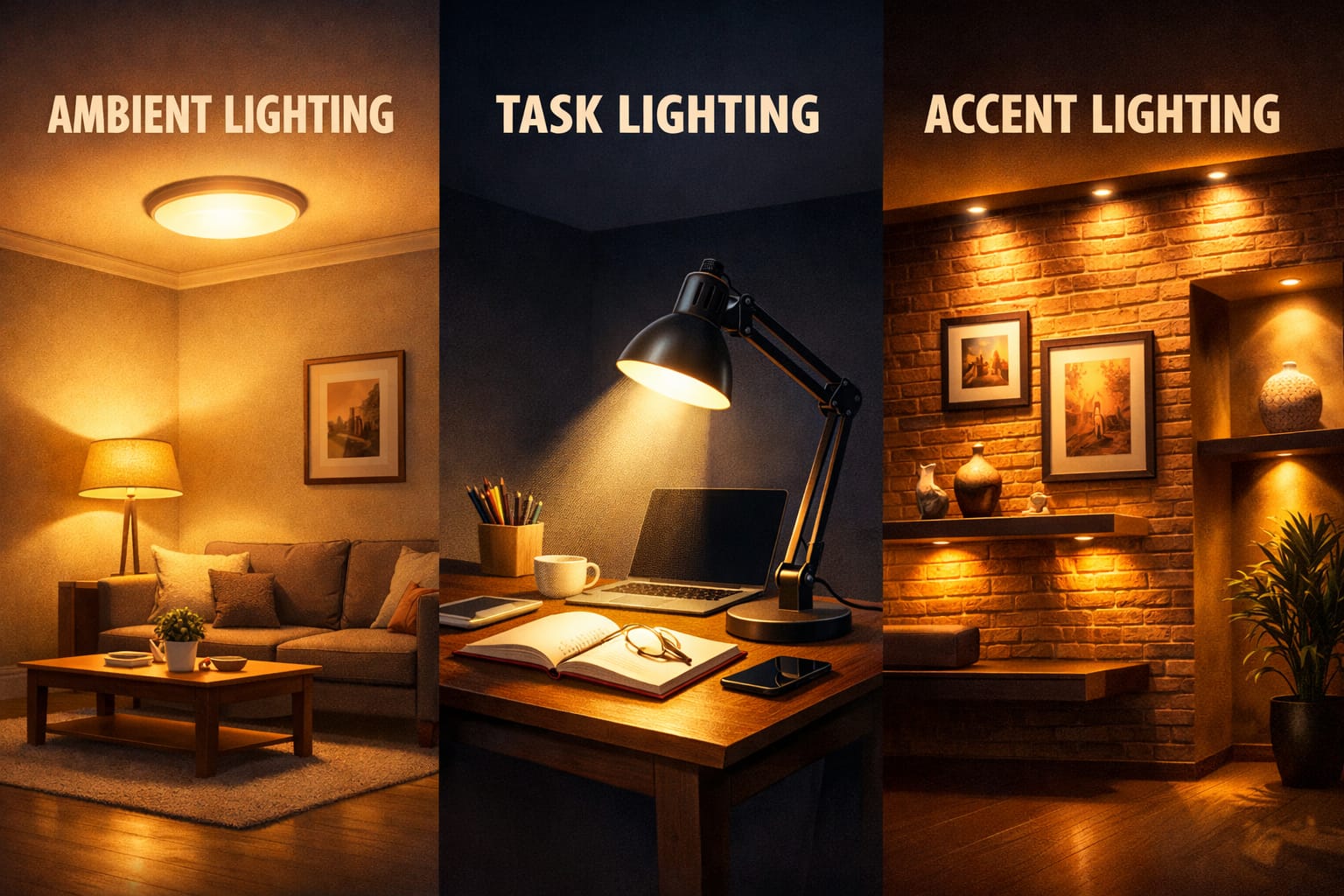
Table of Contents:
- Ambient vs Task vs Accent Lighting at a Glance
- Ambient Lighting: Meaning, Examples and Best Uses
- Task Lighting: Meaning, Examples and Placement
- Accent Lighting: Meaning, Examples and When to Use It
- How to Layer Ambient, Task and Accent Lighting
- How to Choose Fixtures and Brightness
- Room-by-Room Lighting Examples
- Dimming, Controls and Common Mistakes
- FAQ
- Sharing This Guide
Ambient vs Task vs Accent Lighting at a Glance
Ambient lighting is the general light in a room, task lighting is focused light for activities like reading, cooking, grooming or desk work, and accent lighting highlights artwork, shelves, walls or architectural features. A good lighting plan usually starts with ambient light, adds task light where work happens, then uses accent light to create depth and focus.
The easiest way to understand the three types of lighting is to think about the job each layer does. Ambient lighting helps you see the room, task lighting helps you do something in the room, and accent lighting helps the room look more intentional.
- Ambient lighting: the base layer for general visibility, movement and everyday comfort.
- Task lighting: focused light for reading, cooking, desk work, grooming, crafts or detailed activities.
- Accent lighting: decorative or directional light that highlights art, shelves, textures, walls or architectural features.
A room can be bright and still feel wrong if the layers are not balanced. For example, a kitchen with only ceiling lights may look bright but still cast shadows on the counter. A living room with only lamps may feel cozy but too dim for cleaning or moving around. A room with only accent lighting may look dramatic but not comfortable for daily use.
Ambient Lighting: Meaning, Examples and Best Uses
Ambient lighting is the base layer that makes a room usable. It gives you the general brightness you need to move around safely, see the space clearly, and avoid the cave-like feeling that comes from relying only on small lamps or narrow beams. In most rooms, this is the first layer to solve because everything else depends on it.
Common ambient lighting examples include ceiling fixtures, recessed downlights, large pendants, flush mounts, chandeliers, wall sconces and broad floor or table lamp coverage. The goal is not dramatic focus. It is even, comfortable visibility that supports everyday life without harsh contrast.
This layer matters because a room can have beautiful accent lighting or excellent task lighting and still feel wrong if the ambient layer is too weak. Many homes rely on one central ceiling fixture and assume that solves the room, but one fixture often leaves corners, seating areas or work zones feeling uneven.
Natural daylight also acts as ambient light during the day, which is why artificial lighting can feel fine in daylight hours and suddenly feel unbalanced after sunset. Understanding that baseline layer is one of the most important lighting design fundamentals for any room.
If a room feels dim even though it has several lamps, the missing piece is often weak ambient coverage rather than a lack of decorative detail.
Task Lighting: Meaning, Examples and Placement
Task lighting is the layer that helps you do something clearly. Reading, chopping food, applying makeup, working at a desk, sewing, shaving and writing all need more focused light than the rest of the room. That is why task lighting should be planned around real activities, not just around the center of the ceiling.
Instead of trying to make the entire room very bright, task lighting puts extra light exactly where it is needed. This usually means desk lamps, under-cabinet strips, vanity lights, reading sconces, pendants over work areas, or adjustable floor lamps positioned near a chair or workstation.
For reading corners, desks, studying or close-up work, an adjustable LED task lamp for reading, desk work or detailed tasks is usually more useful than simply making the whole room brighter. The point is to light the surface you use, not to flood the entire room with unnecessary brightness.
Placement matters as much as brightness. If the fixture is behind you, it may cast shadows across your work. If it is too exposed, it may create glare. In kitchens, task lighting usually works best under cabinets or over islands. In bathrooms, it should light the face evenly. In home offices, it should illuminate the desk surface without bouncing glare into the screen.
Task areas usually need noticeably more light than their surroundings, but not so much that the contrast becomes uncomfortable. Good task lighting feels obvious in use but visually quiet in the room: you notice that the surface is easy to see, not that the light is aggressively aimed at your eyes.
Accent Lighting: Meaning, Examples and When to Use It
Accent lighting is the layer that adds depth, focus and visual interest. Its main job is not to make the room generally usable or to help you complete a task. Its job is to guide the eye, highlight features and make the space feel more designed.
Common accent lighting examples include picture lights, wall washers, track heads aimed at art, toe-kick lighting, shelf lighting, uplights and LED strips used to highlight architectural details. This is the layer that makes a fireplace look more dramatic, artwork stand out, shelving feel intentional, or textured walls look more dimensional.
Accent lighting works through contrast. If everything is lit equally, nothing feels special. A slightly brighter wall, a highlighted object, or a lit architectural line gives the eye a focal point. That is why accent lighting is often the difference between a room that feels flat and one that feels finished.
In a strong layered lighting design, accent lighting usually comes after the ambient and task needs are already covered. It is the finishing layer, not the foundation. If the room is still hard to use, fix ambient or task lighting first; if the room works but feels plain, accent lighting is often the next best upgrade.
How to Layer Ambient, Task and Accent Lighting
The best way to layer lighting is simple: start with ambient light so the room is usable, add task light where specific activities happen, then use accent light to create depth, focus and atmosphere. This order keeps the room practical before it becomes decorative.
This layered approach matters because one type of lighting cannot do every job well. If you rely only on ambient lighting, the room can feel flat and unfocused. If you rely too heavily on task lighting, the room can feel uneven or harsh. If you focus on accent lighting without enough ambient support, the room may look dramatic but not comfortable to live in.
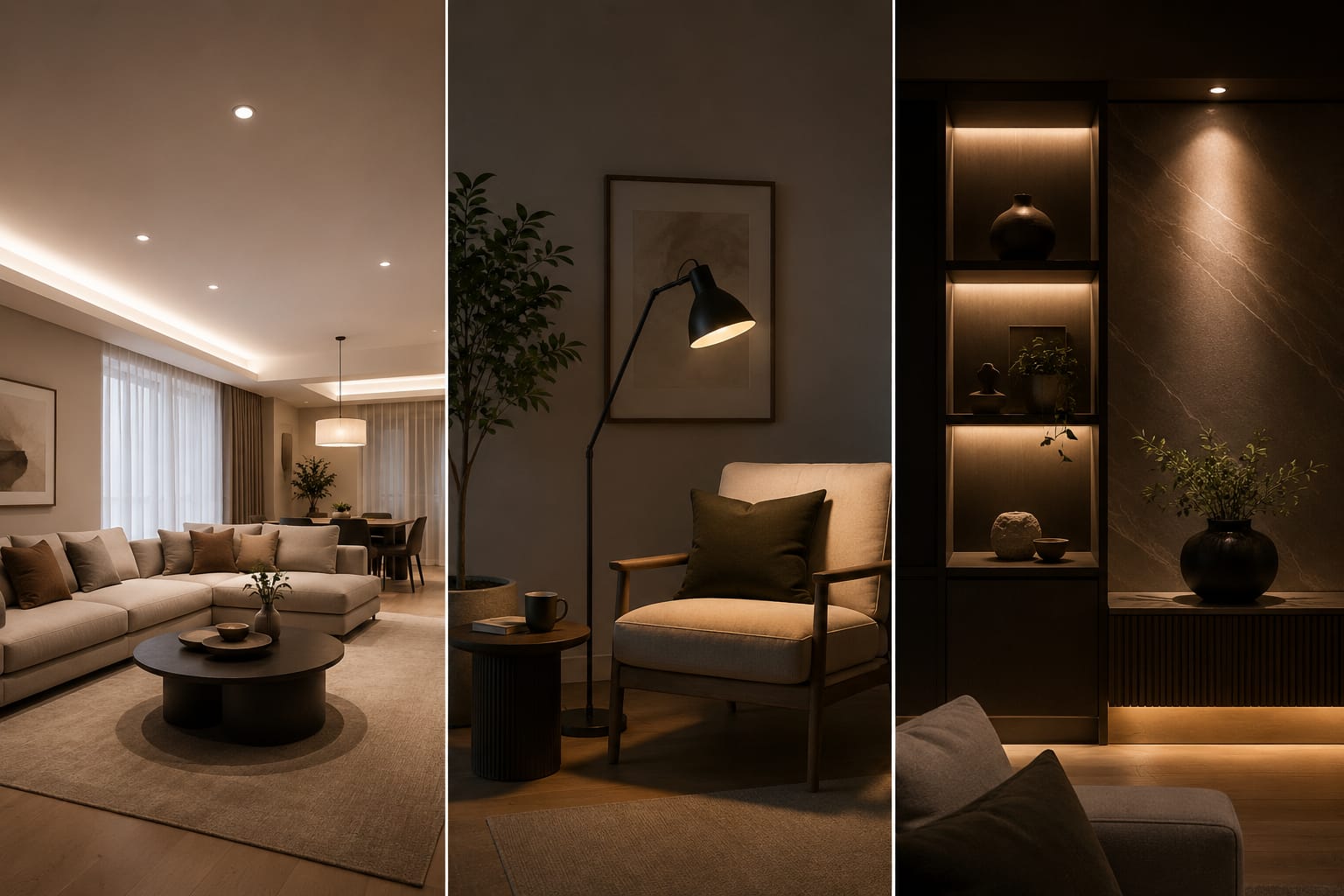
A practical lighting hierarchy looks like this: ceiling fixtures, recessed lights or broad lamps handle base brightness; desk lamps, vanity lights or under-cabinet strips handle close-up work; picture lights, shelf strips or wall washers add the finishing depth. The room works when each layer has a clear job instead of one fixture trying to do everything.
If you want to apply this more precisely room by room, a structured lighting layout planning guide can help you map where each layer should go before you start buying fixtures.
What Should You Choose First?
- If the whole room feels dim: improve ambient lighting first.
- If a specific activity feels difficult: add task lighting near the work area.
- If the room works but looks flat: add accent lighting to create depth.
- If the room feels harsh at night: add dimming or separate controls before buying more fixtures.
How to Choose Fixtures and Brightness
Choosing fixtures becomes easier once you know which layer they belong to. Recessed downlights, flush mounts, chandeliers and large pendants often serve ambient needs. Desk lamps, vanity bars, reading sconces and under-cabinet strips serve task needs. Picture lights, track heads, toe-kick strips and shelf LEDs serve accent needs.
Some fixtures can cross roles. Pendant lights over an island may support both task and ambient lighting. A table lamp may act as soft ambient light in the evening and gentle task light when placed near a chair. The key is understanding what job the fixture is mainly doing in the room.
Brightness should feel balanced, not competitive. The ambient layer should not wash everything out. The task layer should be brighter where work happens, but not so intense that your eyes keep readjusting. The accent layer should stand out enough to create focus without stealing attention from every other element in the room.
Color quality also matters. High-CRI light can make food, skin tones, materials and text look clearer without relying only on higher brightness. The U.S. Department of Energy LED lighting guidance is a useful reference for understanding why efficient LED sources can provide strong brightness with lower energy use.
Fixture choice should follow the layer role first and style second. A decorative exposed bulb may look attractive as a feature, but it can create glare if it is forced to do heavy ambient work above a seating area. A focused desk lamp may be excellent for reading, but it will not solve a dark room by itself.
Room-by-Room Lighting Examples
The same three lighting layers work in most rooms, but the balance changes depending on how the space is used. A kitchen needs stronger task lighting, a bedroom needs softer control, and a living room usually needs a flexible mix for relaxing, reading, entertaining and moving around.
Living Rooms
Living rooms are one of the clearest examples of why all three layers matter. Ambient light may come from recessed lights, a central ceiling fixture, broad floor lamps or table lamps. Task lighting often appears as reading lamps beside a sofa or chair. Accent lighting may highlight artwork, shelves, a fireplace wall or architectural details.
Without task lighting, the room may feel fine until someone wants to read. Without accent lighting, it may feel usable but visually flat. Without enough ambient support, it may look cozy in photos but awkward and underlit in real life.
If your main goal is improving a lounge or family room, choosing the best LED bulbs for living rooms can help you match brightness, warmth and comfort to the way the space is actually used.
Kitchens
Kitchens depend heavily on task lighting because food preparation needs clarity and shadow control. Ambient light may come from ceiling cans or a broad central fixture, but under-cabinet strips, island pendants and focused counter lighting usually handle the most important practical work.
Accent lighting in kitchens is usually more subtle. It may appear in glass-front cabinets, toe-kick strips, shelf lighting, or soft feature lighting around a backsplash or hood area. It is not always necessary, but it can add polish once the room already works functionally.
Bedrooms
Bedrooms usually need a softer version of the three layers. Ambient lighting should feel calm rather than clinical. Task lighting is often limited to bedside reading, dressing or closet visibility. Accent lighting may come from headboard strips, shelf lighting, soft wall washers or subtle decorative lamps.
Bedrooms benefit from dimming more than almost any other room because they often shift between morning routines and evening relaxation. If you are planning a bedroom specifically, our bedroom lighting design guide goes deeper into fixture placement and mood balance.
Bathrooms
Bathrooms need stronger task support than many people expect. Overhead ambient light alone often creates shadows on the face, which is why mirror-area lighting is so important. Vanity lighting on both sides of the mirror or carefully placed frontal light usually works better than relying only on a ceiling fixture.
Ambient lighting still matters for the rest of the room, especially in the shower and circulation areas. Accent lighting is more optional, but it can work well in niches, toe kicks or spa-like settings where the room is also meant to feel relaxing.
Dimming, Controls and Common Mistakes
Control is what turns a layered lighting plan into something that works day to day. Even if you have the right fixtures, the room will feel limited if everything comes on at one fixed brightness every time. Dimming, scene presets and separate switching make the room much more adaptable.
This matters because the same room often shifts between different uses. You may want full ambient and task support in the morning, softer ambient and accent use at night, and only a small task light for a short activity after dark. If you want separate control over each layer, comparing smart bulbs vs smart switches can help you decide whether to control individual lamps, full circuits or complete room scenes.
Smart control can help when you want to automate certain combinations or connect lighting to routines, but even basic dimmers and separate switches make a big difference. The important part is not how advanced the system is. It is whether the layers can be adjusted independently enough to suit real life.
Good dimming also depends on compatible LED products. The ENERGY STAR guide to LED lighting basics is a useful source for understanding LED performance, efficiency and product quality before choosing bulbs or fixtures.
Common mistakes to avoid:
- Using one ceiling fixture to solve every lighting need.
- Making the whole room brighter instead of adding task light where work happens.
- Adding decorative accent lighting before the room has enough ambient light.
- Ignoring glare, shadows and fixture placement.
- Putting all lighting layers on one switch with no dimming or separate control.
If your room still feels uneven after adding more fixtures, it may be worth checking these common lighting placement mistakes before buying anything else.
FAQ: Ambient, Task and Accent Lighting
What Is the Main Difference Between Ambient and Accent Lighting?
Ambient lighting gives the room general visibility, while accent lighting highlights a specific object, wall, shelf, texture or architectural detail. Ambient lighting makes the space usable; accent lighting makes it look more dimensional and intentional.
Is Task Lighting Brighter Than Ambient Lighting?
Task lighting is usually brighter at the work surface, but it should not feel harsh or disconnected from the room. The goal is focused clarity, not maximum brightness everywhere.
What Is the Best Lighting for Reading or Desk Work?
Task lighting is usually the best choice for reading, studying, desk work or detailed activities because it puts focused light exactly where your eyes need it. An adjustable LED task lamp for reading and desk work can be a practical option when the room already has enough general ambient light.
Do You Need All Three Types of Lighting in Every Room?
Not always, but most main living spaces feel better with all three layers. Small utility spaces may only need ambient and task lighting. Living rooms, bedrooms, kitchens and bathrooms usually benefit from a more balanced mix.
Key Takeaways
Ambient lighting gives a room its base visibility, task lighting supports specific activities, and accent lighting adds depth or focus. Rooms usually feel best when all three layers work together instead of one fixture trying to do everything alone.
The easiest way to plan a room is usually to solve ambient first, then task, then accent. That order helps you cover function before decoration and keeps the room from feeling either flat, patchy or unfinished.
Controls matter because brightness relationships change throughout the day. Dimming and separate switching often make the difference between a room that is technically well lit and one that actually feels good to live in.
Sharing This Guide
If you found this guide helpful, you can save it for later or share it with a friend. It’s especially useful for beginners, homeowners and DIY users who want to understand lighting layers before choosing fixtures.
Interested in learning more? Browse all related articles in our category section.