LED vs CFL vs Halogen: Which Bulb Should You Choose?
The short answer: LED bulbs are the best choice for most homes because they use less energy than halogen bulbs, last longer than CFLs in most real-world situations, run cooler, and work well in everyday rooms.
Halogen bulbs still make sense for smooth dimming, compact specialty fittings, or very high color accuracy. CFL bulbs are usually worth keeping only if you already have them installed. This guide compares LED, CFL and halogen bulbs by cost, lifespan, dimming, heat, light quality, disposal and best use cases so you can choose the right bulb without relying on outdated advice.
LED vs CFL vs Halogen: Quick Verdict
If you are replacing old bulbs today, choose LED for most fixtures. Choose halogen only when smooth dimming, compact size, color rendering, or fixture compatibility matters more than efficiency. Keep CFLs only when they still work well or when you need to match an existing setup.
- Best overall: LED, because it combines low energy use, long lifespan, instant brightness and good light quality.
- Best for smooth dimming: halogen, especially in older dimmer setups where LED compatibility is uncertain.
- Best to keep temporarily: CFL, but mainly if you already own the bulb and it is working properly.
- Best for whole-home upgrades: LED, because it performs well across kitchens, living rooms, bedrooms, hallways, bathrooms and utility areas.
- Worst choice for new purchases: CFL in most cases, because LEDs now offer better flexibility, easier disposal and stronger long-term value.
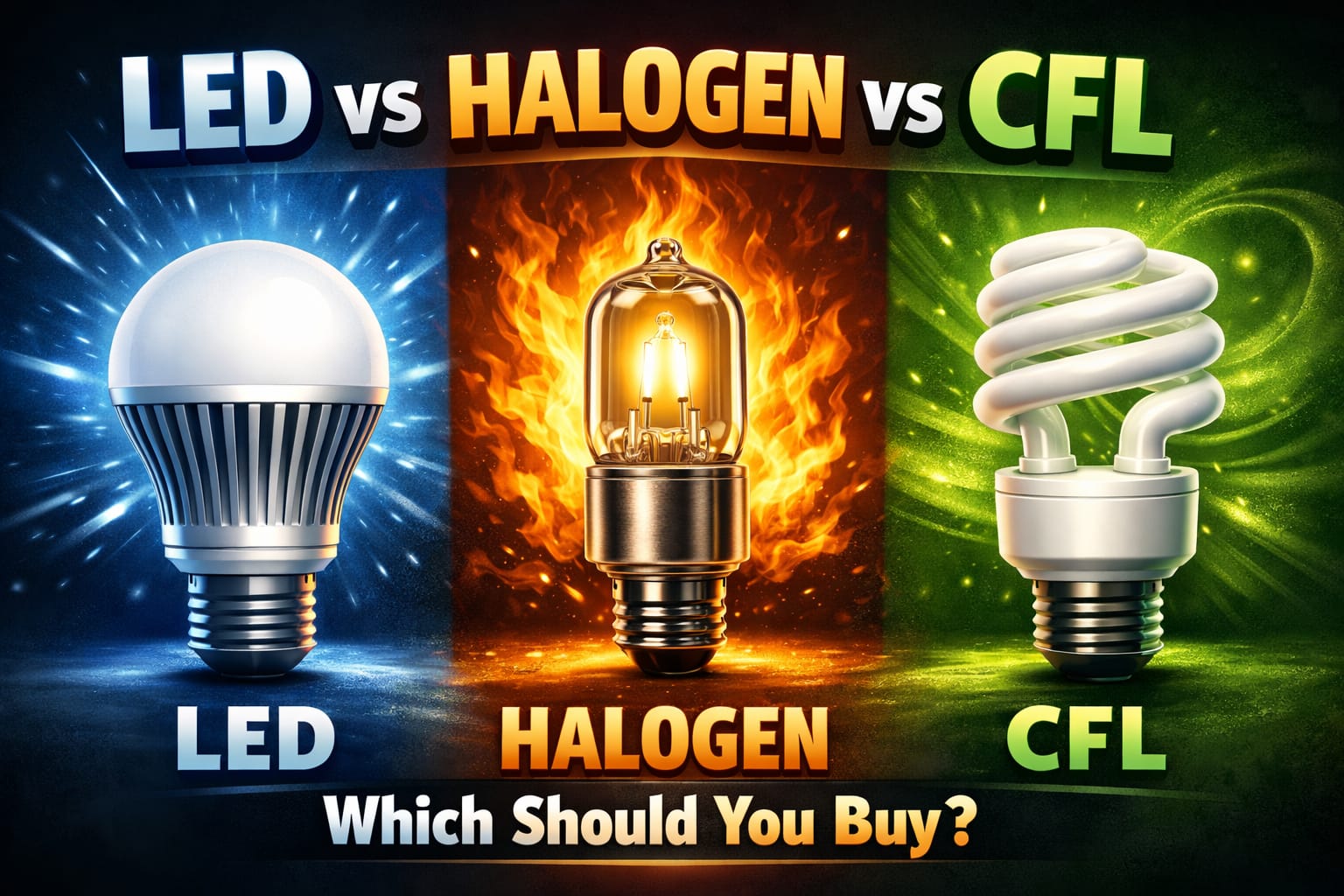
Table of Contents:
LED vs CFL vs Halogen Comparison Chart
This quick bulb comparison shows the practical differences most homeowners care about: energy use, lifespan, dimming, heat, disposal and where each bulb type still makes sense. If terms like lumens, watts, CRI or color temperature feel confusing, this LED lighting terms guide explains the labels shoppers usually see before buying.
LED Bulbs
Best Overall Choice
Best for: most homes, daily use, whole-house upgrades, kitchens, living rooms, bedrooms and utility areas.
Main strengths: lowest energy use, long lifespan, instant brightness, lower heat and flexible light quality.
Watch out for: cheap models, poor dimmer compatibility and enclosed fixtures that need rated bulbs.
CFL Bulbs
Keep Only If Already Installed
Best for: existing CFL setups, lower-priority fixtures and lights that stay on for longer periods.
Main strengths: more efficient than halogen and usually longer lasting than halogen bulbs.
Watch out for: slow warm-up, weak dimming, frequent switching, mercury content and the need for careful disposal.
Halogen Bulbs
Best for Specific Fixtures
Best for: smooth dimming, compact specialty fittings, decorative lighting and high color rendering.
Main strengths: natural-looking warm light, excellent color rendering and very smooth dimming.
Watch out for: high heat, short lifespan and much higher energy use than LED.
How LED, CFL and Halogen Bulbs Work
The easiest way to understand the difference between LED, CFL and halogen bulbs is to look at how each one produces light. Halogen bulbs heat a tungsten filament until it glows, which gives them warm, familiar light and excellent color rendering. The downside is that much of the electricity becomes heat instead of useful light.
CFL bulbs use electricity to excite mercury vapor, which activates a phosphor coating inside the bulb. This made CFLs more efficient than older incandescent and halogen options, but it also created common drawbacks: slower startup, sensitivity to frequent switching, weaker dimming performance and more careful disposal.
LED bulbs use semiconductors instead of filaments or gas-based lighting. That is why they turn on instantly, use less electricity, run cooler and usually last much longer. If you want a broader overview of how LED products are chosen for different rooms and fixtures, our LED lighting buying guide is a useful next step after this comparison.
Energy Use: Which Bulb Costs Less to Run?
Energy use is where the LED vs CFL vs halogen comparison becomes clearest. For a similar level of brightness, a halogen bulb may use around 43 watts, a CFL often uses about 13 to 15 watts, and a modern LED commonly uses about 8 to 10 watts. Exact numbers vary by bulb, brightness and design, but the pattern is consistent: LED usually delivers the same useful light with the lowest electricity use.
In one lamp, the difference may not feel dramatic. Across a whole home, it becomes much more noticeable. Replacing 20 or 30 older bulbs with LEDs can reduce running costs, especially in kitchens, living rooms, hallways, outdoor fixtures and larger spaces where multiple lights stay on for long periods. For those bigger rooms, this guide to LED lights for large rooms can help you think beyond a single bulb and choose the right brightness and fixture setup.
This is why a bulb comparison chart matters before you buy. Wattage, brightness, expected lifespan and usage time all affect the real cost. If you are replacing common lamps or ceiling fixtures, A19 LED replacement bulbs for everyday fixtures are a practical starting point because they target the most common household use case: lower wattage without changing the fixture.
Lifespan: Which Bulb Lasts Longest?
Halogen bulbs usually have the shortest lifespan. Many last around 1,000 to 2,000 hours, which means frequent replacement in heavily used rooms. That may be acceptable for an easy-to-reach table lamp, but it becomes frustrating in ceiling fixtures, stairwells, outdoor lights or any fitting that is awkward to access.
CFLs improved lifespan compared with halogen bulbs. Many models were rated for 8,000 to 15,000 hours, but real-world life could drop when they were switched on and off frequently. That makes CFLs less convenient for bathrooms, closets, hallways and other spaces where lights are used in short bursts.
LEDs are the strongest option for most buyers because quality models often last 15,000 to 25,000 hours or more. The exact result depends on heat, fixture design, driver quality and how the bulb is used. For a deeper explanation of these ratings, read our guide to LED bulb lifespan, which explains why some bulbs last much longer than others in real homes.
If the fixture is high up, enclosed, outdoors, or difficult to access, lifespan matters more than the purchase price. A cheap bulb can become annoying if it needs to be replaced often.
Dimming and Light Quality: Where Halogen Still Wins
Halogen bulbs still have one important advantage: they dim very smoothly and produce warm, natural-looking light with excellent color rendering. If the feel of the room matters more than raw efficiency, halogen can still be useful for decorative lighting, older dimmers, accent lights and specialty fixtures.
CFLs are weaker in this area. Many older CFLs take time to warm up, dim poorly and look less natural than LED or halogen bulbs. Later CFL models improved, but CFL is rarely the best choice for ambiance, smooth dimming or high-end room lighting.
Modern LED bulbs now cover a wide range of quality levels. Good LEDs can offer strong color rendering, instant brightness and reliable dimming when paired with the right dimmer. If your LED bulbs flicker, buzz, or do not dim smoothly, the issue may be compatibility rather than the bulb type itself. Our guide on why LED bulbs do not dim properly explains the most common causes before you replace everything.
If you have an older dimmer setup, a compact specialty fitting, or a fixture where LED replacements are unreliable, halogen replacement bulbs for specialty or dimmer fixtures can still be a sensible stopgap. They are not the most efficient choice, but they can solve compatibility and light-quality problems in specific situations.
Heat, Safety and Disposal
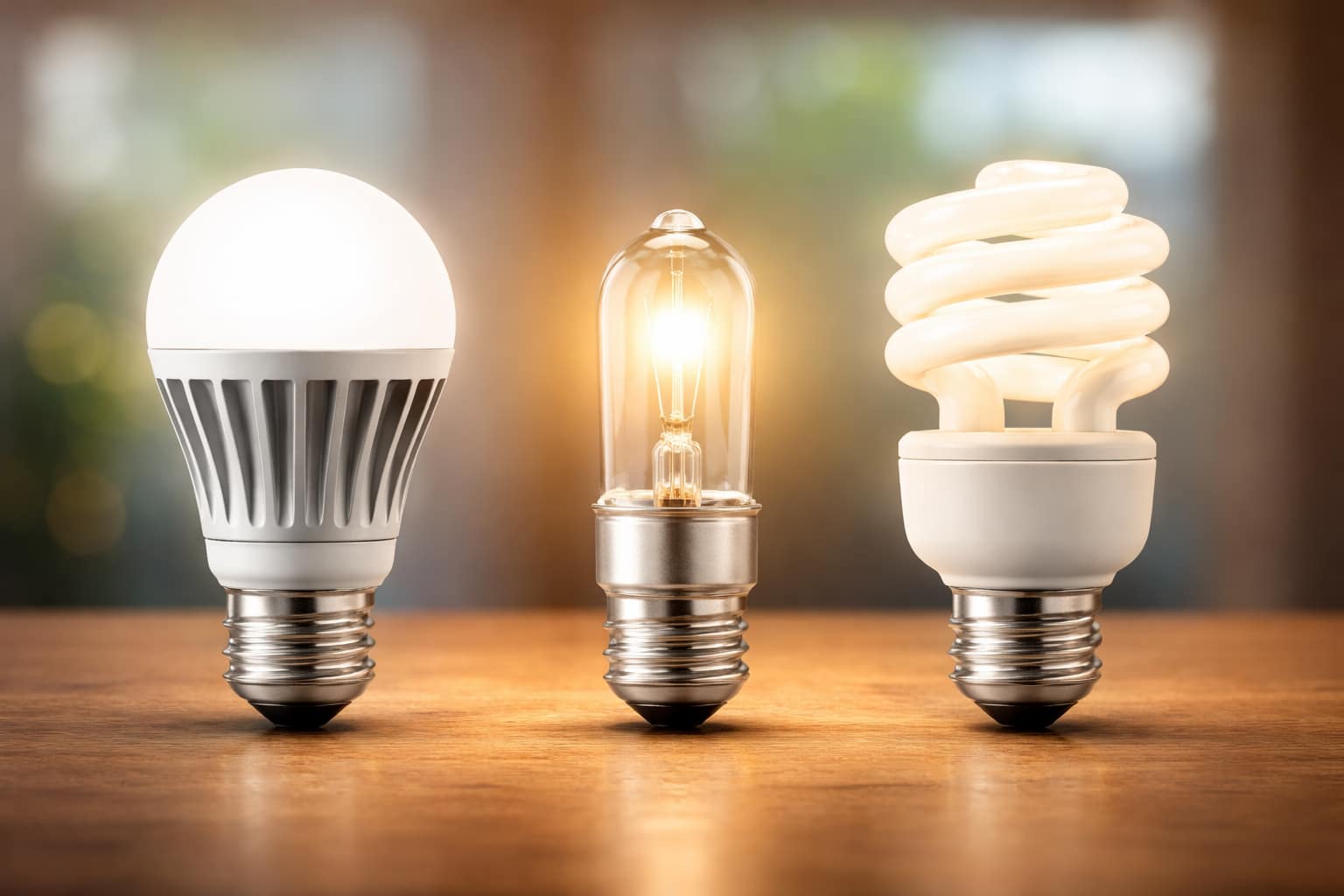
Halogen bulbs generate a lot of heat. This is one of their biggest drawbacks, especially in enclosed fixtures, near fabrics, in small fittings, or in places where the bulb sits close to other materials. The heat also shows why halogen bulbs cost more to run: a large part of the electricity is being turned into unwanted heat.
CFLs run cooler than halogen bulbs, but they contain a small amount of mercury. That does not mean they are dangerous in normal use, but it does mean broken CFLs and old CFLs should be handled with more care than standard household waste. The EPA provides guidance for cleaning up broken CFL bulbs, which is one reason many homeowners now prefer LEDs for simpler everyday use.
LEDs usually come out ahead here because they run cooler, contain no mercury and reduce energy demand over their long lifespan. They still should be disposed of responsibly where recycling options are available, but from a practical homeowner’s perspective, LEDs create fewer compromises than CFL or halogen bulbs.
Best Use Cases: LED, CFL or Halogen?
For most rooms, LED is the obvious choice. Living rooms, kitchens, bedrooms, offices, hallways, bathrooms, garages and outdoor fixtures all benefit from lower energy use, long lifespan and instant-on performance. LEDs also handle frequent switching better than CFLs, which matters in everyday home use. If the main upgrade is a cooking area, this guide to LED lights for kitchens is more specific than a general bulb comparison because kitchens often need brighter task lighting and better coverage.
Halogen bulbs make the most sense when you have a specific reason not to use LED. That could be an older dimmer, a decorative fixture, a very compact bulb shape, an appliance-style fitting, or a situation where you care more about smooth dimming and color rendering than efficiency.
CFLs are mostly useful when you already have them and they still work, or when you need to match an existing CFL setup. If you need that format for a lower-priority fixture that stays on for long periods, E26 CFL bulbs for existing long-running fixtures can fit that specific use case. For most new purchases, though, CFLs no longer offer a strong reason to choose them over LEDs.
For a broader side-by-side view of bulb families, bases, shapes and fixture-specific choices, refer to our light bulb comparison guide. It is a better next step if you already know you need a bulb but are still unsure about base type, shape, brightness or room placement.
Final Verdict: Choose LED Unless You Have a Specific Reason Not To
For most buyers, LED is the best choice overall. It gives you the best balance of lower running costs, long lifespan, lower heat, instant brightness and everyday practicality. Before buying, check the package for brightness, watts, color temperature, CRI, dimmable compatibility and fixture limits; this LED packaging guide explains what those labels mean before you choose a bulb.
- If you want the best all-around value, choose LED.
- If you are replacing many bulbs across a whole home, choose LED first.
- If you need smooth dimming with an older control, consider halogen or check LED dimmer compatibility carefully.
- If you already have CFL bulbs that still work, you can keep them temporarily instead of replacing them immediately.
- If easy disposal, low heat and long-term convenience matter, avoid buying new CFLs unless you have a specific compatibility reason.
FAQ
Are LED bulbs better than CFL and halogen bulbs?
Yes, LED bulbs are better for most homes because they use less energy, last longer, turn on instantly, run cooler and are easier to use across different rooms. Halogen and CFL bulbs still have limited use cases, but LED is the safest general recommendation.
Should I replace CFL bulbs with LED?
If the CFL still works and the fixture is not used often, you can keep it temporarily. If the bulb is slow, dim, flickering, hard to dispose of, or used every day, replacing it with LED usually makes more sense.
Are halogen bulbs still worth buying?
Halogen bulbs are still worth buying only for specific situations, such as older dimmers, specialty fittings, compact bulbs, or applications where very smooth dimming and excellent color rendering matter more than energy efficiency.
Key Takeaways
When comparing LED, CFL and halogen bulbs, LED is the best fit for most homes because it uses the least electricity, lasts the longest, runs cooler and now offers light quality that works well in nearly every common room.
Halogen bulbs are still useful when smooth dimming, compact size, specialty compatibility or excellent color rendering is more important than efficiency. CFLs are more efficient than halogens, but their warm-up time, switching sensitivity and mercury content make them difficult to recommend for new purchases.
For the safest buying decision, start with LED and only consider CFL or halogen when a specific fixture, compatibility issue, dimming setup or lighting preference gives you a clear reason to do so.
Sharing This Guide
If this comparison helped you decide which bulb type makes the most sense, save it for later or share it with someone upgrading their home lighting.
Interested in learning more? Browse related articles in our category section.