LED Phosphor Technology: Complete Expert Guide
LED phosphor technology is the process that converts blue light from semiconductor chips into white light through specialized coating materials. This fundamental mechanism enables modern LED bulbs to produce the warm, neutral, or cool white illumination we use daily in homes and businesses.
Understanding how led phosphor technology functions reveals why LED lighting delivers superior efficiency and controllable color quality. The conversion process involves precise chemical formulations that determine final light characteristics.
This technology represents one of the most significant innovations in lighting history. It makes solid-state illumination practical for general use.
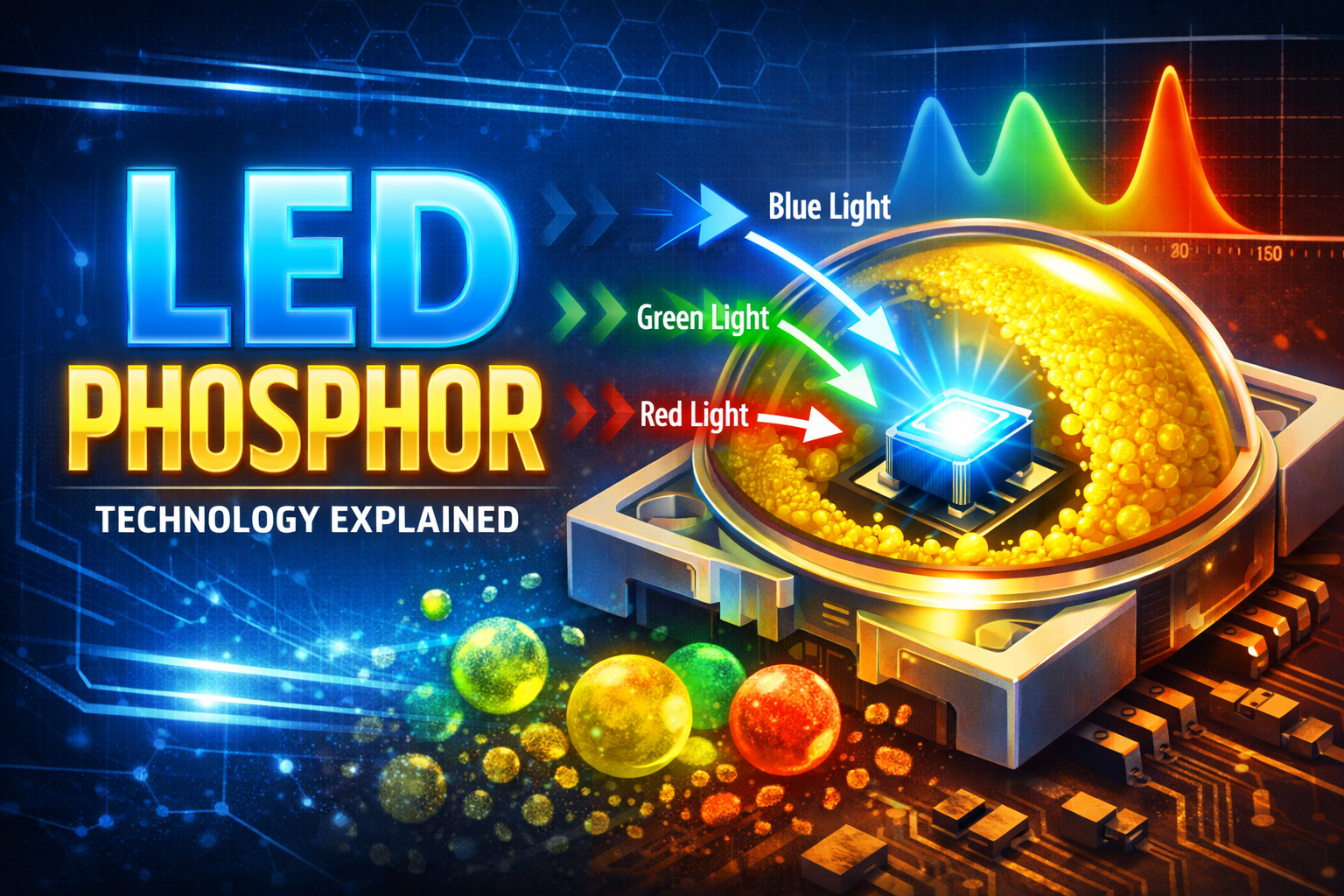
Table of Contents
Basic Conversion Principles
LED chips naturally emit monochromatic light in narrow wavelength ranges. Most common LEDs use gallium nitride semiconductors that produce blue light emission around 450-470 nanometers. This blue light alone appears harsh and unsuitable for general illumination purposes.
LED phosphor technology solves this limitation through wavelength conversion. Special phosphor materials absorb blue photons and re-emit them at longer wavelengths across the visible spectrum. The combination of residual blue light plus converted wavelengths creates the white light emission we perceive.
This process resembles how fluorescent tubes work, though LED systems operate more efficiently. The conversion happens instantly at molecular level without delays. Energy loss during conversion determines overall system efficiency.
Different phosphor formulations create varying color temperatures. Manufacturers adjust chemical composition to produce warm, neutral, or cool white light. If you want a dependable option, a solid example is A19 LED Bulb Soft White, which is known for stable long-term performance.
Semiconductor Chip Foundation
The blue led chip serves as the primary light source in modern LED systems. These chips consist of layered semiconductor materials with specific electrical properties. When current flows through the junction, electrons release energy as photons in the blue spectrum.
Gallium nitride technology enables high-efficiency blue led chip production. Earlier LED attempts used different materials that produced red or green light. The blue breakthrough in the 1990s made white LED lighting commercially viable through led phosphor technology.
Chip quality affects final light output significantly. Premium manufacturers use pure materials and precise fabrication processes. Lower-quality chips show wavelength variations that complicate phosphor matching. Issues like progressive output reduction over time often trace back to chip quality.
The blue led chip generates substantial heat during operation. Thermal management systems prevent excessive temperatures that damage both chips and phosphors. Proper cooling extends lifespan and maintains consistent performance.
Phosphor Coating Composition
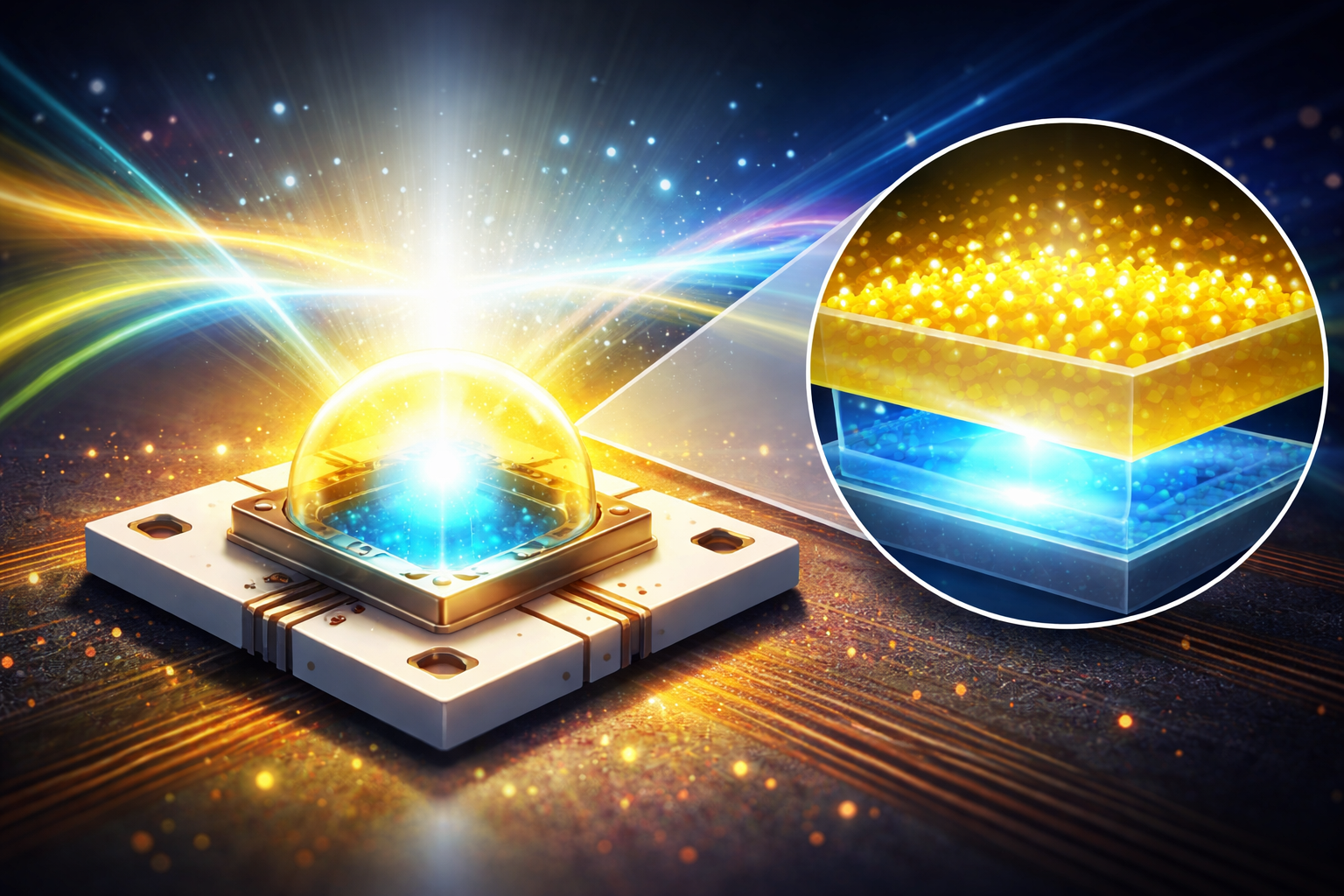
Phosphor coating contains rare-earth elements suspended in transparent binder materials. Common formulations use yttrium aluminum garnet doped with cerium, known as YAG:Ce. This combination efficiently converts blue wavelengths into yellow-green emissions.
Manufacturers layer phosphor coating directly onto blue led chip surfaces or apply it to encapsulation domes. Direct coating provides better thermal coupling but complicates manufacturing. Remote phosphor designs separate coating from chips, improving heat dissipation.
Coating thickness determines color temperature outcomes. Thicker layers convert more blue photons, shifting output toward warmer tones. Thinner coatings allow more blue light through, creating cooler color temperatures. Precise control during application ensures consistent results.
Advanced led phosphor technology uses multiple phosphor types simultaneously. Red phosphors supplement YAG:Ce to improve color rendering. These multi-phosphor systems cost more but deliver superior light quality for demanding applications.
Binder Materials
Silicone resins serve as the primary phosphor coating binder in quality LED products. These materials withstand high temperatures without yellowing or degrading. Cheaper alternatives like epoxy resins fail faster under thermal stress.
Binder quality affects long-term stability significantly. Premium silicones maintain transparency for decades, while inferior materials develop discoloration. This degradation reduces light output and shifts color temperature over time.
Color Spectrum Creation
White light emission requires balanced wavelengths across the visible spectrum. LED phosphor technology achieves this by combining unconverted blue light with phosphor-generated yellow-green emissions. The human eye perceives this mixture as white light.
Standard phosphor systems create acceptable but imperfect spectra. They show strong peaks in blue and yellow regions with reduced output in red wavelengths. This limitation affects color rendering ability, making some objects appear less vibrant.
High-CRI led phosphor technology incorporates red phosphors to fill spectral gaps. These enhanced systems produce more continuous wavelength distribution. Improved color rendering comes at efficiency cost, as red conversion involves larger energy losses. According to the U.S. Department of Energy LED lighting efficiency guidance, balancing color quality with efficiency requires careful phosphor selection.
Spectral power distribution graphs reveal phosphor coating performance characteristics. Engineers analyze these graphs to optimize formulations. Consumer products rarely publish detailed spectral data, though premium manufacturers provide color rendering index values as quality indicators. Concerns about potential vision impacts have driven improvements in spectral composition.
Efficiency Factors
Conversion efficiency determines how effectively led phosphor technology transforms blue photons into useful illumination. Each wavelength conversion step loses some energy as heat. Quantum efficiency measures the percentage of absorbed photons that generate visible light.
The best phosphor materials achieve 85-95% quantum efficiency. Lower-quality formulations waste more energy, reducing overall system performance. These losses explain why identical blue led chip designs produce different lumens depending on phosphor quality.
Stokes shift describes the energy difference between absorbed and emitted photons. Larger shifts mean greater losses per conversion. Yellow phosphors show moderate Stokes shifts, while red phosphors exhibit larger shifts. This principle explains why warm white LEDs typically demonstrate lower efficiency than cool white versions.
Overall LED efficacy combines chip efficiency with phosphor conversion efficiency. Modern led phosphor technology achieves 100-150 lumens per watt in typical applications. Premium products reach even higher values through optimized chip and phosphor pairings.
Light Extraction
Some converted light travels back toward the blue led chip rather than escaping the package. Manufacturers use reflective surfaces and shaped encapsulants to redirect photons. Better extraction designs improve overall efficiency without changing core phosphor chemistry.
Phosphor particle size affects light scattering characteristics. Smaller particles scatter light more effectively but may reduce conversion efficiency. Engineers balance these competing factors to optimize total light output and quality.
Temperature Effects
LED phosphor technology exhibits temperature-dependent behavior. As phosphor coating heats up during operation, conversion efficiency decreases. This thermal quenching phenomenon reduces light output and can shift color temperature slightly.
High-quality phosphors maintain stable performance across wider temperature ranges. Premium formulations show minimal efficiency loss even at elevated temperatures. Inferior materials suffer significant degradation that becomes noticeable during extended operation.
Heat sink design directly impacts phosphor coating temperatures. Effective thermal management keeps junction temperatures low, preserving efficiency. Poor cooling allows excessive heat buildup that accelerates phosphor degradation beyond normal aging processes.
Remote phosphor configurations separate coating from hot chip surfaces. This arrangement keeps phosphors cooler, maintaining higher efficiency. The approach works especially well in high-power applications where thermal management proves challenging.
Manufacturing Process
Production begins with phosphor powder synthesis. Manufacturers combine rare-earth compounds with host materials at high temperatures. Precise control over composition and firing conditions determines final phosphor characteristics. Different facilities produce varying quality levels based on process control.
Coating application requires careful attention to achieve uniform thickness. Automated systems spray or dispense phosphor-laden silicone onto blue led chip assemblies. Curing processes solidify binders while maintaining phosphor distribution. Inconsistent application creates color variations between individual LEDs.
Quality control measures sort finished LEDs into bins based on color and brightness. Led phosphor technology produces natural variations even under controlled conditions. Binning ensures products meet specified tolerances. Premium manufacturers use tighter bins, guaranteeing better consistency.
Some producers skip quality steps to reduce costs. These shortcuts result in poor color consistency and premature failures. Reputable brands invest in proper testing and binning procedures that justify higher prices through superior performance. Applications like task-intensive environments demand consistent color rendering.
Quality Variations
Market products span wide quality ranges. Premium led phosphor technology uses pure phosphor materials and advanced binders. Budget options substitute cheaper components that compromise performance. Price differences often reflect these material quality variations.
Color consistency represents one visible quality indicator. High-end products maintain tight color tolerances across production batches. Lower-tier items show noticeable color shifts between bulbs purchased at different times. This inconsistency frustrates consumers seeking matching replacements.
Lumen maintenance reveals long-term phosphor coating stability. Quality systems retain 90% of initial output after thousands of operating hours. Inferior phosphors degrade faster, causing noticeable dimming within months. The ENERGY STAR guide to LED lighting basics explains certification requirements that screen out poor performers.
Color rendering index indicates spectral quality differences. Basic led phosphor technology achieves CRI values around 80. Enhanced multi-phosphor systems reach 90-95 CRI by filling spectral gaps. Higher CRI generally signals superior phosphor formulations and careful manufacturing.
Certification Standards
Independent testing organizations verify led phosphor technology performance claims. ENERGY STAR and DesignLights Consortium certifications require meeting specific efficiency and quality thresholds. These programs help consumers identify reliable products among countless options.
Certification involves extensive testing including accelerated aging studies. Products must maintain specifications after prolonged operation at elevated temperatures. Only designs using quality phosphor coating and robust construction pass these rigorous evaluations.
Degradation Patterns
All phosphor materials experience gradual efficiency decline over time. Heat exposure, ultraviolet radiation from blue led chip emissions, and chemical reactions within binders cause progressive degradation. Well-designed led phosphor technology minimizes these effects through material selection.
Color shift often accompanies lumen depreciation. As phosphor coating degrades unevenly, spectral balance changes. Cool white LEDs may shift slightly cooler as yellow phosphor efficiency drops. Warm white versions can develop greenish tints from disproportionate phosphor aging.
Thermal cycling accelerates phosphor breakdown. Repeated heating and cooling stress chemical bonds in both phosphors and binders. Applications involving frequent on-off cycles show faster degradation than continuous operation scenarios. Proper thermal design mitigates these stresses significantly.
Premium led phosphor technology demonstrates predictable degradation curves. Engineers design for graceful performance decline rather than sudden failure. Quality products maintain acceptable light output and color throughout rated lifespans of 25,000-50,000 hours.
Application Differences
Different uses demand specific led phosphor technology characteristics. Residential lighting prioritizes warm color temperatures and high color rendering for comfortable environments. Commercial applications may emphasize efficiency over color quality to minimize operating costs.
Outdoor lighting often uses cooler color temperatures that provide better visibility and efficiency. The same blue led chip foundation works across applications, with phosphor coating adjusted for requirements. This flexibility makes LED technology suitable for virtually all lighting needs.
Specialty applications drive advanced phosphor development. Horticultural lighting uses customized spectra optimized for plant growth. Medical and surgical lighting requires precise white light emission with exceptional color rendering. These demanding uses justify premium led phosphor technology investments.
Display backlighting employs unique phosphor formulations for wide color gamut reproduction. Television and monitor manufacturers specify narrow-band phosphors that enable vibrant color display. These specialized phosphor coating systems cost more but deliver superior visual performance. Resources at the LED knowledge center provide additional application-specific information.
Emerging Developments
Quantum dot technology represents the next evolution in wavelength conversion. These nanoscale particles offer narrower emission bands and higher efficiency than traditional phosphors. Led phosphor technology continues advancing through improved formulations and manufacturing techniques.
Tunable white light emission systems use multiple phosphor types with independent control. These designs enable dynamic color temperature adjustment throughout the day. Such advanced led phosphor technology supports circadian lighting concepts gaining popularity in commercial and residential settings.
Sharing this guide
If you found this guide helpful, you can save it for later or share it with a friend. It’s especially useful for beginners, homeowners, and DIY users.
Share using the links below
Interested in learning more? Browse all related articles in our category section.
Pingback: SMD vs High Power LED: Critical Buying Guide - NeoLEDHub