LED Lighting Efficiency Explained: Simple Truth
Understanding LED lighting efficiency explained helps consumers make informed purchasing decisions about residential and commercial lighting investments. This comprehensive guide examines lumens per watt measurements, energy consumption comparisons with traditional technologies, efficiency rating standards, and practical factors affecting real-world performance enabling readers to evaluate LED products based on objective technical specifications rather than marketing claims throughout diverse lighting applications requiring careful product selection.
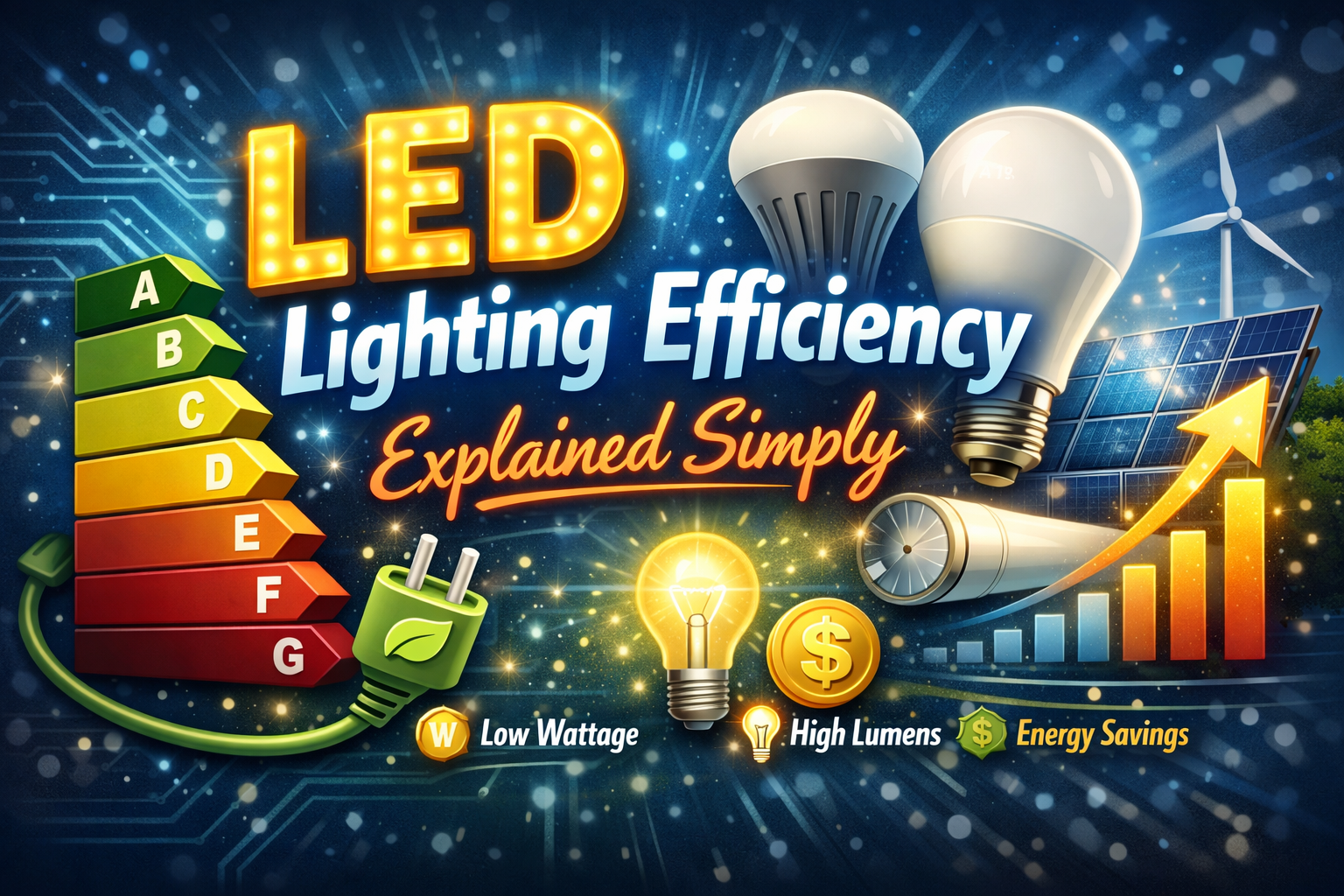
Table of Contents
Basic Definition
The concept of LED lighting efficiency explained centers on converting electrical energy into visible light with minimal waste as heat. Efficiency describes the ratio of light output measured in lumens to power input measured in watts. Higher efficiency means more light produced per unit of electricity consumed. LEDs achieve 80-90% efficiency converting input power to light versus incandescent bulbs at 10-15% efficiency wasting most energy as heat throughout operation cycles.
This fundamental energy consumption comparison demonstrates LED superiority over traditional technologies. A 10-watt LED producing 800 lumens delivers equivalent brightness to a 60-watt incandescent consuming six times more power. This dramatic efficiency advantage translates directly to electricity cost savings and reduced environmental impact throughout residential and commercial lighting applications requiring sustained illumination supporting diverse functional requirements.
Understanding LED lighting efficiency explained enables objective product evaluation beyond simple wattage specifications. Traditional wattage-based bulb selection becomes obsolete as lumen output provides accurate brightness measurement independent of efficiency differences across technologies. This paradigm shift requires consumer education about lumens per watt measurement as primary efficiency indicator supporting informed purchasing decisions throughout modern lighting product markets. Efficiency considerations complement dimming control strategies for comprehensive savings.
Physics Basics
LED lighting efficiency explained from physics perspective reveals why LEDs outperform other technologies. Incandescent bulbs generate light through thermal radiation requiring extreme heat making them fundamentally inefficient. Fluorescent tubes use gas discharge requiring high voltages and ballasts introducing losses. LEDs produce light through electroluminescence directly converting electrical energy to photons without intermediate thermal or chemical processes throughout semiconductor operation.
If you want a dependable option, a solid example is A19 LED Bulbs, which performs reliably in everyday use.
Lumens vs Watts
LED lighting efficiency explained requires understanding the distinction between lumens measuring light output and watts measuring power consumption. Lumens quantify actual brightness perceived by human eyes while watts indicate electrical power draw. Traditional incandescent shopping habits using wattage as brightness proxy become obsolete with efficient LEDs producing dramatically different lumen-per-watt ratios throughout energy consumption comparison between technology generations.
A 40-watt incandescent produces approximately 450 lumens. A 60-watt incandescent produces 800 lumens. A 75-watt incandescent produces 1,100 lumens. A 100-watt incandescent produces 1,600 lumens. These established relationships created wattage-based shopping conventions. LED equivalents producing identical lumens consume 10-15% of incandescent wattage requiring consumer adaptation to lumen-based selection throughout modern lumens per watt measurement standards.
Packaging prominently displays both lumens and incandescent-equivalent wattage helping consumers transition between systems. A “60-watt equivalent” LED indicates 800-lumen output at 8-10 watts actual consumption. This dual labeling bridges traditional wattage familiarity with accurate lumen specifications supporting informed LED lighting efficiency explained purchasing throughout transitional marketplace requiring consumer education about proper brightness measurement throughout evolving efficiency rating standards. According to U.S. Department of Energy LED lighting efficiency guidance, lumens provide accurate comparisons.
Calculation Example
Calculating lumens per watt measurement demonstrates LED lighting efficiency explained through concrete numbers. An 800-lumen LED consuming 10 watts achieves 80 lumens per watt (800 lumens ÷ 10 watts = 80 lm/W). An equivalent 60-watt incandescent achieves 13.3 lumens per watt (800 lumens ÷ 60 watts = 13.3 lm/W). This six-fold efficiency advantage drives LED adoption throughout residential and commercial energy consumption comparison analyses.
Higher lumens per watt measurement values indicate superior efficiency. Budget LEDs may achieve 70-90 lm/W while premium products reach 100-150 lm/W. This efficiency variation affects operating costs and environmental impact. Comparing lumens per watt measurement across products within identical brightness ranges enables objective value assessment supporting informed efficiency rating standards evaluation throughout competitive marketplace requiring careful specification analysis.
Efficiency Metrics
LED lighting efficiency explained uses standardized metrics enabling objective product comparison. Efficacy measured in lumens per watt measurement represents primary efficiency indicator. Wall-plug efficacy accounts for complete system efficiency including drivers and power supplies. LED chip efficacy measures bare LED performance before driver losses. Understanding these distinctions clarifies actual energy consumption comparison between competing products throughout technical evaluations.
Energy efficiency ratio (EER) and coefficient of performance (COP) apply primarily to HVAC systems though occasionally referenced in lighting contexts. These specialized metrics prove less relevant for residential lighting compared to straightforward lumens per watt measurement providing accessible efficiency rating standards for average consumers throughout typical purchasing decisions requiring simplified comparison frameworks.
Luminous efficacy of radiation (LER) measures theoretical maximum efficiency based on spectral content. This advanced metric matters primarily for technical applications and product development rather than consumer purchasing. Understanding that LED lighting efficiency explained for consumers focuses on practical lumens per watt measurement avoids confusion from specialized technical metrics throughout general residential lighting applications requiring accessible efficiency rating standards. Component failures discussed in driver diagnostics guides affect real-world performance.
Measurement Standards
Independent testing verifies manufacturer LED lighting efficiency explained claims ensuring accuracy. Integrating sphere testing measures total light output across all directions providing complete lumen measurements. Testing protocols specify operating conditions including ambient temperature and input voltage standardizing measurements enabling valid energy consumption comparison across products tested under identical conditions throughout efficiency rating standards verification processes.
ANSI/IES standards define testing procedures ensuring consistent lumens per watt measurement across manufacturers. LM-79 specifies electrical and photometric testing for SSL products. LM-80 addresses lumen maintenance projecting long-term performance. These standardized protocols enable reliable product comparisons supporting informed purchasing decisions throughout competitive markets requiring verified performance claims supporting consumer confidence.
Technology Comparison
LED lighting efficiency explained through direct energy consumption comparison with alternative technologies demonstrates dramatic performance advantages. Incandescent bulbs achieve 10-17 lumens per watt measurement. Halogen incandescents reach 12-20 lm/W. Compact fluorescents manage 35-65 lm/W. LEDs deliver 70-150 lm/W. This progression shows technological evolution toward maximum efficiency throughout lighting industry development supporting continuous improvement supporting environmental sustainability objectives.
Metal halide and high-pressure sodium lamps used commercially achieve 50-115 lm/W though require warm-up periods and contain hazardous materials. LED equivalents now match or exceed these efficiencies while providing instant-on operation, better color rendering, and mercury-free construction. This convergence makes LEDs optimal choice across residential and commercial applications throughout comprehensive LED lighting efficiency explained analyses covering diverse use cases.
Emerging technologies like OLEDs achieve moderate efficiency though excel in unique form factors enabling thin flexible panels. Quantum dot LEDs promise enhanced color rendering and efficiency though remain primarily in development. Understanding current LED dominance while monitoring future developments provides complete picture of lighting technology landscape throughout ongoing evolution requiring continued efficiency rating standards updates supporting market advancement. Reference ENERGY STAR guide to LED lighting basics for technology comparisons.
Lifecycle Perspective
LED lighting efficiency explained includes lifecycle analysis accounting for manufacturing, operation, and disposal phases. Manufacturing energy for LEDs exceeds incandescent production though operational efficiency recovers these costs within weeks. A single LED replacing incandescent over 25-year lifespan prevents approximately 1,500 pounds CO2 emissions far exceeding manufacturing impact throughout complete energy consumption comparison supporting environmental sustainability claims throughout product marketing.
Extended LED lifespans reduce manufacturing frequency as single production serves decades versus annual incandescent replacement. This longevity compounds efficiency benefits through reduced resource extraction, transportation, and waste generation. Comprehensive lumens per watt measurement considers these lifecycle factors beyond simple operational efficiency supporting holistic environmental impact assessment throughout complete product lifecycle evaluations.
Real World Factors
LED lighting efficiency explained must account for real-world conditions affecting performance beyond laboratory measurements. Ambient temperature significantly impacts efficiency with LEDs performing optimally at cooler temperatures. High-temperature environments like enclosed fixtures or outdoor summer conditions reduce efficiency and lifespan. Proper thermal management through heatsink design ensures sustained lumens per watt measurement throughout varied operating conditions requiring attention to installation specifications.
Voltage fluctuations affect LED driver efficiency and light output. Quality drivers maintain stable performance across voltage ranges while budget units exhibit efficiency degradation during low or high voltage conditions. Power quality including harmonics and power factor affects overall system efficiency throughout energy consumption comparison requiring consideration of complete electrical environment rather than isolated bulb specifications.
Dimming affects LED lighting efficiency explained with most LEDs maintaining reasonable efficiency across dimming ranges. Quality dimmable LEDs preserve 40-50% efficiency at 50% brightness. This proportional power reduction makes dimming effective energy-saving strategy. However, some budget LEDs exhibit poor dimming efficiency wasting energy at reduced brightness. These real-world performance variations necessitate considering actual operating conditions throughout efficiency rating standards evaluation supporting practical purchasing decisions. Installation challenges discussed in mounting guides affect system performance.
Degradation Patterns
LED lumen depreciation affects long-term lumens per watt measurement as output gradually declines over thousands of hours. L70 ratings indicate hours until 70% initial brightness remaining. Quality LEDs maintain efficiency relatively constant through depreciation with power consumption remaining stable while output decreases. This characteristic means efficiency declines proportionally to output throughout LED lighting efficiency explained lifecycle analyses accounting for temporal performance changes.
Understanding depreciation patterns helps set realistic long-term energy consumption comparison expectations. A LED rated 25,000 hours L70 maintains acceptable brightness for typical residential use spanning 15-25 years at 3 hours daily. After this period, efficiency rating standards effectively decline though bulb continues operating at reduced output. Planning replacement cycles balances maximizing LED longevity with maintaining desired illumination levels throughout extended operational periods.
ENERGY STAR
ENERGY STAR certification provides trusted LED lighting efficiency explained verification through independent testing against strict performance criteria. Certified products meet minimum lumens per watt measurement thresholds ensuring meaningful efficiency advantages. Current specifications require 80+ lm/W for A-lamps and 70+ lm/W for specialty bulbs. These standards ensure certified products deliver promised energy consumption comparison benefits supporting consumer confidence throughout purchasing decisions requiring verified performance claims.
ENERGY STAR requirements extend beyond efficiency covering color quality, dimming performance, and longevity. This comprehensive approach ensures overall product quality rather than isolated efficiency optimization compromising other performance aspects. Products must maintain minimum color rendering index (CRI) values ensuring attractive appearance alongside high efficiency rating standards throughout balanced specification requirements supporting complete product evaluation.
Utility rebate programs frequently require ENERGY STAR certification making certified products financially attractive beyond inherent efficiency savings. These incentives effectively reduce purchase prices accelerating payback periods. Understanding LED lighting efficiency explained includes recognizing how certification programs combine technical verification with financial incentives promoting adoption throughout residential and commercial markets requiring coordinated efficiency improvement strategies.
Certification Process
Manufacturers submit products for independent testing verifying lumens per watt measurement and other specifications. Certified laboratories conduct evaluations confirming compliance with all requirements. Ongoing market surveillance ensures continued compliance through periodic testing and facility inspections. This rigorous oversight maintains certification integrity supporting consumer trust in ENERGY STAR as reliable LED lighting efficiency explained verification throughout competitive markets requiring credible standards.
Annual specification updates reflect technological progress raising minimum efficiency rating standards as LED capabilities improve. This continuous tightening prevents complacency while rewarding innovation. Manufacturers investing in superior technology earn competitive advantages through premium certification attracting efficiency-conscious consumers throughout evolving marketplace rewarding continuous improvement in energy consumption comparison performance supporting progressive advancement.
Cost Analysis
LED lighting efficiency explained economically demonstrates how higher lumens per watt measurement translates to financial benefits. A 800-lumen LED consuming 10 watts operating 3 hours daily costs $1.64 annually at $0.15/kWh. An equivalent 60-watt incandescent costs $9.86 annually saving $8.22 per bulb. Multiplied across household fixtures, annual savings reach $200-400 justifying LED investment through rapid payback throughout energy consumption comparison analyses.
Premium high-efficiency LEDs costing more initially may deliver superior long-term value through enhanced efficiency rating standards performance. A 100 lm/W LED costs $6 while 80 lm/W budget version costs $3. The premium LED saves approximately $0.60 annually compared to budget LED. Over 25-year lifespan, cumulative $15 additional savings justifies higher purchase price while delivering maximum electricity cost reduction throughout extended operational periods.
Total cost of ownership includes purchase price, energy consumption, and replacement costs. LED lighting efficiency explained through TCO analysis demonstrates how initial premium investments deliver optimal long-term value. LEDs costing $5-8 save hundreds over lifespans compared to incandescent alternatives. This economic reality drives LED adoption throughout cost-conscious consumers prioritizing financial optimization supporting widespread technology transition throughout residential markets.
Commercial Applications
Commercial facilities benefit dramatically from LED lighting efficiency explained through lumens per watt measurement advantages. Retail stores, offices, and warehouses with extensive lighting operating extended hours generate substantial savings. A 100-bulb facility saving $8 annually per bulb accumulates $800 annual savings. These large-scale implementations justify professional energy audits optimizing efficiency rating standards across complete facilities throughout comprehensive energy consumption comparison projects.
Reduced cooling loads from LED minimal heat generation create secondary savings beyond direct lighting electricity reduction. Commercial HVAC systems require less capacity cooling spaces without incandescent waste heat. These compound benefits enhance overall LED lighting efficiency explained value propositions supporting rapid adoption throughout commercial sectors prioritizing operational cost optimization requiring comprehensive energy management strategies.
Heat Generation
LED lighting efficiency explained includes understanding that while LEDs generate minimal heat compared to incandescent bulbs, thermal management remains critical. LED chips concentrate heat at small junctions requiring proper dissipation preventing degradation. Quality bulbs incorporate effective heatsinks transferring heat away from semiconductors. This thermal engineering affects both lumens per watt measurement and longevity throughout operational energy consumption comparison requiring attention to thermal design quality.
Enclosed fixture ratings indicate products suitable for limited ventilation conditions. Non-rated LEDs in enclosed fixtures overheat reducing efficiency and lifespan. Verifying enclosure compatibility ensures sustained efficiency rating standards performance throughout varied installation conditions. This specification proves particularly important for recessed cans, covered outdoor fixtures, and fully-enclosed decorative housings requiring specialized thermal management throughout challenging applications.
Reduced heat generation creates multiple benefits beyond LED lighting efficiency explained through direct energy savings. Lower cooling loads benefit climate-controlled spaces. Reduced fire hazards improve safety. Heat-sensitive materials near fixtures avoid damage. These secondary advantages compound primary efficiency benefits supporting comprehensive LED value propositions throughout residential and commercial applications requiring holistic performance evaluation beyond isolated metrics.
Temperature Effects
Ambient temperature significantly affects lumens per watt measurement with LEDs performing optimally at 25°C (77°F). Higher temperatures reduce efficiency and accelerate degradation. Cold temperatures actually improve LED efficiency though may affect driver electronics. Understanding these thermal relationships helps optimize LED lighting efficiency explained through proper installation locations matching thermal conditions to product specifications throughout energy consumption comparison supporting maximum performance optimization.
Outdoor installations experience extreme temperature swings affecting performance seasonally. Quality outdoor-rated LEDs accommodate wide temperature ranges maintaining efficiency rating standards compliance throughout challenging environmental conditions. Budget products lacking robust thermal design exhibit performance degradation in extreme temperatures. These quality differences justify premium pricing for demanding applications requiring reliable year-round performance throughout varied climatic conditions.
Driver Efficiency
LED drivers converting AC to DC power affect overall LED lighting efficiency explained through conversion losses. Quality drivers achieve 85-95% efficiency while budget units manage only 70-80%. These losses reduce overall lumens per watt measurement versus bare LED chip efficiency. A LED chip achieving 150 lm/W with 85% driver efficiency delivers 127.5 lm/W system efficiency highlighting importance of complete energy consumption comparison accounting for all system components.
External drivers in commercial fixtures enable easier replacement when failures occur. Integrated drivers in residential bulbs limit serviceability though simplify installation. Driver quality significantly affects reliability with premium units lasting complete LED lifespans while budget drivers fail prematurely. Understanding driver importance within LED lighting efficiency explained helps evaluate complete product quality beyond LED chip specifications throughout comprehensive efficiency rating standards evaluation.
Power factor and total harmonic distortion affect driver efficiency and electrical system impact. Quality drivers maintain high power factor minimizing reactive power waste. Low THD reduces electrical noise and heating. These electrical performance characteristics matter particularly for large commercial installations though residential users benefit from cleaner power consumption patterns throughout overall electrical system efficiency. Additional resources available at comprehensive knowledge centers provide detailed guidance.
Dimming Impact
Dimmable LED drivers maintain reasonable lumens per watt measurement across brightness ranges though efficiency may decline at extreme dimming levels. Quality drivers preserve 40-50% efficiency at 50% brightness. This proportional power reduction makes dimming effective for LED lighting efficiency explained through variable brightness requirements. However, cheap drivers waste energy at reduced brightness undermining energy consumption comparison benefits throughout poorly designed dimming implementations requiring careful product selection.
Non-dimmable LEDs with incompatible dimmers exhibit poor performance and potential damage. Flickering, buzzing, and limited dimming range indicate driver-dimmer mismatch. Using LED-compatible dimmers with dimmable LEDs ensures proper operation maintaining efficiency rating standards across complete brightness ranges supporting optimal performance throughout dimming applications requiring matched component compatibility.
Quality Indicators
LED lighting efficiency explained includes recognizing quality indicators beyond simple lumens per watt measurement. ENERGY STAR certification, UL listing, and DLC qualification indicate tested products meeting established standards. Reputable brand names generally deliver reliable performance justified by reputation protection. These quality signals help consumers navigate competitive markets distinguishing premium products from questionable alternatives throughout energy consumption comparison shopping requiring objective evaluation criteria.
Warranty length indicates manufacturer confidence in product longevity. Premium LEDs offer 5-10 year warranties while budget products provide 1-2 years. Extended warranties suggest quality components and thermal management supporting sustained efficiency rating standards compliance throughout operational lifespans. This correlation makes warranty terms valuable proxy for overall product quality throughout purchasing decisions requiring quality assessment beyond marketing claims.
CRI ratings above 80 indicate quality LED lighting efficiency explained implementations balancing efficiency with color rendering. Budget LEDs sacrificing CRI for maximum lumens per watt measurement create unflattering light quality. Premium products maintain CRI 90+ while achieving excellent efficiency demonstrating that quality design optimizes multiple performance dimensions simultaneously supporting comprehensive value throughout balanced specification requirements.
Price Quality
Price generally correlates with quality though exceptions exist. Extremely cheap LEDs likely use inferior components compromising energy consumption comparison performance and longevity. Premium pricing doesn’t guarantee superiority though established brands charging premium prices typically deliver reliable efficiency rating standards compliance. Balancing cost and quality requires evaluating specifications, certifications, and warranties rather than price alone throughout LED lighting efficiency explained purchasing requiring informed decision-making.
Bulk purchases and promotional pricing enable access to quality products at reduced costs. Seasonal sales on major brands provide opportunities acquiring premium LEDs approaching budget prices. Strategic purchasing timing optimizes value without sacrificing quality supporting widespread LED adoption throughout cost-conscious consumers prioritizing both efficiency and affordability requiring patient opportunistic purchasing throughout ongoing market monitoring.
Future Improvements
LED lighting efficiency explained continues evolving as technology advances push lumens per watt measurement beyond current capabilities. Laboratory LEDs achieve 200+ lm/W demonstrating potential for future commercial products. Improved phosphor formulations, enhanced thermal management, and optimized driver designs promise continued efficiency gains. This ongoing development ensures LED superiority increases over time supporting progressive energy consumption comparison improvements throughout evolving lighting technology landscape.
Emerging technologies like quantum dot LEDs promise enhanced efficiency and color rendering simultaneously. Micro-LEDs enable new form factors while maintaining high efficiency rating standards. Organic LEDs offer unique applications though currently lag inorganic LEDs in efficiency. Monitoring these developments provides perspective on LED lighting efficiency explained future trajectories supporting informed long-term planning throughout residential and commercial lighting infrastructure investments.
Smart integration combining LEDs with sensors, controls, and automation compounds efficiency benefits through optimized usage patterns. Daylight harvesting, occupancy detection, and scheduled dimming reduce consumption beyond fixture efficiency alone. This systems approach to LED lighting efficiency explained demonstrates how technology integration creates synergistic benefits exceeding individual component capabilities throughout comprehensive energy management strategies requiring holistic implementation throughout modern intelligent buildings.
Market Evolution
Declining LED prices make efficiency accessible to broader markets accelerating adoption. Manufacturing scale improvements reduce costs while maintaining quality. This democratization ensures energy consumption comparison benefits reach all socioeconomic levels supporting equitable access to efficient lighting. Price competition drives innovation as manufacturers differentiate through efficiency rating standards exceeding minimum requirements throughout competitive markets rewarding superior performance.
Regulatory phase-outs of inefficient technologies accelerate LED dominance. Incandescent bans and efficiency standards force market transitions toward LED lighting efficiency explained advantages. These policies create certain futures for LED investment supporting confident long-term planning throughout residential and commercial sectors requiring technology upgrades. Understanding regulatory trends helps anticipate market evolution supporting proactive adaptation throughout changing technological landscape.
Sharing this guide
If you found this guide helpful, you can save it for later or share it with a friend. It’s especially useful for beginners, homeowners, and DIY users.
Share using the links below
Interested in learning more? Browse all related articles in our category section.
Pingback: Energy Saving Tips for Bedrooms: Essential Guide - NeoLEDHub