LED Lighting Buying Guide: Smart Choices Beginners
Shopping for new lighting can be confusing when you encounter unfamiliar terms and countless product options. This LED lighting buying guide simplifies the process by explaining what matters most when selecting bulbs, fixtures, and accessories for your home. You’ll discover practical strategies for choosing LED bulbs that match your needs, understanding LED brightness levels, and exploring smart LED options that add convenience to daily life.
Whether you’re replacing a single bulb or planning a whole-home upgrade, this guide provides the knowledge you need to make confident purchasing decisions that balance performance, efficiency, and budget.
Table of Contents
Understanding the basics
When you begin choosing LED bulbs for your home, the first concept to understand is that wattage no longer indicates brightness. Traditional incandescent bulbs used watts to describe both power consumption and light output. Modern technology separates these measurements, with lumens showing actual brightness and watts showing only energy usage.
This shift fundamentally changes how you shop. A 10-watt product can produce 800 lumens, matching a traditional 60-watt incandescent bulb while consuming far less electricity. Understanding this relationship helps you select appropriate replacements without sacrificing illumination quality.
Base compatibility represents another crucial consideration. Different fixtures require specific base types that determine whether a bulb physically fits. The E26 medium base serves most household lamps and ceiling fixtures. Smaller E12 candelabra bases fit decorative fixtures, while GU10 twist-lock bases work in recessed housings. Always verify your existing base type before purchasing to avoid compatibility issues in common living spaces.
Bulb base types
Base types vary significantly across residential applications. Standard screw bases (Edison bases) come in multiple sizes, with E26 being most common in North America and E27 in Europe. These screw directly into threaded sockets found in table lamps, pendant lights, and many ceiling fixtures.
Pin bases use a different connection method. GU10 bases have two pins that twist and lock into place, commonly found in track lighting and recessed cans. Bi-pin bases like GU5.3 push straight in and are held by friction, typical in low-voltage spotlight applications. Each base type serves specific fixture designs and electrical requirements.
Specialty bases address unique situations. Bayonet bases (B22) use a push-and-twist mechanism popular in certain regions and vintage fixtures. Wedge bases appear in landscape lighting and automotive applications. When choosing LED bulbs, photographing your existing bulb’s base before shopping ensures you purchase compatible replacements.
Measuring brightness
Lumens quantify light output in a standardized way that allows direct comparison between products. This LED lighting buying guide recommends matching lumen levels to room functions rather than simply replacing old wattages. A living room might need 1,500 to 3,000 total lumens distributed across multiple fixtures for comfortable ambient lighting.
Task areas require higher intensity. Kitchen counters benefit from 450-800 lumens per fixture to illuminate food preparation safely. Bathroom vanities typically need 800-1,100 lumens for grooming activities. Bedroom fixtures generally use 200-400 lumens to create relaxing atmospheres. These LED brightness levels directly impact functionality and comfort.
If you want a dependable option, a solid example is NOVOSTELLA 20ft Tunable White LED Strip Light kit Dimmable 3000K-6500K 24V LED Tape Light with Remote Flexible Rope LED Ribbon for Bedroom Home Lighting Mirror Kitchen Bar Cabinet Daylight Warm White, which is known for stable long-term performance.
Beam angle affects how brightness distributes. Narrow beams (25-40 degrees) concentrate light for accent purposes. Wide beams (90-120 degrees) spread illumination broadly for general room lighting. Understanding these LED brightness levels helps you achieve desired lighting effects in each space.
Color temperature
Color temperature, measured in Kelvin (K), dramatically influences room atmosphere and functionality. Lower numbers produce warm yellow tones similar to candlelight, while higher numbers create cool blue-white tones resembling daylight. This specification affects not just aesthetics but also how colors appear and how comfortable a space feels.
Warm white (2700K-3000K) creates cozy, inviting environments perfect for bedrooms, living rooms, and dining areas. This range mimics traditional incandescent bulbs and helps people relax in evening hours. Most homeowners prefer warm temperatures in spaces designed for unwinding or social gathering.
Neutral white (3500K-4100K) offers balanced illumination suitable for kitchens, bathrooms, and home offices. This temperature provides clarity for detailed work while maintaining comfortable ambiance. It represents a practical middle ground for multipurpose rooms where both task work and relaxation occur.
Cool white (5000K-6500K) delivers crisp, energizing light ideal for garages, workshops, and utility areas. This temperature enhances contrast and visual acuity for precision work. However, many find it too harsh for living spaces, making it better suited for functional environments requiring high visibility.
Dimming capabilities
Not all products work with dimmer switches, creating one of the most common frustrations when choosing LED bulbs. Traditional dimmers designed for incandescent technology use different electrical characteristics than modern solid-state lighting requires. Installing non-dimmable products on dimmer circuits often causes flickering, buzzing, or premature failure.
Dimmable products require explicit labeling on packaging. Verify compatibility with your existing dimmer type, as leading-edge (TRIAC) and trailing-edge (ELV) dimmers perform differently. Some manufacturers provide tested dimmer lists on their websites, which can prevent compatibility issues before purchase.
When dimming problems occur, the dimmer switch itself often needs upgrading rather than the bulb. Older switches designed for high-wattage incandescent loads may not function properly with low-wattage modern technology. Investing in a quality dimmer rated for your specific products usually resolves performance issues.
Energy efficiency
Energy consumption directly impacts operating costs over the product’s lifetime. This LED lighting buying guide emphasizes examining both wattage and estimated annual operating costs printed on packaging. A typical 10-watt bulb used three hours daily costs approximately $1.31 annually at average electricity rates, compared to $7.88 for a 60-watt incandescent.
ENERGY STAR certification indicates products meet strict efficiency guidelines established by the U.S. Environmental Protection Agency and Department of Energy. Certified products typically use 75% less energy than traditional lighting while lasting significantly longer. This certification provides independent verification of manufacturer claims.
Calculating total savings requires multiplying per-bulb savings by the number of fixtures in your home. A household replacing 30 bulbs might save $200 annually in electricity costs. While initial purchase prices exceed incandescent bulbs, energy savings typically recover costs within the first year of operation.
Bulb shapes
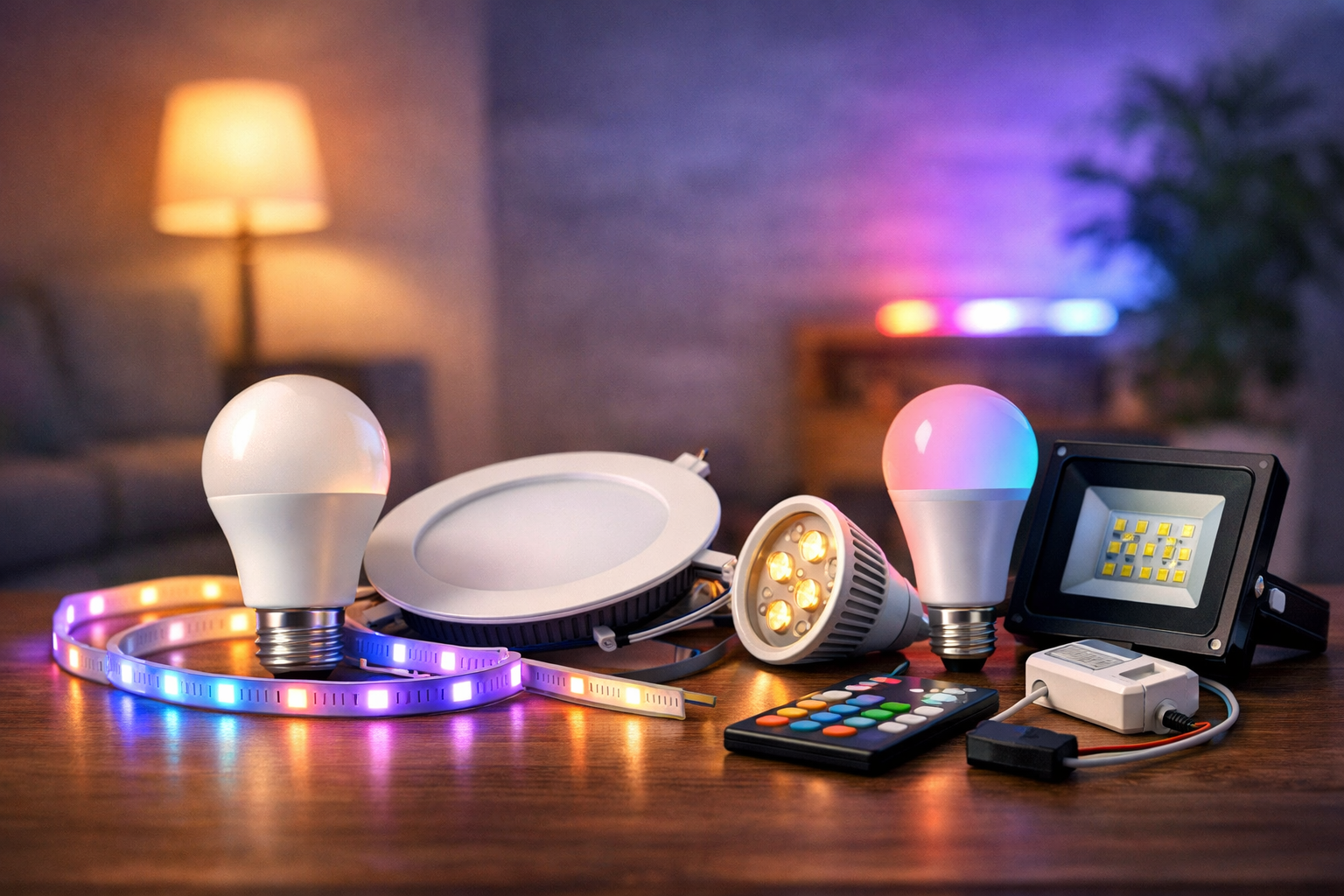
Different shapes serve specific applications and aesthetic preferences. A19 represents the classic pear shape familiar in table lamps and ceiling fixtures. This versatile shape works in most residential applications where the bulb remains partially or fully concealed within a shade or housing.
Globe bulbs (G25, G30) provide spherical designs ideal for bathroom vanities and pendant fixtures where the bulb remains visible. Their uniform shape produces even light distribution in all directions. Candle and flame shapes (B10, CA10) add decorative appeal in chandeliers and wall sconces.
Reflector bulbs (BR30, BR40, PAR20, PAR30, PAR38) incorporate internal reflectors that direct light forward. These shapes excel in recessed cans, track lighting, and outdoor spotlights where focused beams serve specific purposes. The reflector design prevents light from escaping backwards into the fixture housing.
Strip lighting
Flexible strips have gained popularity for accent lighting, under-cabinet illumination, and creative design projects. These products contain multiple small diodes mounted on adhesive-backed circuits, typically sold in 16-foot reels. When choosing LED bulbs versus strips, consider that strips offer installation flexibility that traditional fixtures cannot match.
Diode density significantly affects appearance. Higher density strips (120-144 diodes per meter) produce smooth, continuous light without visible dots. Lower density options (30-60 per meter) work adequately for hidden applications behind crown molding or toe kicks where individual diodes remain invisible.
Another practical alternative is BTF-LIGHTING Mini RF Dimmer Controller 14 Keys for FCOB 3014 5630 5730 3528 Strip Lights DC5V/DC12V/DC24V Brightness Mode Effect Mode Wireless LED Dimmer Controller(Single Color), which performs reliably in everyday use.
Power supplies must match strip voltage requirements, typically 12V or 24V. Calculate total wattage by multiplying watts per meter by total length, then add 20% safety margin. Understanding these LED brightness levels prevents underpowered installations that appear dim or fail prematurely. You can learn more about proper cutting and connecting techniques for custom lengths.
Smart features
Smart LED options integrate wireless connectivity enabling control through smartphone apps, voice assistants, or automation routines. Different protocols offer varying advantages. Wi-Fi products connect directly to your network without additional hardware. Zigbee and Z-Wave devices require dedicated hubs but often provide more reliable performance.
When building connected systems, consider ecosystem compatibility. Hub-based platforms using open standards allow mixing brands while maintaining unified control. Proprietary systems lock you into single manufacturers but sometimes offer tighter integration and more features. Your choice impacts future expansion possibilities.
Common smart LED options include scheduling, which automatically adjusts lighting at preset times, and geofencing, which responds to your phone’s location. Color temperature tuning throughout the day can support natural circadian rhythms. These features add convenience and potential energy savings through automated control. Understanding ecosystem integration strategies helps you build cohesive systems.
Outdoor applications
Outdoor installations require appropriate weatherproofing to withstand moisture, temperature extremes, and UV exposure. IP (Ingress Protection) ratings indicate resistance levels, with the first digit rating dust protection (0-6) and the second rating water protection (0-8). This specification proves critical for longevity in exposed conditions.
Covered outdoor areas like porches need minimum IP44 rating (splashproof). Fully exposed installations require IP65 (jet-resistant) or IP67 (immersion-protected to 1 meter). Ground-level landscape lighting often uses IP68-rated products offering submersion protection for installations subject to flooding or sprinkler systems.
Temperature ratings matter equally. Products must handle your climate’s seasonal extremes, both summer heat and winter cold. Extreme temperatures affect startup times and accelerate degradation. Always verify temperature specifications match your geographic location’s typical range throughout the year.
Lifespan and quality
Rated lifespan typically ranges from 15,000 to 50,000 hours. These numbers represent time until output decreases to 70% of original brightness (L70 rating), not complete failure. A 25,000-hour product used three hours daily should maintain acceptable brightness for approximately 22 years before noticeable dimming occurs.
Operating conditions significantly impact actual longevity. Heat represents the primary degradation factor. Enclosed fixtures trap heat, accelerating deterioration, so verify whether products are rated for enclosed use. Frequent switching affects some products more than others, though quality units handle normal operation without issues.
For a more permanent upgrade, many users switch to HitLights LED Strip Lights, 4 Pre-Cut Waterproof RGB Small LED Light Strip Kit Dimmable Color Changing SMD 5050 LED Tape Light with RF Remote, UL-Listed Power Supply and Connectors for TV Bedroom Home, which offers consistent results over time.
Warranty coverage varies from 1 to 10 years depending on product category and manufacturer. Longer warranties generally indicate confidence in product quality and can justify higher initial costs. Read warranty terms carefully as some require proof of purchase and original packaging for claims.
Budget planning
Purchase prices vary dramatically based on features and quality. Basic bulbs cost $2-4 each while smart LED options with full color control can exceed $50. This LED lighting buying guide recommends evaluating total cost of ownership including energy savings rather than focusing solely on initial price.
Prioritize spending on frequently-used fixtures in main living areas where you’ll notice quality differences and recover costs quickly through energy savings. Kitchens, bathrooms, and primary living spaces deserve premium products. Less-used locations like closets, attics, and storage areas can use more economical options without sacrificing functionality.
Buying in multipacks often reduces per-unit costs significantly. If replacing multiple identical fixtures, purchasing 6-packs or 12-packs provides substantial savings over individual bulbs. However, only buy multipacks after testing single units to ensure color temperature and brightness meet your preferences.
Installation tips
Successful projects begin with thorough assessment before purchasing. Walk through your home noting fixture types, switch configurations, and desired improvements. Photograph existing bulbs to reference while shopping. This preparation prevents buying incompatible products and ensures you don’t overlook necessary accessories.
When choosing LED bulbs for multiple fixtures, maintain consistent color temperatures in connected spaces. Walking from a warm 2700K living room into a cool 5000K hallway creates jarring transitions. Keep adjacent areas within 500K of each other for cohesive ambiance while varying brightness as needed.
Consider upgrading gradually, starting with the most-used rooms where improvements deliver immediate impact. This phased approach lets you gain installation experience and assess product preferences before committing to less-used spaces. It also spreads costs over time rather than requiring large upfront investment.
Avoiding mistakes
Common purchasing errors include selecting products based solely on price without considering quality indicators. Extremely cheap options often use inferior components causing poor color rendering, premature failure, or flickering. Investing moderately more in established brands with positive reviews typically provides better long-term value.
Overlooking Color Rendering Index (CRI) leads to disappointment with how colors appear. CRI measures accuracy compared to natural daylight, with scores below 80 making colors look washed out or distorted. Look for CRI ratings of 90 or higher in spaces where color accuracy matters, including kitchens, bathrooms, and work areas.
Another frequent mistake involves assuming all products dim smoothly with any dimmer switch. Compatibility varies significantly, and pairing incompatible components causes flickering, limited range, or buzzing. Always verify dimmer compatibility through manufacturer documentation before purchasing dimmable products. You can find comprehensive troubleshooting resources at our knowledge center.
Final recommendations
Armed with comprehensive knowledge from this LED lighting buying guide, you can confidently select products matching your specific requirements. Create prioritized lists for each room noting required base types, desired LED brightness levels, preferred color temperatures, and any special features like dimming or smart capabilities.
Read recent customer reviews focusing on long-term performance rather than just initial impressions. Pay attention to comments about color accuracy, durability, and compatibility with dimmers or smart home systems. Reviews mentioning similar use cases provide the most valuable insights into real-world performance.
Consider purchasing sample bulbs in different color temperatures before committing to large quantities. Install them in target rooms and observe lighting at different times of day. Living with samples for several days helps you understand preferences for that particular space, eliminating guesswork from your final order.
Sharing this guide
If you found this guide helpful, you can save it for later or share it with a friend. It’s especially useful for beginners, homeowners, and DIY users.
Share using the links below
Interested in learning more? Browse all related articles in our category section.
Pingback: LED vs Halogen vs CFL: Ultimate Comparison Revealed