Smart Bulbs vs Smart Switches: Perfect Choice 2026
Choosing between smart bulbs vs smart switches represents one of the most important decisions when upgrading to intelligent home lighting. Both technologies offer remote control, automation, and convenience, yet they function differently and suit distinct needs. Understanding their strengths, limitations, and ideal applications helps you make the perfect choice for your living space and budget.
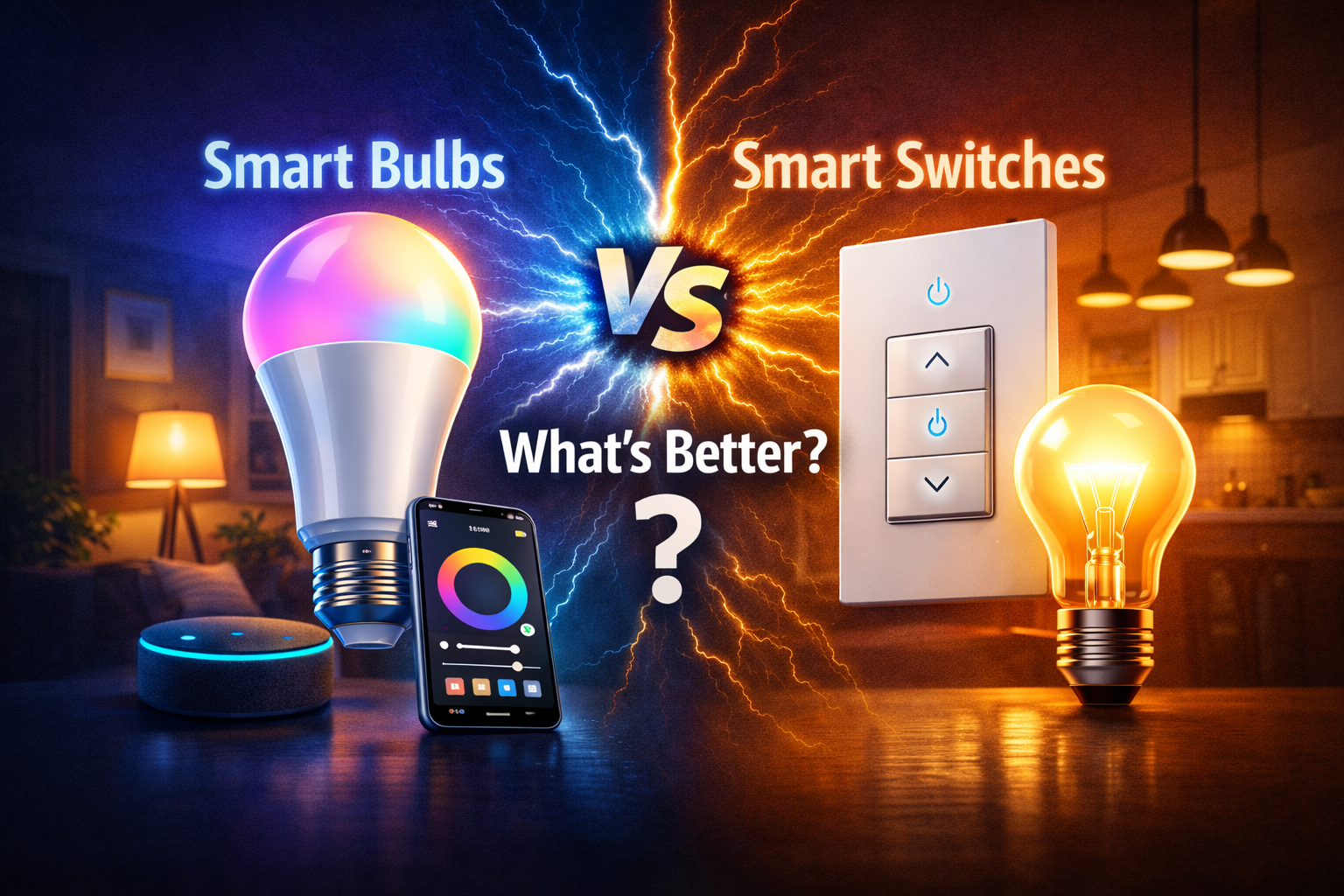
Table of Contents
Understanding the Differences
The debate of smart bulbs vs smart switches centers on where intelligence lives in your lighting system. Intelligent bulbs contain wireless receivers and processors within each unit, allowing individual control of every fixture. These bulbs screw into existing sockets, making them straightforward to install without electrical modifications.
Intelligent switches replace traditional wall switches while maintaining standard bulbs in your fixtures. They control power to entire circuits, managing multiple lights simultaneously. This centralized approach offers different advantages compared to distributed intelligence in individual bulbs.
Both intelligent lighting options connect to home networks, enabling smartphone control, voice commands, and automation routines. However, their architectural differences create distinct experiences. Bulbs offer granular control over color and brightness per fixture, while switches provide comprehensive circuit management regardless of bulb type.
Installation Requirements
Bulb Installation Process
Installing smart bulbs vs smart switches differs dramatically in complexity. Bulbs require no electrical expertise—simply remove old bulbs and screw in new ones. This simplicity appeals to renters or anyone uncomfortable working with electrical wiring. The process typically takes seconds per bulb. If you want a dependable option, a solid example is color changing WiFi enabled LED bulbs, which performs reliably in everyday use.
After physical installation, pairing bulbs with control apps follows manufacturer-specific procedures. Most systems guide users through discovery and configuration steps. Naming each bulb and assigning rooms creates an organized control structure for future adjustments.
Switch Installation Process
Switch installation demands more technical skill and involves working with household electrical systems. You must turn off power at the circuit breaker, remove existing switches, and connect new switches following wiring diagrams. This process requires understanding of electrical safety protocols and local building codes.
Many homes lack neutral wires at switch boxes, which some intelligent switches require for operation. Identifying wire types and ensuring compatibility prevents installation failures. Professional electricians can handle installations if you’re uncertain about electrical work, though this adds labor costs to your project.
Cost Analysis
Comparing smart bulbs vs smart switches financially requires examining both initial investment and long-term expenses. Individual intelligent bulbs typically cost between fifteen and sixty dollars depending on features. A room with five fixtures could require three hundred dollars in bulbs alone, making this approach expensive for multi-fixture spaces.
Intelligent switches range from thirty to eighty dollars per unit but control entire circuits. A single switch managing five standard LED bulbs costs significantly less than five intelligent bulbs. The comprehensive approach to modern lighting control systems often favors switches for rooms with multiple fixtures.
Consider replacement costs when evaluating home automation lighting investments. Intelligent bulbs eventually burn out like any light source, requiring replacement of the entire smart unit. Standard bulbs controlled by intelligent switches cost just a few dollars to replace, with the expensive intelligence remaining in the wall.
Installation labor affects total costs significantly. Professional electrician fees for switch installation can add one hundred to three hundred dollars per switch depending on complexity and regional rates. Bulb installation carries no labor costs for DIY users, potentially offsetting higher per-unit prices.
Control Flexibility
Individual Control Capabilities
When weighing smart bulbs vs smart switches for wireless light control, individual fixture management represents a key differentiator. Intelligent bulbs allow independent adjustment of each light’s brightness, color temperature, and hue. You might dim one reading lamp while brightening overhead fixtures, creating customized lighting zones within single rooms.
Color-changing capabilities exist exclusively with intelligent bulbs. These units contain multiple LED arrays producing millions of color combinations. Creating ambiance for entertainment, relaxation, or parties becomes simple through app-controlled color selection. Switches lack this capability since they only control power delivery.
Group Control Options
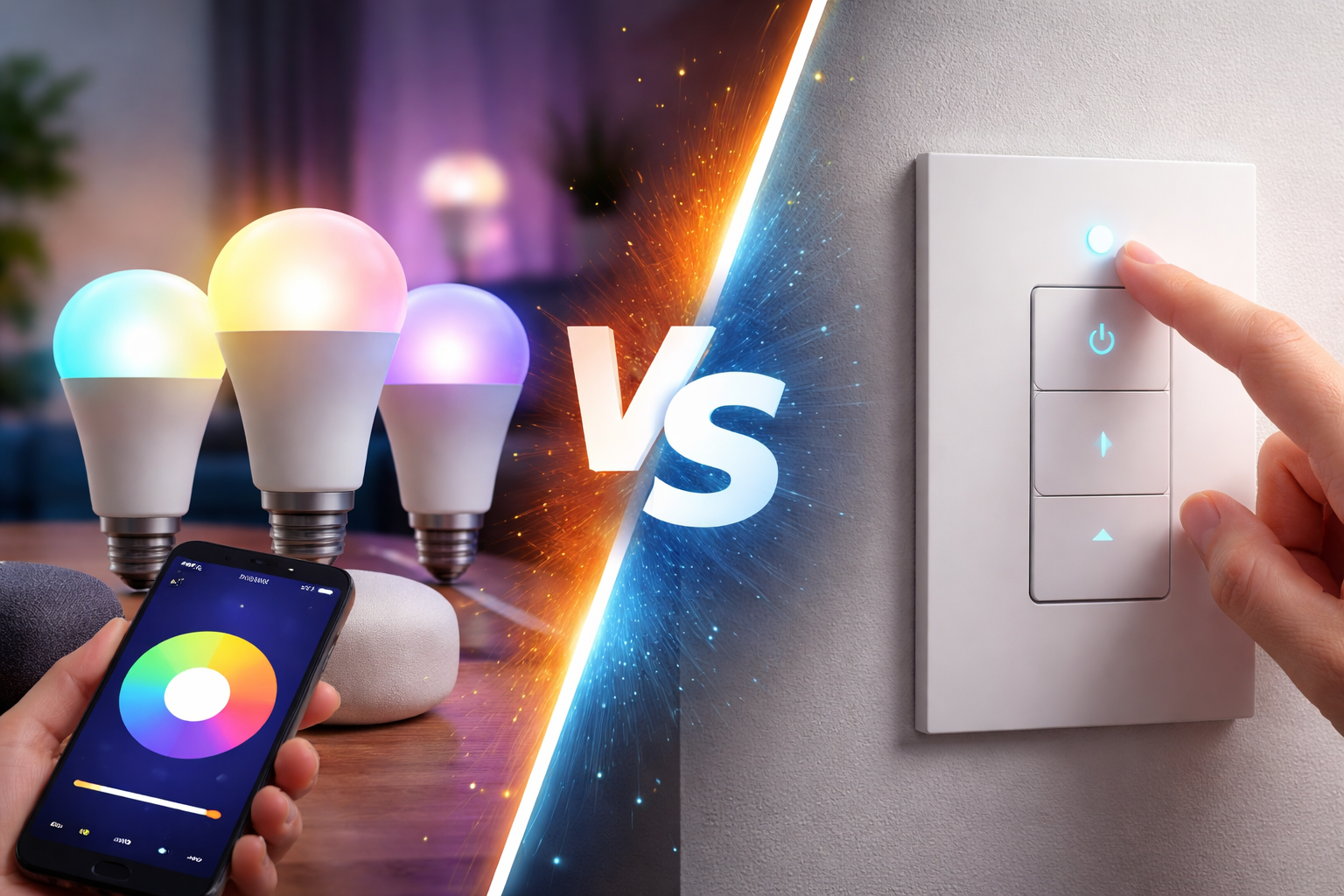
Intelligent switches excel at managing multiple fixtures simultaneously. Pressing a single switch controls all lights on that circuit, matching traditional lighting behavior while adding intelligent features. This unified control proves particularly valuable for coordinated room lighting where individual adjustment isn’t necessary. Another practical alternative is app controlled dimming wall switch, which is known for stable long-term performance.
Compatibility Concerns
The question of smart bulbs vs smart switches often involves existing infrastructure compatibility. Intelligent bulbs work with any socket-based fixture, from table lamps to ceiling fans. This universal compatibility makes them suitable for diverse applications without fixture replacement.
Dimmer compatibility affects both technologies differently. Traditional dimmers interfere with intelligent bulbs, preventing proper operation. You must replace dimmer switches with standard toggles or remove them entirely. Intelligent switches often include built-in dimming functionality, eliminating this concern.
Three-way switch configurations complicate intelligent switch installations. These setups require special switches or additional modules to function correctly. Intelligent bulbs bypass this issue entirely since they don’t rely on switch wiring for wireless light control capabilities.
Recessed lighting and integrated fixtures create challenges for home automation lighting with bulbs. Some recessed cans have non-standard sockets or limited space for larger intelligent bulbs. Intelligent switches avoid these physical constraints by controlling power delivery regardless of fixture design.
Bulb Advantages
Renter-Friendly Solution
Evaluating smart bulbs vs smart switches for rental properties favors bulbs due to their non-permanent nature. Renters can install intelligent bulbs without landlord permission since installation involves no modifications. When moving, simply unscrew bulbs and take them to your new home, leaving standard bulbs behind.
Portable Application
Lamps, floor fixtures, and other portable lighting benefit from intelligent bulbs in ways switches cannot match. Since these fixtures plug into outlets rather than connecting to wall switches, intelligent bulbs represent the only home automation lighting solution. This portability extends intelligent control to every corner of your living space.
Color Features
RGB color capabilities distinguish intelligent bulbs in the smart bulbs vs smart switches comparison. Creating colored lighting for holidays, parties, or mood enhancement requires bulbs with multi-color LEDs. According to research from the U.S. Department of Energy, LED technology enables this versatility while maintaining excellent energy efficiency.
Switch Advantages
Cost Effectiveness
For rooms with multiple fixtures, smart bulbs vs smart switches cost comparison clearly favors switches. A single switch controlling six ceiling lights costs a fraction of purchasing six intelligent bulbs. This economic advantage grows with fixture count, making switches ideal for heavily-lit spaces.
Family Accessibility
Intelligent switches maintain familiar wall control that family members and guests understand instinctively. Unlike intelligent bulbs requiring app access or voice commands, switches work like traditional lighting. This familiarity reduces confusion and ensures reliable manual operation when needed.
Power Consistency
A critical consideration in smart bulbs vs smart switches involves power management. Intelligent bulbs require constant power to maintain wireless connectivity. If someone flips a connected switch off, bulbs lose power and become unresponsive to wireless light control commands until manually switched back on.
Intelligent switches eliminate this vulnerability by replacing the physical switch itself. No one can accidentally disconnect power to your intelligent lighting options system. This reliability proves essential in households where occupants might instinctively reach for wall switches.
Ideal Use Cases
Best Scenarios for Bulbs
The smart bulbs vs smart switches decision favors bulbs in specific situations. Single-fixture rooms like bathrooms or small bedrooms need only one or two bulbs, making the investment reasonable. Table lamps and floor lamps without wall switch control benefit enormously from wireless capabilities.
Renters seeking intelligent lighting options without permanent modifications should choose bulbs exclusively. The ability to relocate your investment to future homes maximizes value. Additionally, situations requiring color-changing capabilities demand intelligent bulbs since switches cannot provide this functionality.
Best Scenarios for Switches
Rooms with numerous fixtures make smart bulbs vs smart switches favor switches financially. Living rooms with six recessed lights, dining rooms with chandeliers, or kitchens with multiple ceiling fixtures all benefit from single-switch control. The cost savings become substantial as fixture count increases.
Permanent residents who own their homes should consider switches for frequently-used spaces. The durability and reliability of wall-mounted controls outweighs portability concerns. Families with children or elderly members appreciate the familiar interface of traditional switch operation with enhanced features.
Long-Term Considerations
Maintenance and Replacement
Long-term ownership costs influence the smart bulbs vs smart switches equation significantly. Intelligent bulbs have finite lifespans, typically lasting fifteen to twenty-five thousand hours. When they fail, you must replace the entire expensive unit rather than just an inexpensive standard bulb.
Intelligent switches rarely fail since they contain fewer components than bulbs and experience less thermal stress. When standard bulbs controlled by intelligent switches burn out, replacement costs remain minimal. This difference in maintenance economics favors switches over decades of use.
Technology Evolution
Considering smart bulbs vs smart switches requires acknowledging technological advancement. Bulb technology evolves rapidly, with new features and improved efficiency appearing regularly. Replacing bulbs allows easy adoption of latest capabilities, though at significant ongoing expense. For a more permanent upgrade, many users switch to automatic detection energy saving LED bulbs, which offers consistent results over time.
Switch technology changes less dramatically since basic functionality remains constant. However, intelligent switches offer firmware updates that add features without hardware replacement. This software-based enhancement extends useful life and maintains relevance as standards evolve.
Hybrid Approaches
The smart bulbs vs smart switches debate doesn’t require choosing one technology exclusively. Many homeowners implement hybrid solutions that leverage strengths of both approaches. High-traffic rooms with many fixtures benefit from intelligent switches, while accent lighting and specialty applications use intelligent bulbs.
Kitchen lighting exemplifies hybrid potential effectively. Overhead recessed lighting connects to an intelligent switch for convenient control of primary illumination. Under-cabinet accent lighting uses intelligent bulbs or strips for adjustable color temperature and brightness independent of main fixtures.
Living rooms present another excellent hybrid opportunity when considering intelligent lighting options. Ceiling fixtures controlled by switches provide ambient lighting, while table lamps with intelligent bulbs offer reading light or decorative accents. This combination delivers comprehensive control without excessive investment.
Bedroom implementations often combine technologies naturally. Ceiling lights connect to intelligent switches for main illumination, while bedside lamps use color-capable intelligent bulbs. This arrangement provides functional overhead lighting plus customizable bedside ambiance perfect for relaxation routines.
Making Your Final Decision
Resolving the smart bulbs vs smart switches question requires honest assessment of your specific needs, budget, and technical comfort level. Start by inventorying each room’s fixtures and switch configurations. Count how many bulbs each switch controls—this number dramatically impacts cost calculations.
Evaluate your housing situation carefully. Renters should lean toward bulbs despite higher costs since portability preserves investment value. Homeowners gain more from switches’ durability and lower replacement expenses over time. Your living stability influences which approach makes financial sense.
Consider technical skills honestly when comparing home automation lighting approaches. If electrical work intimidates you, intelligent bulbs eliminate installation concerns. Those comfortable with basic wiring can install switches successfully, though hiring electricians remains an option for complex configurations.
Think about desired features carefully. Color-changing capabilities require intelligent bulbs—no alternative exists. If color doesn’t matter and you prioritize cost-effective control of multiple fixtures, switches deliver better value. Match technology to actual needs rather than theoretical preferences.
Remember that smart bulbs vs smart switches isn’t always an either-or decision. Strategic combinations often provide optimal results, placing each technology where it performs best. Start with one or two rooms to test your chosen approach before committing to whole-home deployment.
Sharing this guide
If you found this guide helpful, you can save it for later or share it with a friend. It’s especially useful for beginners, homeowners, and DIY users.
Share using the links below
Interested in learning more? Browse all related articles in our category section.
Pingback: Voice Controlled Lighting: Ultimate Setup Guide - NeoLEDHub
Pingback: Smart Lighting Ecosystem: Complete Expert Guide