How Do LED Bulbs Work? Understanding the Science Behind Modern Lighting
Understanding how LED bulbs work reveals the fascinating intersection of physics, engineering, and practical innovation. Unlike traditional incandescent bulbs that waste energy as heat, LED technology harnesses the power of semiconductor diodes to produce light efficiently. This comprehensive guide breaks down the science behind LED light technology and explains why these bulbs have revolutionized modern lighting while delivering amazing savings on your energy bills.
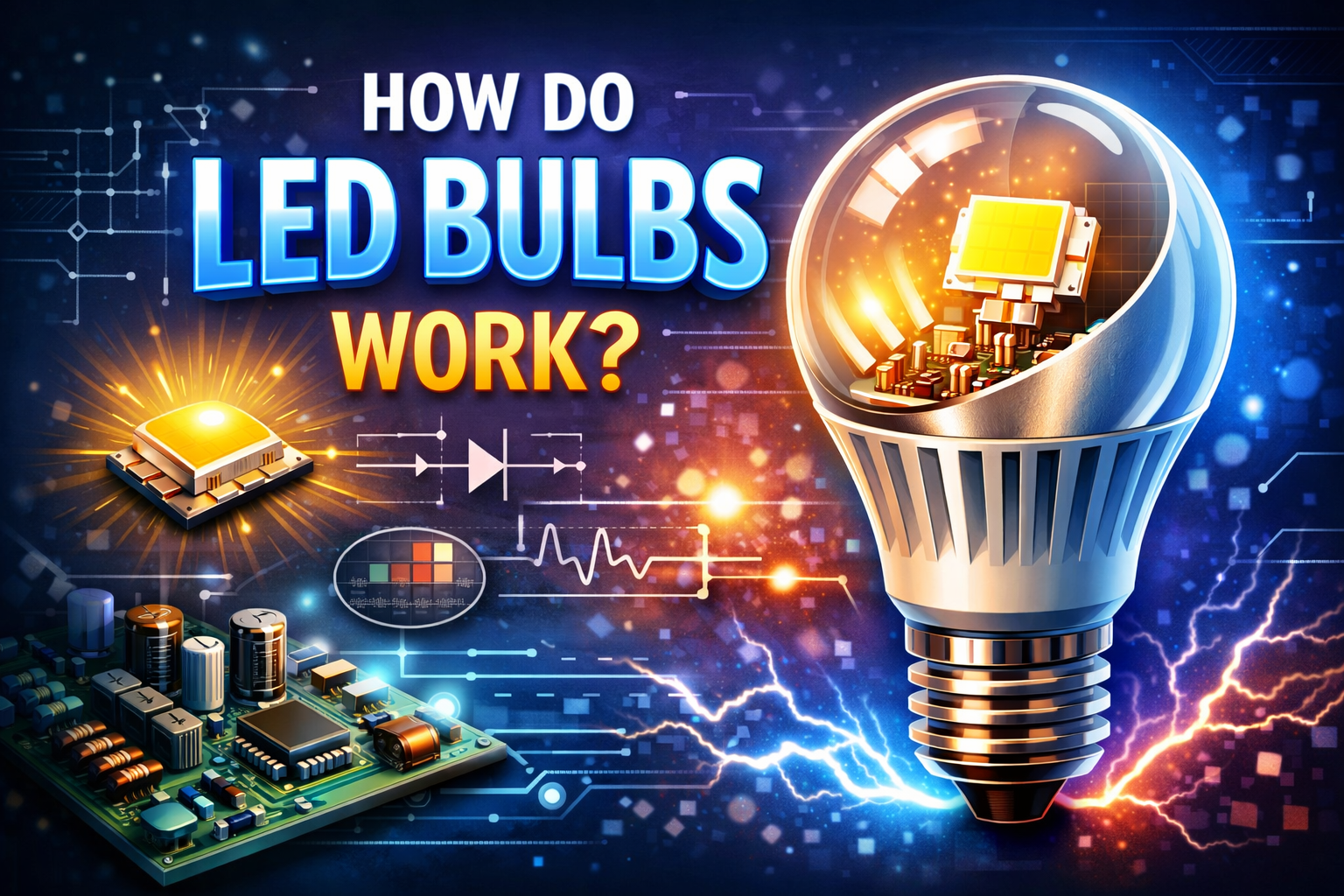
Table of Contents
- The Fundamentals of LED Technology
- Semiconductor Diodes and Light Emission
- Key Components Inside an LED Bulb
- The Light Production Process
- How LED Bulbs Create Different Colors
- Heat Management in LED Systems
- Why Energy-Efficient Lighting Matters
- Comparing LED Performance to Traditional Bulbs
- Understanding LED Lifespan and Degradation
- Share This Guide
The Fundamentals of LED Technology
To understand how LED bulbs work, we first need to explore what LED actually means. LED stands for Light Emitting Diode, and this name provides important clues about the technology. A diode is an electronic component that allows electrical current to flow in only one direction, and when certain types of diodes are energized, they emit light as a byproduct of this electrical activity. If you’re starting from scratch, this basic overview of LED bulbs and a deeper look at LED lighting fundamentals explained help clarify the core principles.
The science behind how LED bulbs work dates back to the early 1960s, when researchers discovered that specific semiconductor materials could produce visible light when electricity passed through them. This discovery laid the foundation for modern LED light technology, which has evolved dramatically over the past six decades. Today’s LED bulbs represent the culmination of extensive research into materials science, thermal management, and optical engineering.
Unlike incandescent bulbs that generate light by heating a filament until it glows, LED technology produces light through a process called electroluminescence. This fundamental difference explains why LED bulbs remain cool to the touch even after hours of operation. When lighting feels too harsh or inconsistent, switching to app-controlled bulbs with adjustable brightness and color can solve the problem by giving you precise control over output and tone.
The efficiency of this conversion process is what makes energy-efficient lighting possible. Traditional bulbs waste approximately 90% of their energy as heat, while LED bulbs convert about 95% of their energy into light. If you’re curious about measuring light output, you might find it helpful to learn how brightness is measured in lumens vs watts in modern lighting systems.
Semiconductor Diodes and Light Emission
At the heart of understanding how LED bulbs work lies the behavior of semiconductor diodes. These microscopic structures are typically made from materials like gallium arsenide, gallium phosphide, or gallium nitride. Each material has unique properties that determine the color and efficiency of the light produced. The choice of semiconductor material directly influences the wavelength of light emitted when electricity flows through the diode. For a deeper technical breakdown, you can explore how LED chip types differ in modern lighting.
Semiconductor diodes contain two layers of material with different electrical properties. One layer, called the N-type layer, has an abundance of free electrons, while the other, called the P-type layer, has spaces where electrons can settle, known as holes. When voltage is applied across these layers, electrons begin moving from the N-type region toward the P-type region. This movement creates the conditions necessary for light emission.
As electrons cross the boundary between these two layers, they release energy in the form of photons, which are particles of light. The amount of energy released determines the color of the light we see. This is the essential mechanism of how LED bulbs work at the quantum level. The process happens incredibly quickly, with millions of electrons making this transition every second, creating a steady stream of light.
The junction where the N-type and P-type materials meet is called the P-N junction, and it’s here that the magic of LED light technology occurs. Engineers carefully control the composition and structure of this junction to optimize light output and color quality. Advanced manufacturing techniques allow precise control over the semiconductor properties, enabling the production of LED bulbs with specific characteristics for different applications.
Key Components Inside an LED Bulb
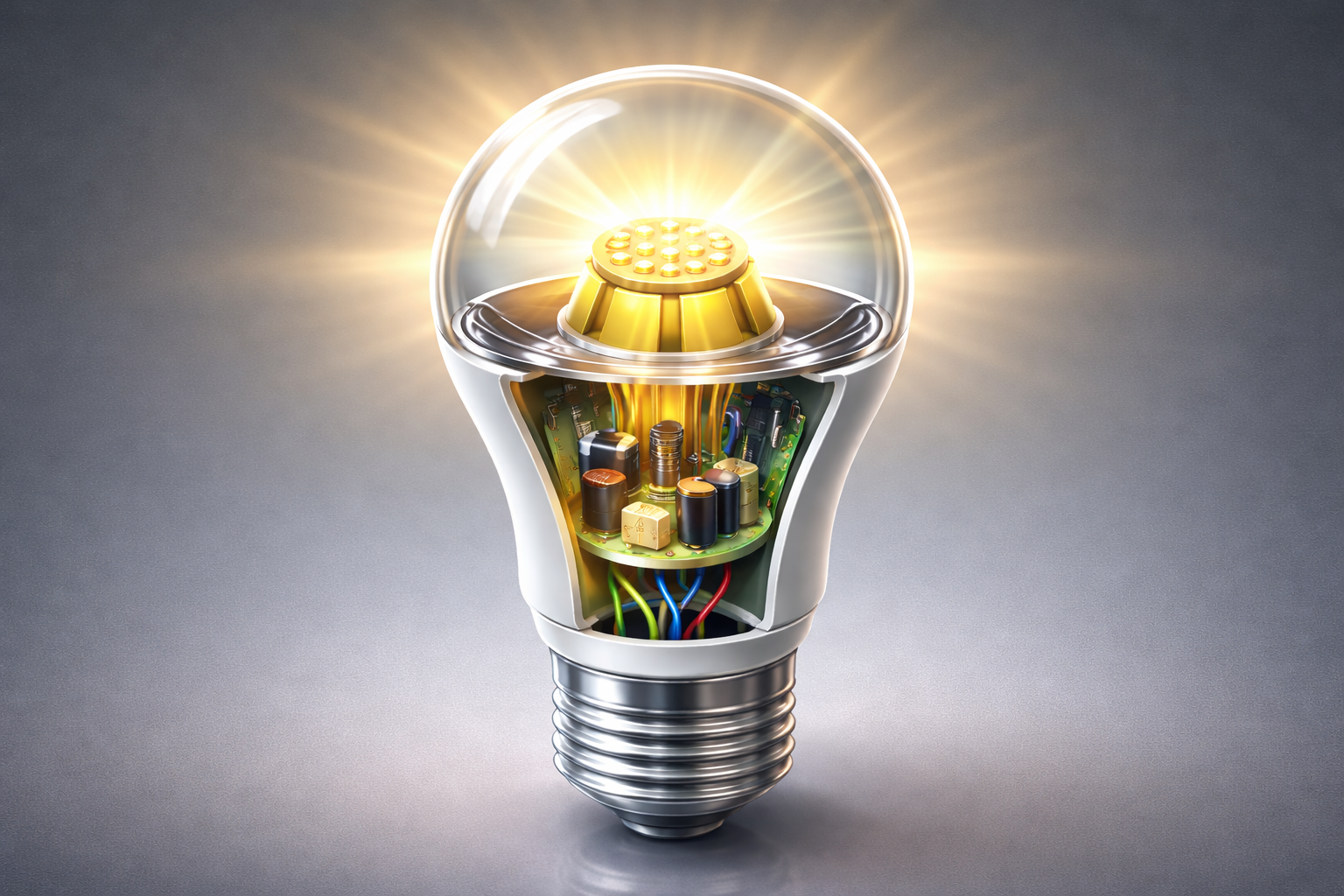
When examining how LED bulbs work, it’s important to recognize that modern LED bulbs contain several critical components beyond just the light-emitting diode itself. Each component plays a specific role in ensuring reliable, efficient operation. The bulb you screw into your lamp socket is actually a sophisticated assembly of electronic and optical elements working in harmony.
The LED Chip Array
At the core of every LED bulb sits a cluster of individual LED chips mounted on a circuit board. These tiny semiconductor diodes are often arranged in a specific pattern to distribute light evenly. A typical household LED bulb might contain anywhere from 10 to 50 individual LED chips, depending on the desired brightness level. Each chip contributes to the overall light output, and this redundancy helps explain the exceptional longevity of LED technology.
The Driver Circuit
Understanding how LED bulbs work requires knowledge of the driver circuit, which converts your home’s alternating current into the direct current needed by the LED chips. If your lights flicker or behave inconsistently, switching to reliable warm LED bulb with stable driver circuit can help ensure smooth, consistent output without electrical issues.
Heat Sink Assembly
Although LED bulbs produce far less heat than traditional bulbs, they still generate some thermal energy that must be dissipated. The heat sink, typically made of aluminum or ceramic, draws heat away from the LED chips and disperses it into the surrounding air. Proper heat management is crucial for maintaining the efficiency and longevity that characterize LED light technology. If you want to understand this better, check how LED heat sink cooling works in real applications.
Optical Diffuser
The plastic or glass cover that encases the LED assembly serves as an optical diffuser, spreading the light evenly in all directions. Without this component, LED bulbs would produce harsh, directional light with visible hot spots. The diffuser material is carefully selected to maximize light transmission while providing comfortable, uniform illumination that mimics traditional bulb characteristics.
The Light Production Process
Following the complete pathway of how LED bulbs work reveals a precisely orchestrated sequence of events. When you turn on a light switch, electricity flows from your home’s power supply to the LED bulb’s driver circuit. This circuit immediately begins converting the alternating current from your wall outlet into a steady direct current suitable for the semiconductor diodes.
The driver circuit delivers controlled voltage and current to the LED chip array, initiating electron movement within each semiconductor diode. As electrons traverse the P-N junction in each chip, they drop from a higher energy state to a lower one, releasing the excess energy as photons. This process happens almost instantaneously, which is why LED bulbs achieve full brightness the moment you flip the switch, unlike compact fluorescent bulbs that need warm-up time.
The photons generated by the semiconductor diodes initially travel in various directions. Some photons head directly toward the optical diffuser, while others bounce off reflective surfaces inside the bulb housing. The diffuser then scatters these photons uniformly, creating the soft, even illumination we expect from modern energy-efficient lighting. This entire process repeats millions of times per second as long as power flows to the bulb.
Temperature plays a crucial role in how LED bulbs work during operation. As the LED chips generate light, they also produce a small amount of heat as a byproduct. The heat sink continuously draws this thermal energy away from the chips, maintaining them at optimal operating temperature. Keeping the chips cool ensures consistent light output and prevents premature degradation of the semiconductor materials.
How LED Bulbs Create Different Colors
The mechanism of how LED bulbs work enables precise control over light color, which represents one of the technology’s most versatile features. The color of light emitted by an LED chip depends entirely on the energy gap in the semiconductor material.
Creating white light presents an interesting challenge in understanding how LED bulbs work. Since no single semiconductor material naturally produces white light, manufacturers use phosphor coatings and color mixing. If you want to dive deeper into this, this guide on LED phosphor technology explains the process in detail.
Heat Management in LED Systems
Effective thermal management is essential to understanding how LED bulbs work efficiently over long periods. Although LED technology converts most electrical energy into light rather than heat, the small amount of heat generated must still be carefully managed.
Modern LED light technology includes thermal protection circuits that monitor chip temperature and reduce power if overheating occurs. If your current bulbs struggle to maintain brightness without overheating, upgrading to high-output LED bulb for brighter and cooler lighting can help balance performance and efficiency.
Why Energy-Efficient Lighting Matters
The efficiency inherent in how LED bulbs work translates directly into significant energy savings for homeowners and businesses. Traditional incandescent bulbs waste most of their energy producing heat.
If you want a deeper breakdown of efficiency, you can explore how LED efficiency is calculated in practical scenarios.
Comparing LED Performance to Traditional Bulbs
Examining how LED bulbs work in comparison to traditional technologies reveals advantages beyond simple energy efficiency.
For a broader comparison, you can also check LED vs incandescent differences to see why this shift happened.
Understanding LED Lifespan and Degradation
The longevity inherent in how LED bulbs work stems from the stable nature of light emission from semiconductor diodes.
To understand how lifespan is measured in practice, see how long LED bulbs really last and what affects their performance over time.
Sharing this guide
If you found this guide helpful, save it or share it with someone who’s still using old bulbs.
Pingback: What Are LED Bulbs? Beginner Guide - NeoLEDHub
Pingback: Best LED Bulbs for Recessed Lighting (Top Picks) - NeoLEDHub
Pingback: CANBUS in Car LED Lighting: Essential Smart Guide
Pingback: Are LED Lights Safe for Cars? Full Safety Guide - NeoLEDHub
Pingback: LED Heat Sink Cooling: How It Works - NeoLEDHub