Are LED lights safe for cars? The Truth About Safety and Legality
Many drivers wonder if LED lights are safe for cars. In most cases, they are safe, but only if the bulbs, housings, and wiring are compatible with the vehicle and if the installation is done correctly.
This guide addresses the question of whether LED lights are safe for cars by explaining where LED car lighting is safer than older technology, where problems usually arise, and how to avoid glare, electrical issues, installation errors, and legal trouble when upgrading.
Quick Answer
In short, the answer to the question of whether LED lights are safe for cars is yes, but safety depends more on the full setup than on the bulb alone. Certified products, proper fitment, a correct beam pattern, and careful installation matter far more than marketing claims.
- Safe LED upgrades should match the vehicle’s housing and electrical system.
- A poor beam pattern is one of the biggest real-world safety risks.
- Quality cooling and EMI control help prevent early failure and interference.
- Legal compliance is especially important for headlight conversions.
- Cheap, uncertified bulbs are far more likely to cause glare, warnings, or reliability issues.
Table of Contents:
- Quick Answer
- When Are LED Lights Safe for Cars?
- Regulatory Compliance Overview
- Electrical System Impact
- Heat Management Considerations
- Electromagnetic interference
- Beam pattern safety
- Installation risks
- Quality certifications
- How do LEDs compare with halogen bulbs?
- Longevity and reliability
- Legal Considerations
- Choosing safe products
- Benefits of professional installation
- Key Takeaways
- Share this guide
When are LED lights safe for cars?
LED technology operates quite differently from traditional incandescent or halogen bulbs. Rather than relying on a fragile filament, LEDs use semiconductor materials that emit light when current passes through them. This solid-state design eliminates some of the weaknesses found in older lighting systems, such as delicate filaments, pressurized glass, and the high operating temperatures of halogen bulbs.
This is one reason why LEDs can be a safe option for cars when used correctly. They reach full brightness almost instantly, which is helpful for brake lights and turn signals. They also use less power than traditional bulbs. If you want a broader overview before focusing on safety details, our beginner’s guide to car LED lights is a useful place to start. For a deeper explanation of the underlying technology, our guide on how LED bulbs work breaks it down in simple terms.
Modern automotive LED assemblies use driver circuits to regulate current and protect the LEDs from unstable voltage. Better products include thermal protection and current control features that reduce the risk of overheating, flickering, or premature failure. In other words, the technology itself is not usually the danger. The bigger risks come from poor product quality, bad compatibility, or careless installation.
Regulatory Compliance Overview
A significant aspect of the discussion about whether LED lights are safe for cars is understanding the rules that govern automotive lighting. In the United States, the Department of Transportation enforces Federal Motor Vehicle Safety Standard 108, which addresses beam patterns, light output, color limits, and other requirements for legally operating vehicle lighting on roads.
Europe uses ECE regulations, such as R48, R87, and R112, that serve a similar purpose, though they are not identical. These regulations ensure that lighting upgrades do not cause glare, reduce forward visibility, or employ colors and beam patterns that render a vehicle unsafe on public roads. A bulb that appears bright in an online listing does not automatically comply with regulations when installed in a headlight housing.
According to the Society of Automotive Engineers, legitimate automotive lighting products undergo testing for vibration resistance, heat cycling, moisture exposure, and photometric performance. Products that skip this testing process may work initially, but are far more likely to cause safety issues or malfunction prematurely under real driving conditions.
Electrical System Impact
LED bulbs usually draw far less power than comparable halogen bulbs, which is one of their biggest advantages. The problem is that many newer vehicles monitor bulb circuits and expect to see a certain current draw. If the current draw changes too much, the car may assume the bulb has failed and trigger warnings, flickering, or inconsistent behavior.
Good automotive LED products address this issue with load resistors or CANBUS-compatible electronics that better align with the vehicle’s expectations. A dedicated LED load resistor kit solves this issue by wiring in parallel with the bulb to help the vehicle read the circuit correctly. Lower-quality bulbs often lack this feature, which is why they are more likely to cause dashboard errors, dimming issues, or unstable operation.
In most vehicles, the lower power draw is beneficial rather than problematic. It reduces strain on the electrical system and charging components. Still, compatibility matters. A bulb that is electrically efficient but poorly matched to the car can be frustrating or unsafe to use daily.
Heat Management Considerations
Although LEDs produce less overall heat than halogen bulbs, they are not heat-free. Rather than radiating heat forward like a filament bulb, LEDs concentrate it at the semiconductor junction. Therefore, thermal control is essential for reliable performance and safe long-term operation.
Better bulbs use aluminum heat sinks, passive fins, or cooling fans to move heat away from the LED chips and driver electronics. Without proper cooling, the bulb’s output will drop, its color can shift, and it can fail much sooner than expected. This is especially important inside sealed headlight housings, where airflow is limited.
During installation, ensure that the heat sink has enough space, that the bulb is seated fully, and that the dust cover still seals correctly. Poor airflow and trapped moisture can quickly shorten bulb life, even when the product itself is well made. Heat management is not just a performance issue. It is also what makes a setup reliable on the road.
Electromagnetic interference
Another overlooked factor is electromagnetic interference. LED driver circuits often use high-frequency switching, and poorly designed ones can interfere with other electronics in the car. This can manifest as radio static, GPS issues, keyless entry problems, or strange behavior in other sensitive systems.
Certified products are more likely to include EMI filtering, such as ferrite cores and capacitors, as well as better shielding. Budget bulbs often omit these parts to reduce costs. The bulbs may appear bright in the driveway, but they can cause annoying or even risky interference once the vehicle is in regular use.
Since most drivers don’t have access to specialized testing equipment, certification and brand reputation are more important here than usual. If new LED bulbs suddenly cause radio interference, activate warning lights, or result in other electronic malfunctions, they may not meet proper automotive standards.
Beam Pattern Safety
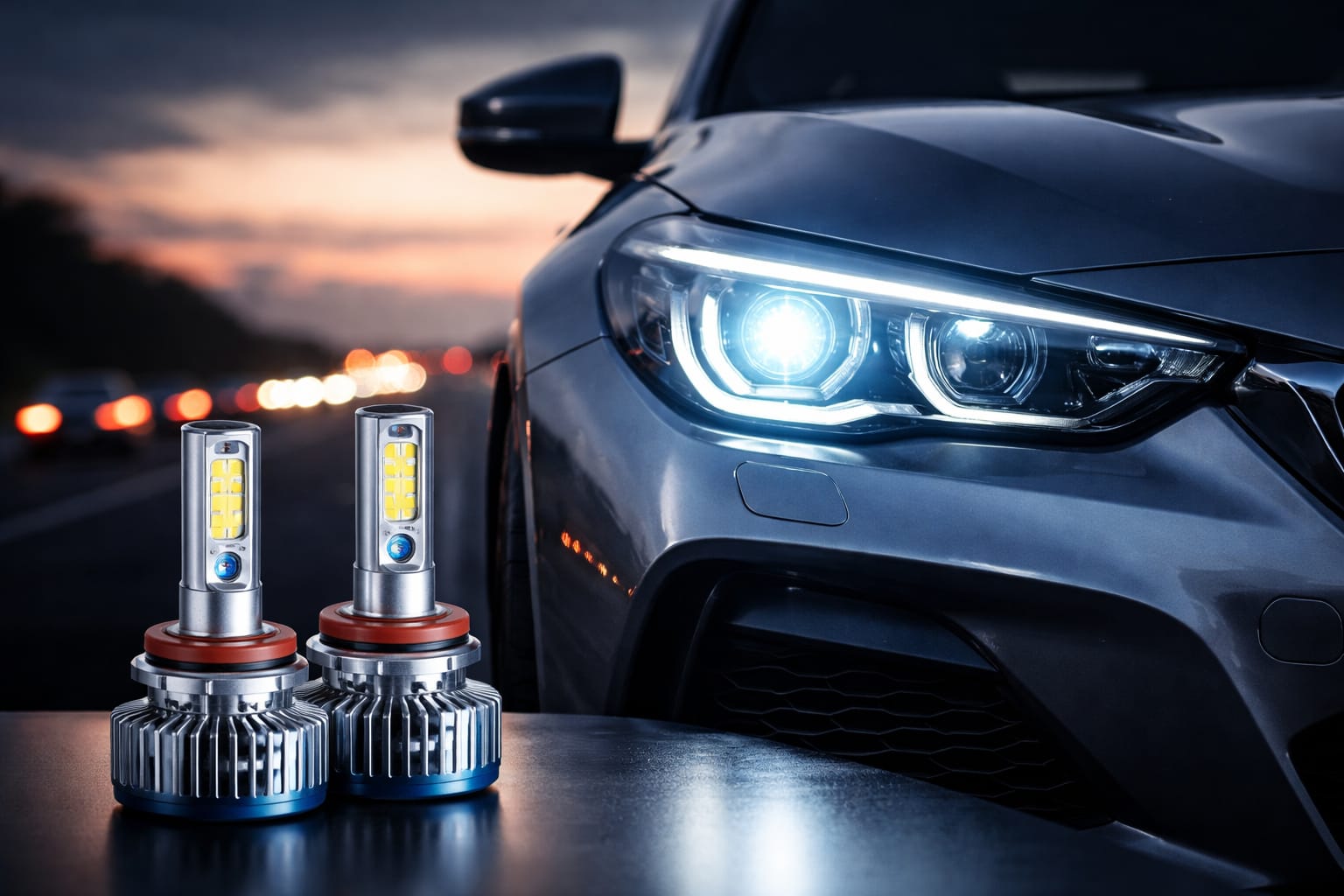
Beam pattern is one of the most important reasons some LED upgrades are safe and others are not. A headlight housing is designed around a specific light source position. In a halogen system, the reflector or projector is built around the exact placement of the filament. If an LED chip does not sit in the same optical position, the beam may scatter and create glare while still failing to properly illuminate the road ahead.
A bulb that appears brighter when viewed head-on is not necessarily safer. If the beam pattern is incorrect, it can reduce your visibility while blinding oncoming drivers.
Higher-quality replacement bulbs try to match the original filament location as closely as possible to help preserve a useful beam shape. Even then, results vary by housing design. Reflector housings are usually more sensitive to source mismatch, while projector housings often handle LED retrofits better because the lens shapes the beam more effectively.
If your vehicle has a reflector housing and you want high-quality light, a complete LED-specific headlight assembly is safer than simply swapping the bulb. Although it costs more, it usually provides more predictable optics and a better chance of staying compliant.
Installation Risks
Even a high-quality bulb can be a poor upgrade if installed incorrectly. Many automotive LEDs have larger heat sinks, fans, or external drivers, and these additional components do not always fit neatly inside the original housing. This can result in loose bulbs, missing dust covers, pinched wiring, or components that rub against nearby parts.
Wiring also requires careful attention. Corrosion, poor connections, and improperly routed wires can cause flickering, intermittent failure, and short circuits. Some bulbs rely on external driver modules that must be mounted in a dry, protected area away from heat and vibration. Our guide on how to safely replace car bulbs with LEDs covers the process in more detail and helps you check fitment before you start.
Poor installation can affect other parts of the vehicle as well. Over time, water intrusion, poor sealing, and mechanical interference can damage electrical connections or surrounding components. In extreme cases, a poorly designed bulb combined with careless wiring can create safety issues that LED technology itself never caused.
Quality Certifications
Certification marks are one of the clearest signals that a product has undergone real testing. While DOT, ECE, and SAE-related markings do not guarantee perfection, they show that the product claims compliance with recognized standards instead of relying solely on advertising language.
These standards cover more than just brightness. They also include beam testing, color consistency, vibration resistance, temperature cycling, and electromagnetic compatibility. A CANBUS-compatible LED decoder from a reputable manufacturer is a good example of a product category for which documentation is important because electrical compatibility and EMI performance are key to a reliable setup.
However, be cautious. Counterfeit markings are common in the LED market, especially on very cheap online listings. Trust brands that publish real specifications, warranty details, and support information. If a seller offers little to no technical documentation, that is usually a warning sign.
How LEDs Compare with Halogen Bulbs
Compared with halogen bulbs, LEDs have several built-in safety and durability advantages. Halogens run extremely hot, which increases the risk of burns during replacement and puts more heat stress on housings and nearby materials. Although they still need proper heat management internally, LEDs usually stay much cooler on the outside.
Halogen bulbs also use fragile glass and pressurized gas, making them susceptible to damage during handling. LEDs avoid these weaknesses and typically tolerate vibration better, which is important for automotive use. They also reach full brightness immediately, which is especially useful for brake lights and signals where every fraction of a second counts.
However, not every LED replacement is automatically better than every halogen bulb. A well-designed halogen setup is safer than a poorly designed LED retrofit with poor optics. Ultimately, the safest choice combines good beam control, solid reliability, and legal fitment for the specific vehicle.
Longevity and reliability
A long service life is one of the main reasons drivers switch to LEDs. Quality bulbs can last far longer than halogens, meaning fewer replacements and less maintenance. There is also less chance of losing a bulb unexpectedly during night driving or bad weather.
However, this reliability only holds up when the bulb is properly cooled and electrically stable. Premium products tend to degrade gradually instead of failing suddenly, which gives you time to notice reduced output and replace the bulbs before they become a real problem. This is a clear advantage over traditional bulbs, which may stop working with little warning.
For positions like fog lights, where consistent output is important in poor conditions, LED fog light bulbs from well-known manufacturers can provide better long-term stability than inexpensive alternatives. Reliability is not just about the lifespan listed on the box. It’s about how steadily the light performs over time under real conditions of heat, moisture, and vibration.
Legal Considerations
Legality is closely tied to safety because lighting laws are designed to prevent glare, poor visibility, and confusion on the road. In many places, replacing a halogen headlight with an LED bulb is not automatically legal, even if the bulb looks high quality. What matters is whether the entire bulb-and-housing combination is approved for road use.
Inspections often check headlight aim and beam performance, not just whether the bulb turns on. For a clearer overview of the rules in different locations, refer to our guide on the legality of LED headlight conversion, which explains how certification, inspections, and local enforcement can affect an upgrade.
There is also a liability aspect to consider. For example, if a non-compliant lighting setup contributes to a crash, it could cause problems with inspections, citations, and insurance claims. A legal upgrade isn’t just about avoiding tickets. It’s also about mitigating risk in case something goes wrong.
Choose safe products
For those researching LED lights for cars, the safest products are usually the ones that provide the most accurate information. Look for brands that publish beam photos, fitment details, thermal design information, warranty terms, and compatibility guidance, rather than relying on vague claims such as “super bright” or “error free.”
Established brands like Philips, Osram, and PIAA typically invest more in testing and compliance than lesser-known budget brands. This doesn’t mean that every premium product is perfect, but it does mean that you are more likely to get consistent output, better quality control, and documentation that you can verify. Paying more often buys better engineering, not just branding.
When checking reviews, look for feedback from drivers with the same vehicle and headlight housing style as yours. The same bulb can perform very differently from one vehicle to another.
Vehicle-specific reviews are especially helpful because fitment, beam shape, and electrical behavior can vary greatly from one car to another. This is why the safest shopping approach is usually to narrow your search rather than broaden it. Focus on products with proven results for your specific application.
Benefits of Professional Installation
If you are considering whether LED lights are safe for cars, professional installation can eliminate much of the uncertainty of an LED upgrade. An experienced technician can check clearances, confirm compatibility, safely route wiring, and ensure the final beam pattern is usable and not just bright. This can prevent many of the mistakes that make LED conversions risky.
Reputable shops also tend to avoid questionable products. Many will not install LED products without verified CANBUS compatibility because they know how often cheap bulbs lead to warnings, flicker, or poor results. This caution is often a sign of good standards, not unnecessary upselling.
Proper installation includes aiming the headlights after fitting the bulbs. This is one of the simplest and most important safety steps. If you want more information on how professionals think about product quality and lighting performance, the LED Knowledge Center is a helpful next stop.
Key Takeaways
LED lights can be safe for cars, but only when the entire system is correct. Product quality, beam pattern, fitment, cooling, and legal compliance matter much more than raw brightness claims or low prices.
If you are planning an upgrade, focus on certified products, vehicle-specific compatibility, and proper aiming after installation. A well-matched LED setup can improve efficiency and reliability, whereas a poor retrofit can cause glare and safety issues.
The best next step is to evaluate your vehicle’s housing design and check the legal requirements where you drive. Avoid treating every LED bulb as a universal solution. When done carefully, upgrading to LEDs can be both practical and safe.
Share This Guide
If it helped you, save it for later or share it with someone considering LED upgrades for their car. It is especially useful for drivers trying to balance safety, legality, and real-world performance.
Use the links below to share it.
Interested in learning more? Browse all related articles in our category section.
Pingback: LED Car Lights Legal? Complete 2026 Country Guide
Pingback: Colored LED Lights on Cars: Essential Legal Guide
Pingback: Are LED Underglow Lights Legal? Essential Guide - NeoLEDHub
Pingback: LED Headlight Conversions Legal? Final Answer - NeoLEDHub
Pingback: Are LED Headlights Legal in the US? State Laws - NeoLEDHub
Pingback: CANBUS in Car LED Lighting: Essential Smart Guide
Pingback: Are LED Car Lights Legal? What Drivers Need to Know
Pingback: Colored LED Lights on Cars: Essential Legal Guide
Pingback: Are LED Underglow Lights Legal? State Laws, Colors & Rules
Pingback: Are LED Headlight Conversions Legal? DOT Rules, Beam Pattern & State Laws