Best Light Bulbs for Bedrooms: Warm 2700K LED Picks
The best light bulbs for bedrooms are usually warm LED bulbs around 2700K, with moderate brightness and smooth dimming. For most bedside lamps, 400 to 600 lumens feels comfortable. For ceiling lights, 800 to 1,100 lumens usually works better without making the room feel harsh.
If you want a calmer bedroom, start with warm white or soft white LED bulbs, avoid daylight bulbs at night, and choose dimmable options when possible. This guide helps you choose the right bulb for bedside lamps, ceiling fixtures, decorative lights, reading, and smart bedroom routines.
Quick Answer
For most bedrooms, the best light bulbs are warm white LED bulbs between 2700K and 3000K. Use 400 to 600 lumens for bedside lamps, 800 to 1,100 lumens for ceiling fixtures, and choose dimmable bulbs if you read, relax, or wind down at night.
- Best overall bedroom bulb: warm white LED, around 2700K, dimmable.
- Best for bedside lamps: 400 to 600 lumens with soft diffusion.
- Best for ceiling lights: 800 to 1,100 lumens, preferably dimmable.
- Best for decorative lamps: warm filament or Edison-style LED bulbs.
- Avoid daylight bulbs at night unless you need task-focused brightness.
- Choose CRI 90+ if color quality, fabrics, or décor matter.
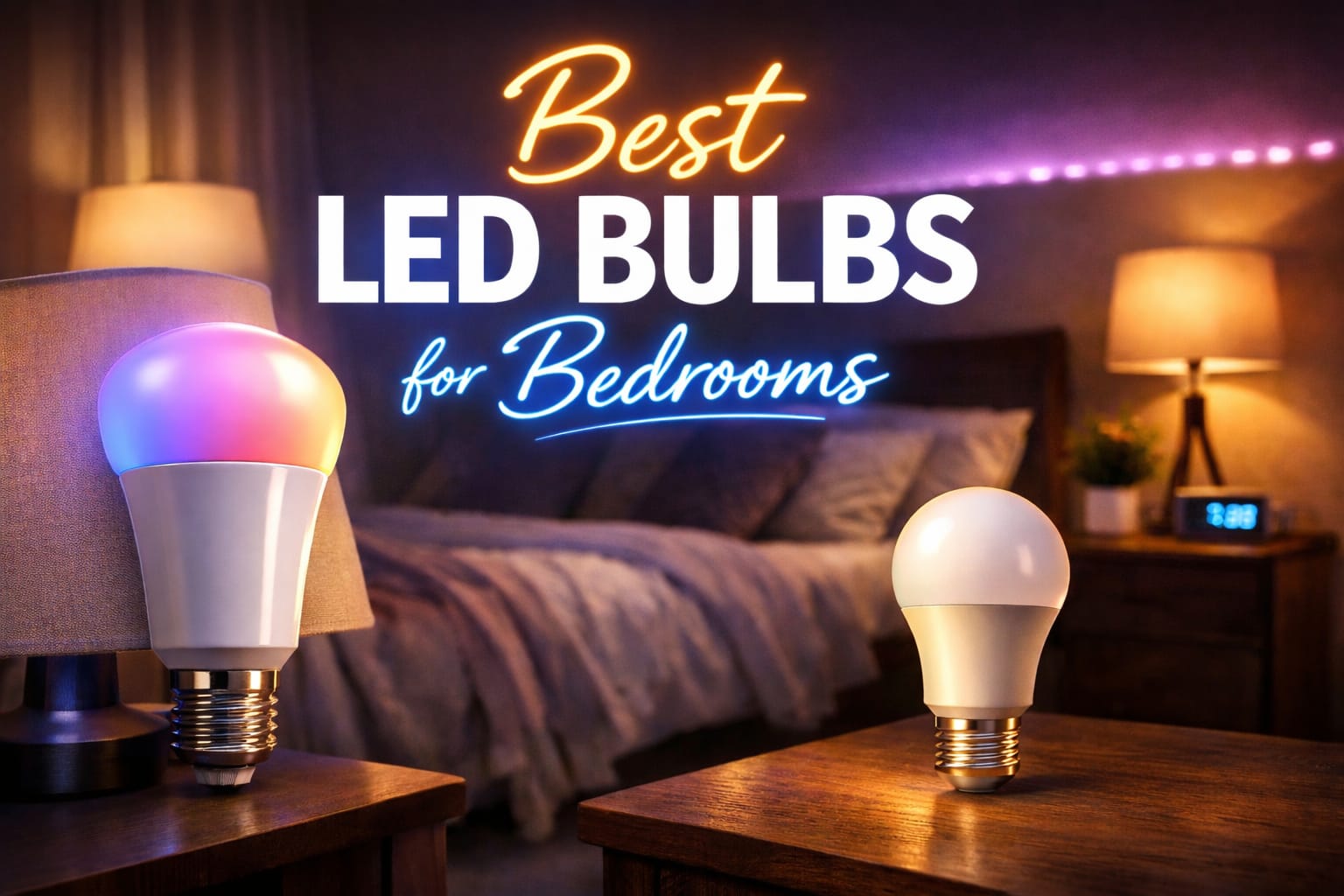
Planning the whole room, not just the bulbs? Our complete LED bedroom lighting guide covers ceiling fixtures, ambient lamps, and layered lighting for a more relaxing setup.
Table of Contents:
- Quick Answer
- Best Color Temperature for Bedroom Light Bulbs
- How Many Lumens Do You Need in a Bedroom?
- Are Dimmable LED Bulbs Worth It for Bedrooms?
- Best Bulb Shapes for Bedroom Lamps and Ceiling Lights
- Smart Bedroom Bulbs: Useful or Unnecessary?
- CRI, Lifespan, Compatibility, and Value
- Best Bedroom Light Bulb Picks by Use Case
- Bedroom Light Bulb Mistakes to Avoid
- Which Bedroom Light Bulb Should You Choose?
- FAQ
- Key Takeaways
Best Color Temperature for Bedroom Light Bulbs
Color temperature shapes how a bedroom feels more than most people expect. Measured in Kelvin, it tells you whether a bulb looks warm, neutral, or cool. For bedroom light bulbs, warm white LED bulbs in the 2700K to 3000K range usually create the most comfortable atmosphere for evening use.
A 2700K bulb is the safest starting point for most bedrooms because it feels warm without becoming too orange. A 3000K bulb can work well if you want a slightly cleaner look for dressing, cleaning, or general use. Ultra-warm bulbs around 2200K create a candle-like mood, which is better for decorative lamps, exposed fixtures, or relaxing at night than for task lighting.
Cool white or daylight bulbs can look sharper, but they often feel too clinical for a restful space. They may be useful in a closet, vanity area, or workspace inside the bedroom, but they are usually not the best choice for bedside lamps or ceiling lights used before sleep.
If you are unsure, choose 2700K for a cozy bedroom. Move toward 3000K only if the room feels too yellow or you need clearer light for daily tasks.
Your décor matters, too. Cooler wall colors often benefit from slightly warmer bulbs to make the room feel more inviting. Beige, cream, wood, linen, and warm neutral bedrooms usually pair well with most soft white LED bulbs.
How Many Lumens Do You Need in a Bedroom?
Brightness is just as important as color temperature. Even a warm LED bulb can feel uncomfortable if the lumen output is too high. Many bedrooms work well with overhead bulbs in the 800-to-1,100-lumen range, while bedside lamps often feel better at 400 to 600 lumens.
For reading in bed, a bulb around 400 to 600 lumens is usually enough if the lamp is close to the book. For a ceiling fixture, you may need more output because the light spreads across the whole room. For closets, dressing corners, or vanity areas, brighter light can help you see colors and details more accurately.
Choose moderate brightness first, then use dimming or layered lighting instead of buying the brightest bulb available.
Room size also affects the ideal brightness level. Smaller bedrooms need less output, while larger primary bedrooms may need stronger ceiling lights and softer secondary lamps. If you are unfamiliar with bulb specifications, start by learning what LED bulbs are and how they work before comparing products in detail.
The key is to match the brightness to the task. A calm bedroom usually needs more than one light source: a practical ceiling bulb, a softer bedside lamp, and maybe a focused task light near a dresser, desk, or reading corner.
Are Dimmable LED Bulbs Worth It for Bedrooms?
Dimmable LED bulbs are worth it in most bedrooms because they let one fixture serve different moments of the day. You can use brighter light for dressing or cleaning, then lower the brightness for reading, watching TV, or winding down at night.
However, not all LED bulbs dim well. Lower-quality bulbs may flicker, buzz, or appear uneven at low settings. Better dimmable bulbs remain stable across the dimming range and keep the light warm and comfortable instead of making the room feel strange or harsh.
Dimmer compatibility matters. If your switches are old, a better bulb alone may not eliminate flicker or humming. Trailing-edge dimmers usually work better with LED bulbs than older incandescent-style dimmers, but exact compatibility still depends on the bulb and the switch.
Using non-compatible dimmers with LED bulbs can cause flickering, buzzing, poor low-end dimming, or a shorter bulb lifespan. Always check that the bulb and switch are rated to work together.
Some smart bulbs avoid wall-dimmer problems by handling dimming through an app, remote, or voice control. That can be useful if you want flexible bedroom light without replacing your existing wall controls.
Best Bulb Shapes for Bedroom Lamps and Ceiling Lights
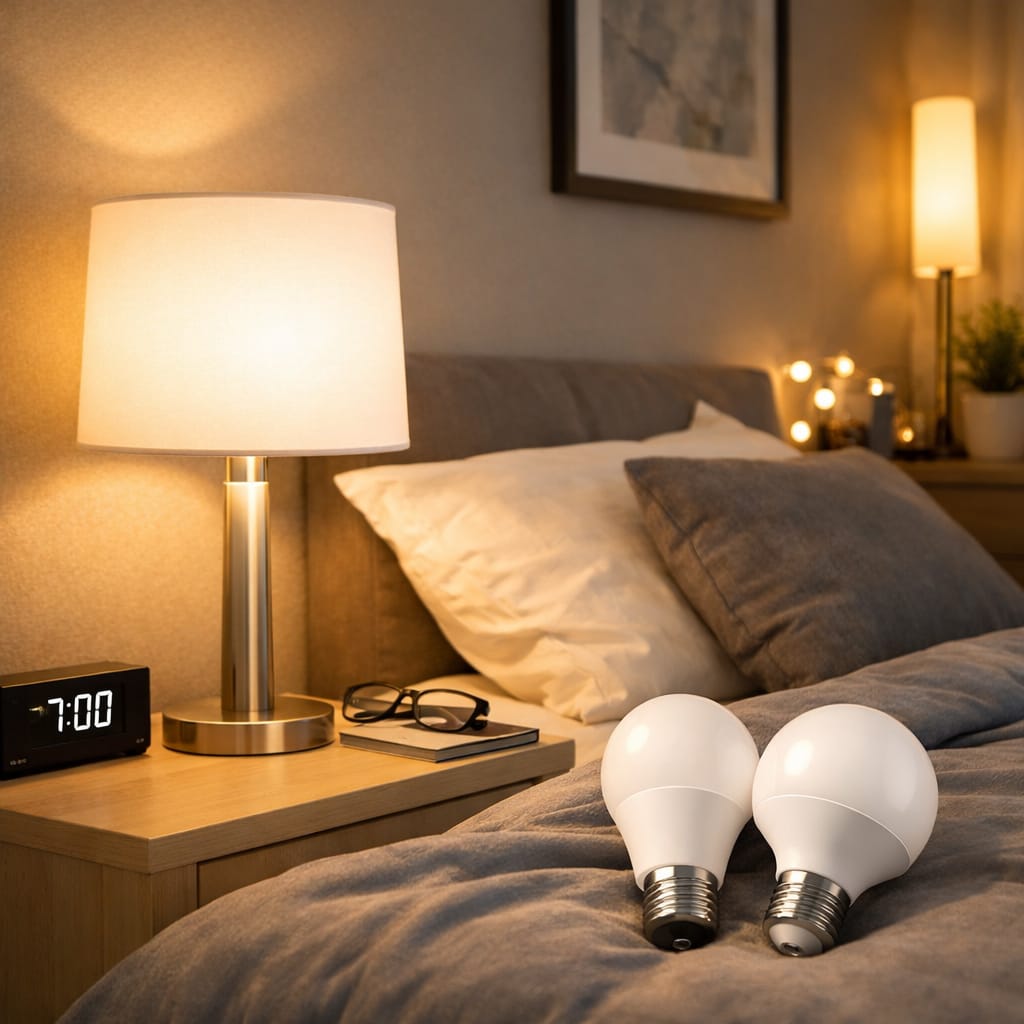
The best LED bulb for a bedroom is not necessarily the same shape for every fixture. Standard A19 bulbs fit most table lamps and many ceiling fixtures, which makes them the easiest all-round choice for bedroom use.
Decorative or exposed fixtures often look better with globe, candle, or filament-style bulbs. If the bulb is visible, appearance matters as much as brightness. In that case, warm filament or warm Edison-style LED bulbs for decorative bedroom lamps can create a softer, more atmospheric look than a plain utility bulb.
Base type matters, too. The E26 base is common in many standard lamps, while chandeliers, sconces, and accent fixtures may use E12 or another base. Always check the base, bulb length, and fixture clearance before buying, especially for enclosed shades or tight fittings.
Reflector shapes, such as BR bulbs, can work well in recessed bedroom fixtures. For bedside reading, a shaded lamp with a standard warm bulb often feels better than a bare bulb because the shade softens glare and spreads light more evenly.
Smart Bedroom Bulbs: Useful or Unnecessary?
Smart bulbs can be useful in bedrooms if you want schedules, voice control, app-based dimming, or adjustable color temperature. They are especially helpful if you want brighter light in the morning and warmer light at night without changing bulbs.
For bedroom routines, tunable white bulbs are usually more useful than color-changing bulbs. A bulb that shifts from warm white to daylight gives you practical flexibility without turning the room into a decorative effects space. If that sounds useful, smart LED bulbs that shift from warm white to daylight can make sense for bedside lamps, ceiling fixtures, or morning schedules.
Smart features are still optional. If you only want warm, quiet, dimmable light, a standard LED bulb may be a better fit than a connected one. If you also light shared spaces, our guide to the best LED bulbs for living rooms explains how priorities change outside the bedroom.
If you choose smart bulbs, buy from reputable brands that offer app support and firmware updates. Connected lighting is convenient, but it is still part of your home network, so reliability and support matter.
CRI, Lifespan, Compatibility, and Value
Once the color temperature and brightness are right, look at quality details. The Color Rendering Index (CRI) tells you how natural colors look under a bulb. In bedrooms with fabrics, wood tones, artwork, or dressing areas, CRI can make a noticeable difference.
The best bedroom light bulbs usually have a CRI of at least 80, but CRI 90+ is the better choice if you want richer colors and a more natural look. Lower-CRI bulbs can still work, but they often make the room feel flatter or less inviting.
Lifespan and heat handling also matter. LED bulbs usually last far longer than incandescent or CFL alternatives, but real-world durability depends on driver quality, heat, dimmer compatibility, and whether the bulb is used in an enclosed fixture. For a deeper look, NeoLEDHub’s article on LED bulb lifespan explains what actually affects longevity.
Installing LED bulbs is usually simple, but compatibility still matters. If your bedroom uses a three-way lamp, touch lamp, dimmer circuit, enclosed shade, or specialty fixture, check the bulb packaging before buying. A good bulb can feel disappointing if it flickers, buzzes, overheats, or fails to dim properly in the wrong setup.
LEDs also use far less electricity than incandescent bulbs while providing similar brightness. A 60-watt incandescent replacement LED often uses only about 8 to 12 watts, which helps bedrooms with multiple lamps or long evening use. The U.S. Department of Energy explains how LED lighting reduces power use compared with older bulb types.
The best value usually comes from total cost over time rather than the cheapest shelf price. Energy savings, fewer replacements, better dimming, and more consistent light often make a quality bulb the better buy. For more detail, see our guide to LED energy savings.
Best Bedroom Light Bulb Picks by Use Case
The best bedroom light bulbs depend on where the bulb goes and how you use the room. Instead of buying one bright bulb for everything, choose based on how each fixture will be used.
- Best overall bedroom bulb: choose warm 2700K dimmable A19 LED bulbs with CRI 90 that produce around 800 lumens. This is the safest choice for most bedrooms because it gives you soft color, practical brightness, and better color quality than basic low-CRI bulbs.
- Best for bedside lamps: choose a warm white bulb with 400 to 600 lumens and a shaded lamp that softens glare. If you read often, prioritize stable dimming and visual comfort.
- Best for ceiling lights: choose a dimmable bulb with 800 to 1,100 lumens for general use. In larger rooms, use layered lighting instead of relying on one harsh overhead bulb.
- Best for decorative lamps: choose warm filament, globe, or Edison-style bulbs when the bulb is visible and the goal is atmosphere more than task brightness.
- Best for routines: choose tunable white smart bulbs if you want warm light at night, brighter light in the morning, schedules, or app-based control.
Brand matters, but the spec sheet matters more. Focus first on color temperature, lumens, dimming quality, CRI, fixture compatibility, and whether the bulb fits the actual lamp or ceiling fixture. Once those basics are right, compare warranty, smart features, and price.
If your bedroom also includes a desk, vanity, or task area, the priorities may change. Our guide to the best LED bulbs for desk lamps can help when you need more focused light for reading, work, or close-up tasks.
Bedroom Light Bulb Mistakes to Avoid
The most common mistake is buying bulbs that are too cool or too bright. A bedroom usually does not need crisp daylight-style output at night, and many rooms feel worse the moment a cool white bulb is installed, even if the product itself is technically efficient.
Another mistake is ignoring dimmer compatibility. A great bulb can still perform badly if the switch is wrong. Low CRI is another easy trap, especially with cheap bulbs that look fine on paper but make the room feel flat once installed.
Too many lumens can also ruin the bedroom atmosphere, even if the color temperature is right. Start with a lower setting, then add more light through extra fixtures or dimmable controls if needed. Layered lighting almost always works better than one aggressive ceiling bulb.
Do not forget fixture limits. Enclosed fixtures, small shades, touch lamps, three-way lamps, and older dimmer switches can all affect bulb performance. Checking compatibility before buying prevents flicker, buzzing, overheating, and early failure.
Which Bedroom Light Bulb Should You Choose?
If you want a bedroom that feels comfortable, practical, and easy to adjust, choose warm, dimmable LED bulbs with moderate brightness and good enough CRI for the way you use the room.
- If better sleep comfort is your goal, start with 2700K warm white LED bulbs.
- If you often read in bed, use 400 to 600 lumens near the bedside with dimming.
- If the room feels too dark, improve layering before choosing a very bright bulb.
- If your fixture is exposed, choose a warm decorative bulb that looks good when visible.
- If you want morning and night routines, choose tunable white smart bulbs.
- If visual quality matters, look for CRI 90+.
- If you use an older dimmer, confirm LED compatibility before buying.
FAQ
What Color LED Bulb Is Best for a Bedroom?
For most bedrooms, 2700K warm white is the best starting point. It feels cozy and soft without being too orange. A 3000K bulb can work if you want a slightly cleaner look, while daylight bulbs are usually too cool for nighttime use.
How Many Lumens Should a Bedroom Bulb Have?
For bedside lamps, 400 to 600 lumens is usually comfortable. For ceiling fixtures, 800 to 1,100 lumens often works better. Larger bedrooms may need more total light, but it is usually better to add layers than to use one very harsh bulb.
Are Daylight Bulbs Good for Bedrooms?
Daylight bulbs can be useful for closets, dressing areas, or task zones, but they are usually not the best choice for bedside lamps or evening use. Warm white bulbs are more comfortable for relaxing and winding down.
Should Bedroom Bulbs Be Dimmable?
Dimmable bulbs are a strong choice for bedrooms because they let you adjust the room from practical brightness to a softer nighttime glow. Just make sure the bulb and dimmer switch are compatible.
Is CRI Important for Bedroom Bulbs?
CRI matters if you care about how fabrics, wood tones, artwork, makeup, or clothing colors look. CRI 80 is acceptable for general use, but CRI 90+ usually gives a richer and more natural bedroom appearance.
Key Takeaways
The best light bulbs for bedrooms combine warm color temperature, comfortable brightness, reliable dimming, and fixture compatibility.
For most people, 2700K to 3000K is the best range, with 400 to 600 lumens for bedside lamps and 800 to 1,100 lumens for ceiling fixtures.
A good bedroom bulb does more than save energy. It makes the room feel softer, calmer, and easier to live with every evening.
Sharing This Guide
If you found this guide helpful, save it or share it with someone who is currently comparing bedroom light bulbs.
Interested in learning more? Browse all related articles in our category section.