What LED Replaces a 60W Bulb? Wattage Equivalent Chart
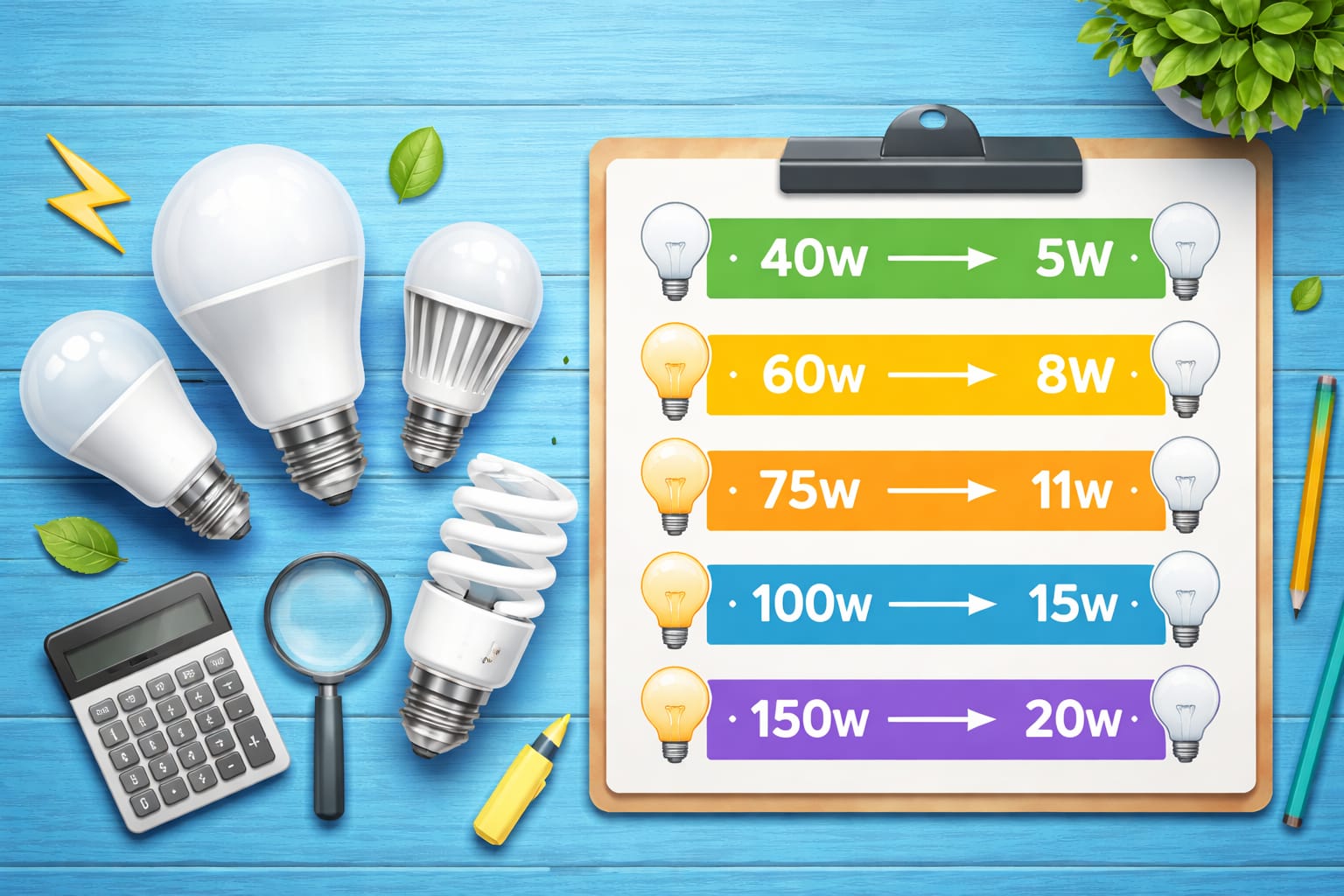
If you are replacing an old bulb, the easiest way to choose the right LED is to match brightness by lumens, not watts. This LED wattage equivalent chart shows what replaces 40W, 60W, 75W, and 100W bulbs so you can buy the right bulb faster.
Use this guide to compare familiar incandescent wattages with modern LED replacements, understand why lumens matter more, and avoid buying a bulb that looks correct on the box but feels wrong in the room.

Quick Answer
A 60W incandescent bulb is usually replaced by an LED bulb rated around 8W to 10W with about 800 lumens. A 40W bulb is usually replaced by an LED with around 450 lumens, a 75W bulb by one with around 1,100 lumens, and a 100W bulb by one with around 1,600 lumens.
- Match lumens first, not watts.
- A 60W bulb usually equals about 800 lumens.
- A 100W bulb usually equals about 1,600 lumens.
- Check bulb shape, base, and dimmer compatibility.
- Choose color temperature based on room use.
Table of Contents:
- Quick Answer
- How to Read the Chart
- Why Watt Labels Confuse Buyers
- Common Bulb Conversions
- What Replaces a 60W Bulb
- Why Lumens Matter More Than Watts
- How Fixtures Change Brightness
- Common Comparison Mistakes
- Why 100W Claims Need a Closer Look
- Best Brightness by Room
- How Color Temperature Affects Brightness
- Quick Side-by-Side Choice
- Features Worth Paying For
- When More Lumens Can Save Money
- Buying Checklist
- Common Questions
Many people are frustrated because they remember the old wattage system, not the brightness they liked. This is exactly why an LED wattage equivalent chart is useful: it translates familiar incandescent numbers into modern LED choices. You can stop guessing and buy the right bulb for your lamp, ceiling fixture, or task light the first time.
How to Read an LED Wattage Equivalent Chart
The easiest way to read an LED wattage equivalent chart is to start with an old bulb that you are familiar with. If your room was adequately lit with a 40W incandescent bulb, look for an LED bulb with around 450 lumens, which is usually about 5W to 6W. If you used a 60W bulb, aim for about 800 lumens, which is usually about 8W to 10W. If you used a 75W bulb, aim for around 1,100 lumens, and if you used a 100W bulb, look for around 1,600 lumens.
If you are shopping for a lamp, start with the bulb you already liked and compare it by lumens first. Then confirm the base size, bulb shape, and whether the fixture is open or enclosed. A chart is useful, but those three checks prevent the most common buying mistakes. If you want a broader view of efficiency, this breakdown of how LED lighting works provides helpful background information before you buy.
Why Watt Labels Still Confuse Buyers
In the past, watts were an indirect measure of brightness because incandescent bulbs were inefficient in a predictable way. LEDs changed that. Now, a bulb can use 9W and still match a traditional 60W lamp. This is why people who ignore lumen output often end up with a room that feels too dim or strangely harsh. The chart translates habit into modern specs, but the package label alone is not enough.
A good rule is to treat wattage as a rough replacement label and lumens as the actual brightness number. That matters especially when comparing brands, because two bulbs with the same “equivalent” claim can still feel different in use depending on beam spread and color tone.
When two bulbs claim the same replacement wattage, choose based on lumens first. The lumen number tells you the actual light output, while the equivalent wattage is only a convenient shortcut.
Common Bulb Conversion Patterns
Most households see the same conversion patterns, and an LED wattage equivalent chart is built around them. A 40W incandescent replacement usually produces about 450 lumens. A 60W replacement is close to 800 lumens. A 75W replacement often has around 1,100 lumens. A 100W incandescent replacement typically targets around 1,600 lumens. Once you know these benchmarks, it becomes much easier to read packages.
These conversions also explain why LEDs create real energy savings. Rather than using 60W to achieve a certain brightness level, you may only need 9W or 10W. Over time, the reduction in power usage adds up, especially in kitchens, hallways, and living rooms, where lights are left on for hours. If you are replacing several bulbs in one room, matching the total lumen level of the space is often smarter than copying the wattage of each old bulb one by one. This effect is more clearly seen in this guide to LED vs. incandescent electricity costs.
For a practical product reference, consider a high-output bulb marketed for brighter task lighting. This can be useful when comparing a strong 150W equivalent claim against the bulb’s actual lumen rating. This makes it easier to determine if the bulb matches the brightness you expect or if it simply sounds impressive on the box. For this kind of shopping, the Amazon Basics LED A19 100W equivalent, 15W, soft white 2700K, dimmable, 6-pack is a useful reference point.
What LED Replaces a 60W Bulb in Real Homes?
In most cases, an 8W to 10W LED bulb that produces around 800 lumens replaces a 60W bulb. This works well for bedside lamps, small table lamps, and many overhead fixtures. However, shade material, bulb direction, and room color all affect brightness perception, so 800 lumens is a good starting point, not a guarantee. A common option here is the Amazon Basics LED A19 60W equivalent, 9W, soft white 2700K, dimmable, 6-pack.
Why Lumens Matter More Than Watts
If you remember one thing from this guide, remember this: brightness comes from lumens, not watts. While an LED wattage equivalent chart can be helpful in pointing you toward familiar replacements, lumen output is the real measure of visible brightness. This explains why two bulbs with the same wattage rating can still appear different once switched on.
Another reason lumens matter is LED efficiency. Better bulbs produce more lumens per watt, meaning they provide stronger illumination without wasting power as heat. According to the U.S. Department of Energy’s guidance on LED lighting efficiency, LEDs are designed to use substantially less electricity than older technologies while lasting much longer. For a deeper comparison, see lumens versus watts.
How Do Beam Angle and Fixture Design Change Brightness?
A narrow beam can make a bulb appear more intense, even if the lumen rating is the same. A wide beam spreads light across a larger area and can appear softer. Fabric shades, frosted covers, and recessed housings also alter the light output. This is why you should always read an LED wattage equivalent chart alongside the fixture design, especially for accent lamps and ceiling cans.
Common Comparison Mistakes
The biggest mistake people make when comparing bulbs is assuming that every 60W or 100W equivalent bulb is interchangeable. Some brands round numbers up. Others use a clear glass design that makes the light source more visible, making it appear brighter. People also ignore dimmer compatibility, color temperature, and bulb shape. While an LED wattage equivalent chart provides a solid baseline, packaging details still matter if you want the result to be optimal.
Another common mistake is comparing running costs without considering usage time. A bulb used for three hours a day behaves very differently from a bulb used for eight hours a day. If the goal is comfort and savings, the best replacement is the one that balances brightness, beam spread, and fixture fit rather than the one with the biggest equivalent claim. For context on long-term savings, see LED energy savings and monthly savings from switching to LEDs.
Do not assume that a higher equivalent claim always means a better purchase. If the bulb shape traps heat, fits poorly, or produces the wrong color tone, the upgrade can feel inferior despite using the right comparison chart.
Why 100W Claims Need a Closer Look
People searching for an LED equivalent to a 100-watt bulb often expect any bulb with that claim to behave the same way. In reality, you should first look for around 1600 lumens, then confirm the base type, physical size, and heat management. Some oversized bulbs fit open fixtures well but are awkward in enclosed lamps, which can affect safety and performance.
A strong 100W-equivalent bulb is useful in larger rooms, but it only works well if the fixture can handle the shape and heat. If the bulb is going in a decorative lamp, a smaller body with the same lumen target may be more practical. That kind of detail matters more than the label alone.
Choosing the Right Brightness for Each Room
An LED wattage equivalent chart is most useful when matched to the purpose of each room. Bedrooms often require warmer, softer lighting, while kitchens and work areas usually need brighter lighting. A bulb that works in a hallway may feel underpowered over a kitchen counter. The chart provides a replacement range, but the practicality of that range depends on room use.
If you loved the cozy look of older lamps, you may prefer to stay near 2700K to 3000K. If you need sharper task visibility, 4000K to 5000K often provides better illumination. Choosing the right brightness by room is often the difference between a technically correct bulb and a bulb that feels comfortable every day.
For broader comparison context, this comparison of LED and halogen energy use and how much LED lights can save per year are useful next reads.
How Color Temperature Affects Perceived Brightness
A cooler bulb can seem brighter even when its lumen rating is unchanged. This is why color temperature matters when reading an LED wattage equivalent chart. A warm 800-lumen bulb may appear softer than a cool 800-lumen bulb, even though the measured output is the same.
If you want a calm, cozy feel, warm light usually works better even if it is slightly lower in perceived brightness. For task areas, cooler tones can help visibility, especially when paired with the right lumen target. That is why brightness and color should be chosen together.
A Quick, Side-by-Side Way to Compare Replacements
When standing in a store or scrolling through online listings, the fastest method is to compare the typical brightness of the old bulb with the lumen rating of the new bulb, and then check any quality features that affect comfort. An LED wattage equivalent chart is a shortcut, but making a better decision requires combining equivalent claims with visible specs and use cases.
Start with lumens
If you know the brightness you liked before, matching lumens will get you closer to the desired result than matching watts alone.
Do not rely only on the front label
A bold claim of a 100W or 150W equivalent can hide differences in beam spread, color tone, or bulb size.
If you want to check the long-term value, this overview of LED energy savings will help you connect the comparison chart with real usage patterns around your home, especially if you leave multiple bulbs on every evening.
Which Bulb Features Are Worth Paying For?
Once you find the right brightness range on the chart, the next step is to know which upgrades are meaningful. Dimmable performance, better diffusion, enclosed-fixture safety, and strong LED efficiency can all justify a slightly higher price. The most useful bulb is not necessarily the cheapest one on the page. It is the one that consistently delivers the right brightness in your fixture.
For those comparing high-output options, a corn bulb with wide light coverage is a smart reference point because its 360° lighting pattern illustrates the effect of distribution on real-world visibility. If you are buying for a lamp or ceiling fixture, that distribution detail can matter as much as the equivalent wattage number. If you are comparing technologies, this comparison of LED and halogen energy use explains why LEDs are the better choice for household replacements.
When More Lumens Can Save Money
Higher lumens can save money when one efficient bulb replaces two weak ones. In some fixtures, a single high-lumen lamp provides better coverage and uses less total energy than several mediocre bulbs. This is where an LED wattage equivalent chart becomes a planning tool because it helps you size lighting more efficiently.
When replacing several older bulbs, compare total room brightness rather than replacing one bulb at a time. This approach often results in fewer bulbs, better coverage, and more predictable energy savings.
A Simple Checklist Before You Buy
Before adding anything to your cart, take a moment to perform a quick check. An LED wattage equivalent chart is only accurate when used with the right fixture, base, and lighting goal. This short list will prevent you from buying a bulb that looks good on paper but feels wrong in daily use.
- ✓ Check lumens before checking equivalent wattage claims.
- ✓ Match the bulb base and physical size to the existing fixture.
- ✓ Choose the right color temperature for comfort or task visibility.
- ✓ Confirm whether the bulb works with dimmers or enclosed fixtures.
- ✓ Compare long-term cost, not just the lowest shelf price.
If you want to estimate yearly costs, this page on how much LED lights can save per year provides the necessary context. For a broader foundation on bulb types, specifications, and lighting decisions across the home, the LED Knowledge Center is a useful next stop before making a final choice.
Common Questions Before Choosing a Replacement Bulb
This final section answers common questions about choosing a replacement bulb, especially regarding brightness matching, room comfort, and whether package claims can be trusted when several bulbs seem to offer the same replacement range.
How many lumens do I need to replace a 60W bulb?
Most 60W incandescent bulbs are replaced by an LED bulb that produces about 800 lumens, usually in the 8W to 10W range.
Why does one bulb feel brighter even when the package shows the same numbers?
Perception of brightness can differ due to beam spread, diffusion, fixture shape, and color temperature. Two 800-lumen bulbs may not appear identical when in use.
Should I shop by wattage or lumens?
Shop by lumens first because lumens measure actual brightness. The wattage claim is still useful, but mainly as a shortcut for older incandescent habits.
Key Takeaways
An LED wattage equivalent chart works best as a translation tool, not a final decision-maker. It helps you match your incandescent preferences to modern bulb choices. However, lumen output, fixture design, and color temperature determine whether the finished result feels right in the room.
To achieve the best results, start with the brightness you already know, then verify the bulb’s lumen rating, physical fit, and dimmer compatibility. This method makes questions such as “What LED bulb replaces a 60W bulb?” much easier to answer.
As LED efficiency improves, shoppers will rely less on old watt numbers and more on smarter brightness planning.
Sharing This Guide
If you found this guide helpful, save it or share it with someone who’s still using old bulbs.
Interested in learning more? Browse all related articles in our category section.