Best Headlight Bulbs for Night Driving: LED Picks
Night driving gets harder when your headlights look bright close to the car but fail to light the lane, shoulder, and road signs far enough ahead. The best headlight bulbs for night driving are not simply the highest-lumen LEDs; they are bulbs that fit your housing, keep a clean beam pattern, stay stable when hot, and reduce glare.
This guide focuses on practical LED headlight bulbs for drivers who want better visibility without falling for inflated lumen claims. You will learn how to choose by bulb size, projector or reflector housing, beam focus, color temperature, cooling, rear clearance, and road legality before spending money on an upgrade.
Quick Answer
The best headlight bulbs for night driving create a focused beam, match your vehicle’s housing, use a sensible white color temperature, and keep brightness stable after heat builds up. For most LED upgrades, beam pattern and fitment matter more than raw lumen numbers.
- For projector headlights, prioritize a sharp cutoff and long-distance focus.
- For reflector headlights, choose precise chip alignment to avoid glare.
- For rainy roads, avoid overly blue light output that can increase reflections.
- For frequent highway driving, look for sustained brightness and strong cooling.
- For tight engine bays, check fan depth, dust cap clearance, and wiring space.
If your factory bulbs feel weak on dark roads, a balanced cool-white LED headlight upgrade kit can be a practical starting point once you confirm the correct bulb size and rear clearance.
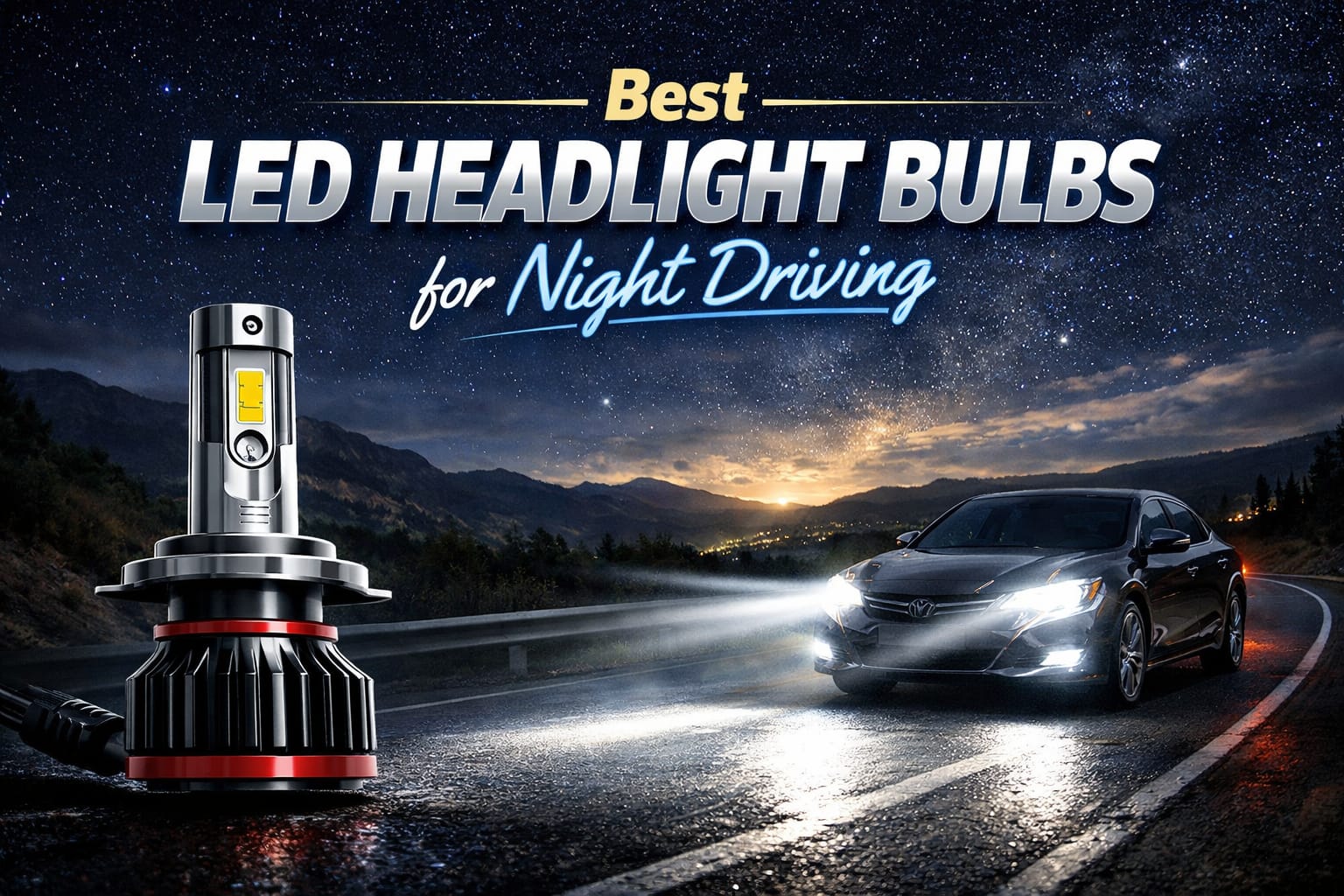
Table of Contents:
- Quick Answer
- Why Better Bulbs Improve Night Driving
- Match Bulb Size, Housing, and Beam Pattern
- Compare LED Headlight Specs Without Hype
- Color Temperature, Glare, and Comfort
- Cooling, Weather Resistance, and Legality
- Installation Checklist
- Which LED Headlight Bulb Should You Choose?
- FAQ
- Key Takeaways
- Sharing This Guide
Why Better Bulbs Improve Night Driving
Drivers often notice poor headlights before they notice poor bulbs. Lane markings appear late, road edges disappear, signs feel dim until the last moment, and wet pavement can make the beam look weaker than it does in dry weather. Better LED headlight bulbs help when they put usable light farther down the road instead of creating a bright patch directly in front of the bumper.
The goal is not only a whiter or more modern look. The goal is a beam that helps your eyes read contrast earlier, track the lane more naturally, and spot shoulders, curves, animals, pedestrians, and road signs with less strain. For a broader overview of where headlights fit into other vehicle lighting upgrades, this beginner’s guide to car LED lights explains the main upgrade paths without treating every LED swap as the same type of improvement.
Beam pattern matters more than raw brightness. Lumens can make a product sound impressive, but a high-output bulb can still perform poorly if the hotspot is misplaced, the foreground is overlit, or the cutoff becomes blurry. A good bulb directs light down the lane and toward the shoulder without throwing excessive light into oncoming traffic.
This is why the brightest LED headlight bulbs are not always the best headlight bulbs for night driving. A smoother, better-focused beam can feel safer than a technically brighter bulb that washes out road texture, reflects off wet asphalt, or creates glare. For more detail on usable output, this car LED headlight brightness guide explains why stronger numbers do not always translate into better road vision.
Match Bulb Size, Housing, and Beam Pattern
Fitment is where many otherwise good purchases fail. The best LED headlight bulbs must match your bulb size, housing design, locking position, and physical space behind the headlight. A bulb can look compatible online but still sit slightly wrong inside the housing, which can shift the beam and reduce nighttime visibility.
This is especially important when choosing H11 LED headlight bulbs because the collar depth, tab position, rear fan size, and dust cap clearance can affect the final result. Before choosing a product, confirm the exact bulb size for your vehicle and check whether your headlight uses a projector or reflector design. If you are still deciding whether the upgrade makes sense, this comparison of LEDs vs. halogen headlights helps set realistic expectations.
Projector headlights are usually more controlled because the lens and cutoff shield already shape the beam, but LED chip placement still matters. Reflector headlights are more sensitive because the reflector depends heavily on the position of the light source. If the LED emitters do not mimic the original halogen filament position closely enough, the result can be hot spots, dark gaps, or extra glare.
For drivers trying to improve focus rather than just add brightness, an adjustable beam-focus LED bulb set for a cleaner cutoff can make sense when the housing allows proper alignment. The key is to use adjustability to improve beam shape, not to compensate for an incompatible bulb size or a poor installation.
If you are comparing different headlight technologies, this guide to LED headlights and HID headlights explains why instant-on response, compact packaging, and modern beam control make LEDs appealing for many night drivers. However, even strong electronics cannot fix poor optics, so housing match should always come before claimed brightness.
Compare LED Headlight Specs Without Hype
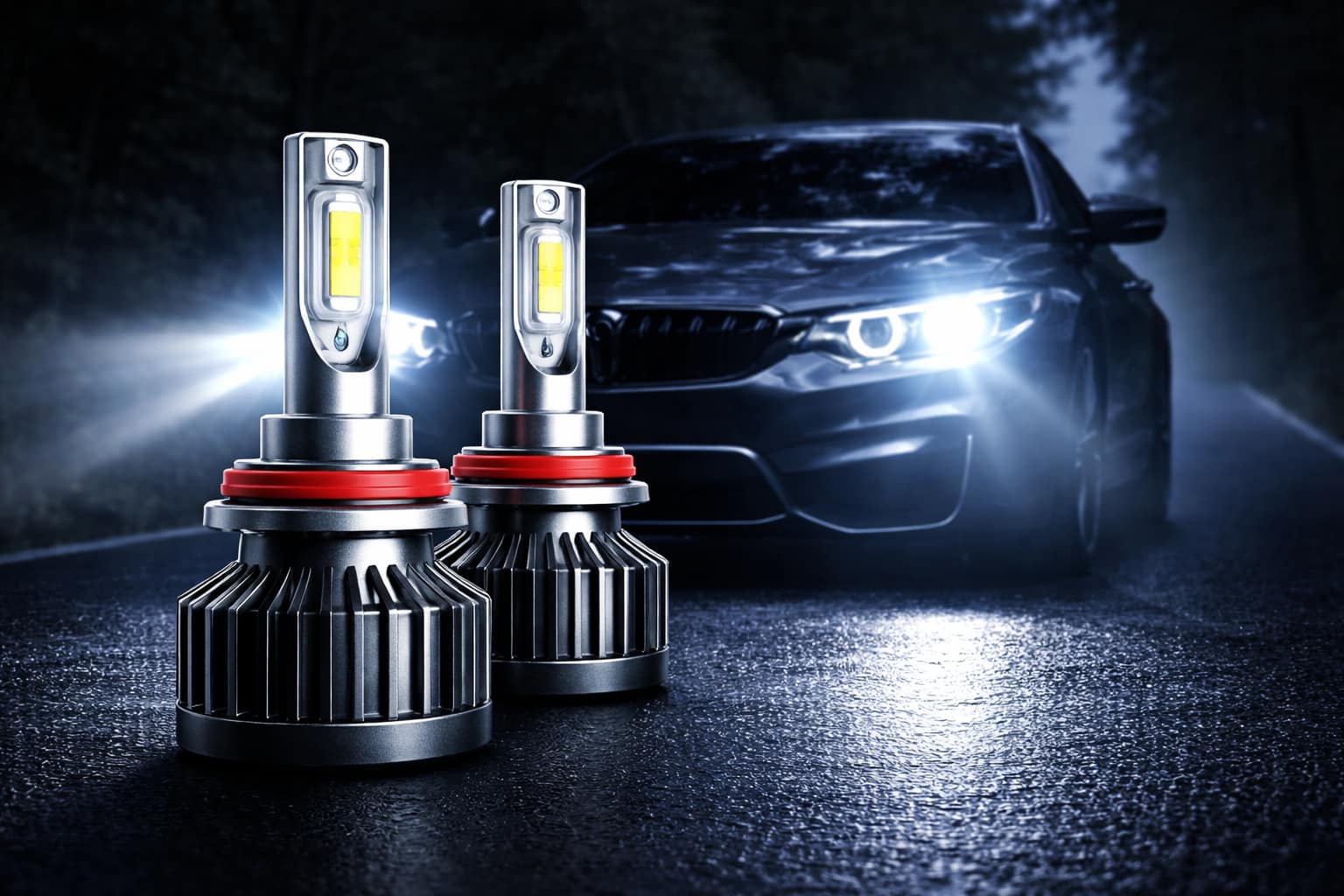
Spec sheets are useful only when you read them with context. A very high-lumen claim does not guarantee better night driving if the bulb cannot sustain output, maintain a clean beam, or control heat. Instead of choosing the biggest number, compare the specs that affect real road performance: chip placement, color temperature, cooling method, driver design, moisture protection, and fitment details.
Some bulbs look impressive in a cold-start demo but fade after heat builds up. Others create strong foreground brightness that makes the road directly ahead look bright while reducing your sense of distance. For night driving, you want enough reach to see farther, enough width to read the shoulder, and enough control to preserve contrast without flooding the wrong areas.
The optical design behind the bulb matters because headlights are not simple flashlights. Lenses, reflectors, emitter placement, and cutoff geometry all work together. This explanation of LED optical systems is useful if you want to understand why two bulbs with similar brightness claims can perform very differently in the same vehicle.
Color Temperature, Glare, and Comfort
For many drivers, a white output around 6,000 to 6,500 Kelvin feels crisp without looking excessively blue. This range can make signs and lane markings appear clearer, but whiter is not automatically better. If the beam pattern is poor or the headlights are aimed incorrectly, even premium LED bulbs can look harsh and distracting.
Rainy roads make this more obvious. Very cool or bluish light can reflect from wet asphalt, puddles, and painted lines, making the road look busy instead of clearer. A balanced white output is usually more comfortable than an icy blue tone, especially if you drive at night often or spend time on unlit rural roads.
Glare control is just as important as brightness. Correct bulb clocking, proper seating, and headlight aiming after installation are non-negotiable because a small alignment mistake can push light into the wrong part of the beam. The U.S. Department of Energy’s general LED guidance reinforces the broader principle that good LED performance depends on design and application, not just higher output claims.
When comparing two similar LED headlight bulbs, choose the one with better emitter alignment, a cleaner cutoff, and a sensible white color temperature over the one with the most aggressive lumen claim.
Comfort shows up over repeated use. If you drive at night several times a week, your headlights should help your eyes settle into the scene instead of forcing them to react constantly to glare, reflected hot spots, or uneven patches of light.
Cooling, Weather Resistance, and Legality
A bright bulb that fades quickly is not an effective upgrade. LED headlight bulbs need thermal control to keep the chips and driver circuit stable during long drives. Cooling can come from a compact fan, a heat sink, or a well-designed driver, but the result should be the same: stable brightness after the first few minutes, not just a strong first impression in the driveway.
Build quality also matters. Look for sealed connectors, decent moisture protection, stable output at idle, and a design that does not flicker during voltage variation. Flicker is more than an annoyance; subtle instability can make your eyes work harder over time. If you are planning a broader lighting refresh beyond the headlights, this guide to LED car lighting upgrades by type can help you prioritize upgrades with daily value instead of cosmetic novelty.
Do not assume every fan-cooled LED bulb will fit behind the dust cap just because the socket matches. Tight clearance can crush wiring, restrict airflow, force a poor installation angle, and ruin beam alignment.
Reliability also means consistency in tough conditions. Rain, temperature swings, road dirt, and moisture quickly expose weak designs, so the best LED headlight bulbs for night driving should perform across seasons rather than only on a dry evening. The basic durability principles in the ENERGY STAR guide to LED lighting basics support the importance of efficient, dependable operation over time.
Legality should be checked before buying, not after installation. Rules vary by region, vehicle, and headlight design, and a bulb that fits the socket is not automatically road-legal. If the conversion changes beam pattern, glare behavior, or certification expectations in your market, it can create problems during inspections or enforcement. This article on LED headlight conversions and legality explains the main issues to review before committing.
Installation Checklist
Even the best LED headlight bulbs can disappoint if they are installed carelessly. Do not rush bulb seating, clocking, sealing, wire routing, or post-installation aiming. If you choose H11 LED headlight bulbs or another common fitment, verify that both sides sit identically and that the cutoff height remains consistent once the dust caps and connectors are secured.
Use this checklist before finishing the job. It only takes a few extra minutes and can save you from settling for an upgrade that looks powerful in photos but performs poorly in traffic.
- ✓ Confirm the exact bulb size, housing type, and rear clearance before ordering.
- ✓ Check that the LED emitters are oriented correctly and evenly on both sides.
- ✓ Make sure the dust cap, fan, heat sink, and wiring do not interfere with fitment.
- ✓ Test the beam pattern on a flat wall before driving on public roads.
- ✓ Re-aim the headlights after installation, especially if the cutoff moved.
- ✓ Recheck output after a full drive to confirm cooling and brightness stability.
To continue learning after installation, the LED Knowledge Center is a useful resource for understanding how LED systems behave in real applications.
Which LED Headlight Bulb Should You Choose?
Start with how and where you actually drive. The best headlight bulbs for night driving are not necessarily the flashiest option; they are the ones that match your vehicle’s housing, your weather conditions, and your tolerance for glare, fan noise, and installation complexity.
- If you mostly drive on dark highways, prioritize long-range beam focus and thermal stability.
- If your roads are often wet, choose a balanced white output that is not overly blue.
- If you have reflector headlights, choose bulbs known for precise emitter placement.
- If your vehicle has tight rear clearance, prefer compact cooling designs and check dust cap space.
- If you want a simple common fit, start by confirming whether your vehicle uses H11 LED headlight bulbs or another exact size.
- If you need both high- and low-beam coverage, a dual-beam LED headlight combo for high- and low-beam coverage can make sense when your vehicle supports that setup.
The safest choice is the bulb that improves visibility while preserving beam control. If a product promises extreme brightness but gives little detail about fitment, cooling, or beam shape, treat the claim carefully.
FAQ
What are the best headlight bulbs for night driving?
The best headlight bulbs for night driving are the ones that match your vehicle’s housing and create a focused, stable beam. For LED upgrades, look for correct bulb size, precise emitter alignment, controlled glare, realistic color temperature, and cooling that keeps output stable during long drives.
Are the brightest LED headlight bulbs always better?
No. The brightest LED headlight bulbs can be disappointing if the beam is scattered, the foreground is overlit, or the cutoff creates glare. For real nighttime visibility, beam pattern, fitment, and sustained output usually matter more than the highest lumen claim.
What headlight should I use at night?
Use a headlight bulb that fits your exact socket and housing, produces a clean beam, and avoids excessive blue light or glare. If you drive mostly on dark roads, prioritize reach and cooling. If you drive in rain, choose a balanced white beam rather than an overly cold color temperature.
Are LED headlight bulbs better than halogen for night driving?
LED headlight bulbs can improve night driving when they are compatible with the housing and installed correctly. They often provide a whiter, more efficient beam, but a poor LED conversion can create glare or uneven lighting. Compatibility and beam control are more important than the technology label alone.
Key Takeaways
The best headlight bulbs for night driving improve visibility by delivering controlled light, not just higher brightness numbers. Beam pattern, bulb size, housing match, cooling, realistic color temperature, and correct installation matter more than aggressive lumen claims.
If you are shopping now, first identify your exact bulb size and housing type. Then narrow your options by rear clearance, beam focus, weather performance, and whether the bulb can maintain brightness after heat builds up. For common upgrades such as H11 LED headlight bulbs, small fitment differences can have a big effect on the final beam.
A good LED headlight upgrade should feel calm, focused, and reliable on real roads. When the beam reaches farther without glare, nighttime driving becomes easier, less tiring, and more predictable.
Sharing This Guide
If you found this guide helpful, save it or share it with someone who is still driving with weak factory bulbs.
Interested in learning more? Browse all related articles in our category section.